
Table 1
Porous samples code and specification of sacrificial pore former materials.
| Sample code | Porous sample identity (Matrix/wt.% of PFs) | Sacrificial pore Formers specification | |||
|---|---|---|---|---|---|
| Density [g/cm³] | Melting point [°C] | Purity [%] | Resource | ||
| BBH | BBFO/30HDPE | 0.95 | 130 | Commercial | – |
| BBP | BBFO/30PVA | 1.26 | 230 | >99.0 | Merck |
| BBU | BBFO/30Urea | 1.32 | 133 – 135 | >95.0 | Merck |
| BBG | BBFO/30Graphite | 2.16 | – | >99.0 | MP Biomedicals |
| BBC | BBFO-Compact | – | – | – | – |
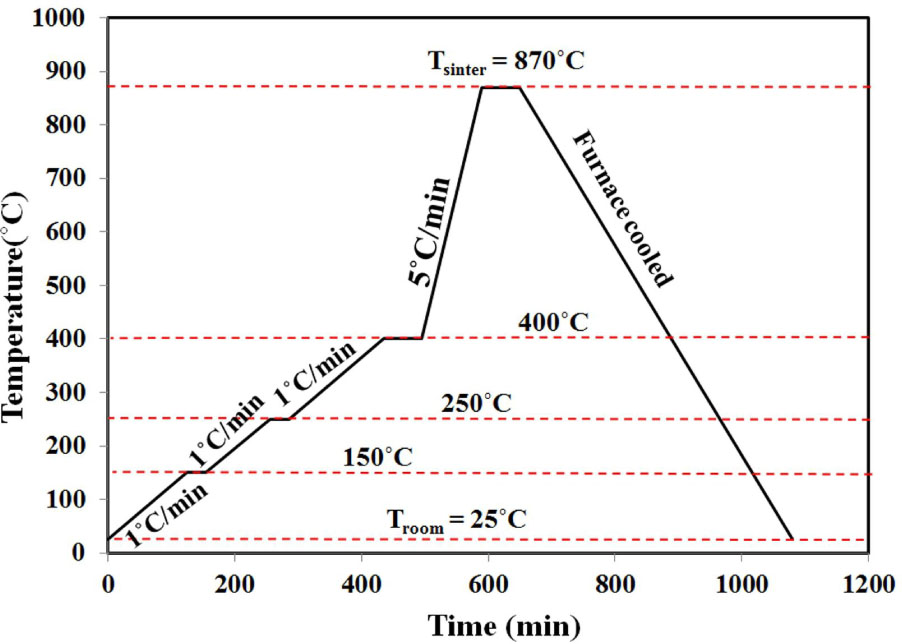
Fig. 1
Multi-step heat treatment cycle of samples sintered at 870 °C for 1h.
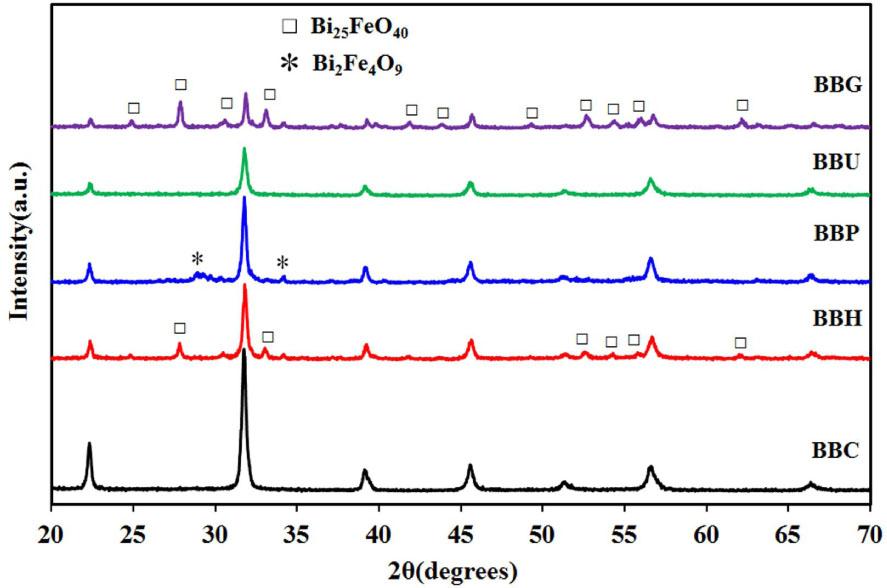
Fig. 2
X-ray diffraction patterns of BBFO/PFs porous samples after sintering at 870 °C, 1 h.
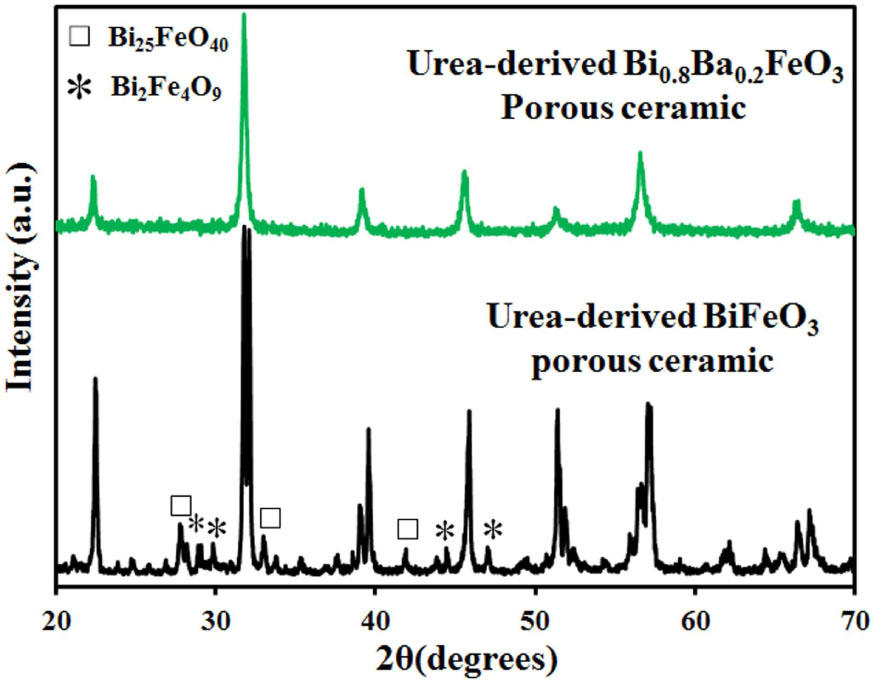
Fig. 3
X-ray diffraction patterns of urea-derived BiFeO₃ and Bi₀.₈Ba₀.₂FeO₃ porous ceramics sintered at 870 °C, 1 h.
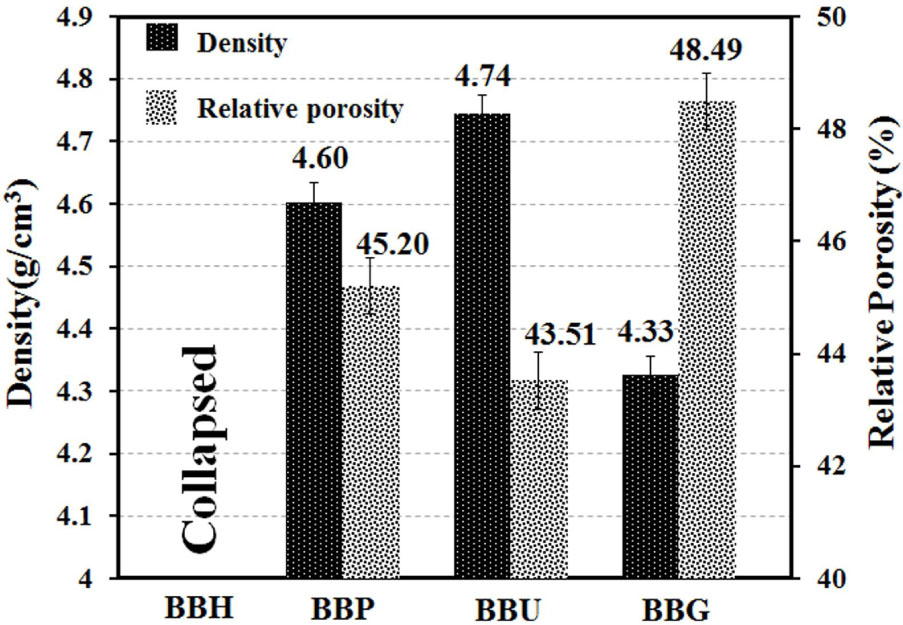
Fig. 4
Density and relative porosity of BBFO/30PFs porous samples.
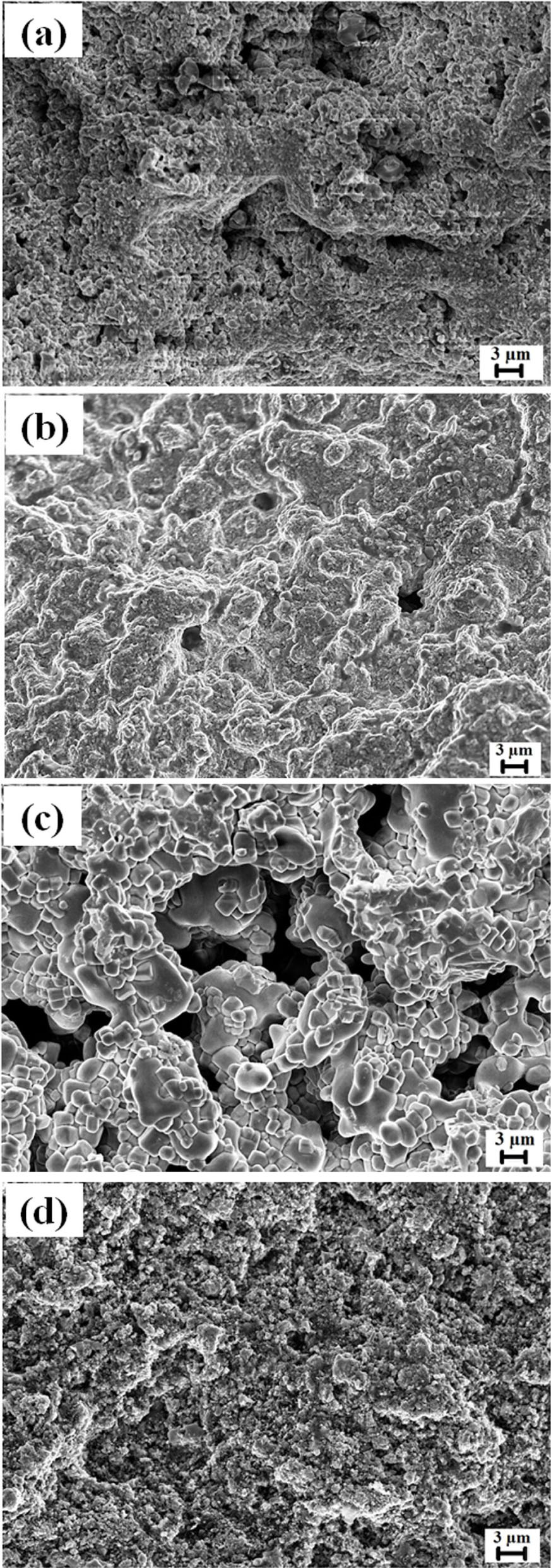
Fig. 5
FESEM images of BBFO/30PFs samples (a) BBH, (b) BBP, (c) BBU and (d) BBG.
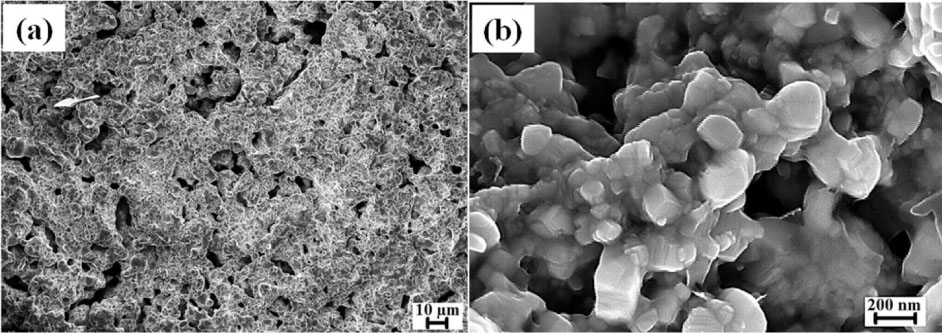
Fig. 6
FESEM micrographs (a) microstructure of BBU porous sample at low magnification showing a mean pore size of 7.5 μm (b) nano-sized grains formed on the cell walls of BBU sample.
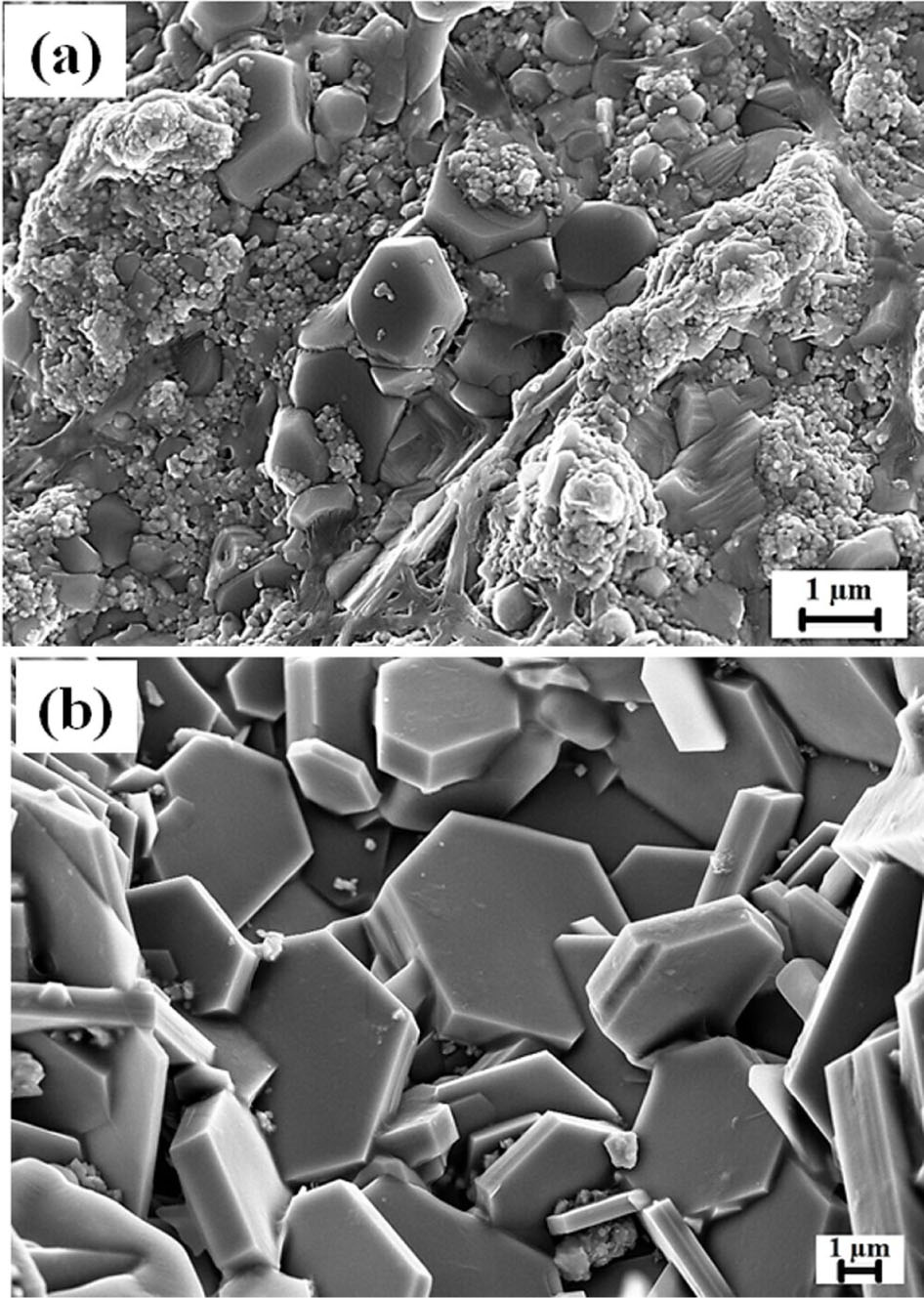
Fig. 7
FESEM micrographs of (a) BBP, (b) BBG porous samples showing some hexagonal grains.
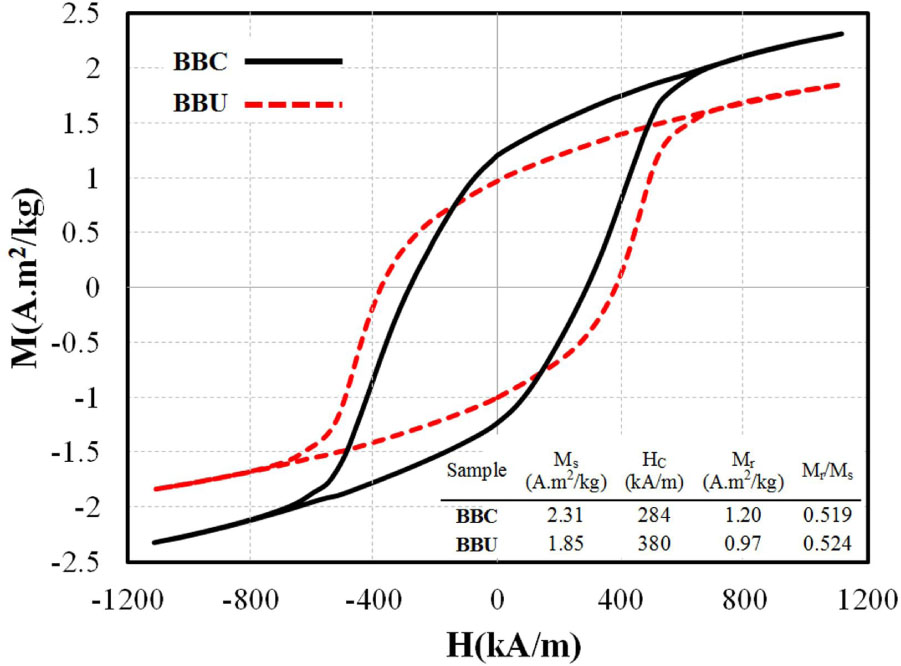
Fig. 8
Room temperature hysteresis loops (M-H) of porous BBU and compact BBC samples.