Have a personal or library account? Click to login
Nuclear protein in testis midline carcinoma in a Turkish boy: a case report Cover

Nuclear protein in testis midline carcinoma in a Turkish boy: a case report

Open Access
|Oct 2020

Figures & Tables

Figure 1

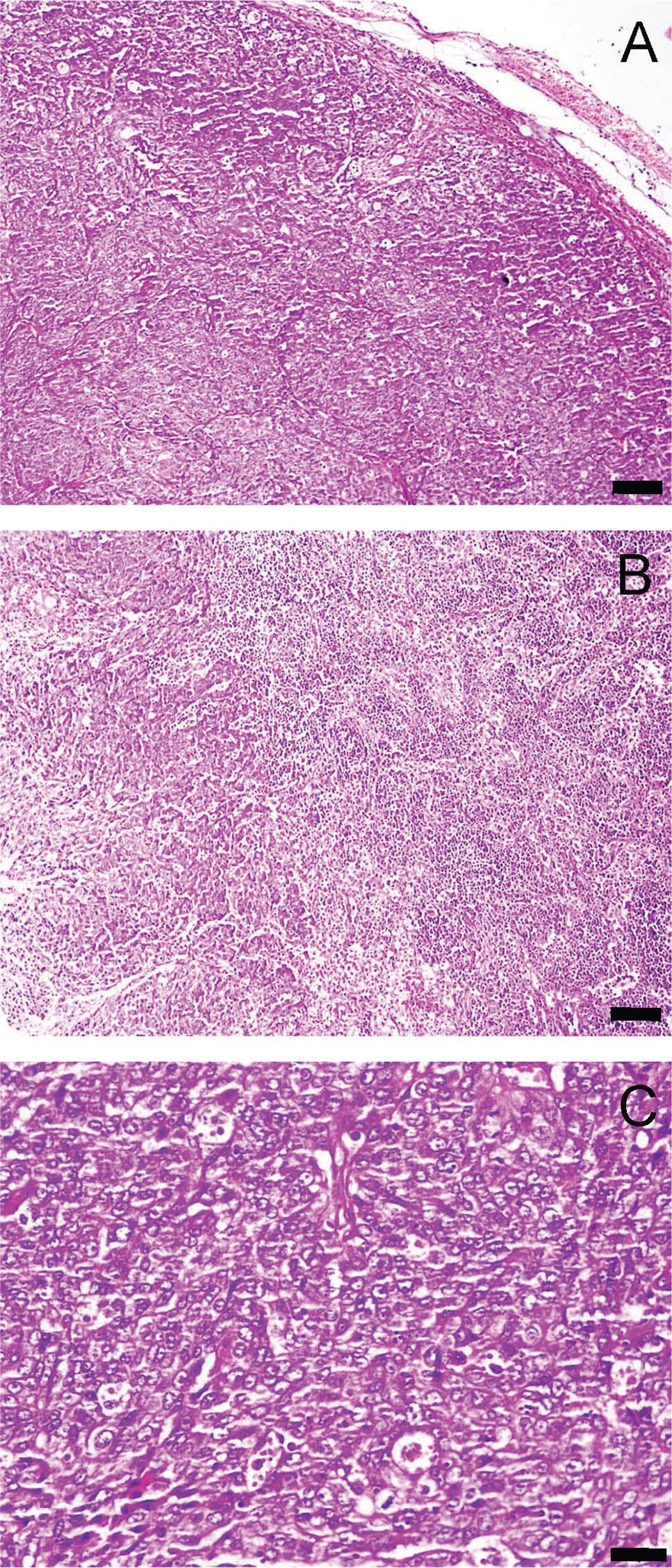
Histopathology of an abdominal lymph node derived from the patient with nuclear protein in testis (NUT) midline carcinoma. Undifferentiated tumor cells infiltrating into the lymph node are prominent. Hematoxylin and eosin staining. (A) 100× (scale bar 100 μm); (B) 100× (scale bar 100 μm); and (C) 400× (scale bar 25 μm).
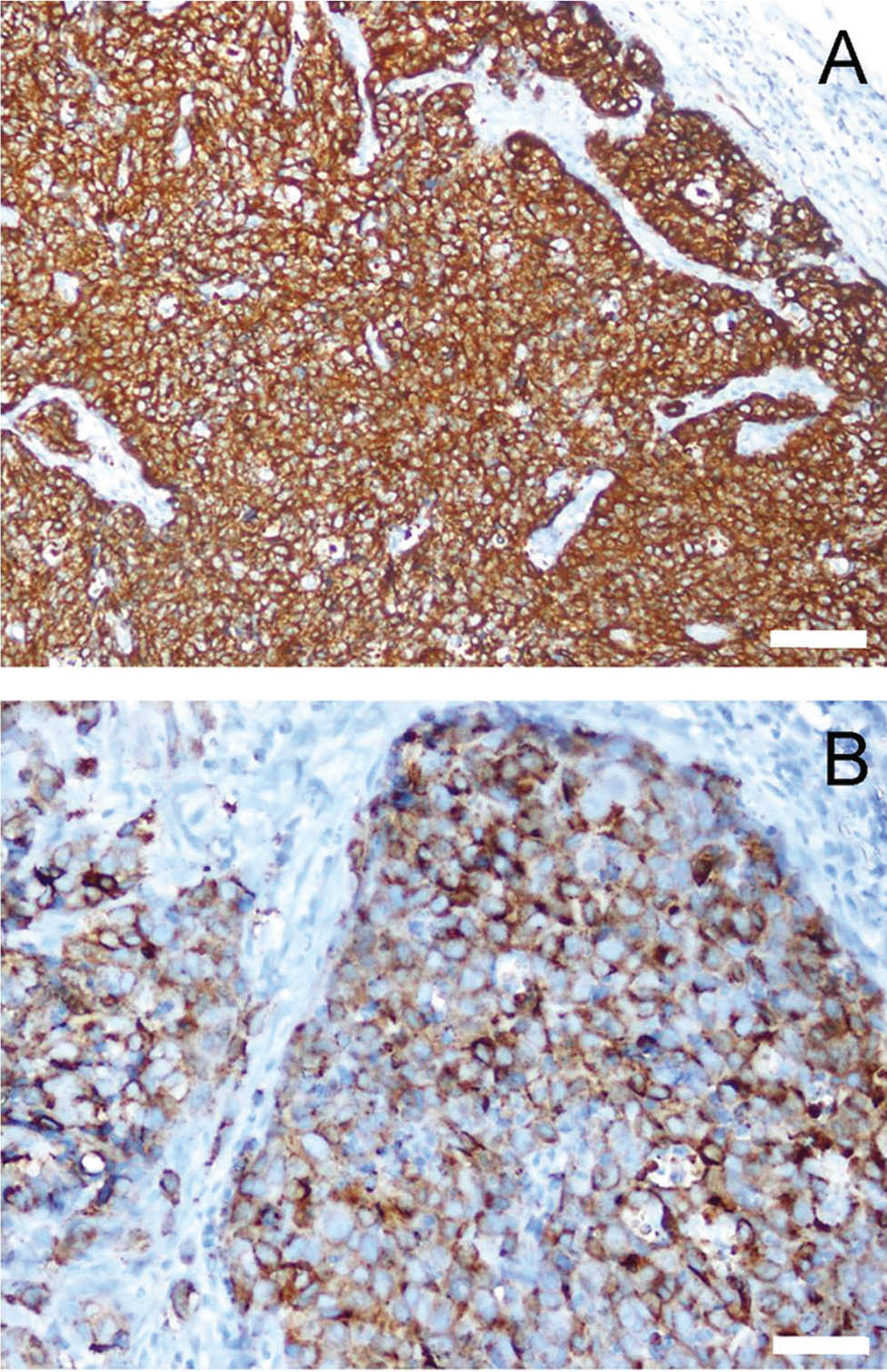

Figure 2

Micrograph images of an abdominal lymph node section immunohistochemistry derived from the patient with nuclear protein in testis (NUT) midline carcinoma. Immunoreactivity is indicated by the dark-brown staining from oxidized diaminobenzidine chromogen used in the method. The blue counterstain is Mayer's hematoxylin. A. Positive cytoplasmic immunoreactivity for cytokeratin (AE1/AE3), 200× (scale bar 50 μm). B. Positive cytoplasmic immunoreactivity for epithelial membrane antigen, 200× (scale bar 50 μm).
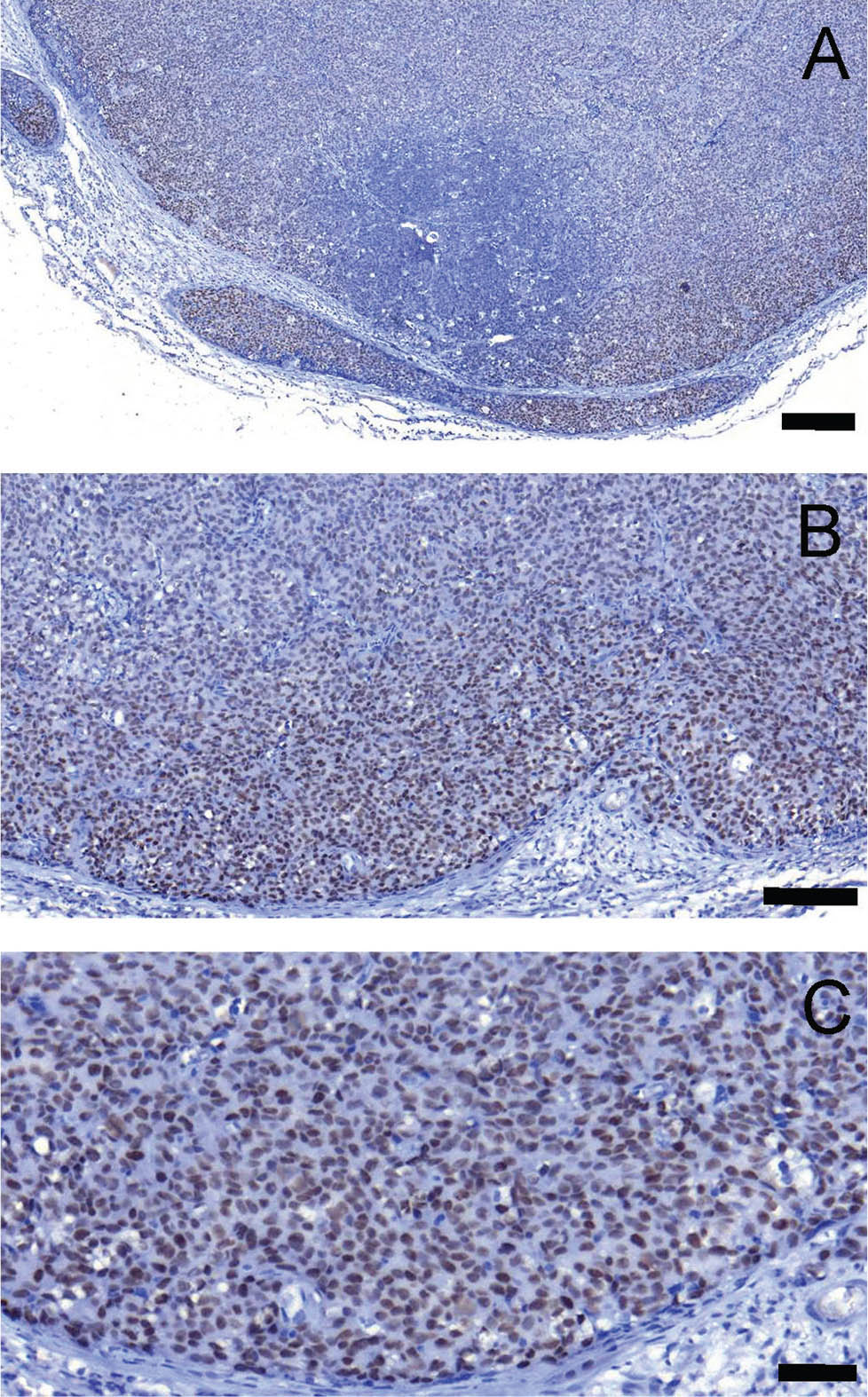

Figure 3

Positive nuclear immunoreactivity for nuclear protein in testis (NUT) in an abdominal lymph node derived from the patient with NUT midline carcinoma is indicated by the dark-brown staining of tumoral nuclei from oxidized diaminobenzidine chromogen used in the method. The blue counterstain is Meyer‘s hematoxylin, which stained nontumoral nuclei dark blue. Some cytoplasmic staining is also seen in lighter blue due to the long incubation time with the hematoxylin. (A) 40× (scale bar 200 μm), (B) 100× (scale bar 50 μm), and (C) 200× (scale bar 20 μm).
DOI: https://doi.org/10.1515/abm-2020-0029 | Journal eISSN: 1875-855X | Journal ISSN: 1905-7415
Language: English
Page range: 203 - 208
Published on: Oct 31, 2020
Published by: Chulalongkorn University
In partnership with: Paradigm Publishing Services
Publication frequency: 6 issues per year

© 2020 Büşra Yaprak Bayrak, Demir Kürşat Yildiz, Uğur Demirsoy, Funda Çorapçioğlu, Yonca Anik, Christopher A. French, published by Chulalongkorn University
This work is licensed under the Creative Commons Attribution-NonCommercial-NoDerivatives 4.0 License.