Have a personal or library account? Click to login
A new methodology for simultaneous comparison and optimization between nanoparticles and their drug conjugates against various multidrug-resistant bacterial strains Cover

A new methodology for simultaneous comparison and optimization between nanoparticles and their drug conjugates against various multidrug-resistant bacterial strains

Open Access
|Mar 2020

Figures & Tables

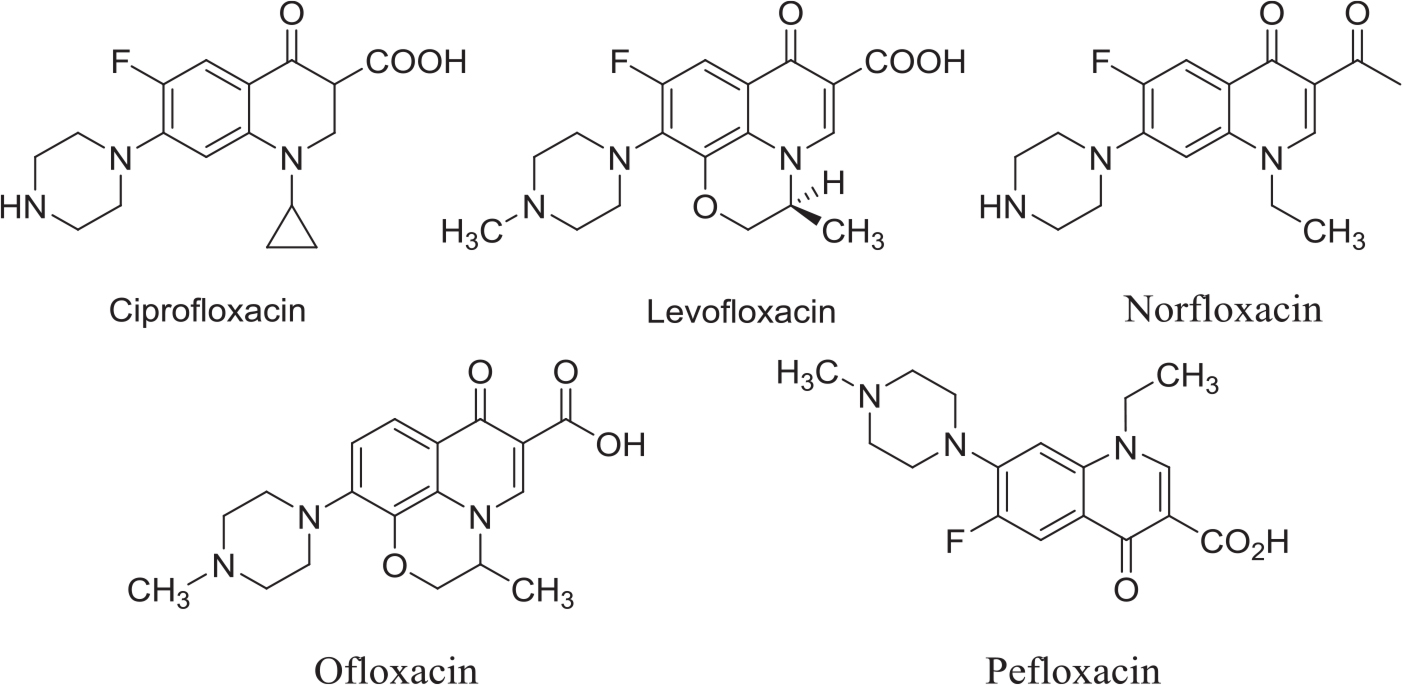
Figure 1

Few representative molecules from the second- and third-generation fluoroquinolone antibiotics are used in this study.
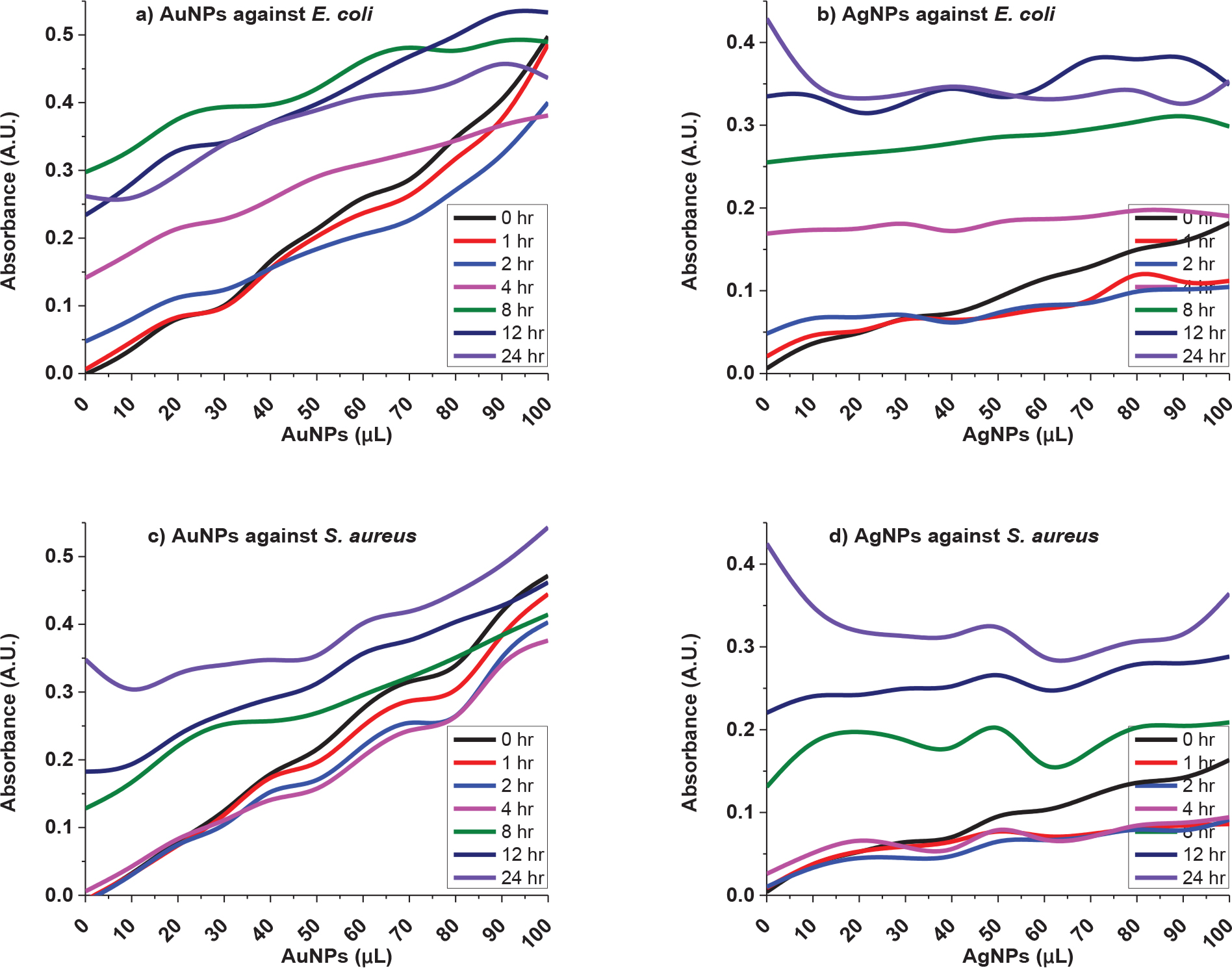

Figure 2

Absorbance of E. coli(a, b) and MRSA (c, d) with increasing concentration of AuNPs (2.87 nM) (a, c) and AgNPs (0.124 nM) (b, d) from 0 to 100 μl with 10 μl increments.
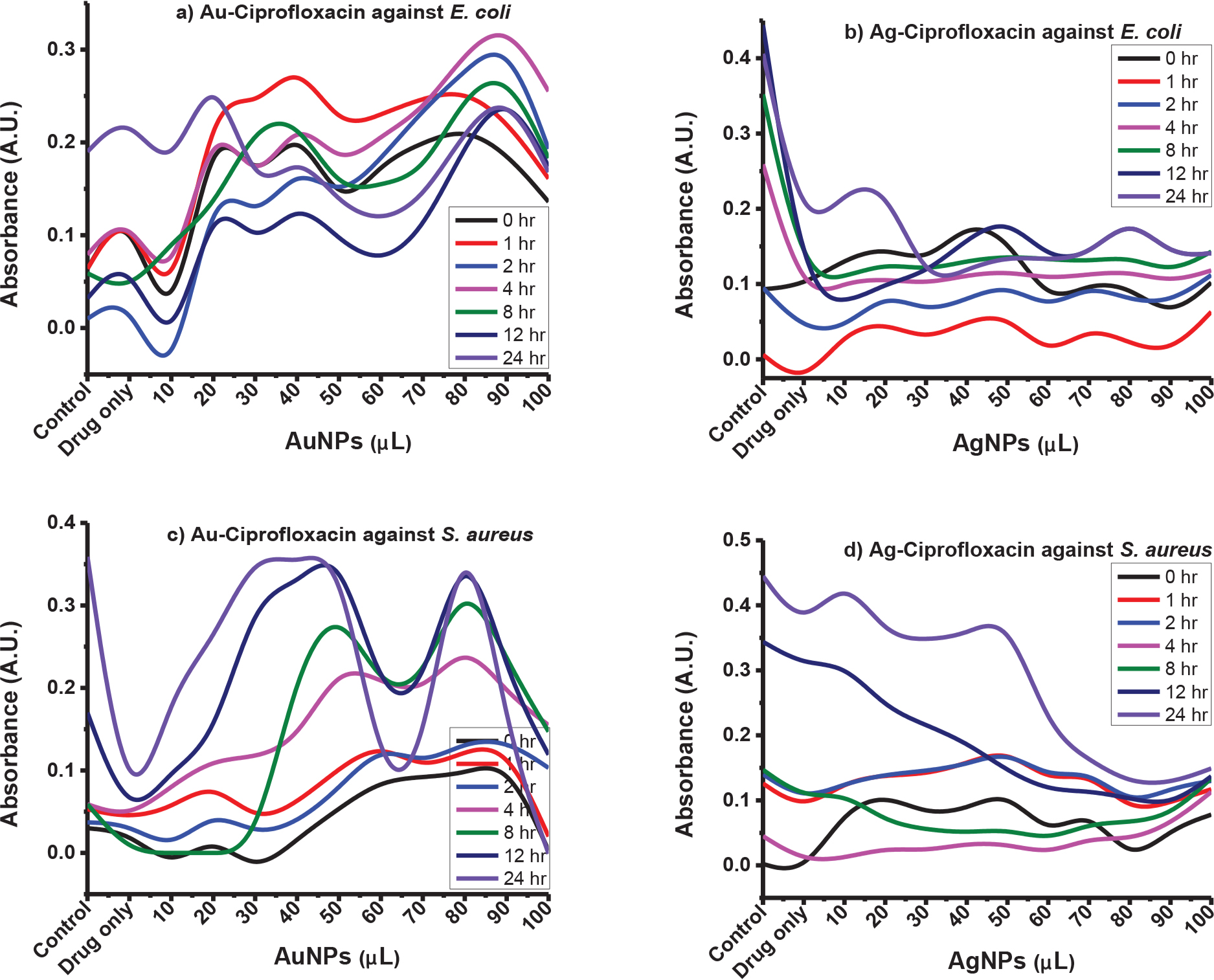

Figure 3

Absorbance of E. coli(a, b) and MRSA (c, d) in the absence of drug or nanoparticles (control), in the presence of drug only (ciprofloxacin) and by varying concentrations of AuNPs (2.87 nM) (a, c) and AgNPs (0.124 nM) (b, d) from 10 to 100 μl.
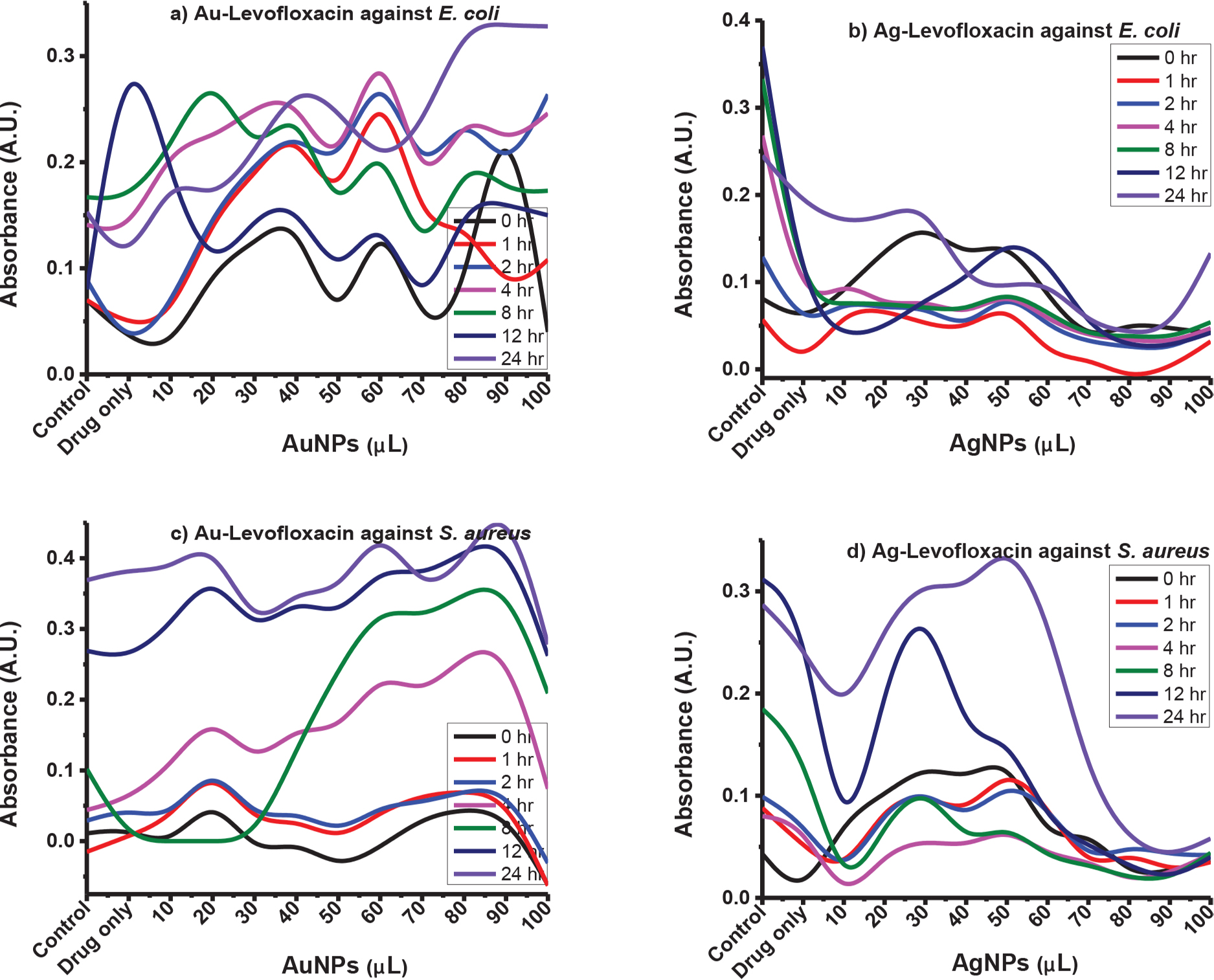
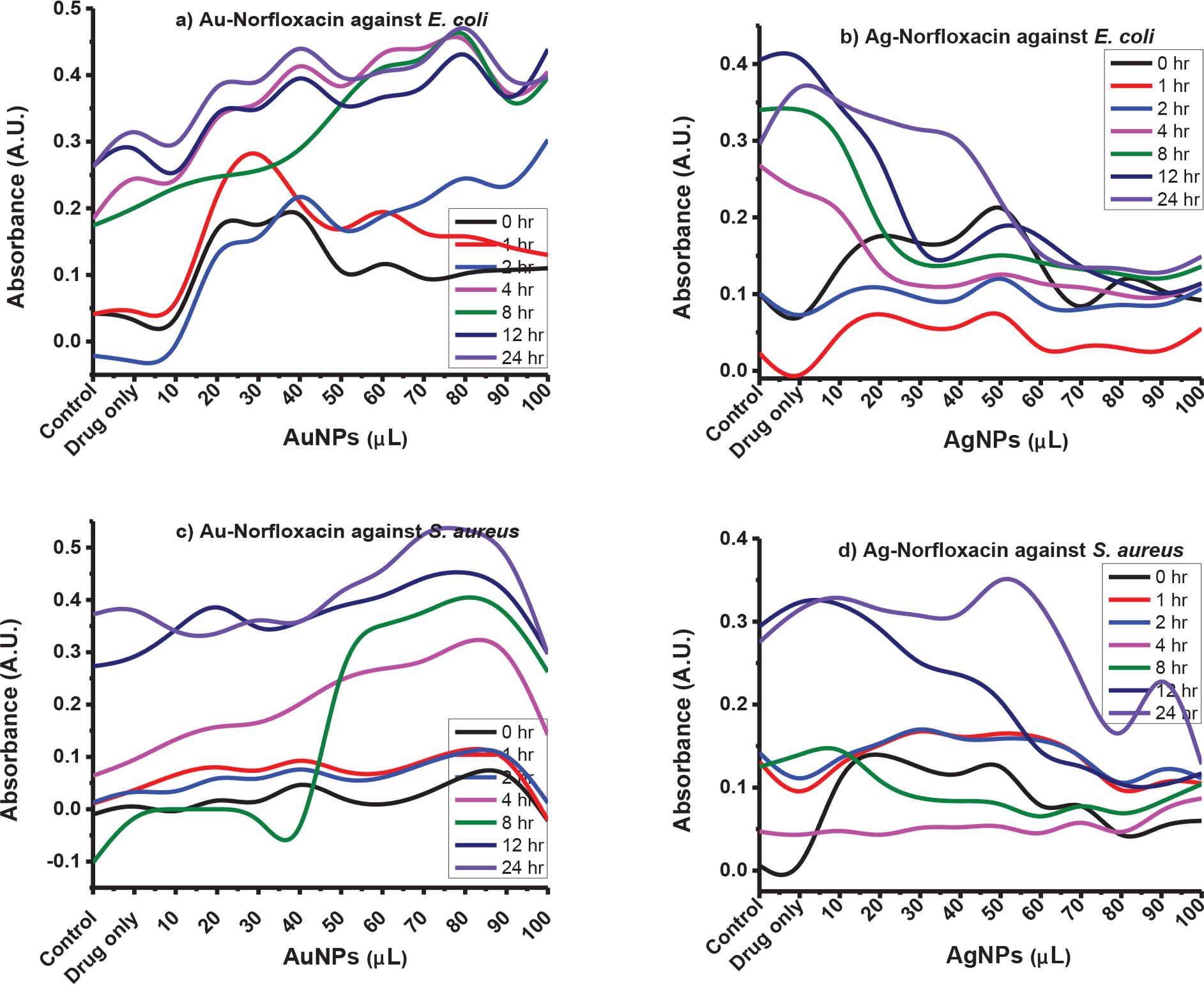
Figure 4

Absorbance of E. coli(a, b) and MRSA (c, d) in the absence of drug or nanoparticles (control), in the presence of drug only (levofloxacin) and by varying concentrations of AuNPs (2.87 nM) (a, c) and AgNPs (0.124 nM) (b, d) from 10 to 100 μl.
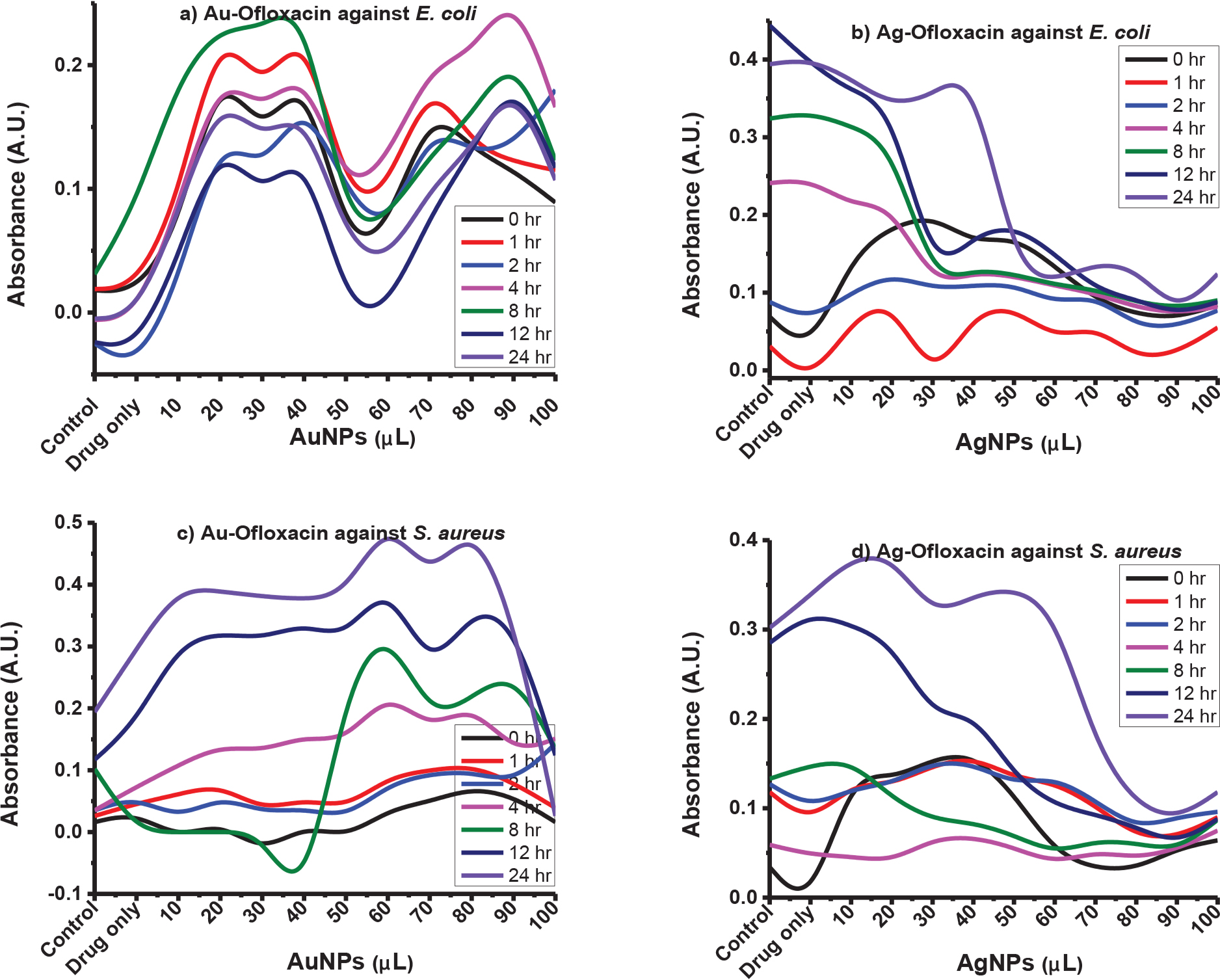

Figure 5

Absorbance of E. coli(a, b) and MRSA (c, d) in the absence of drug or nanoparticles (control), in the presence of drug only (norfloxacin) and by varying concentrations of AuNPs (2.87 nM) (a, c) and AgNPs (0.124 nM) (b, d) from 10 to 100 μl.

Figure 6

Absorbance of E. coli(a,b) and MRSA (c, d) in the absence of drug or nanoparticles (control), in the presence of drug only (ofloxacin) and by varying concentrations of AuNPs (2.87 nM) (a, c) and AgNPs (0.124 nM) (b,d) from 10 to 100 μl.
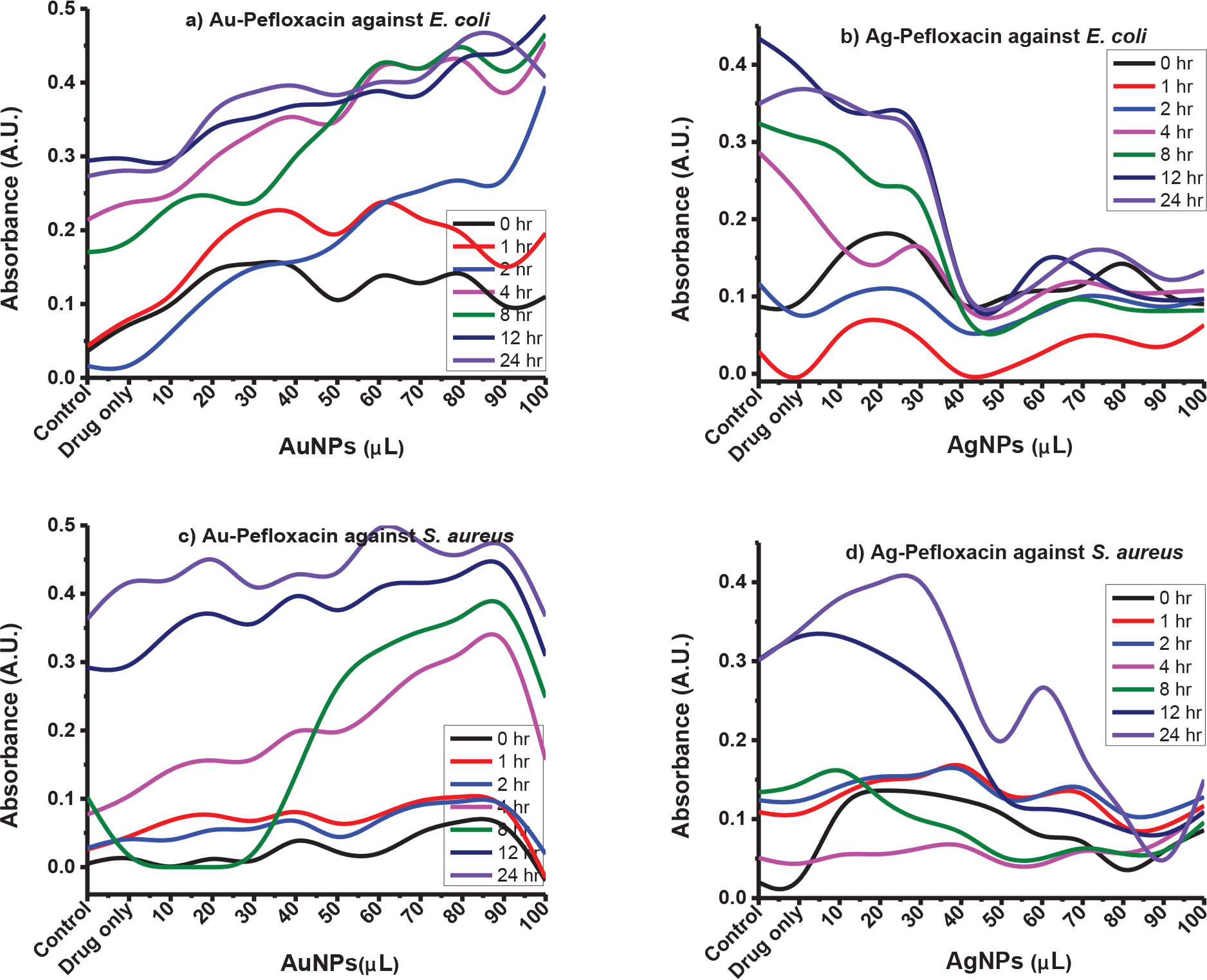

Figure 7

Absorbance of E. coli(a, b) and MRSA (c, d) in the absence of drug or nanoparticles (control), in the presence of drug only (pefloxacin) and by varying concentrations of AuNPs (2.87 nM) (a, c) and AgNPs (0.124 nM) (b, d) from 10 to 100 μl.

Standard minimum inhibitory concentrations (MIC) for reference strains

FluoroquinolonesE. coliS. aureus
Ciprofloxacin [42]0.015 mg/l0.12 mg/l
Levofloxacin [43]0.03 mg/l0.12 mg/l
Norfloxacin [42]0.06 mg/l0.25 mg/l
Ofloxacin [42]0.06 mg/l0.25 mg/l
Pefloxacin [42]0.06 mg/l0.25 mg/l

Comparison of antibacterial effects of various antibiotic – NP conjugates against E_ coli and S_ aureus

Fluoroquinolone–NP hybridsEscherichia coli AgNPsEscherichia coli AuNPsStaphylococcus aureus AgNPsStaphylococcus aureus AuNPsConclusion
No drug (NPs only)
  • Max. control until 2 h

  • Increasing concentration of nanoparticles has no effect on bacterial strains

  • Max. control until 2 h

  • Growth is increased with the increasing concentration of nanoparticles

  • Max control until 4 h

  • Increasing concentration of nanoparticles has no significant effect on bacterial strains

  • No control over time

  • Growth is increased with the increasing concentration of nanoparticles

  • Increasing concentration supports the growth of bacterial strains for AuNPs. No effect of concentration is observed for AgNPs

Ciprofloxacin
  • Max. control at 1 h

  • Overall good control

  • 10 μl are sufficient to control

  • Control of growth at 12 h

  • Minimum growth at 10 μl, increases with additional AuNPs, decreases at 100 μl

  • Good control at 4 h

  • Growth increases with time

  • 70 μl are required to control the growth

  • No control over time

  • Growth decreases at 100 μl of AuNPs

  • AgNP conjugates are best effective against E. coli and moderately effective against S. aureus. AuNPs are not effective against S. aureus or E. coli

Levofloxacin
  • Max. control at 1 h

  • Overall good control

  • 10 μl is sufficient to control

  • Minor effects on control of growth at 12 h

  • No concentration effects

  • Good control at 4 h

  • Growth increases with time

  • 70 μl is required to control the growth

  • No control over time

  • Growth increases with the addition of AuNPs, decreases at 100 μl of AuNPs

  • Same as above (ciprofloxacin)

Norfloxacin
  • Max. control at 1 h

  • Growth increases with time

  • 50 μl is required to control the growth

  • No control over time

  • No effect of AuNPs

  • Good control at 4 h

  • Growth increases with time

  • 70 μl is required to control the growth

  • No control over time

  • Growth slightly increases with the addition of AuNPs, decreases at 100 μl of AuNPs

  • AgNP conjugates are moderately effective against E. coli and S. aureus. AuNPs are not effective against S. aureus or E. coli

Ofloxacin
  • Max. control at 1 h

  • Growth increases with time

  • 50 μl is required to control the growth

  • Control of growth at 12 h

  • Growth increases with the addition of AuNPs, minimum at 60 μl, decreases at 100 μl of AuNPs

  • Good control at 4 h

  • Growth increases with time after 8 h

  • 70 μl is required to control the growth

  • No control over time

  • Growth slightly increases with the addition of AuNPs, decreases at 100 μl of AuNPs

  • Same as above (norfloxacin)

Pefloxacin
  • Max. control at 1 h with controlled growth until 4 h, afterward growth increases with time

  • 40 μl is required to control the growth

  • No control over time

  • Growth increases with the addition of AuNPs

  • Growth is observed with time

  • 50 μl is required to control the growth

  • No control over time

  • Growth slightly increases with the addition of AuNPs, decreases at 100 μl of AuNPs

  • Same as above (norfloxacin and ofloxacin)

DOI: https://doi.org/10.1515/abm-2019-0054 | Journal eISSN: 1875-855X | Journal ISSN: 1905-7415
Language: English
Page range: 149 - 162
Published on: Mar 31, 2020
Published by: Chulalongkorn University
In partnership with: Paradigm Publishing Services
Publication frequency: 6 issues per year

© 2020 Ahson Jabbar Shaikh, Nargis Aman, Muhammad Arfat Yameen, published by Chulalongkorn University
This work is licensed under the Creative Commons Attribution-NonCommercial-NoDerivatives 4.0 License.