
Dr. Noon was born on December 18, 1934, in Nogales, Arizona, to a surgeon father and a nurse mother, embedding medicine into the fabric of his life from the very beginning and leaving a lasting imprint on his professional path. He entered college with the clear intention of becoming a physician and, among the six siblings, was the only one to follow that path.
During World War II, while his father served in the military, the family briefly lived in Brentwood and Modesto, California. Dr. Noon completed high school in Arizona and later matriculated at the University of Arizona, where he earned his Bachelor of Science degree. There he met his wife, Bonnie Johnson, a native of Oklahoma and former Miss Arizona. They were married on July 18, 1958, and together built a life centered on family, raising four children, and welcoming 12 grandchildren.
As an undergraduate, Dr. Noon learned of Dr. Michael E. DeBakey and Dr. Denton Cooley, which inspired him to move to Houston in 1956 to begin medical school at Baylor College of Medicine, newly relocated from Dallas. He graduated from Baylor College of Medicine in 1960 and completed his internship at Jefferson Davis Hospital, Houston’s first centralized public hospital for indigent patients. He was fluent in Spanish, a skill that greatly enhanced his care of Spanish-speaking patients. Later in his career, he delivered lectures and performed surgical demonstrations in Latin America and Spain in the local language. He also operated in more than 31 countries and helped establish cardiac surgery programs around the world.
After his internship, Dr. Noon completed residencies in general surgery and thoracic surgery at Baylor College of Medicine. While a thoracic surgery resident, he also served as assistant chief of surgery at Ben Taub General Hospital.
After residency, Dr. DeBakey invited him to join the faculty at Baylor College of Medicine and Methodist Hospital. Dr. Noon accepted because, as he later recalled, “Houston was at the center of all activity.” Having worked closely with Dr. DeBakey during training, he understood exactly what the role would demand. Dr. DeBakey was not easily impressed, but his esteem for Dr. Noon ran so deep that he was known to say, “If I ever needed surgery, I would want Dr. Noon to be my surgeon.” It was an extraordinary expression of admiration from Dr. DeBakey—and one that would come to life decades later.
In Houston, Dr. Noon witnessed the evolution of cardiovascular surgery firsthand: the increasing use of prosthetic grafts in place of homografts, the development of new instruments and monitoring systems that improved upon the era of “doctors’ fingers and blood pressure cuffs,” and, early in his career, even the advent of designated intensive care units, among many other advances now taken for granted.
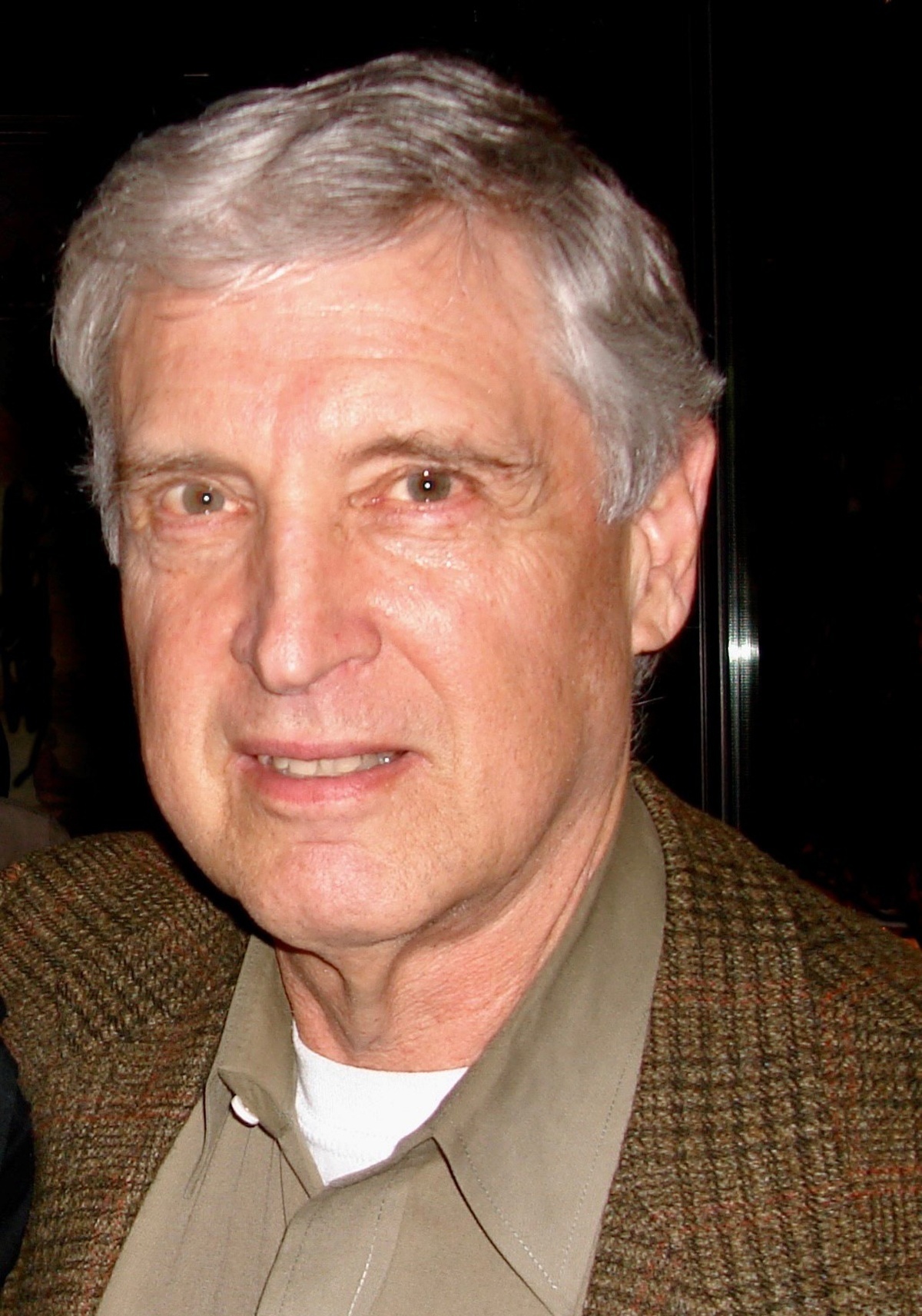
George P. Noon, MD, photo taken December 9, 2006.
In 1968, Dr. Noon joined the faculty at Baylor College of Medicine and Houston Methodist Hospital and rose rapidly, becoming professor of surgery in 1975. Beginning in 1990, he served as chief of the Division of Transplant and Assist Devices at Baylor College of Medicine and Methodist Hospital, as well as director of the Michael E. DeBakey Heart Assist Device Program. From 2000 until his death, he held the Meyer-DeBakey Chair in Investigative Surgery at Baylor College of Medicine. He also served as president of the DeBakey Medical Foundation.
During his early years at Methodist Hospital, Dr. Noon participated in the heart and lung transplant program. Occurring in the late 1960s, those programs were later paused until the introduction of cyclosporine, when transplant activity at Methodist resumed. Dr. Noon became an instrumental figure in that program and performed more than 600 of the first 1,000 heart transplants completed at Methodist Hospital. He worked closely with Dr. DeBakey on early artificial heart prototypes in NIH-funded research supported by a $10 million grant, equivalent to $111 million dollars today. He also contributed to the development of cardiopulmonary bypass systems used in Houston, served as surgical director of the kidney transplant program at Methodist Hospital and Texas Children’s Hospital, and cofounded the Methodist Hospital vascular noninvasive laboratory, which he helped lead until his retirement.
Drs. George P. Noon and Michael E. DeBakey celebrating the first MicroMed-DeBakey-Noon LVAD implantation in the US. Photo taken at Methodist Hospital in July 2000.
In the 1970s, Dr. Noon emerged as a leading figure in mechanical circulatory support research—collaborating with Dr. DeBakey and the Soviet surgeon Dr. Valery Shumakov, who performed the first heart transplant in Russia, on cross-continental cardiovascular research. That collaboration arose through Mstislav Keldysh, President of the Soviet Academy of Sciences and a key figure in the Soviet space program.
While traveling in Mexico, Mr. Keldysh experienced claudication and stopped in Houston for evaluation, where he was found to have aorto-iliac occlusive disease. A decision then had to be made about where he would undergo surgery, and Mr. Keldysh chose the Soviet Union. Dr. Noon and Dr. DeBakey assembled a team, brought the necessary instruments and sutures, and traveled there to perform the procedure.
After a translumbar aortogram and femoral arteriograms, surgery was recommended, and Mr. Keldysh underwent a successful aorto-bi-external iliac artery bypass, bilateral femoropopliteal bypasses, and cholecystectomy. The team remained for a week to ensure his recovery before returning to the United States (US). Mr. Keldysh was an influential figure in the Soviet era, and this event helped open the door to scientific collaboration and rapprochement between two rival superpowers.
During this period, Dr. Noon also helped develop first-generation pneumatic ventricular assist devices and conducted early studies on the physiology of long-term circulatory support, paving the way for the next generation of heart assist devices. He also played a significant role in the development of continuous-flow left ventricular assist devices (LVADs).1
In the 1980s, Dr. Noon led Methodist’s ventricular assist device program, one of the earliest in the world. He found those first-generation devices large, noisy, and difficult to implant, requiring patients of substantial size to accommodate them. In 1984, David Saucier, a NASA engineer, underwent a heart transplant performed by Dr. Noon. Shortly afterward, Dr. Noon and Dr. DeBakey approached him about helping develop a smaller pump. Through Saucier, they were introduced to three additional NASA engineers with expertise in fuel pumps used in space shuttles. That collaboration led to the development of a miniaturized heart pump that later became known as the Micromed-DeBakey-Noon LVAD.
At the time, continuous-flow devices were met with considerable skepticism because they created a nonpulsatile physiology. Dr. Noon, however, drew reassurance from earlier experience with the Hemopump, which could temporarily support patients, and with the BioMedicus pumps, which could bridge patients to transplant. He also argued that pulsatility exists only in the larger arterial system; farther downstream, in the distal vasculature and capillaries, flow is continuous and nonpulsatile. He was right: pulsatile devices have now disappeared entirely from clinical use.
In 1998, the first Micromed-DeBakey-Noon continuous-flow device was implanted at the German Heart Institute in Berlin by Dr. Roland Hetzer, Dr. Matthias Loebe, and Dr. Noon. It was the first implantation of a continuous-flow device for long-term support and provided proof of concept that continuous-flow support is compatible with human life. The first implantation in the US followed in the summer of 2000 at Methodist Hospital, performed by Drs. Noon and DeBakey. Since then, nearly 50,000 continuous-flow devices have been implanted worldwide as a bridge to transplant or as destination therapy, and survival with continuous-flow support now rivals survival after heart transplantation.
In 1996, Boris Yeltsin, former president of Russia, required coronary revascularization. Drs. DeBakey and Noon were asked to advise the Russian surgical team on his candidacy for surgery as he was also known to have heart failure. A decision was made to proceed, and both Noon and DeBakey traveled to Russia to observe the operation and provide back-up with a centrifugal pump in case the patient could not be weaned from cardiopulmonary bypass.2 Fortunately, as is publicly known, the surgery was successful and President Yeltsin made a full recovery.
On New Year’s Eve 2005, Dr. DeBakey suffered a Type II DeBakey acute aortic dissection. He initially refused surgery and chose conservative management. After his condition deteriorated over several weeks, Dr. Noon, assisted by his surgical partner Dr. Matthias Loebe, performed the operation, replacing the ascending aorta and hemi-arch with resuspension of the aortic valve under hypothermic circulatory arrest and retrograde cerebral perfusion.3 Dr. DeBakey made a full recovery and later received the Congressional Gold Medal from President George W. Bush.4 Although initially hesitant to undergo surgery due to fear of neurologic deterioration, Dr. DeBakey later expressed deep gratitude to Dr. Noon for performing it. On July 11, 2008, Drs. Noon and DeBakey had dinner at Dr. DeBakey’s home near the Rice University campus. That evening, Dr. DeBakey mentioned feeling weak. After Dr. Noon left for the night, Dr. DeBakey collapsed and was emergently taken to Methodist Hospital, where he died.
Dr. Noon retired from surgery in 2008 for health-related reasons, but he continued to work until 2020, when he fully retired, in part because of the COVID-19 pandemic. He authored more than 350 peer-reviewed publications, books, and book chapters. His early work focused primarily on vascular surgery, as Houston stood at the forefront of that field; later, his scholarship shifted toward transplantation and heart failure.
Dr. Noon trained generations of surgeons and scientists who went on to become leaders and educators around the world. He received numerous honors, including the Houston Distinguished Surgeon Award in 2010, and was inducted into the Space Technology Hall of Fame in 1999 for his work on miniaturized heart pumps. He was a member of all major cardiothoracic surgical and transplant societies and served as past president of the DeBakey International Surgical Society.
At age 17, Dr. Noon learned to fly airplanes. His father owned a single-engine plane that they used for fishing trips to Mexico. He did not, however, obtain his pilot’s license until he moved to Houston for medical school. Dr. Noon was known to fly his own plane to his ranch in West Texas on weekends off, and he maintained his skills with a flight simulator in his office. On vacation, he went helicopter skiing in the Canadian Rockies and bungee jumping in New Zealand, preparing for such adventures by inline skating downhill in the parking garage of Scurlock Tower at Methodist Hospital. He carried the same fearlessness, discipline, and appetite for challenge into every part of his life that he demonstrated in the operating room. Dr. Noon was known for his kindness, calm presence, and unquestioned competence: a true surgeon’s surgeon. He was the person many turned to for reassurance during the most demanding moments, especially because Dr. DeBakey was known to expect nothing short of excellence from his residents, even when that standard could feel difficult to meet.2
Dr. Noon was beloved by all who had the privilege of working with him. His residents held him in the deepest admiration and affection. Hospital staff regarded him with the highest respect, and his administrative assistant of 49 years, Pam Miller, remained by his side until the day he finally decided it was time to stay home. That kind of loyalty says as much about the man as any list of accomplishments ever could.
Dr. Noon is survived by his four children, Deanna Noon Chavez, Darryl Noon, Christopher Noon, and Kimberly Noon Pariza; his 12 grandchildren; four great-grandchildren; and five siblings. His contributions to cardiovascular surgery, his generous mentorship, and his example of steadiness, courage, and excellence will continue to live on in the many lives and careers he shaped.
“Waste no more time arguing what a good man should be. Be one.” — Marcus Aurelius