
The field of adult congenital heart disease (ACHD) has undergone extraordinary transformation over the past several decades. Advances in pediatric cardiac surgery, interventional cardiology, imaging, critical care, and longitudinal multidisciplinary management have allowed most children born with congenital heart disease to survive into adulthood. As a result, adults with CHD now outnumber children with CHD in many developed countries, creating one of the fastest-growing populations within cardiovascular medicine. What was once considered a predominantly pediatric discipline has evolved into a lifelong cardiovascular condition requiring highly specialized adult care.
This remarkable success story has also created one of the most pressing workforce challenges in cardiovascular medicine. The rapid growth and increasing complexity of the ACHD population have dramatically outpaced the number of healthcare professionals trained to care for these patients—creating a national shortage of cardiologists, adult congenital cardiac surgeons, congenital interventionalists, electrophysiologists, heart failure specialists, specialized nurses, advanced practice providers, adult congenital cardiac sonographers, cardiac magnetic resonance and cardiac computed tomography technologists, anesthesiologists, intensivists, and multimodality imaging specialists with expertise in ACHD. At the same time, patients with CHD are living longer with increasingly complex anatomy, prior surgical repairs, residual lesions, arrhythmias, heart failure, aortopathy, valvular disease, pulmonary vascular disease, and multisystem complications that require lifelong surveillance at comprehensive care centers.
The need for education in ACHD extends far beyond dedicated congenital centers. General cardiologists, imagers, emergency physicians, hospitalists, intensivists, surgeons, and cardiovascular trainees increasingly encounter patients with ACHD in daily practice. Yet many clinicians receive limited formal exposure to CHD during training. Consequently, improving ACHD education and expanding opportunities for specialized training represent urgent priorities for the cardiovascular community. This issue aims not only to provide state-of-the-art reviews for ACHD specialists but also to serve as a practical educational resource for the broader cardiovascular workforce. Increased awareness, multidisciplinary collaboration, and investment in training programs will be essential to ensure access to high-quality care for patients with CHD across their lifespan.
The field itself stands at a crossroads of innovation. Rapid advances in multimodality imaging, transcatheter structural interventions, electrophysiology, heart failure therapies, mechanical circulatory support, multiorgan transplantation, and computational technologies are reshaping the management of congenital cardiovascular disease. Patients previously considered too high risk for intervention are now candidates for sophisticated hybrid surgical and catheter-based procedures. The integration of advanced imaging, precision medicine, and team-based care models is creating new opportunities to improve outcomes across the lifespan. These innovations are transforming ACHD from a field once focused primarily on survival into one increasingly focused on quality of life, long-term outcomes, and personalized care.
This issue of the Methodist DeBakey Cardiovascular Journal brings together an international group of experts to provide a contemporary and clinically relevant overview of key topics in ACHD. The selected articles emphasize practical approaches to diagnosis and management while highlighting the complexity, innovation, and multidisciplinary nature of modern adult congenital cardiovascular care.
The issue begins with “The Initial Diagnostic Approach to Adult Congenital Heart Disease: A Practical Imaging Pathway for General Cardiologists and Cardiac Imagers,” in which Alicia Rangosch, ACS, RCCS, RDCS, RVT, and Drs. Aneesh Dhore-Patil and Valeria Duarte present a practical framework for evaluating adults with CHD. As more patients with ACHD present outside specialized centers, the authors emphasize an anatomy-first multimodality imaging strategy supported by standardized protocols and highly trained adult congenital sonographers and advanced imaging technologists, whose expertise is essential to diagnostic accuracy and quality care.
We then highlight “Common Clinical Scenarios in Adult Congenital Heart Disease: A Practical Guide for General Cardiologists,” in which Drs. Matthew R. Carazo and Tripti Gupta address the growing need for noncongenital cardiologists to confidently recognize and manage frequently encountered ACHD presentations. Through common clinical scenarios, the review provides pragmatic guidance on pathophysiology, multimodality imaging, and indications for intervention, helping bridge the gap between ACHD specialists and general cardiovascular practice.
In “Unrepaired Congenital Shunt Lesions in Adults: Principles for Clinical Management,” Drs. Amalia Elizari, Diana Mariela Mouratian, and colleagues review the pathophysiology, diagnostic evaluation, and management of adults presenting with unrepaired congenital shunt lesions. The article highlights the importance of individualized decision-making and careful assessment of indications and contraindications for defect closure in this unique population.
Next, Drs. Berardo Sarubbi, Giancarlo Scognamiglio, and colleagues discuss “Single Ventricle Fontan: The Basics for General Cardiologists,” one of the most complex physiologies in cardiovascular medicine. As more and more Fontan patients survive into adulthood, clinicians increasingly encounter multisystem complications involving the cardiovascular, hepatic, lymphatic, and pulmonary systems. This article provides a practical overview of Fontan physiology, long-term surveillance, and the principles of lifelong management essential for providers caring for these patients.
From here, Drs. Maurizio Brighenti, Gabriele Egidy Assenza, and colleagues examine “Lifelong Management of Right Ventricular Outflow Tract Dysfunction in Adults with Congenital Heart Disease,” one of the most common late complications in ACHD. The authors discuss contemporary surgical and transcatheter treatment strategies, advances in imaging and device technology, and the importance of lifelong surveillance to preserve ventricular function and improve long-term outcomes.
Next, we focus on “Reoperative Aortic Root Surgery in Adults with Prior Conotruncal Repair,” in which Drs. Andrea Giulio Quarti, Ziyab Sarfaraz, and coauthors address the increasingly important challenge of aortic root disease in adults with repaired conotruncal anomalies. The review explores mechanisms of aortic root dilatation, surveillance strategies, and surgical considerations for complex reoperative interventions in this growing patient population.
We then shift to “Primary Tricuspid Regurgitation in ACHD: Diagnosis and Treatment,” where Dr. Luciana Da Fonseca Da Silva examines congenital and acquired causes of primary tricuspid valve disease, with particular focus on Ebstein anomaly and tricuspid valve dysplasia. The article reviews contemporary diagnostic approaches, surgical indications, and repair strategies.
In our next manuscript, “Transcatheter Edge-to-Edge Repair in Adult Congenital Heart Disease: Anatomic Challenges, Device Adaptations, and Emerging Evidence,” Dr. Dhaval R. Parekh highlights one of the most rapidly evolving frontiers in congenital structural heart disease. This review explores emerging transcatheter edge-to-edge repair technologies and their application across a broad spectrum of ACHD substrates, illustrating how innovation is expanding therapeutic options for patients previously considered high risk for surgery.
Having reviewed contemporary approaches to congenital structural and valvular disease, the issue then turns to three major causes of morbidity and mortality in ACHD: arrhythmias, heart failure, and infective endocarditis.
In “Innovative Management of Rhythm Disorders in Adults with Congenital Heart Disease,” Drs. Stephanie Fuentes Rojas and Paul Khairy review the rapidly advancing field of congenital electrophysiology. They discuss contemporary approaches to arrhythmia management, including pulsed field ablation, conduction system pacing, leadless technologies, intraoperative conduction mapping, and emerging applications of artificial intelligence and personalized digital modeling. These advances exemplify the increasingly individualized and mechanism-based approach to ACHD care.
Next, authors Jessica N. Richardson, MSN, RN, NP, and Cindy M. Martin, MD, explore “Heart Failure in Adult Congenital Heart Disease,” one of the leading causes of morbidity and mortality in the adult congenital population. The article presents a ventricle-based framework for understanding the unique mechanisms of heart failure in ACHD and reviews contemporary approaches to diagnosis, medical therapy, mechanical circulatory support, and transplantation. As survival continues to improve, heart failure has emerged as one of the defining challenges of modern congenital cardiology.
Finally, in “Endocarditis in Adults with Congenital Heart Disease,” Drs. Carlo Pace Napoleone, Andrea Busti, and Giuseppe Annoni review a complication that continues to carry substantial morbidity and mortality in congenital heart disease. The authors discuss the unique epidemiology, diagnostic challenges, preventive strategies, and multidisciplinary management considerations associated with infective endocarditis in this high-risk population. Their review underscores the importance of vigilance, prevention, and timely intervention in patients whose anatomy and prior procedures often complicate both diagnosis and treatment.
Collectively, the articles in this issue demonstrate how ACHD has evolved into a highly specialized and profoundly multidisciplinary field that intersects with nearly every domain of cardiovascular medicine. They highlight not only the remarkable progress achieved in imaging, intervention, surgery, electrophysiology, and heart failure management but also the responsibility of the broader cardiovascular community to recognize and appropriately care for congenital patients throughout adulthood.
Looking ahead, the future of ACHD will depend not only on continued technological innovation but also on expanding and strengthening the congenital workforce. Expanding training programs across multiple specialties is essential to meet the needs of this growing population. Greater collaboration among academic centers, professional societies, and healthcare systems will be critical to addressing workforce shortages and ensuring equitable access to specialized care.
The future of ACHD is exceptionally promising. Advances in multimodality imaging, transcatheter structural interventions, artificial intelligence, precision medicine, electrophysiology, heart failure therapies, mechanical circulatory support, and transplantation continue to redefine what is possible for congenital patients. Yet the ultimate success of the field will depend on our ability to translate these innovations into accessible, lifelong, multidisciplinary care for all adults living with congenital heart disease.
As guest editors, we hope this issue provides practical clinical insights, fosters collaboration and innovation, and underscores the need for continued investment in education, research, and workforce development to meet the growing needs of the ACHD population.
Guest Editor Biographies
The editorial team of the Methodist DeBakey Cardiovascular Journal wishes to express our appreciation to Dr. Duarte and Dr. Quarti for their expertise and guidance in curating this issue on adult congenital heart disease.
Valeria E. Duarte, MD, MPH
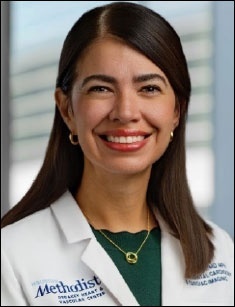
Dr. Duarte received her medical degree from Favaloro University in Buenos Aires and earned her Master of Public Health from the Harvard T.H. Chan School of Public Health. She completed her internal medicine residency at Cleveland Clinic followed by a cardiology fellowship at the University of Florida, where she served as chief fellow. She subsequently pursued advanced fellowship training in adult congenital heart disease, pulmonary hypertension, and cardiovascular imaging at Boston Children’s Hospital, Brigham and Women’s Hospital, and Massachusetts General Hospital. During her fellowship, she was awarded an NIH T32 research grant. She subsequently remained on the faculty at Boston Children’s Hospital and Brigham and Women’s Hospital and served as an Instructor at Harvard Medical School.
Dr. Duarte joined Houston Methodist DeBakey Heart & Vascular Center in September 2019 and currently serves as medical director of the Adult Congenital Heart Disease Program. During her tenure, she has led development of the ACHD imaging, ACHD multiorgan transplantation, and cardio-obstetrics programs. Her clinical and research interests include advanced cardiovascular imaging in adult congenital heart disease, high-risk pregnancy in patients with cardiovascular disease, and genetic aortopathies. Dr. Duarte holds an academic appointment at Weill Cornell Medical College and is passionate about expanding access to ACHD education and advancing the care of adults with congenital heart disease.
Andrea Giulio Quarti, MD, PhD
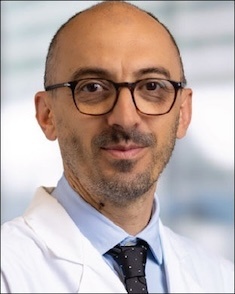
Dr. Quarti earned his medical degree from the Università Statale di Milano in 1998 and trained at San Raffaele Hospital under Prof. Ottavio Alfieri, gaining early exposure to valve repair and minimally invasive and robotic surgery. He completed a fellowship at Ospedali Riuniti di Ancona in 2003 and joined the staff there in 2004, developing expertise in acquired heart disease.
He later completed a fellowship in congenital heart disease at Alder Hey Children’s Hospital in the United Kingdom, which led to his role in establishing a congenital heart surgery program in Ancona in 2008. He became senior staff in congenital surgery, working across all ages and disease complexity. Between 2011 and 2017, he led minimally invasive congenital surgery and served as vice-director of the department.
In 2019, he joined Policlinico Sant’Orsola in Bologna as senior staff in one of Italy’s largest congenital programs, expanding his work to include heart transplantation and ventricular assist devices. He then completed a PhD on Fontan-associated liver disease and has been serving as surgical director of the ACHD program in the Houston Methodist DeBakey Heart & Vascular Center, Houston Methodist, since September 2023. He became assistant professor at Weill Cornell Medical College in June 2025.