
Introduction
A renaissance in the management of pericarditis is occurring due to advances in the evaluation and therapeutics of this heterogeneous condition. Recurrent pericarditis is defined as the recurrence of pericarditis after a symptom-free interval of at least 4 to 6 weeks following a documented initial episode.1 This is distinct from incessant pericarditis, where symptoms persist without remission. Epidemiologically, recurrent pericarditis occurs in approximately 15% to 30% of patients after a first episode of acute pericarditis in North America and Western Europe, with higher rates in certain risk groups (eg, those with multiple recurrences, incomplete course or response to first-line anti-inflammatory therapy, corticosteroid use, or underlying autoimmune disease).1 In addition to established traditional therapies of colchicine, nonsteroidal anti-inflammatories (NSAIDs), and corticosteroids, rapid advances of novel therapies over the last decade have shifted the paradigm in the management of pericarditis.1 The purpose of this review is to provide an updated and comprehensive overview of the pathophysiological mechanisms underlying recurrent pericarditis and to critically examine emerging targeted therapies that are reshaping the treatment landscape.
Clinical Perspectives
The 2025 Clinical Concise Guidance from the American College of Cardiology (ACC) introduced updated diagnostic criteria for pericarditis that emphasize a tiered, evidence-based approach. According to the statement, the diagnosis requires the presence of pleuritic chest pain or an equivalent symptom within a suggestive clinical context as a mandatory feature. In addition, the presence of one or more of the following five supportive findings or criterion must be established: (1) a pericardial friction rub on auscultation; (2) characteristic electrocardiographic changes such as diffuse ST-segment elevation and/or PR-segment depression; (3) elevated inflammatory biomarkers such as C-reactive protein (CRP) or erythrocyte sedimentation rate (ESR); (4) new or worsening pericardial effusion seen on cardiac imaging; or (5) direct imaging evidence of pericardial inflammation, particularly late gadolinium enhancement or edema on cardiac magnetic resonance (CMR). If no supportive findings are present, then a diagnosis of pericarditis is unlikely; with one supportive finding, the diagnosis is possible, and 2 or more findings, the diagnosis is definite.1
Similarly, the 2025 European Society of Cardiology (ESC) guidelines updated the definition by requiring pleuritic chest pain or an equivalent presentation plus at least one objective criterion, mirroring the ACC’s diagnostic elements. Diagnostic likelihood is likewise categorized as unlikely (symptom alone), possible (symptom plus one finding), or definite (symptom plus two or more findings).2
Pericarditis can be divided by duration into acute, recurrent, incessant, and chronic. Acute pericarditis refers to a first episode that resolves within 4 weeks. Recurrent pericarditis requires a documented initial episode, a symptom-free interval of 4 to 6 weeks, and recurrence of pericarditis. Incessant pericarditis consists of persistent or fluctuating symptoms lasting 4 to 6 weeks to less than 3 months without remission, distinguishing it from true recurrence and conferring higher complication risk. Chronic pericarditis refers to symptoms persisting beyond 3 months, often reflecting ongoing inflammation, persistent effusion, or underlying systemic disease.1
The etiologies of recurrent pericarditis are diverse and vary by geographic region and clinical context. In high-resource settings such as North America and Western Europe, most cases are idiopathic or presumed viral. Post-cardiac injury syndromes—including pericarditis following myocardial infarction, cardiac surgery, or catheter-based procedures—are increasingly recognized, accounting for up to 30% of cases after cardiac operations and 10% after ablation for atrial fibrillation.3,4
Globally, tuberculosis remains the leading cause of pericarditis in low-resource countries, responsible for up to 70% of pericardial effusions in endemic regions.3,4 Other infectious etiologies include nontuberculous bacteria (eg, Staphylococcus, Streptococcus), which are less common but associated with higher complication rates.3,4 Noninfectious causes encompass malignancy (lung, breast, hematologic), radiation therapy, chronic kidney disease (uremia), and systemic autoimmune diseases such as systemic lupus erythematosus and rheumatoid arthritis.3 In the context of chronic pericardial effusion, recurrent pericarditis is a major cause, especially in idiopathic, post-viral, and autoimmune cases. In regions with high tuberculosis prevalence, tuberculous pericarditis is a leading etiology of both chronic effusion and recurrence.3,4
Pathophysiological Mechanisms
Recurrent pericarditis is primarily driven by dysregulation of the innate immune system, with a central role for autoinflammatory mechanisms, but adaptive immune processes and classic autoimmune syndromes may also contribute in select cases.3, 4, 5, 6
The innate immune response is the dominant pathophysiological mechanism in most cases of recurrent pericarditis, especially those with an inflammatory phenotype (fever, elevated CRP). Activation of the NOD-like receptor 3 (NLRP3) inflammasome in pericardial cells—triggered by infectious agents, tissue injury, or endogenous danger signals—leads to caspase-1–mediated release of proinflammatory cytokines, particularly interleukin-1β and alpha (IL-1β and IL-1 α). This creates a self-amplifying autoinflammatory cycle, recruiting neutrophils and macrophages and perpetuating pericardial inflammation.3, 4, 5, 6 The efficacy of IL-1 blockade (eg, anakinra, rilonacept) in refractory cases further supports this mechanism.5,7,8
Conventional pericarditis therapies target inflammation through distinct mechanisms. Aspirin and NSAIDs act by inhibiting cyclooxygenase enzymes, thereby reducing the synthesis of prostaglandins and thromboxanes, which are key mediators of pain, fever, and inflammation in the pericardium.1 Colchicine disrupts microtubule polymerization, inhibiting neutrophil chemotaxis, adhesion, and activation, and specifically blocks the assembly of the NLRP3 inflammasome, thereby reducing IL-1β production and downstream inflammatory signaling.1,4 Corticosteroids exert broad anti-inflammatory effects by inhibiting nuclear factor kappa B and multiple cytokine pathways, including IL-1, IL-6, and tumor necrosis factor-α, thereby suppressing both innate and adaptive immune responses.1,4
Autoinflammatory syndromes such as familial Mediterranean fever and other monogenic IL-1–driven diseases can present with recurrent pericarditis, and genetic variants in inflammasome-related genes are more frequent in idiopathic recurrent pericarditis, reinforcing the autoinflammatory paradigm.9,10 Adaptive immune dysregulation (autoimmunity) is more common in patients with underlying rheumatologic disease (eg, systemic lupus erythematosus), where autoantibodies and autoreactive T cells contribute to pericardial injury. In idiopathic cases, autoimmune and autoinflammatory mechanisms may overlap, but the majority of recurrent pericarditis is now considered autoinflammatory in nature.7,10
Risk Factors
Recurrent pericarditis is influenced by a combination of clinical, demographic, genetic and treatment-related factors. Among these, one of the most consistently recognized risk factors is the presence of an underlying autoimmune disorder.3,6,7 A recent review estimates that autoimmune conditions increase the likelihood of recurrence by approximately 50%.3 This association is further reinforced by mechanistic evidence highlighting the involvement of both autoinflammatory and autoimmune pathways in the disease’s pathophysiology.3,7,11
Persistently elevated inflammatory markers—CRP levels remaining high after 1 week of therapy—are a strong predictor of recurrence, reflecting ongoing pericardial inflammation.3 Demographic features such as female sex and younger age have also been linked to a higher risk, as demonstrated in multiple observational studies.12,13 Similarly, a subacute or delayed presentation, rather than a classic acute onset, appears to predispose patients to recurrent episodes.4
The presence of a large pericardial effusion or tamponade physiology at the time of diagnosis further compounds this risk, as noted by the American Society of Echocardiography.14
Therapeutic factors also play a crucial role: inadequate response to NSAIDs within the first week or the early use of corticosteroids—known to suppress symptoms without fully resolving inflammation—have both been associated with higher relapse rates.4,12,14,15 Moreover, the omission of colchicine during the initial treatment course significantly increases the likelihood of recurrence.4
Additional contributing factors include myopericarditis, an immunocompromised state, prior chest trauma, and concurrent anticoagulant use, all of which may influence disease trajectory and recurrence risk.14
From a genetic standpoint, inherited factors appear to contribute meaningfully to the development and recurrence of pericarditis. A prospective cohort data show that roughly one in four patients (22.9%) with recurrent pericarditis carry disease-associated genetic variants detected by whole-exome sequencing.16 In addition, rare pathogenic variants in the NLRP3 gene occur significantly more often in patients with idiopathic recurrent pericarditis than in ancestry-matched controls.9
Biomarkers and Imaging in Monitoring Disease Activity
Inflammatory biomarkers and imaging play a crucial role in monitoring disease activity; recent evidence highlights several nuances in their application for monitoring disease activity in recurrent pericarditis. CRP remains the most robust biomarker for active inflammation, with persistently elevated levels after 1 week of therapy associated with a significantly higher risk of recurrence (hazard ratio ≈ 2.4) and delayed clinical improvement.3,4 High-sensitivity CRP offers additional sensitivity, and levels > 10 mg/L or CRP > 1 mg/dL are independently linked to increased risk of tamponade and recurrence as well as longer time to remission.4 The neutrophil-to-lymphocyte ratio is another emerging marker, with higher ratios correlating with more severe disease and poorer outcomes.4 ESR and leukocyte count are supportive but less specific; their elevation can help confirm active inflammation, especially when CRP is equivocal.17 Notably, no disease-specific biomarker exists for pericarditis, so these markers are used in conjunction with clinical and imaging findings.
CMR is a pivotal tool for assessing disease activity in recurrent pericarditis, especially in cases with diagnostic uncertainty. Recent clinical studies and expert reviews have demonstrated that CMR provides incremental diagnostic and prognostic value in recurrent pericarditis by directly visualizing pericardial inflammation and guiding therapy decisions.4,18 The combination of late gadolinium enhancement (LGE) and T2 short tau inversion recovery (T2-STIR) imaging is particularly effective: LGE detects neovascularization and active inflammation, while T2-STIR identifies pericardial edema, both of which are highly sensitive and specific for active pericarditis.4,18 Quantitative and semiquantitative grading of LGE has been shown to correlate with disease activity and risk of recurrence. Higher LGE is associated with shorter time to subsequent flare and increased recurrence rates, while lower LGE predicts clinical remission.4,19 T2-STIR signal intensity reflects the degree of pericardial edema and typically resolves earlier than LGE, making it useful for monitoring response to therapy. Importantly, persistent LGE may indicate ongoing subclinical inflammation even after symptoms and biomarkers have normalized, supporting a CMR-guided approach to therapy tapering.4,19
CMR can also identify patients at higher risk for complications such as constriction or tamponade and is valuable for staging disease and determining treatment duration. In cases where clinical criteria are equivocal, CMR reliably confirms or excludes active pericardial inflammation, improving diagnostic accuracy and reducing unnecessary immunosuppression.20 Several scoring systems have been proposed to help predict recurrence or assess disease activity in recurrent pericarditis, but they require further validation before widespread global adoption. These include four recently published tools: the Klein/Cleveland Clinic score for assessing inflammatory activity and guiding evaluation of clinical remission, the Athens score for estimating the risk of recurrence after a first episode of acute pericarditis, the Torino score for identifying complicated cases, and the Pericarditis INFLA-score for supporting diagnosis.21
Conventional Therapies and Limitations
The American College of Cardiology recommends that conventional therapy for recurrent pericarditis consists of high-dose aspirin or NSAIDs in combination with colchicine for 6 months as first-line treatment. Aspirin is preferred in patients with concomitant ischemic heart disease.1
Colchicine is a cornerstone due to its efficacy in reducing recurrence rates and should be continued for at least 6 months in recurrent cases.1 It is strongly supported by randomized clinical trial evidence as first-line therapy for recurrent pericarditis, significantly reducing recurrence rates and improving outcomes. The 2013 Investigation on Colchicine for Acute Pericarditis (ICAP) trial established colchicine’s efficacy in acute pericarditis, showing a reduction in incessant or recurrent pericarditis from 37.5% with placebo to 16.7% with colchicine over 3 months.22 For recurrent pericarditis, the Colchicine for Recurrent Pericarditis (CORP) and CORP-2 trials provide the most direct evidence. In CORP, among patients with a first recurrence, colchicine reduced subsequent recurrences from 55% (placebo) to 24%.23 In CORP-2, which enrolled patients with multiple recurrences, the recurrence rate was 21.6% with colchicine versus 42.5% with placebo over 6 months (relative risk, 0.49; number needed to treat, 5).24
Corticosteroids (low to moderate dose, eg, prednisone 0.2–0.5 mg/kg/day) are reserved for patients who are refractory or intolerant to first-line therapy. Steroids should be tapered slowly over months after achieving remission to minimize relapse risk.1 The guidelines caution that early use of corticosteroids in the initial episode increases the risk of subsequent recurrences and steroid dependence.1
Relapse rates with conventional therapy (NSAID/colchicine) are approximately 15% to 30% but are significantly higher (up to 40–50%) in patients who require corticosteroids, especially if steroids are used early or tapered rapidly.1 Steroid dependence—defined as the inability to taper without recurrence—occurs in a substantial subset of patients treated with corticosteroids, which is why the ACC recommends restricting their use to refractory cases.1
For patients failing both first-line and corticosteroid therapies, anti–IL-1 agents (anakinra, rilonacept) are recommended (Figure 1), and azathioprine or intravenous immunoglobulin may be considered in select refractory cases.1 All medications used in the management of recurrent pericarditis are summarized in Table 1.
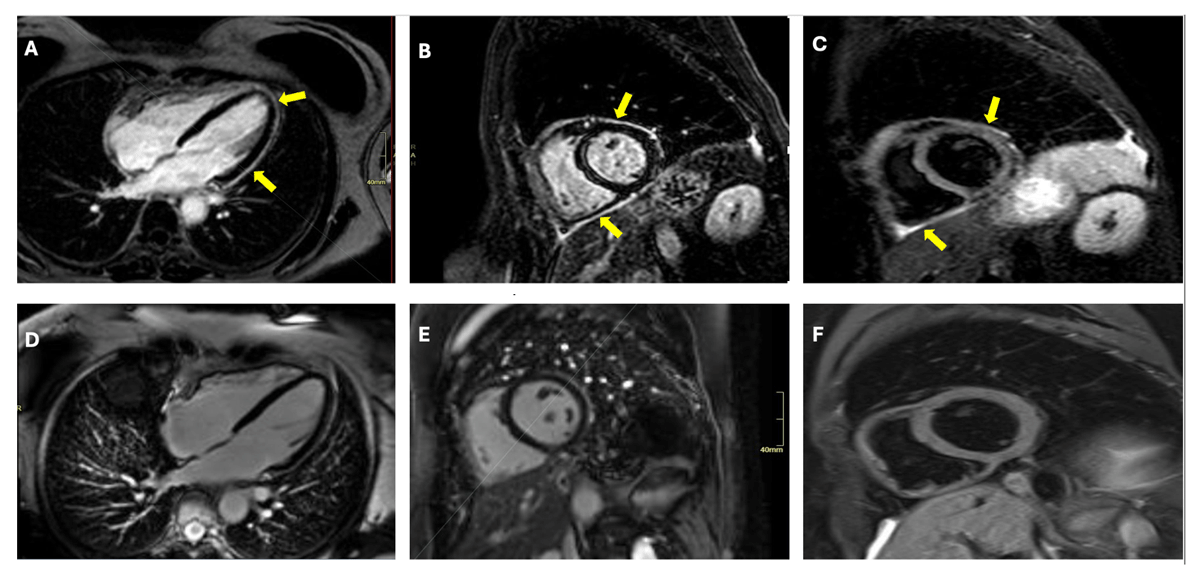
Figure 1
A patient with recurrent pericarditis who failed conventional therapy achieved remission with rilonacept. (A, B) CMR demonstrates positive LGE along with (C) edema evidenced by increased T2-STIR signal, findings consistent with active pericardial inflammation. In the same patient following rilonacept therapy, CMR demonstrated complete resolution of inflammation, with (D, E) a significant decrease in pericardial LGE and (F) no edema, as evidenced by a normal T2-STIR signal. CMR: cardiac magnetic resonance; LGE: late gadolinium enhancement; T2-STIR: T2-short tau inversion recovery
Table 1
Medications used in the treatment of recurrent pericarditis. NSAIDs: nonsteroidal anti-inflammatory drugs; PO: oral; IV: intravenous; SC: subcutaneous; q8h: every 8 hours; QD: once daily; BID: twice daily; CBC: complete blood count; CRP: C-reactive protein; ESR: erythrocyte sedimentation rate; GI: gastrointestinal; PPI: proton pump inhibitor; TB: tuberculosis; URTI: upper respiratory tract infection; PCP: Pneumocystis jirovecii pneumonia; IL-1: interleukin-1; IVIG: intravenous immunoglobulin; HIV: human immunodeficiency virus
| MEDICATION CLASS | DOSE & ROUTE | DURATION | SIDE EFFECTS | MONITORING |
|---|---|---|---|---|
| NSAIDs: Ibuprofen, aspirin, indomethacin | Ibuprofen: 600–800 mg PO q8h Aspirin: 650–1000 mg PO q8h Indomethacin: 50 mg PO q8h | Until symptom/CRP normalization, then taper (typically weeks-months) | GI upset, ulceration, renal dysfunction, hypertension, fluid retention | CBC, renal function, liver enzymes, CRP/ESR, GI protection (PPI) |
| Colchicine | ≥ 70 kg: 0.5–0.6 mg PO BID < 70 kg: 0.5–0.6 mg PO QD (reduce for GI intolerance or drug interactions) | 3 months (first episode) ≥ 6 months (recurrence) | Diarrhea, nausea, vomiting, abdominal pain, alopecia, myopathy, neuropathy | CBC, renal and hepatic function, CRP/ESR, drug interactions |
| Corticosteroids: Prednisone | 0.2–0.5 mg/kg/day PO, slow taper after remission | Until remission, then slow taper (months) | Weight gain, hyperglycemia, osteoporosis, adrenal suppression, infection, hypertension, GI ulcers | CBC, glucose, bone density, CRP/ESR, infection risk, GI protection (PPI), consider PCP prophylaxis |
| Anti–IL-1 agents: Anakinra, rilonacept | Anakinra: 100 mg SC daily Rilonacept: 320 mg SC once, then 160 mg SC weekly | Variable (often ≥ 6–18 months; optimal duration unclear) | Injection site reactions, URTI, neutropenia, elevated liver enzymes, lipid changes | CBC, liver enzymes, lipid profile, CRP/ESR, screen for TB, hepatitis, HIV before initiation |
| Immuno-suppressants: Azathioprine | 1–2 mg/kg/day PO | Months-years (individualized) | Myelosuppression, hepatotoxicity, infection, GI upset | CBC, liver enzymes, CRP/ESR, infection risk |
| IVIG | 2 g/kg IV over 2–5 days (varies) | Variable (case-by-case) | Infusion reactions, headache, renal dysfunction, thrombosis | Renal function, CBC, CRP/ESR |
Paradigms Shift in Therapeutics with Novel Therapies
Building on the established role of anti–IL-1 agents, recent clinical trial evidence has clarified the efficacy and safety of these therapies for recurrent pericarditis (Table 2). Anakinra, a recombinant IL-1 receptor antagonist, demonstrated marked benefit in the Anakinra—Treatment of Recurrent Idiopathic Pericarditis (AIRTRIP) study: among patients with colchicine-resistant corticosteroid-dependent recurrent pericarditis, recurrence occurred in 90% of those randomized to placebo versus only 18% of those continuing anakinra, and all patients were able to withdraw corticosteroids successfully.25 The International Registry of Anakinra for Pericarditis (IRAP) registry further confirmed anakinra’s effectiveness in reducing recurrences, emergency visits, and hospitalizations in a larger, real-world cohort.3,26 Anakinra was the first IL-1 inhibitor studied and used for the treatment of recurrent pericarditis.27 It is typically administered in the outpatient setting, with a recommended dose of 2 mg/kg (up to 100 mg/day) subcutaneously once daily. Because of its rapid onset of action—often within just a few days—anakinra serves as an effective inpatient bridge to rilonacept in patients with severe or refractory recurrent pericarditis, facilitating rapid disease control and a smooth transition to long-term outpatient therapy with rilonacept.27,28
Table 2
Summary of randomized clinical trials (RCTs) evaluating therapies for recurrent pericarditis. NSAID: nonsteroidal anti-inflammatory drug; RCT: randomized clinical trial
| TRIAL NAME | INTERVENTION(S) | POPULATION/DESIGN | KEY FINDINGS/OUTCOMES |
|---|---|---|---|
| CORE | Colchicine vs placebo (with NSAID) | First recurrence, RCT, n = 84 | Colchicine reduced recurrence at 18 months (24% vs 51%) |
| CORP | Colchicine vs placebo (with NSAID) | Recurrent pericarditis, RCT, n = 120 | Colchicine reduced recurrence at 18 months (24% vs 55%) |
| CORP-2 | Colchicine vs placebo (with NSAID) | Multiple recurrences, RCT, n = 240 | Colchicine reduced recurrence at 6 months (21.6% vs 42.5%) |
| AIRTRIP | Anakinra vs placebo (withdrawal) | Colchicine-resistant, steroid-dependent, ≥ 3 recurrences, RCT, n = 21 | Recurrence: 18% (anakinra) vs 90% (placebo) after withdrawal; rapid symptom/CRP control |
| RHAPSODY | Rilonacept vs placebo (withdrawal) | ≥ 2 recurrences, colchicine-resistant/steroid-dependent, RCT, n = 61 | Recurrence: 7% (rilonacept) vs 74% (placebo); rapid pain/CRP resolution; steroid-sparing |
| Goflikicept | Goflikicept vs withdrawal | Recurrent pericarditis, RCT, n = 20 | Recurrence: 0% (Goflikicept) vs 90% (placebo) |
Rilonacept, a soluble decoy receptor for IL-1α and IL-1β, was evaluated in the RHAPSODY (Study to Assess the Efficacy and Safety of Rilonacept Treatment in Participants with Recurrent Pericarditis) trial—a pivotal randomized withdrawal study; the pilot study phase II was published in the Heart journal regarding rilonacept for recurrent pericarditis. In this study, patients received a 320 mg subcutaneous loading dose of rilonacept followed by 160 mg weekly for a 6-week base treatment period, with an optional 18-week extension. The primary outcomes were reduction in pericarditis pain (numeric rating scale) and inflammation (CRP) as well as successful corticosteroid tapering. Among 25 enrolled patients, pain and CRP decreased rapidly after the first dose: median CRP normalized in 9 days, and pain scores dropped from 4.5 to 0.7. Pericarditis manifestations resolved, and 85% of corticosteroid-dependent patients were able to discontinue steroids without recurrence.29 In addition, 74% of patients relapsed after rilonacept withdrawal compared to just 6.7% who continued therapy, with rapid symptom control and successful corticosteroid discontinuation in most cases.29 These results led to US Food and Drug Administration (FDA) approval of rilonacept for recurrent pericarditis.
Building on the guideline recommendations for extended rilonacept therapy, clinical trial and real-world data provide further clarity on optimal duration and discontinuation strategies. The RHAPSODY phase 3 trial demonstrated that patients who continued rilonacept had a dramatically lower recurrence rate (7%) compared to those who stopped therapy (74%), with most recurrences occurring within 8 to 9 weeks of withdrawal.30 Retrospective cohort studies suggest that therapy durations of 12 to 24 months are common in practice, and abrupt cessation is associated with a high risk of relapse (up to 82%), whereas a gradual taper—extending dosing intervals from weekly to bimonthly, then monthly—reduces recurrence risk to about 37%. Additionally, continuing colchicine after rilonacept discontinuation may further delay time to flare.31 Over the past few years, there is strong evidence of a marked decrease in corticosteroid use and a substantial increase in rilonacept (and other IL-1 blockers) use for recurrent pericarditis, driven by randomized trial data and updated guideline recommendations.1,32
Goflikicept is an investigational IL-1 inhibitor that has demonstrated efficacy in reducing recurrences of idiopathic recurrent pericarditis in a phase II/III randomized withdrawal trial. In this study, patients with idiopathic recurrent pericarditis who responded to goflikicept during an open-label run-in period were randomized to either continue goflikicept or switch to placebo. Over 24 weeks, none of the patients who continued goflikicept experienced a recurrence, compared to 90% recurrence in the placebo group (P < .001). Goflikicept also led to reductions in chest pain, pericardial effusion, and CRP levels, supporting its anti-inflammatory effect.33
Canakinumab, a monoclonal antibody targeting IL-1β, is FDA-approved for several autoinflammatory syndromes but not for pericarditis; data for its use in recurrent pericarditis are limited to case reports and small series, and robust clinical trial evidence is lacking.4,26,34
Other immunomodulators such as methotrexate, azathioprine, hydroxychloroquine, and IVIG are reserved for refractory cases. These agents have shown benefit in small studies and case series, particularly for patients who fail or cannot tolerate anti–IL-1 therapy, but their evidence base is less robust.7,8 Anti–interleukin-6 therapies are under investigation for recurrent pericarditis, but clinical trial data are still emerging and they are not yet recommended for routine use.4,8
Pericardiectomy
Pericardiectomy is primarily reserved for chronic or irreversible constrictive pericarditis, but it can also be considered for refractory recurrent pericarditis when optimal medical therapy fails and symptoms are debilitating.35,36 Evidence from retrospective studies and specialty center experience demonstrates that pericardiectomy can significantly reduce relapse rates and medication dependence in this population, with low perioperative mortality when performed at high-volume centers.4,36 Radical pericardiectomy is preferred over partial approaches for both constrictive and refractory recurrent pericarditis and should be performed at high-volume centers with expertise due to the technical complexity and patient risk.1,4,35 Outcomes are generally better with more extensive resection, but incomplete symptom relief can occur, especially if epicardial inflammation persists or the resection is incomplete.4,12,36
The ACC recommends preoperative treatment with anti-inflammatory medications to reduce pericardial inflammation and avoid pericardiectomy, or prior to pericardiectomy in patients with evidence of active pericardial inflammation, particularly in cases of transient constrictive pericarditis or when cardiac magnetic resonance imaging demonstrates significant pericardial late gadolinium enhancement and/or pericardial edema on T2-STIR sequences.1 For patients with underlying pericardial inflammation as in transient constriction, anti-inflammatory therapy should be initiated before considering pericardiectomy.1 The specific anti-inflammatory regimen may include corticosteroids and/or anti–IL-1 agents (such as anakinra or rilonacept), which may be continued until surgery to dampen inflammation as much as possible.1 These medications may also be continued for 3 to 6 months postoperatively as indicated for ongoing symptoms of pericardial inflammation or active inflammation noted on the pericardial pathology.1
Patient Stratification and Individualized Therapy
Several clinical, biochemical, and imaging factors predict relapse and treatment response in recurrent pericarditis. Persistent CRP elevation after 1 week of therapy, underlying autoimmune disease,3 and high-risk clinical features such as fever, subacute presentation, large effusion or tamponade, myopericarditis, immunosuppression, prior chest trauma, or incomplete anti-inflammatory therapy are all associated with increased risk of recurrence.14 Early or high-dose corticosteroid use also predisposes to relapse,12,14 and greater LGE on CMR correlates with future flares.3
In terms of treatment response, patients with an inflammatory phenotype—characterized by fever, elevated CRP, and imaging evidence of pericardial inflammation—show the best outcomes with colchicine and IL-1 blockade (anakinra, rilonacept, goflikicept).1,8,37,38 Conversely, those without systemic inflammation tend to respond better to corticosteroids or other immunosuppressive agents such as azathioprine or IVIG.8,39
Recent evidence and expert reviews further clarify that the duration and tapering of therapy in recurrent pericarditis should be highly individualized, guided by both clinical remission and normalization of inflammatory biomarkers, particularly CRP. For a first recurrence, colchicine is typically continued for 6 months, while NSAIDs or aspirin are tapered over several weeks after symptom resolution and CRP normalization. In cases of multiple recurrences, therapy may extend for several years, with the risk of relapse remaining highest within the first 3 to 6 months after a flare and rarely occurring beyond 12 months if remission is maintained.3,7,12
For corticosteroids, tapering should be slow—often over months—after achieving remission. Rapid tapering or high initial doses are associated with higher recurrence and adverse event rates; thus, a gradual reduction (eg, decreasing by 5 mg per week) is advised, especially when transitioning to or combining with IL-1 blockade.3,8,17
For patients requiring IL-1 inhibitors (eg, anakinra, rilonacept), the optimal duration is not well defined, but recurrences are common after discontinuation, even after 18 months of therapy. This suggests that prolonged or even indefinite therapy may be necessary in refractory cases, with careful monitoring for relapse upon withdrawal or tapering.3,7,8
Emerging Therapies and Ongoing Clinical Trials
Emerging investigational therapies for recurrent pericarditis include CardiolRx™, VTX2735, and KPL-387, each targeting distinct components of the inflammatory cascade (Table 3).
Table 3
Overview of forthcoming clinical trials investigating new therapies for recurrent pericarditis.
| TRIAL/SPONSOR NAME | INTERVENTION(S) | POPULATION/DESIGN | KEY FINDINGS/OUTCOMES |
|---|---|---|---|
| MAVERIC/Cardiol Therapeutics | CardiolRxTM vs placebo | Recurrent pericarditis, phase 3, ongoing | Primary outcome: recurrence; results pending |
| VENTYX | VTX2735 vs placebo | Recurrent pericarditis, phase 2, ongoing | Primary outcome: recurrence rate; results pending |
| KINIKSA | KPL-387 vs placebo | Recurrent pericarditis, phase 2, ongoing | Primary outcome: recurrence rate; results pending |
CardiolRx™, an oral cannabidiol formulation with anti-inflammatory and anti-fibrotic properties, is being evaluated in the MAvERIC Phase III trial for reducing pericarditis recurrence following withdrawal of IL-1 blockade. The study enrolls patients with recurrent pericarditis who have been maintained on IL-1 inhibitor therapy for at least 12 months.40
VTX2735, an oral NLRP3 inflammasome inhibitor developed by Ventyx Biosciences, is under investigation in an early phase II pilot study assessing its safety and biologic activity in recurrent pericarditis. It has a potential therapeutic benefit in a range of systemic inflammatory conditions including cardiovascular, metabolic, rheumatic, dermatologic, and rare genetic diseases.41
KPL-387, a novel monoclonal antibody from Kiniksa Pharmaceuticals, is undergoing phase 2/3 evaluation for controlling acute flares and preventing subsequent recurrences. This fully human IgG2 monoclonal antibody targets IL-1R1, blocking signaling from both IL-1α and IL-1β, and is administered as a once-monthly subcutaneous injection. Although results are pending, these agents represent the next wave of targeted immunomodulatory therapies beyond IL-1 inhibition in recurrent pericarditis.42
Conclusion
Recurrent pericarditis is now understood as a predominantly autoinflammatory disorder driven by NLRP3 inflammasome activation and IL-1–mediated cytokine release, marking a paradigm shift from symptomatic management toward mechanism-based therapy. The recognition of this IL-1–driven inflammatory axis has catalyzed the development of targeted biologic agents such as anakinra and rilonacept, which have demonstrated dramatic efficacy in reducing recurrence rates, facilitating corticosteroid withdrawal, and restoring quality of life in patients with refractory disease. These advances underscore the promise of precision immunomodulation in transforming the natural history of recurrent pericarditis. Moving forward, individualized treatment strategies that integrate clinical phenotype, imaging evidence of inflammation, and biomarker trends—particularly CRP and CMR findings—will be essential for optimizing therapy duration, tapering, and relapse prevention. The future of pericarditis care lies in personalized, biomarker-guided management that aligns mechanistic understanding with therapeutic precision, ultimately minimizing recurrence, steroid exposure, and chronic morbidity.
Key Points
Recurrent pericarditis is predominantly an autoinflammatory disease driven by IL-1 signaling, mediated mainly by NLRP3 inflammasome.
Conventional therapy is effective but limited by high recurrence and steroid dependence.
IL-1 inhibitors have transformed management and outcomes in recurrent pericarditis.
Biomarker- and CMR-guided, individualized therapy is central to modern care.
Competing Interests
Allan L. Klein has received research grants from Kiniksa Pharmaceuticals, Ventyx, and Cardiol Therapeutics and serves on the Advisory Boards of Kiniksa Pharmaceuticals, Cardiol Therapeutics, Ventyx, and Pfizer. The other authors have no competing interests to declare.