
A 78-year-old man with a known history of hyperlipidemia and nonischemic cardiomyopathy presented with shortness of breath, weakness, and lower limb edema. Vital signs were stable on the initial exam. Physical exam showed signs of heart failure and bilateral lower limb edema, which was worse on the left side. Echocardiogram showed severely decreased biventricular function with a large clot straddling the patent foramen ovale (PFO) extending from the right atrium into the left atrium and ventricle (Figure 1; Videos 1, 2). Computed tomography of the chest showed evidence of bilateral pulmonary embolism with no evidence of right ventricular strain. Computed tomography and magnetic resonance of the brain were negative for any acute findings. Heparin was initiated; however, he became unresponsive shortly after and had a cardiac arrest with pulseless electric activity.
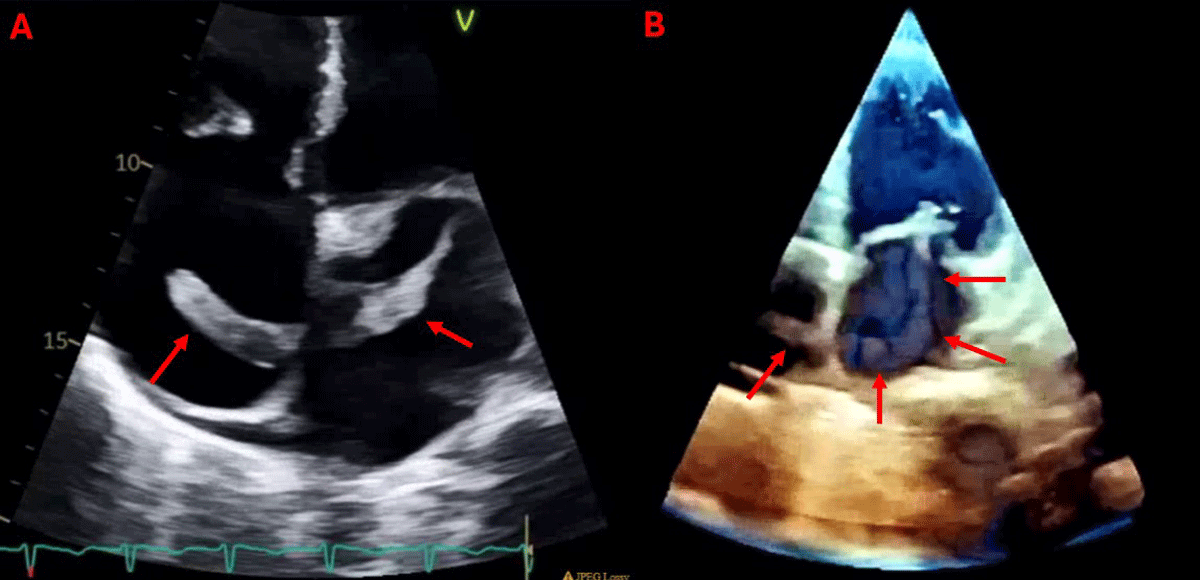
Figure 1
(A) Echocardiogram shows a large thrombus extending from the right atrium through the interatrial septum into the left atrium. (B) Three-dimensional echocardiogram show a large thrombus extending from the right atrium through the interatrial septum into the left atrium and left ventricle
Video 1
Echocardiogram in apical four-chamber view showing a thrombus in the left atrium extending into the left ventricle; also view at https://youtu.be/uXIVuoVSpmM.
Video 2
Echocardiogram showing a large thrombus extending from the right atrium through the interatrial septum into the left atrium; see also at https://youtu.be/MpNb-T_Yt94.
PFO is a frequent finding that occurs in up to one-third of the population. It becomes particularly significant in patients with deep vein thrombosis and pulmonary embolism because sometimes, although rarely, systemic embolization can occur through the PFO. Patients with prior PFO-related stroke should undergo PFO closure.1 The challenge, however, lies in managing patients with the thrombus straddled at the PFO since there are no clear guideline recommendations.2
A systematic review of 174 patients with straddling thrombi reported a 30-day mortality rate of 18.4%. The majority of patients presented with pulmonary embolism (91.4%) followed by systemic embolism (55.2%) and cerebrovascular accidents (33.3%).3 Regarding management, surgical thrombectomy and closure of the PFO is the preferred option for hemodynamically stable patients because it reduces the risk of systemic embolism. Anticoagulation is mainly used for patients with significant comorbidities, at high surgical risk, or those who decline invasive treatment. Due to the increased risks of systemic embolization, thrombolysis should be reserved for patients with hemodynamic instability who are not candidates for surgical intervention.3
Competing Interests
The authors have no competing interests to declare.