
Obesity remains a major public health concern in the United States. National Health and Nutrition Examination Survey (NHANES) data from 2021 to 2023 reports that 40.3% of adults are affected by obesity.1 Projections suggest that by 2030, nearly half of all adults will meet criteria for obesity.2
Obesity is a significant risk factor for other chronic diseases such as cardiovascular disease, diabetes, osteoarthritis, and several malignancies including endometrial, colorectal, and breast cancers. Obesity can contribute to these health complications through two distinct mechanisms: adiposopathy and fat mass disease (FMD). Adiposopathy refers to metabolic dysfunction due to pathogenic adipose tissue leading to insulin resistance and dyslipidemia, whereas FMD refers to the biomechanical strain of excess fat, which contributes to conditions such as obstructive sleep apnea and osteoarthritis. Individuals with obesity may be affected by both conditions together, either condition, or neither. Interestingly, both adiposopathy and FMD contribute to hypertension through adverse endocrine/immune responses and compression of the kidney, respectively.3
Developments in obesity research, combined with shifts in the perception of obesity by the medical community and the general public, have led to obesity being more readily recognized as a complex chronic condition. However, many patients with obesity still face significant stigma in their interactions with the healthcare system, often leading to delays in seeking necessary medical care.4
The following “Points to Remember” can help physicians develop a patient-centered approach to initiating the discussion of weight management. A conversation beyond lifestyle changes that incorporates the social, psychological, and environmental influences contributing to obesity fosters an open dialogue and works to reduce weight stigma and biases surrounding obesity.
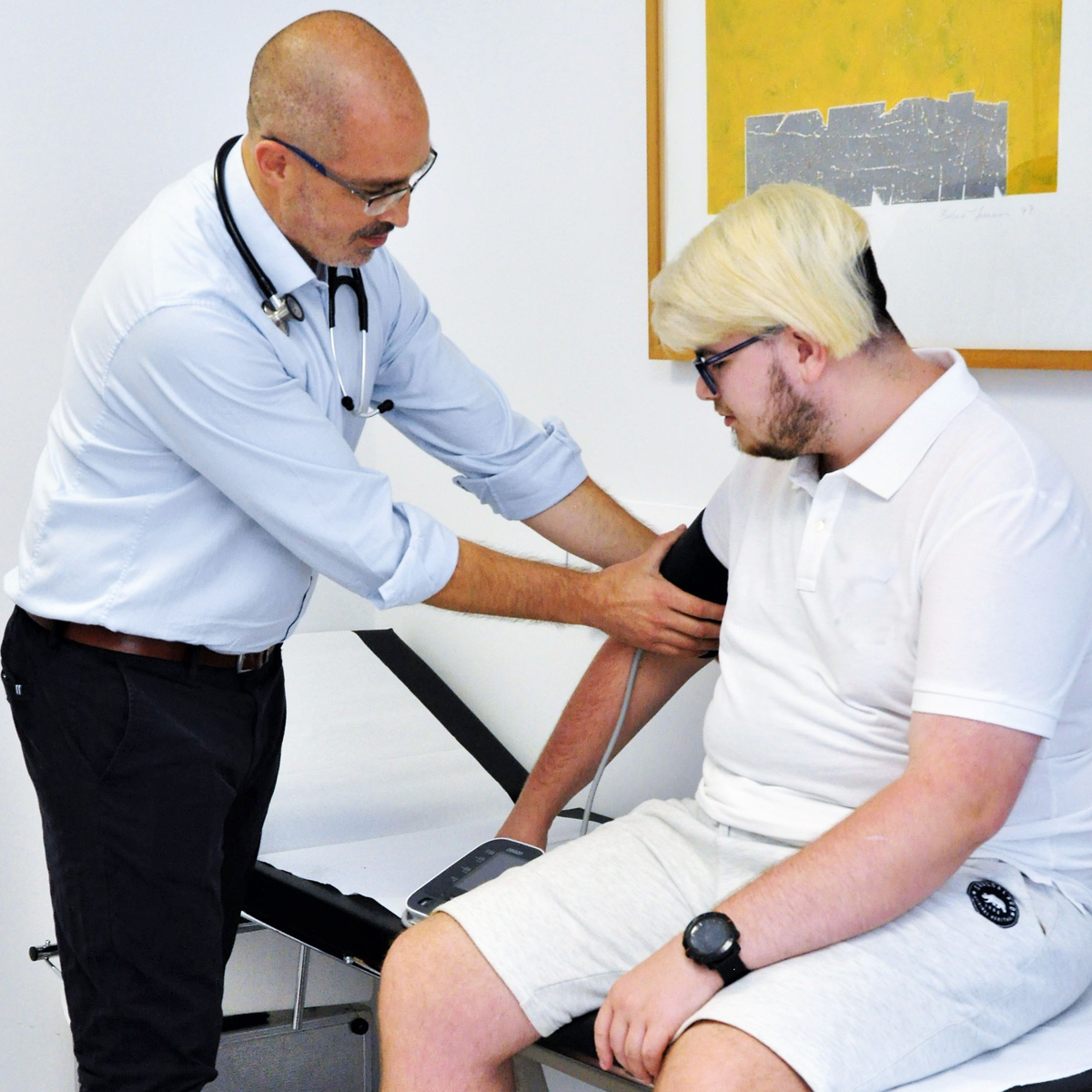
Medical practitioner taking blood pressure of patient with obesity. Photo copyright by Matt Love, Maura Murphy at www.icpobesity.org.
Points to Remember
Start with a welcoming office environment. Chairs, exam tables, gowns, and medical equipment suitable for patients with larger builds and higher weights convey that patient concerns will be addressed without shame or bias.
Use people-first language. Using phrases such as “patient with obesity” or “person affected by obesity” as opposed to “obese patient” decreases weight stigma and reinforces that the patient’s health is the primary focus.
Ask permission to discuss weight management. Asking whether the patient would be amenable to discussing their weight gives them the option to explore the topic rather than receive unsolicited, unanticipated advice.
Assess readiness for change. Using motivational interviewing techniques to understand a patient’s personal goals and address potential challenges creates an open discussion leading to actionable plans.
Don’t overemphasize body mass index (BMI) or weight. The current understanding of how obesity affects the body through adiposopathy and fat mass disease confirms that patients with obesity require individualized assessments of how obesity affects their health. This avoids “false negatives,” or a failure to diagnose problems like diabetes when a patient is not overweight, as well as “false positives” such as categorizing a patient as unhealthy solely due to a higher weight. Physicians should promote a holistic approach to a healthy lifestyle that emphasizes cardiovascular fitness and good nutrition rather than simply focusing on BMI or weight.
Avoid stigmatizing terms and phrases. The Obesity Medicine Association encourages terms including “excess weight,” “unhealthy weight,” “overweight,” and “affected by obesity.” Terms such as “morbidly obese,” “obese,” “fat,” “heaviness,” and “large size” are discouraged.
Use shared decision making to determine treatment plans. Partnering with patients to navigate management approaches and develop realistic and effective goals can improve outcomes in many chronic diseases, including obesity.
Continue the discussion. As with any chronic disease, ongoing support and follow-up are vital for long-term success as patients work through their management plans and stay connected to their goals.
Competing Interests
The authors have no competing interests to declare.