
Introduction
Every two in five adults in the United States (US) has obesity.1 It exerts a significant toll on human health and productivity and has been associated with nearly $175 million in medical expenditures annually.2 The obesity epidemic constitutes a growing public health concern and is a leading risk factor for the development and progression of atherosclerotic cardiovascular disease (ASCVD)—the leading cause of death globally.3 The interplay between obesity and ASCVD is multifaceted, involving complex social, biologic, and environmental pathways as well as underlying metabolic, inflammatory, and hemodynamic mechanisms that mediate the obesity-ASCVD association.4 Obesity is an established risk factor for type-2 diabetes (T2DM), hypertension, dyslipidemia, and comorbidities (such as cancer) that are strong predictors of ASCVD risk.5,6,7,8 Additionally, unfavorable social determinants of health (SDoH) and environmental factors such as economic instability, food insecurity, lack of health insurance, and neighborhood disadvantage are key upstream drivers of obesity. These factors not only increase obesity risk but also contribute to poorer cardiovascular outcomes in individuals with obesity.9,10
The burden of obesity becomes even more concerning when considering the upward trajectory of obesity prevalence, which increased by 11.4% from 1999 to 2000 and from 2017 to 2020.11,12 This epidemic is paralleled by an increase in ASCVD incidence, making obesity a major driver of cardiovascular morbidity and mortality. Given that obesity prevalence is estimated to increase up to 51% by 2030, these trends are particularly concerning, especially as obesity-related cardiovascular conditions are increasingly being seen in younger populations, thereby reversing decades of progress in reducing cardiovascular mortality.13 Understanding the impact of obesity on ASCVD is essential to inform effective prevention and treatment strategies. Therefore, this review focuses on the link between obesity and ASCVD, exploring the underlying mechanisms associated SDoH, and strategies to optimize outcomes among patients with obesity at risk of ASCVD.
Obesity and its association with traditional risk factors of atherosclerotic cardiovascular disease
In addition to promoting an adiposopathic, atherogenic lipid profile, obesity explains up to 75% of variation in the risk of primary hypertension (HTN) through pathways such as stimulation of renin-angiotensin-aldosterone system, modification of adipose-released cytokines, insulin resistance, and structural and functional renal changes.14,15,16,17 Additionally, obesity contributes to T2DM due to multiorgan insulin resistance and a decline in B cell insulin secretory function.18 In association with the traditional risk factors of dyslipidemia, HTN, and T2DM, obesity is known to accelerate atherosclerotic changes, thereby contributing to cardiovascular disease (CVD).5,6,7,19 A study evaluating 1.8 million participants with 57,161 coronary heart disease (CHD) events found that half of the excess risk of CHD due to high body mass index (BMI) is mediated by blood pressure, glucose, and cholesterol.20 Apart from these traditional risk factors, an analysis of 404,322 white UK Biobank participants with obesity identified estimated glomerular filtration rate as an augmented ASCVD risk factor, with a mediation proportion of 44.6%.21 In light of these observations, apart from standard interventions to reduce body weight, high blood pressure, and cholesterol and glucose levels, monitoring kidney function in the obese population is equally important.
While there is considerable evidence of the impact of obesity on CVD via traditional risk factors, greater evidence is needed to delineate the independent effects of BMI on CVD and associated outcomes. Data from the Framingham Heart Study suggest that a significant part of the association between body weight and CVD risk is mediated through hypertension, cholesterol, diabetes, and other traditional risk factors.22 Contrasting findings show an independent association between BMI and CVD after accounting for traditional risk factors.23,24 The Pathobiological Determinants of Atherosclerosis in Youth (PDAY) study demonstrated a direct association of central adiposity with the development of ASCVD.25 Furthermore, an analysis of 226,955 Korean young adults aged 20 through 39 demonstrated a greater direct, rather than indirect, effect of BMI on ASCVD.26 Given that obesity often co-occurs with traditional risk factors, additional work is needed to delineate the potential mediating roles of co-occurring risk factors in driving the impact of obesity on ASCVD on a population level.
Pathophysiological mechanisms linking obesity to atherosclerotic cardiovascular disease
There are well-recognized pathways through which obesity plays its role in the initiation and progression of ASCVD. Adipose tissue varies in its type, distribution, and sequelae. Herein we discuss the impact of liver fat, visceral, and epicardial adipose tissue (EAT) deposition on ASCVD (Figure 1).
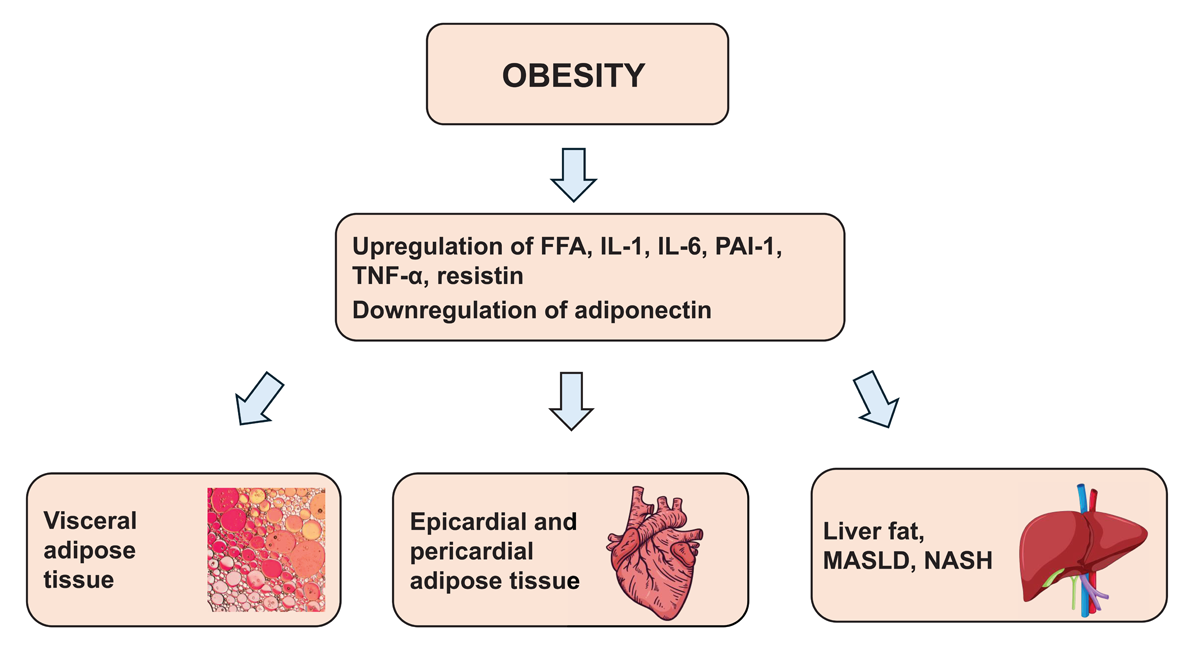
Figure 1
Pathophysiological mechanisms contributing to atherosclerotic cardiovascular disease. FFA: free fatty acid; IL-1: interleukin-1; IL-6: interleukin-6; PAI-1: plasminogen activator inhibitor-1; TNF-α: tumor necrosis factor alpha; MASLD: metabolic dysfunction-associated steatotic liver disease; NASH: nonalcoholic steatohepatitis
Impact of Visceral Obesity
Adipokines play a key role in atherosclerosis of the vessel wall by modulating endothelial cells, macrophages, and arterial smooth muscle cells.27 Excess of visceral adipose tissue causes dysregulation of adipokines, leading to increased production of free fatty acid (FFA), interleukin-1, interleukin-6, nitric oxide, plasminogen activator inhibitor-1, tumor necrosis factor, and resistin. This proinflammatory state, in addition to atherogenic dyslipidemia, and oxidative stress, collectively contributes to a milieu of atherosclerotic plaque, endothelial dysfunction, and a prothrombotic state.4 Obesity further contributes to increased ASCVD risk due to a decrease in insulin-mediated vasodilation, an increase in insulin-mediated renal sodium reabsorption, insulin-related sympathetic nervous system stimulation, and increased vasoconstriction due to increased levels of FFAs.28,29
Impact of Liver Fat
Visceral obesity is frequently associated with steatohepatitis and mediates release of pro-inflammatory molecules and high-fat content, leading to insulin resistance and consequent metabolic dysfunction-associated steatotic liver disease (MASLD).30,31 MASLD itself contributes to atherosclerosis through endothelial dysfunction, systemic inflammation, and ectopic fat deposition in other organs, particularly the epicardial fat pad, which results in exacerbated atherosclerosis.32 In addition to findings from the Framingham Heart Study that demonstrated the association of fatty liver with cardiovascular risk despite adjustment for other fat deposits, MASLD has also been found to be a predictor of adverse cardiovascular events in other studies, independent of age, gender, BMI, smoking, alcohol consumption, lipid levels, or elevated blood pressure.33,34 Notably, the development of MASLD over a median follow-up of 12.3 years was associated with a 28% increased risk of CVD, whereas regression of MASLD was associated with a 16% lower risk of CVD.35 Furthermore, ASCVD has also been established as the leading cause of death in patients with MASLD.32
Impact of Epicardial and Pericardial Adipose Tissue
Evidence suggests that EAT plays a diverse role in cardiac biology, influencing myocardial redox state and intracellular Ca2+ cycling, which are important in maintaining cardiomyocyte function.36 In obesity, EAT-derived adipokines can negatively impact Ca²+ handling and contribute to contractile dysfunction, thereby promoting the progression of ASCVD.36 A meta-analysis has highlighted the significance of EAT thickness and volume in predicting major adverse cardiovascular events. Increased EAT thickness and volume were associated with higher risks of cardiac death, myocardial infarction (MI), coronary revascularization, and atrial fibrillation.37 Given its clinical relevance, accurate assessment of EAT thickness is essential and can be achieved through imaging modalities such as transthoracic echocardiography, which offers a noninvasive and widely accessible option, while advanced techniques such as cardiac computed tomography and cardiac magnetic resonance imaging provide more precise volumetric measurements.38
Role of Leptin
Leptin, a hormone predominantly produced by adipose tissue, plays a key role in regulating energy balance, appetite, and metabolism. In individuals with obesity, leptin levels are often elevated due to increased fat mass; however, a diminished response to its effects is noted in this cohort, a condition known as leptin resistance.39 Leptin resistance not only contributes to persistent weight gain but also exacerbates the risk of CVD by promoting inflammation, oxidative stress, and endothelial dysfunction.39 Increased leptin levels in obesity are strongly associated with elevated inflammatory markers, such as C-reactive protein, which further aggravate vascular and myocardial damage.40 Although the exact mechanisms underlying leptin signaling dysfunction remain incompletely understood, the interplay between hyperleptinemia, inflammation, and oxidative stress in obesity underscores leptin’s complex role in the pathophysiology of ASCVD, highlighting the need for further research into potential therapeutic strategies targeting leptin pathways.41
Impact of obesity on ASCVD outcomes
An analysis of 1,547 participants from the National Health and Nutrition Examination Survey (NHANES) between 2011 and 2020 found that higher visceral adiposity index or lipid accumulation product scores were associated with elevated 10-year ASCVD risk.42 It has been previously demonstrated that obesity is associated with greater lifetime burden of CVD.43
A study of a predominantly African American population did not note an increased ASCVD risk when comparing patients with obesity to patients with overweight. However, both populations demonstrated a higher likelihood of an elevated ASCVD risk score.44 Another study comparing Asian-Indians with and without abdominal obesity demonstrated a twofold higher risk of incident ASCVD in patients with abdominal obesity, highlighting potential variations in the obesity/ASCVD relationship by race/ethnicity.45
In addition to increasing the risk of developing atherosclerosis, obesity has been linked with increased risk of acute MI as well as congestive heart failure and arrhythmias, which can result in worse outcomes among patients with concomitant ASCVD.46,47 Obesity-induced worsening of hypertension can also predispose patients to MI, stroke, congestive heart failure, and worsening kidney function.48 As previously discussed, inflammatory cytokines released by adipocytes may further contribute to the pathogenesis of ASCVD and downstream thrombotic events such as MI. This once again highlights the importance of focusing more on visceral adiposity. One study of 6,920 patients with established ASCVD found that a high waist-circumference-to-BMI ratio was associated with higher risk of cardiovascular death, nonfatal MI and stroke, and cardiac arrest.49
Greater attention is needed to assess ASCVD risk associated with obesity among younger adults, who experience a longer cumulative burden of increased risk over time. Indeed, an analysis of the Multi-Ethnic Study of Atherosclerosis found that higher BMI was only associated with increased risk of incident ASCVD among adults who had elevated BMI at age 20, but no significant association was found among adults with elevated BMI at age 40.50
Importantly, despite the established evidence of obesity’s role in propagating ASCVD, multiple studies have shown that obese patients with established CAD have better or comparable mortality outcomes compared to normal-weight patients.51,52 This phenomenon, referred to as the “obesity paradox,” implies to the counterintuitive observation that, in certain populations, individuals with overweight or mild obesity may have better cardiovascular outcomes and lower mortality rates compared to those with normal or lower body weight. The paradox is well documented across a variety of patient populations—hospitalized patients, patients post-revascularization, post-cardiopulmonary bypass, and those undergoing stress testing.53,54,55,56 Certain studies with STEMI patients have shown that a moderately obese population (BMI between 30-35 kg/m2) has the lowest mortality, whereas others—with both STEMI and NSTEMI patients—have shown that patients with morbid obesity (BMI > 40 kg/m2) have the lowest mortality.53,57 Conversely, the STABILITY study, conducted in 2022 on stable CHD patients, demonstrated that all-cause and cardiovascular mortality were lowest at a BMI of 25 to 35 kg/m2, while BMI of < 20 kg/m2 and very high BMI of ≥ 35 kg/m2 were strong risk markers for poor prognosis.58 This suggests being underweight and severely obese are strong indicators for poor prognosis in CHD patients, further complicating our understanding of the obesity/mortality relationship.
Social and environmental determinants of health: key upstream drivers of obesity and cardiovascular disease risk
Social determinants of health—such as socioeconomic status, social context, neighborhood and built environment, and access to health care, nutritious food, and education—are key factors in understanding racial and ethnic disparities in the development and prevalence of obesity. These SDoH factors not only drive higher rates of obesity but also contribute to mental and psychological health challenges such as chronic stress, anxiety, and depression, which can exacerbate obesity risk (Figure 2). Together, the physical and psychological impacts of SDoH elevate the risk of chronic health conditions, such as CVD, that disproportionately affect socially vulnerable individuals and communities, creating a complex interplay that exacerbates health disparities.
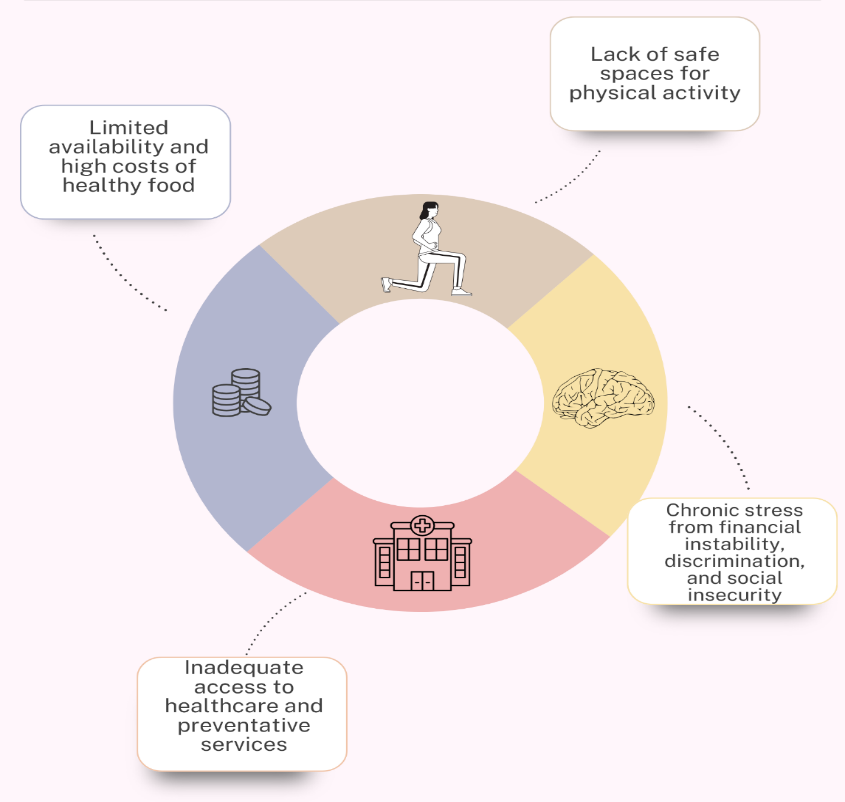
Figure 2
Social determinants of health implicated in increasing the risk of obesity and associated atherosclerotic cardiovascular disease.
SDoH as Drivers of Racial and Ethnic Disparities in Obesity and Cardiovascular Disease
Prior work has identified various interconnected mechanisms through which SDoH increase the risk of obesity in racial and ethnic minorities by influencing lifestyle, behavior, and biological responses. Low-income neighborhoods, where racial and ethnic minorities are disproportionately represented, often lack access to affordable, nutritious food and a safe environment. These “food deserts,” characterized by limited availability and higher costs of healthy food, often force residents to rely on calorie-dense, nutrient-poor options that contribute to weight gain over time.59 Additionally, these communities often lack safe spaces for physical activity, discouraging exercise and reinforcing sedentary lifestyles.60
A study analyzing 281,135 obesity-related cardiovascular deaths in the United States revealed that Black individuals had the highest age-adjusted mortality rates (AAMRs).61 Among Black individuals, women exhibited higher AAMRs than men, a pattern that contrasted with other racial groups where men had higher rates.61 Furthermore, Black individuals living in urban areas experienced higher AAMRs than those in rural areas, which was contrary to what was observed in other races. Notably, the most significant increase in AAMRs between 1999 and 2020 was observed among American Indian and Alaska Native populations.61
Chronic stress—stemming from financial instability, discrimination, and social insecurity, which are common stressors among minority populations—further exacerbates obesity risk by triggering biological responses, such as increased cortisol production, leading to increased fat storage and dysregulation of appetite.62,63 Inadequate access to health care and preventative services means that early signs of obesity may go unaddressed, allowing weight gain to progress unchecked. Together, these mechanisms, reinforced by SDoH, create a cyclic relationship in which social and environmental factors perpetuate obesity risk, particularly in historically underserved populations.
SDoH and Psychological Stress in Obesity
Mental and psychological health are critical mediators between SDoH and obesity because they influence both behavioral and physiological pathways linked to weight gain. Those faced with adverse SDoH often experience higher rates of chronic stress, anxiety, and/or depression, which can disrupt healthy coping mechanisms and lead to maladaptive behaviors such as emotional eating or reduced physical activity.64 As previously mentioned, the psychological stress increases the production of cortisol and other hormones that promote fat storage, particularly in the abdominal region, exacerbating obesity risk.65 Furthermore, mental health challenges may create barriers to accessing health care and adhering to dietary and exercise regimens, as those facing depression or anxiety may have reduced motivation and energy for self-care.66
The association between obesity and mental health is not unidirectional; those who struggle with obesity may struggle with issues related to mood, self-esteem, quality of life, and body image, thus potentially leading to depression or anxiety.67 Cumulatively, these psychological effects create a cycle where poor mental health and weight gain reinforce each other, making it harder for individuals to achieve healthier lifestyles and sustain weight management.
Gender Disparities in Obesity and Risk of ASCVD
Importantly, the relationship between obesity and ASCVD may vary significantly by patient gender. Stress, which is a known risk factor for visceral obesity and associated metabolic dysfunction, is more likely to be reported at higher levels among women than men.68,69,70,71 This is compounded by the fact that women are more likely to engage in emotional and restricted eating in response to stress, further increasing risk of obesity and associated ASCVD.72,73 These trends may explain why stressful life events are associated with significant increases in BMI among women but not men.74 Previous research has also shown a stronger association between obesity and cardiovascular risk factors like diabetes and hypertriglyceridemia among women compared to men.75 A study of the UK Biobank also found that higher waist-to-hip ratio and waist circumference (both of which assess central adiposity) conferred greater excess risk of MI among women than men.76 Taken together, the literature suggests stress may be a key contributor to developing obesity and downstream cardiovascular complications, particularly among women.77
Environmental Influences on Obesity and Cardiovascular Risk
The relationship between the environment, obesity, and CVD highlights the critical role of urban planning and environmental health in reducing disease burden. Poor environmental conditions—characterized by limited green spaces, high carbon emissions, and exposure to environmental pollutants—have been associated with increased rates of obesity and CVD.78,79,80
Green spaces, in particular, encourage walkability, thus promoting physical activity, reducing obesity, and mitigating cardiovascular risk. Studies show that access to green spaces is inversely associated with obesity prevalence and serves as a strong predictor of lower obesity rates in adults.81 For instance, neighborhoods with ample green spaces and walkable infrastructure encourage more active lifestyles by increasing opportunities for exercise, which lowers the risk of obesity, hypertension, and CVD. A systematic review of 63 studies found consistent evidence linking greenness and walkability with reductions in cardiovascular risk factors, including hypertension and arterial stiffness, as well as major CVD events like stroke and heart attacks.82 Similarly, a meta-analysis covering 18 countries and 100 million individuals reported that a 0.1-unit increase in the normalized difference vegetation index—a measure of vegetation health and density—was associated with a 2% to 3% reduction in the odds of CVD mortality, ischemic heart disease, and stroke prevalence.83
Beyond green spaces, urban environments burdened by pollution, plastics, and high greenhouse gas (GHG) emissions exacerbate health risks. Plastics, for example, release harmful chemicals, including endocrine disruptors, which contribute to metabolic and cardiovascular dysfunction.79 To address these challenges, effective urban planning strategies must prioritize the integration of green spaces, pedestrian-friendly designs, and pollution-reduction initiatives. Green infrastructure, such as parks and recreational facilities, can enhance access to safe spaces for physical activity, reduce environmental hazards, and promote social cohesion, all of which contribute to lowering obesity and CVD risk.
Optimizing outcomes in patients with obesity at risk of atherosclerotic cardiovascular disease
Addressing the complex interplay between obesity and CVD requires a comprehensive, multifaceted approach. Besides implementing behavioral, pharmacological, surgical, and interventional management strategies to optimize outcomes for patients with obesity at risk of ASCVD (Table 1), it is important to enhance healthcare delivery through patient-centric, targeted strategies. This includes training physicians in cardiometabolic health, establishing multidisciplinary cardiometabolic centers, and expanding patient education initiatives and community-based prevention clinics.84
Table 1
Strategies to reduce risk of obesity in patients with or at risk of atherosclerotic cardiovascular disease. SDoH: social determinants of health
| STRATEGY | TACTICS |
|---|---|
| Patient education | Assess patients’ comprehension of their treatment plans, verify their understanding, and personalize clinical strategies to align with each patient’s needs |
| Community engagement to address SDoH/Community outreach initiatives | Educate expectant mothers on the importance of balanced nutrition, healthy weight management, and regular physical activity Develop community partnerships to encourage healthy lifestyles |
| Dedicated cardiometabolic and cardiovascular prevention clinics | Conduct routine obesity screening during medical visits for children and adolescents Consistently monitor patients with obesity at risk for cardiovascular disease |
Patient Education
Despite the significant association between obesity and cardiovascular morbidity and mortality, nearly 80% of patients with coronary heart disease fail to achieve their ideal weight post-hospitalization.85 A key strategy for improving outcomes in patients with obesity at risk of ASCVD is the use of educational interventions. Patients should be educated on the poor prognostic implications of obesity and their risk of developing ASCVD. However, a critical factor to consider is the challenge of limited health literacy. Patients with low health literacy may struggle to access healthcare services, understand educational materials such as clinical brochures and post-discharge instructions, and engage in effective communication with their healthcare providers.86 This barrier has been linked to increased mortality, higher rates of hospital readmission, and a reduced quality of life in patients with CVD.87 To address this, it is essential to assess patients’ comprehension of their treatment plans, verify their understanding, and personalize clinical strategies to align with their individual needs.86
Community Engagement to Address SDoH
Community enhancement efforts are important for raising awareness about the severe health risks associated with obesity, particularly its impact on overall and cardiovascular morbidity and mortality. A population health approach that includes targeted awareness programs can be beneficial in this instance. Given the challenges of achieving significant weight loss once obesity is established, prevention should be prioritized. This includes not only community outreach initiatives for both children and adults but also interventions that start as early as pregnancy. Educating expectant mothers on the importance of balanced nutrition, healthy weight management, and regular physical activity can help reduce the risk of obesity in the next generation.88
In addition, health systems should invest in the development of community-based programs that navigate socially disadvantaged individuals and communities to available resources that may help address outstanding SDoH risk factors. Community partnerships are also important toward creating supportive environments that encourage healthy lifestyles, such as increasing access to nutritious food, promoting active living through safe spaces for exercise, and fostering social support networks. Engaging schools, workplaces, and local organizations can further amplify the impact of these initiatives, helping to sustain long-term changes in health behaviors at the community level.
Dedicated Cardiometabolic and Cardiovascular Prevention Clinics
Given the high prevalence of obesity and its consequences on cardiovascular health, routine obesity screening during medical visits for children, adolescents, and adults may be considered. As recommended by the US Preventive Services Task Force, early identification of obesity itself followed by referrals to evidence-based weight management programs is crucial when necessary. Employing the 5As framework—Ask, Assess, Advise/Agree, Assist, and Arrange—is an effective strategy for identifying risk factors and determining key areas for intervention.89
In addition, dedicated cardiometabolic and prevention clinics can play a pivotal role in the ongoing monitoring of patients with obesity at risk for cardiovascular disease. These clinics provide regular assessments and support, which can help curtail the risk of adverse cardiovascular events through early intervention and consistent follow-up care.
Conclusions
Obesity remains a critical public health challenge and a major driver of ASCVD, influencing disease progression not only through traditional risk factors but also via complex physiological, social, and environmental determinants. Addressing this growing epidemic requires a comprehensive approach that integrates prevention and management strategies. Health system–community partnerships are key to addressing outstanding social determinants of obesity as well as downstream ASCVD risk. Behavioral interventions focusing on physical activity, nutrition, stress management, and weight loss, combined with evidence-based pharmacological therapies such as GLP-1 receptor agonists, have demonstrated significant benefits. In addition, patient education, community-based initiatives, and dedicated cardiometabolic prevention clinics offer vital tools for improving outcomes and reducing disparities among obese individuals. As the prevalence of obesity continues to rise, innovative, multidisciplinary strategies targeting the physiological, social, and environmental dimensions of obesity are essential to optimize cardiovascular health.
Key Points
Obesity is a key driver of atherosclerotic cardiovascular disease (ASCVD), contributing through metabolic dysfunction, inflammation, and hemodynamic changes.
Traditional risk factors such as hypertension, diabetes, and dyslipidemia mediate much of obesity’s ASCVD risk, but visceral and epicardial fat also play independent roles.
Social determinants of health contribute to disparities in obesity-related ASCVD risk and outcomes, with socioeconomic status, healthcare access, and food availability shaping disease burden.
Environmental factors, including limited green spaces and high pollution, worsen obesity and ASCVD by restricting physical activity and promoting obesogenic behaviors.
Targeted strategies such as community engagement, multidisciplinary cardiometabolic centers, and expanded patient education may help improve outcomes.
Competing Interests
Dr. Nasir is on the advisory boards of Amgen, Novartis, and Novo Nordisk, and his research is partly supported by the Jerold B. Katz Academy of Translational Research. The other authors have no competing interests to declare.