
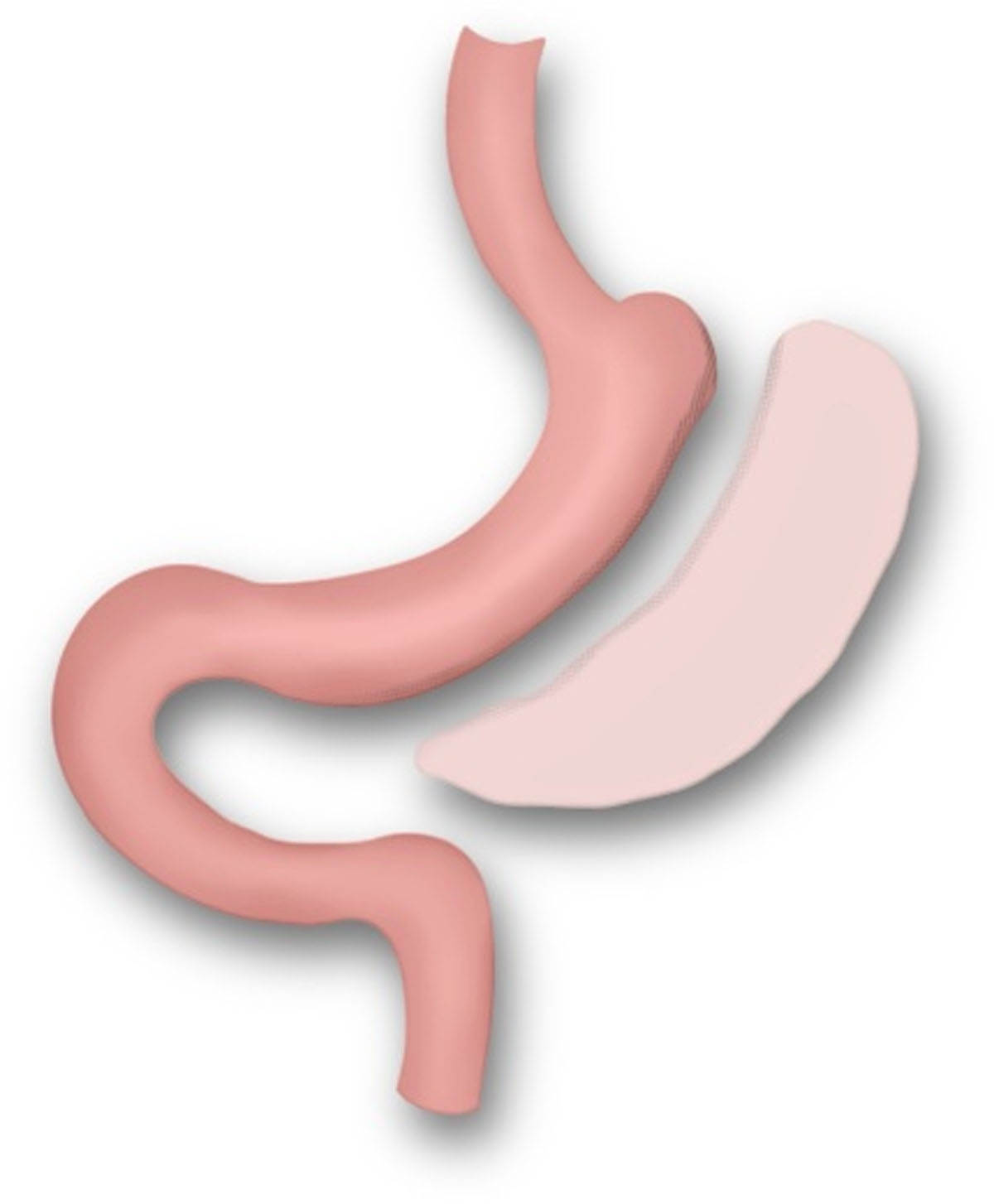
Figure 1
Sleeve gastrectomy: anatomic resection of the greater curvature of the stomach in a sleeve gastrectomy results in approximately one-third or less of the original stomach. Images created by Rodrigo Jacobucci, MD
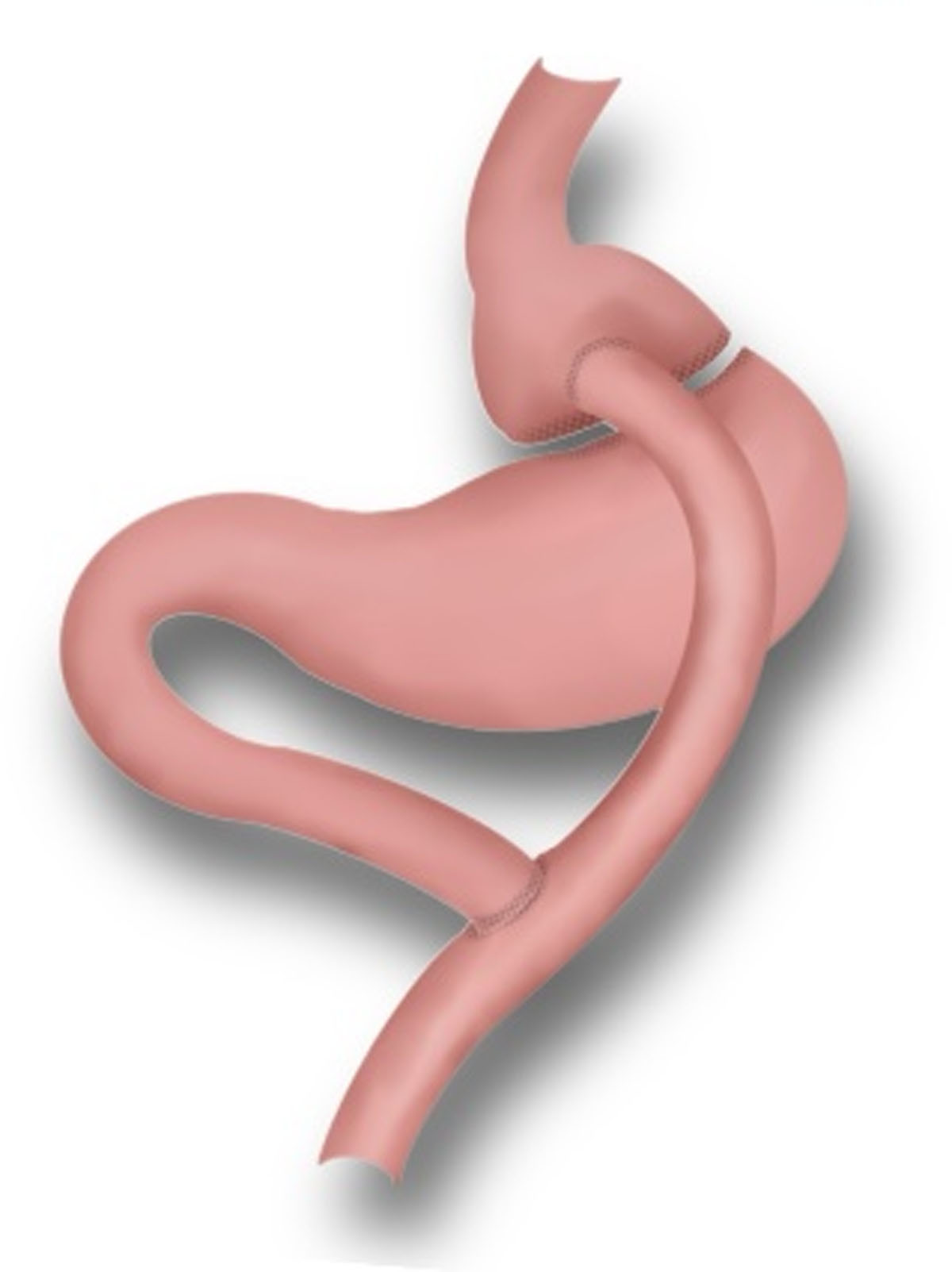
Figure 2
Roux-en-Y gastric bypass involves anatomic resection of the stomach to create a gastric pouch that is anastomosed to a segment of jejunum, creating the roux limb. The distal duodenum connected to the gastric remnant is anastomosed to the distal jejunum, creating the biliopancreatic limb. Images created by Rodrigo Jacobucci, MD
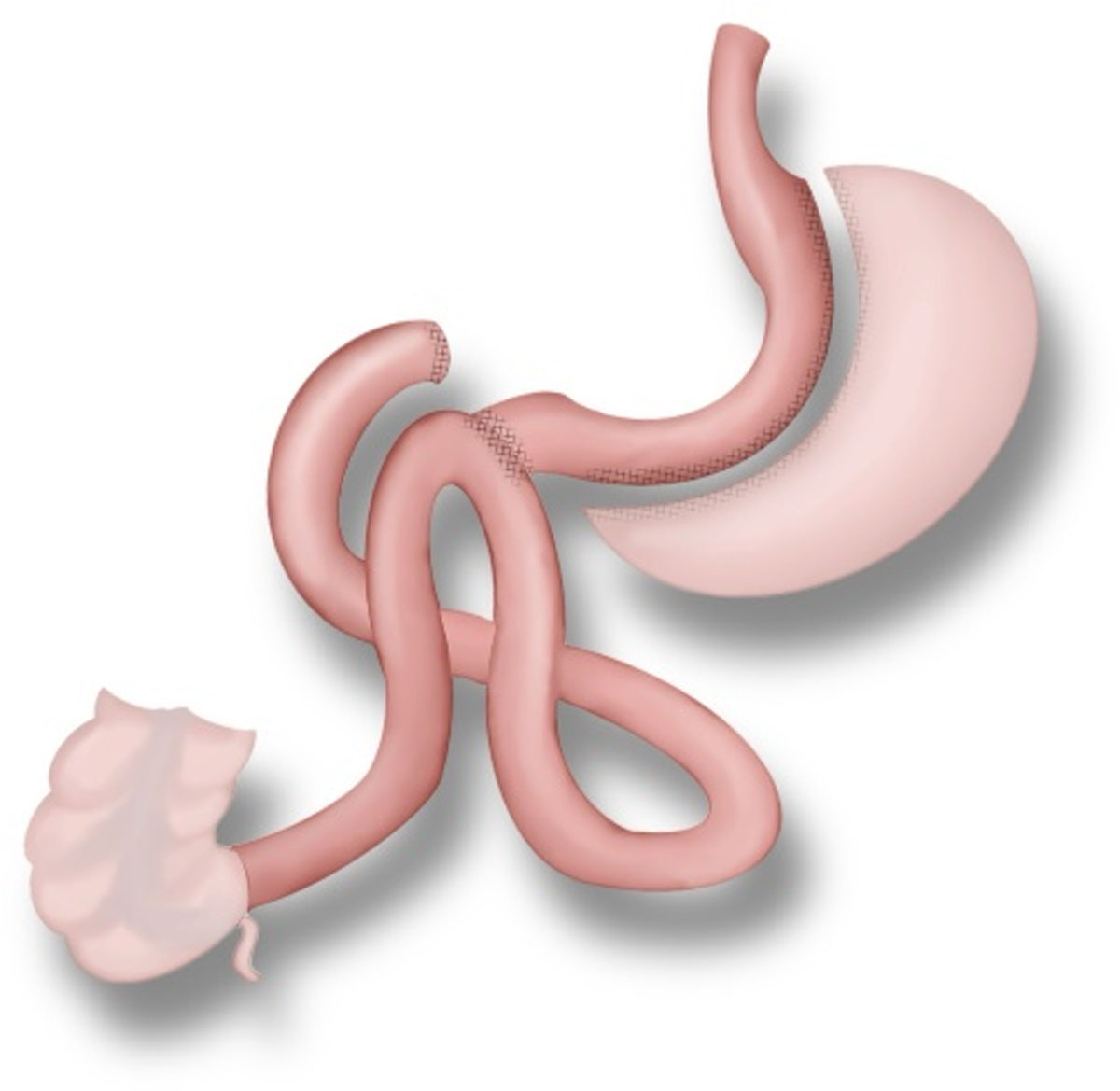
Figure 3
Single anastomosis duodeno-ileal bypass with sleeve gastrectomy involves anatomic resection of the greater curvature of the stomach with the proximal duodenum, then anastomosed to a loop of ileum. Images created by Rodrigo Jacobucci, MD
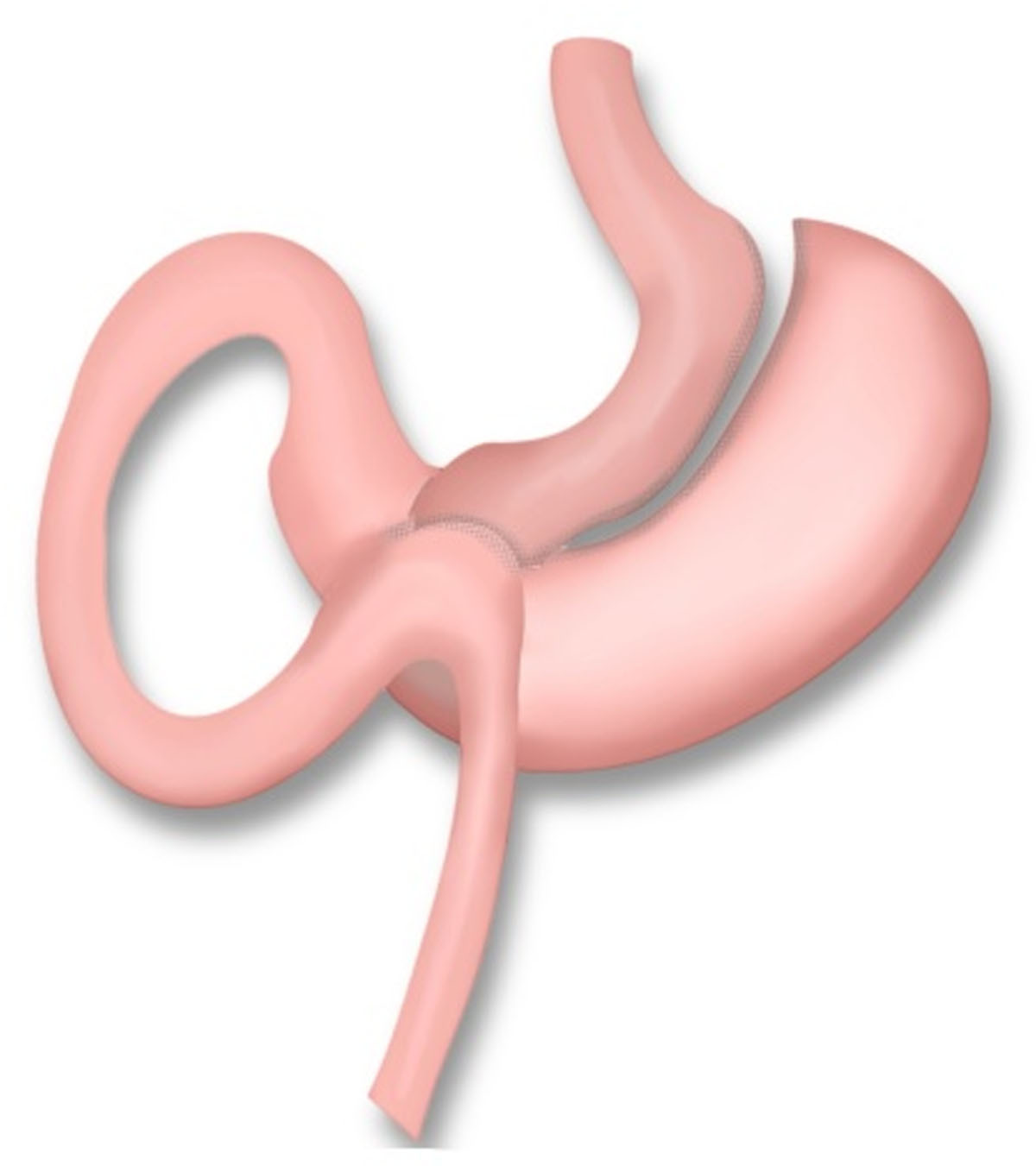
Figure 4
One anastomosis gastric bypass involves anatomic resection of the stomach with the stomach pouch anastomosed to a loop of jejunum. Image created by Rodrigo Jacobucci, MD
Table 1
Bariatric surgery outcomes. EBWL: excess body weight loss (defined as initial weight - postoperative weight/initial weight - ideal weight); HTN: hypertension (remission defined as blood pressure < 135/85 mm Hg without medication; hemoglobin A1C: glycated hemoglobin (remission of diabetes defined as hemoglobin A1C < 6.5% without medication)
| OUTCOMES | SURGICAL PROCEDURES | |||
|---|---|---|---|---|
| LSG 8,10,18,20,25,26,50,51,52,53,54,55 | RYGB 10,18,20,25,26,38,53,54,55,56,57,58,59 | SADI-S 33,57,59 | OAGB 16,37,38,39,52,55,56,57 | |
| % Morbidity, 30-day | 1-5% | 4-8% | 6.4-12% | 7.5-8% |
| % Mortality, 30-day | 0.1-0.2% | 0.1-0.5% | 0.67% | 0.1% |
| % EBWL, 1-year | 50-70% | 60-80% | 50-85% | 50-80% |
| % EBWL, 5-years | 50-60% | 50-70% | 75-80% | 70-85% |
| % HTN Remission, 5-years | 40-60% | 50-60% | 40-70% | 60-80% |
| % Diabetes Remission, 5-years | 30-40% | 50-80% | 60-80% | 90% |