
Introduction
Heart failure (HF) and obesity are complex diseases that are often interrelated. Approximately 6.7 million adults in the United States (US) have HF, and the prevalence is expected to rise to 8.5 million by 2030.1 It is estimated that approximately 1 in 4 adults will develop HF in their lifetime.1,2,3 At this time, 42% of US adults meet the criteria for obesity, currently defined as a body mass index (BMI) ≥ 30 kg/m2.4,5,6 The rates of both HF and obesity are increasing at an alarming rate. Obesity is present in approximately one-third of patients with HF and significantly more prevalent in those with HF with preserved ejection fraction (HFpEF).7,8 Moreover, it is estimated that the risk of incident HF increases by 41% per 5-unit increment in BMI.9
Achieving weight loss through lifestyle, medical, and/or surgical strategies has been shown to improve cardiovascular outcomes, quality of life outcomes, cardiac function, and access to transplant.4,5,6 Consequently, the Heart Failure Society of America (HFSA) recommends weight loss of 5% to 10% for patients with HF and BMI ≥ 35 kg/m2.10 However, patients with HF have limited access to surgical weight loss interventions due to an increased upfront perioperative risk.11 This is despite evidence that bariatric surgery is safe in patients with advanced HF12 and that postoperative HF patients who maintain weight loss have improved long-term cardiovascular outcomes.13 Recent evidence from randomized clinical trials suggests that weight loss via use of glucagon-like peptide 1 receptor agonists (GLP-1 RAs) improve symptoms in patients with obesity and HFpEF.4 However, the utilization and pattern of prescription of these agents in HF is yet to be studied.
Interestingly, despite the well-established negative effects of obesity on cardiovascular health, an “obesity-HF paradox” has been observed in HF. In this inverse relationship, patients with obesity demonstrated better long-term survival outcomes than patients who were underweight or with a normal BMI.14 Understanding the effects of obesity on cardiac structure and function, the implications for advanced HF, and the role of weight loss interventions is essential for improving outcomes. This review examines the intersection of obesity and HF, exploring pathophysiology, treatment strategies, clinical implications, and potential strategies for prevention.
Impact of obesity on cardiac structure and function
Despite obesity being interrelated to several traditional CVD risk factors, obesity can independently contribute to cardiomyopathy and biventricular dysfunction.14 The effects of excess body fat deposits have been implicated in promoting chronic inflammation, insulin resistance, lipid dysregulation, endothelial dysfunction, and sympathetic system activation, resulting in increased heart rate and cardiac remodeling (Figure 1).15,16 Hemodynamically, obesity leads to increased central blood volume and stroke volume, which causes increased cardiac output proportional to the degree of obesity. The result of this cascade is structural changes with left ventricular (LV) dilatation followed by a compensatory hypertrophic response evident at both cellular and organ levels.17 Obesity is also associated with lower brain-natriuretic peptide (BNP) in asymptomatic individuals, and natriuretic peptide degradation by fat tissue is associated with increased aldosterone activity, expansion of plasma volume, and low ventricular compliance—key factors in HFpEF pathophysiology.18
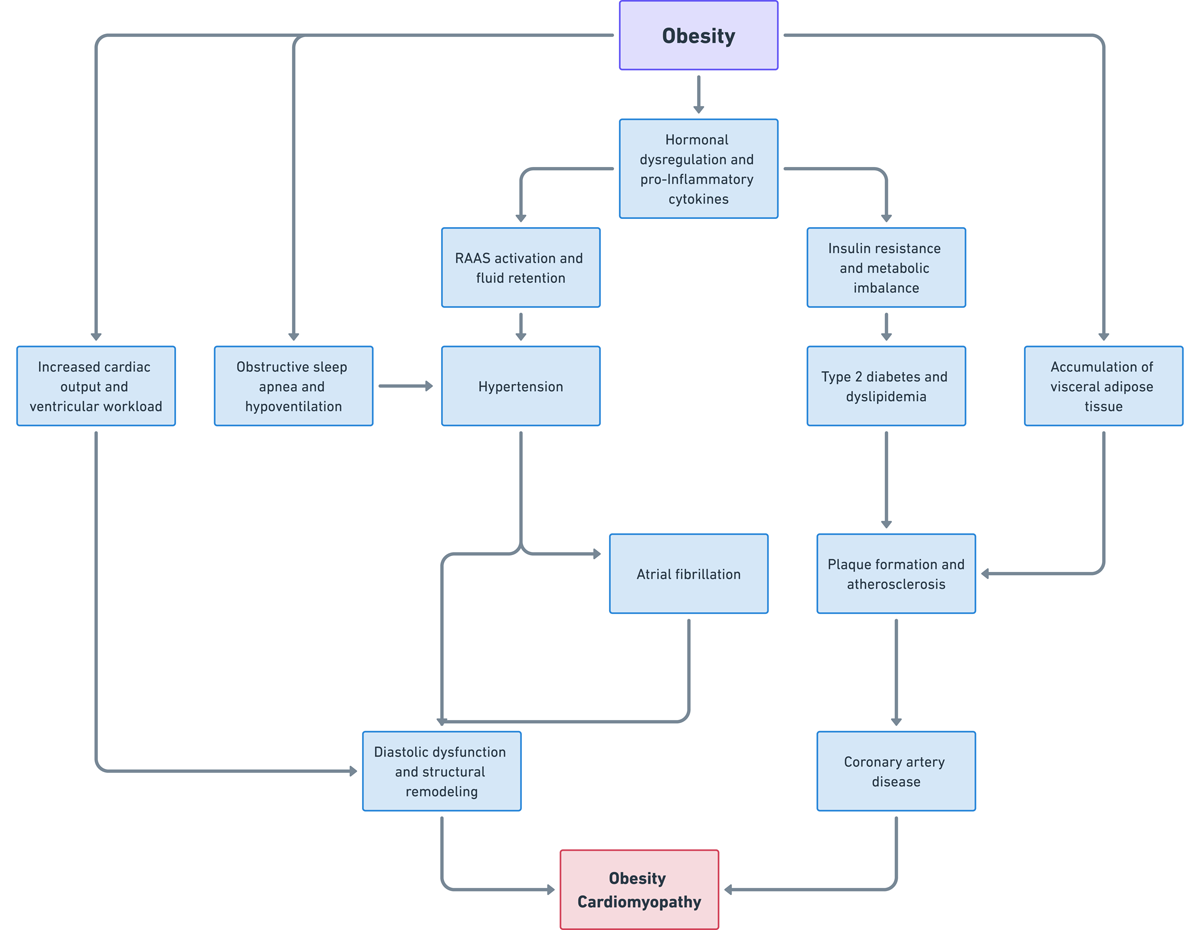
Figure 1
The association between obesity and cardiovascular risk factors leading to cardiomyopathy and heart failure. RAAS: renin-angiotensin-aldosterone system
Diastolic dysfunction and an increase in LV filling pressure in patients with obesity may occur even without LV hypertrophy, suggesting potential alternative mechanisms involving toxicity from visceral adipose tissue, particularly epicardial and pericardial fat, which triggers local inflammatory pathways involving macrophage activation and cytokine gene expression.19 Research has shown that obesity-related HFpEF could represent specific distinct phenotypic features that include greater biventricular remodeling, more right ventricular (RV) dysfunction, greater ventricular interaction and pericardial restraint, worse exercise capacity, and impaired pulmonary vasodilation.20 Moreover, atherosclerotic cardiovascular disease related to obesity can lead to LV systolic dysfunction and ultimately HF with reduced ejection fraction (HFrEF). Also, comorbidities associated with obesity—such as obstructive sleep apnea and obesity-hypoventilation syndrome—can increase the risk for pulmonary hypertension and right ventricular failure.21
The impact of obesity on HF outcomes and the obesity-HF paradox
Paradoxical to the negative effects of obesity on cardiac structure and function, HF patients with obesity have been shown to have improved long-term survival outcomes compared to HF patients with low BMI.22,23 This inverse relationship between mortality and BMI is often referred to as the “obesity paradox”—a seemingly counterintuitive phenomenon that intrigues researchers and clinicians and is influenced by several interrelated factors. One key limitation in most of these studies is the reliance on BMI to classify obesity because BMI is an imprecise tool that does not differentiate between fat mass, fat-free mass, and lean mass. For example, higher lean muscle mass in individuals categorized as overweight or obese may partially explain their improved survival outcomes. Additionally, selection bias plays a significant role, as patients with obesity who survive to develop HF may represent a healthier subset of the population with obesity, while lean individuals with HF might include those with frailty, cachexia, or other debilitating conditions.22,23
Residual confounding—such as differences in comorbidities, socioeconomic factors, and healthcare access—also complicates the interpretation of these findings. Furthermore, competing mortality risks may contribute to this paradox, as individuals with obesity are more likely to succumb to other conditions like diabetes or hypertension before HF becomes a significant cause of mortality. Conversely, leaner individuals with heart failure may be at greater immediate risk due to catabolic states or malnutrition. Therefore, a more precise assessment of body composition, incorporating measures of fat distribution, visceral adiposity, and muscle mass, rather than relying solely on BMI, is crucial to further understand the nuanced relationship between obesity and heart failure outcomes.24,25
Recently, there has been more focus on recognizing different phenotypes of obesity based on the degree of visceral fatty deposits, the presence of metabolic dysfunction, and cardiorespiratory fitness status.26 One such phenotype, termed sarcopenic obesity, refers to reduced lean muscle mass combined with an increase in fat mass. This phenotype is rapidly becoming more prevalent in the US and has already been related to poor outcomes in a number of chronic diseases, including HFpEF. Additionally, when stratifying patients based on peak oxygen consumption (VO2 max), the survival advantage is absent among those with obesity and low BMI with relatively high cardiorespiratory fitness and VO2 max > 14 mL/kg/min, compared with those who are underweight with low cardiopulmonary reserve, which demonstrates the obesity paradox.27 Therefore, BMI does not distinguish between individuals with stage 0/1 obesity and HF patients with low lean muscle mass and low cardiorespiratory fitness.
Weight loss interventions in HF
Lifestyle Interventions
Lifestyle interventions with exercise and dietary caloric restriction are the first step and mainstream method for weight loss in HF patients. HFSA guidelines recommend a nutritional assessment by a registered dietician (RD) at least once from the time of diagnosis, 150 minutes of exercise per week, and a caloric-deficient diet to target 5% to 10% weight loss for HF patients with BMI > 35 kg/m2.10 According to Kitzman et al., patients with obesity and HFpEF who were able to maintain 10% of total body weight loss had significant improvements in 6-minute walk test and quality of life.28 The beneficial effect of diet and exercise was also noted in patients with HFrEF in terms of reduced HF hospitalization and exercise tolerance with > 5% weight loss.29
Medical Management
Older weight reduction medications were scarcely studied in the HF population, but one such drug, Orlistat, was found to have a modest weight loss effect at the expense of multiple gastrointestinal side effects.30 These medications have fallen out of favor since the emergence of GLP-1 RAs, which have repeatedly shown significant effect on prevention of adverse cardiovascular outcomes, including HF incidence and hospitalization in patients with cardiovascular risk factors such as type 2 diabetes (T2DM) and obesity.31,32,33 In the STEP-HFpEF (Semaglutide in Patients with Heart Failure with Preserved Ejection Fraction and Obesity) trial, one-third of the intervention group receiving semaglutide had at least 10% weight reduction, and the degree of weight loss in HFpEF patients was associated with a significant decrease in Kansas City Cardiomyopathy Questionnaire (KCCQ) scores, suggesting a meaningful impact on quality of life.4 Beyond weight reduction, GLP-1 RAs demonstrated favorable metabolic and hemodynamic effects, including reductions in C-reactive protein, systolic blood pressure, and BNP levels, indicating anti-inflammatory and cardiovascular benefits. Notably, these effects in HFpEF patients were observed early in the trial, hinting at a direct role of semaglutide in modifying HFpEF pathophysiology. This aligns with findings from preclinical animal models, further supporting the mechanistic benefits of GLP-1 RAs in this population.34 The effects of GLP-1 RAs in patients with advanced HFrEF are less promising, as liraglutide failed to show any significant reduction in the composite outcome of HF hospitalization or mortality, and there was a non-significant signal for worse outcomes.35
Bariatric Surgery
Bariatric surgery, including Roux-en-Y gastric bypass and sleeve gastrectomy, is the single most effective tool to lower BMI in individuals with obesity. Current guidelines recommend consideration of bariatric surgery for individuals with a BMI ≥ 35 kg/m2, regardless of presence, absence, or severity of comorbidities, and should be considered for individuals with metabolic disease and BMI between 30 to 34.9 kg/m2.36 A limited number of mostly retrospective studies with small sample sizes have demonstrated an improvement in cardiac function, HF symptoms, and quality of life in patients with HFrEF who underwent bariatric surgery. Additionally, there was a decrease in HF exacerbation admissions following surgery. Lastly, there are some data showing promising effects of bariatric surgery reducing the incidence of HF in patients without prior HF following surgery compared with nonsurgical counterparts. Although more data are needed in this field, we believe bariatric surgery remains a safe and suitable method for HF patients with morbid obesity who have failed other noninvasive interventions.13,37,38,39,40
Goal-Directed medical therapy in HF patients with obesity
Guideline-directed medical therapy (GDMT) is the cornerstone of pharmacological therapy for patients with HFrEF. Analysis from multiple HFrEF registries across the US and Europe showed that patients with obesity are significantly more likely to receive GDMT in terms of the percentage of optimal GDMT prescribed and target dose achieved. Interestingly, there was an observed association between lower cardiovascular death in HFrEF patients with obesity compared to patients without obesity and the use of renin-angiotensin system inhibitors (RASi)/angiotensin receptor–neprilysin inhibitors (ARNi). One potential explanation is that patients with obesity and HFrEF are more likely to have higher blood pressure and T2DM, which facilitates the initiation and the subsequent up-titration of different GDMT, including RASi/ARNi. These observations might contribute to explaining the reported better outcomes prognosis associated with obesity in HF (ie, obesity paradox).41,42,43 Sodium-glucose cotransporter-2 inhibitors (SGLT2i), the newest GDMT for HFrEF, were found to be beneficial across a wide range of BMI in terms of HF hospitalization and cardiovascular mortality associated, particularly if treatment was associated with weight loss.44,45
For HFpEF, pharmacological therapy options remain a challenge compared with HFrEF. In HFpEF, clinicians must consider the role of comorbidities that contribute to symptoms and prognosis, and interventions to improve quality of life. Weight management is key in managing HFpEF in obesity. Novel therapeutics can provide promising treatment options for patients with HFpEF and obesity. Using semaglutide and tirzepatide in HFpEF and obesity leads to significant reductions in symptoms and physical limitations and improvements in exercise function and weight loss.4,46 Moreover, to address symptoms and manage obesity-related comorbidities in HFpEF, individuals with a BMI ≥ 35 kg/m² should be referred, when possible, to a multidisciplinary team of medical, surgical, and nutritional experts specializing in obesity care.
Advanced HF and obesity
Patients with advanced HFrEF and obesity represent a challenge in terms of selection for advanced HF therapy options, such as left ventricle assist devices (LVADs) and heart transplantation (HT). Obesity is associated with worsened peri- and postoperative outcomes after HT, including increased risks of graft rejection and mortality.47 As a result, the International Society of Heart and Lung Transplantation (ISHLT) has recommended that a BMI of 35 kg/m² or higher be a relative contraindication for HT eligibility.48 Consequently, the only advanced HF therapy option for many patients with severe obesity is LVAD implantation or palliative care. LVAD implantation in these cases is considered destination therapy, with the intention of readdressing HT candidacy after sufficient weight loss during LVAD support. However, LVAD placement reverses the catabolic state of HF and leads to higher metabolism and appetite recovery, which results in weight gain and subsequently impedes HT candidacy.49 In a large observational analysis, obesity in patients with LVAD was associated with increased risks of infection, device malfunction and thrombosis, arrhythmias, hospital readmissions, RV failure, and respiratory failure but not associated with increased mortality.49
Individualized weight management strategies and multispecialty/multimodal interventions have been adapted by multiple centers to achieve target weight loss for patients with LVAD, including psychosocial support and evaluation by a registered dietitian, exercise physiologist, endocrinologist, and bariatric surgeons. Bariatric surgery is considered the most robust modality for significant weight loss.50 One center reported that the composite outcome of BMI of < 35 kg/m2, HT, listing for HT, or myocardial recovery was achieved in 79% of LVAD patients post-bariatric surgery,51 while another center reported safety and feasibility of bariatric surgery in advanced HF, where there was no 30-day mortality and target BMI < 35 was achieved in 42% of patients.52 However, the type and timing of weight reduction procedure and perioperative management remain a challenge due to the risk of bleeding, thrombosis, gastrointestinal complications, infections, and hemodynamic decompensation. Management of these complex patients requires the presence of a multidisciplinary team with expertise in bariatric surgery, advanced HF, cardiac anesthesia, cardiac perfusion, and thrombosis specialists.53 Lastly, clinicians should remain vigilant about the pharmacodynamic changes post-bariatric surgery that can lead to over-anticoagulation and bleeding, or abnormal immunosuppressant absorption post-HT with a risk of rejection. One study reported that weight loss post-bariatric surgery is associated with decreased vasodilator, diuretic, and anticoagulant medication requirements in LVAD patients by 50%, 45%, and 35%, respectively.54
Prevention of HF in patients with obesity
Obesity is a significant risk factor for HF, either by directly impacting cardiac remodeling or by contributing to the burden of cardiometabolic risk factors including hypertension and insulin resistance. Epidemiological and observational studies suggest that large amounts of weight loss are associated with a lower risk of HF. For example, post-hoc analysis of a randomized trial showed that weight loss ≥ 10%, decrease in waist circumference, or fat mass reduction through lifestyle intervention is significantly associated with lower risk of incident HF in individuals with overweight or obesity and T2DM.55,56 Moreover, bariatric surgery is associated with a 60% reduction in risk of incident HF as shown in large cohort studies, and it leads to more optimal control for other important risk factors of HF, including T2DM and hypertension.13
Weight loss reduces the risk of other modifiable risk factors for HF, such as insulin resistance, diabetes, hypertension, and metabolic syndrome. Additionally, there is a strong inverse relationship of physical activity and cardiorespiratory fitness with risk of HF.57 Higher levels of physical activity are associated with a lower risk of HF on follow-up, particularly related to risk of HFpEF.58 Moreover, in patients with T2DM and obesity who are considered to be at increased risk of HF, SGLT2i were associated with a higher absolute risk reduction of incident HF in patients with obesity compared with patients with normal weight.59,60 Novel approaches that incorporate weight management into a multidisciplinary cardiometabolic center resulted in a significant increase in the utilization of GLP-1 RA and, as a result, large reductions in weight.61
Given that obesity is very often observed with other cardiometabolic conditions, cardiometabolic centers that involve a multidisciplinary approach—ie, lifestyle modifications, pharmacological treatments, or bariatric surgery—to optimize cardiometabolic health have the potential to decrease future risk of HF.62
Conclusion
Obesity significantly impacts the development, progression, and management of HF. Effective and multidisciplinary management of obesity through lifestyle modifications, pharmacological treatments, or bariatric surgery have been shown to improve cardiac function, quality of life, and reduce HF-related hospitalizations. In advanced HF, particularly for patients requiring left ventricular assist devices or heart transplantation, weight management is crucial for optimizing outcomes. Addressing obesity in HF patients is essential for improving both short-term and long-term cardiovascular health. Most importantly, the prevention of HF in patients with obesity can potentially curb the burden of this chronic condition.
Key Points
The prevalence of heart failure (HF) and obesity are increasing at an alarming rate. Obesity is a very strong risk factor for HF, HF with preserved ejection fraction, in particular, in a dose-dependent fashion through multiple mechanisms. Interestingly, the “obesity paradox” suggests that patients with HF and obesity may have better survival rates compared with normal-weight individuals, despite obesity’s negative cardiac impact.
Weight loss achieved through lifestyle changes, pharmacological interventions, or bariatric surgery has the potential to improve HF outcomes by enhancing cardiac function and reducing hospitalizations as well as reducing the risk of developing HF.
Advanced HF management in patients with obesity is complex; as such, considerations for surgical interventions such as left ventricular assist devices and bariatric surgery to optimize transplant eligibility are becoming more widely adopted as a treatment strategy.
Focusing on strategies to prevent incident HF in patients with obesity could be a cornerstone that leads to a decreased burden of this chronic debilitating condition in communities.
Competing Interests
The authors have no competing interests to declare.