Have a personal or library account? Click to login
Strategies to Manage Obesity: Lifestyle Cover
Open Access
|Feb 2025

Figures & Tables

Table 1

American Heart Association Guidance Statement (2021) and 2020-2025 Dietary Guidelines for Americans.6,7

American Heart Association Guidance Statement (2021)
  • Variety of fruits and vegetables

  • Whole-grain foods and products

  • Healthy protein of plant or low-fat animal source

  • Liquid plant oils

  • Minimally processed foods

  • Beverages free of added sugar

  • Foods prepared with minimal or no salt

  • Minimal or no alcohol intake


Follow these recommendations regardless of place of preparation or consumption
2020-2025 Dietary Guidelines for Americans
  • Vegetables of all kinds, colorful non-starchy vegetables; beans, peas, lentils and other starchy vegetables

  • Whole fruits

  • Whole grains

  • Low-fat or fat-free dairy products

  • Lean proteins including meats, poultry and eggs, seafood and plant-based foods like beans, peas, lentils, nuts and seeds, and soy products

  • Vegetable oils and oils in foods from seafood and nuts

  • Limited intake of added sugars, saturated fat, sodium, and alcohol

Table 2

Comparison of benefits and risks of dietary patterns in Keto or low carbohydrate, intermittent fasting, and calorie-restricted diets.12 BMI: body mass index; TC: total cholesterol; LDL-C: low density lipoprotein cholesterol; HDL-C: high density lipoprotein cholesterol; TG: triglycerides

DIETARY PATTERNADVANTAGESDISADVANTAGES
Keto or low carbohydrate
  • Weight, body fat, and BMI reduction

  • Improved insulin resistance

  • Glycemic control

  • Increased satiety and appetite control

  • Decreased muscle loss

  • Improved blood pressure

  • Increased TC, LDL-C, HDL-C

  • Increased TG

  • Potential for increased inflammation and blood pressure

  • May be difficult to maintain in long term

Intermittent fasting
  • Weight and BMI reduction

  • Reduced waist circumference

  • Reduced inflammatory biomarkers

  • Improved blood pressure

  • Improved TC, LDL-C, TG

  • Limited evidence of cardiovascular benefits

  • May be difficult to maintain in long term

Calorie restricted
  • Weight and BMI reduction

  • Decreased inflammatory biomarkers

  • Reduced TC, LDL-C, HDL-C and TG

  • Improved glucose regulation

  • Improved blood pressure (systolic and diastolic)

  • Reduced oxidative stress

  • Increased insulin sensitivity

  • Potential for malnutrition

  • Possible muscle loss

  • May be difficult to maintain in long term

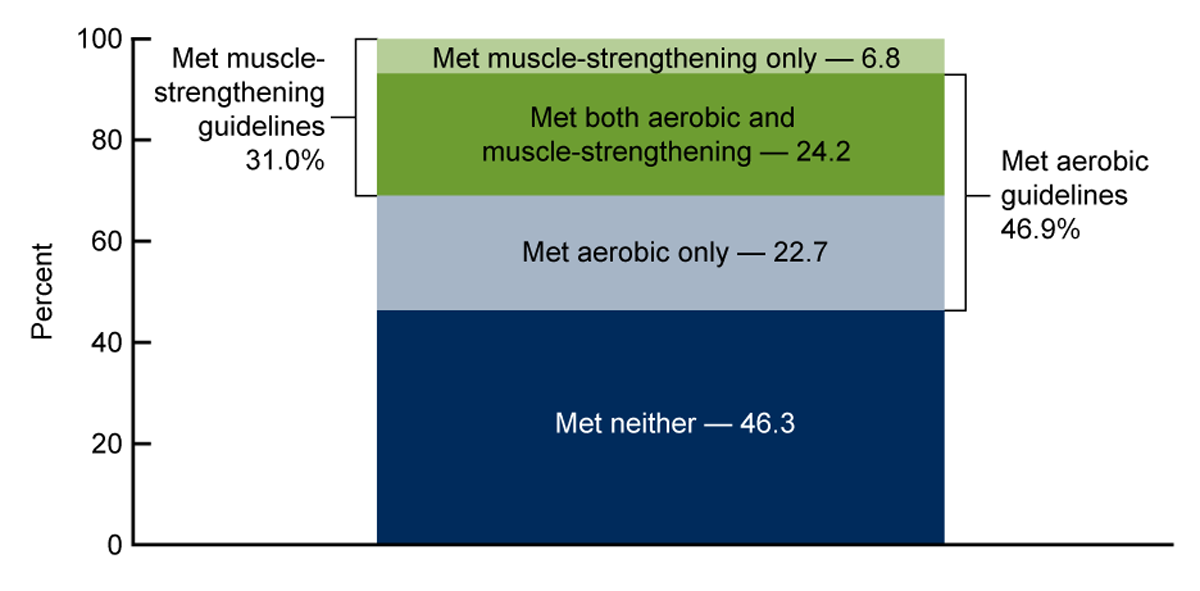
Figure 1

Percent distribution of adults aged 18 and over who met 2018 Physical Activity Guidelines for Americans for aerobic and muscle strengthening activities. Used with permission from Elgaddal et al. and CDC.17

DOI: https://doi.org/10.14797/mdcvj.1510 | Journal eISSN: 1947-6108
Language: English
Page range: 53 - 61
Submitted on: Oct 25, 2024
Accepted on: Dec 7, 2024
Published on: Feb 18, 2025
Published by: Houston Methodist DeBakey Heart & Vascular Center
In partnership with: Paradigm Publishing Services

© 2025 Ramiro Saavedra, Betsy Ramirez, Brandon Jay, published by Houston Methodist DeBakey Heart & Vascular Center
This work is licensed under the Creative Commons Attribution-NonCommercial 4.0 License.