
We are pleased to share this issue on the crucial topic of Cardiac Recovery. The meaning of “recovery”—and the potential for achieving it—have seen tremendous changes in the past decade. Perceptions of heart failure as a passive pathological state are expanding to encompass biological processes that actively influence organism-level recovery, resulting in functional improvement for patients that heretofore was unimaginable.
Yet predictions suggest we will see an increasing number of patients with heart failure. According to a 2023 report from the Heart Failure Society of America, 6.7 million Americans over age 20 have heart failure—a number that is expected to increase to 8.5 million by 2030. With this in mind, we have chosen to focus on myocardial recovery and recent developments for tapping natural mechanisms that help to heal the dysfunctional myocardium.
I offer my sincerest thanks to our authors for sharing their expertise and insights on cardiac recovery. I am especially grateful to our guest editors Arvind Bhimaraj, MD, and James Young, MD, for curating topics on a range of recent developments, from pathobiology to clinical opportunities. This issue nicely complements our November 2023 Issue 19.5 on Cardiac Regeneration, which explores regeneration of the myocardium after significant injury.
I hope you will benefit from the expertise shared here, and I remind you of the many topics you can find in the Journal archives. You will find additional learning resources in our Special Collections of videos, case reports, and interactive CME cases, and we invite you to submit case reports. If you haven’t already signed up to receive our e-newsletter, be sure to subscribe now.
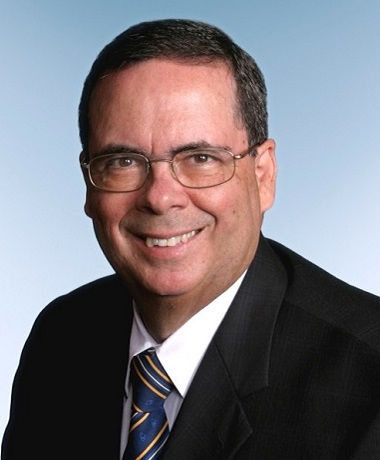
Miguel A. Quiñones, MD, MACC, FASE
Editor-in-Chief
Methodist DeBakey Cardiovascular Journal
Winters Family Distinguished Centennial Chair
in Cardiovascular Education, Houston Methodist DeBakey Heart & Vascular Center