
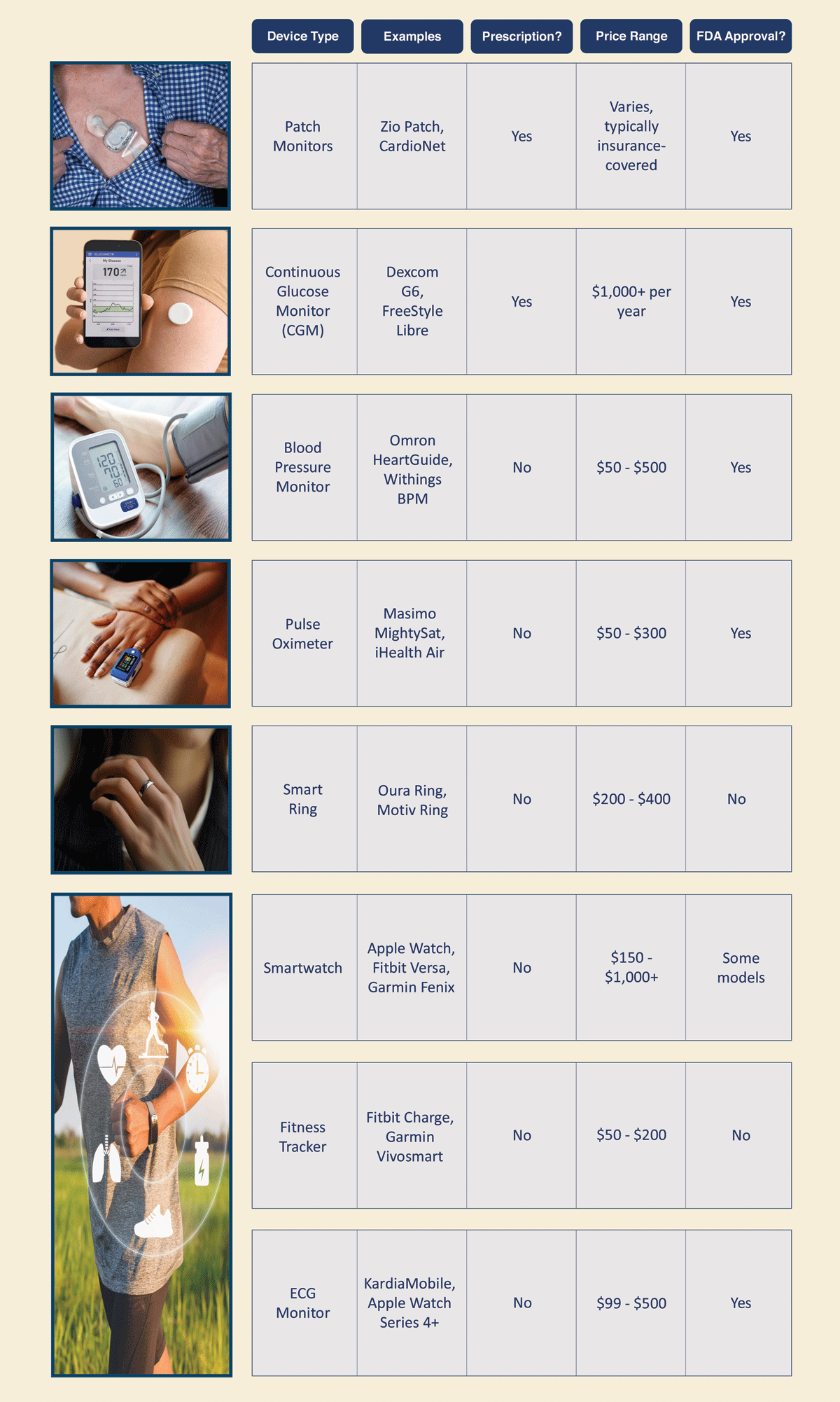
Figure 1
Overview of various wearable devices used in health care, including their types, examples, prescription status, price ranges, and US Food and Drug Administration approval status. The table highlights different categories such as patch monitors, continuous glucose monitors (CGMs), blood pressure monitors, pulse oximeters, smart rings, virtual headsets, smartwatches, fitness trackers, and electrocardiographic monitors. The information underscores the diversity of wearable health technologies and their varying levels of accessibility and regulatory approval.13
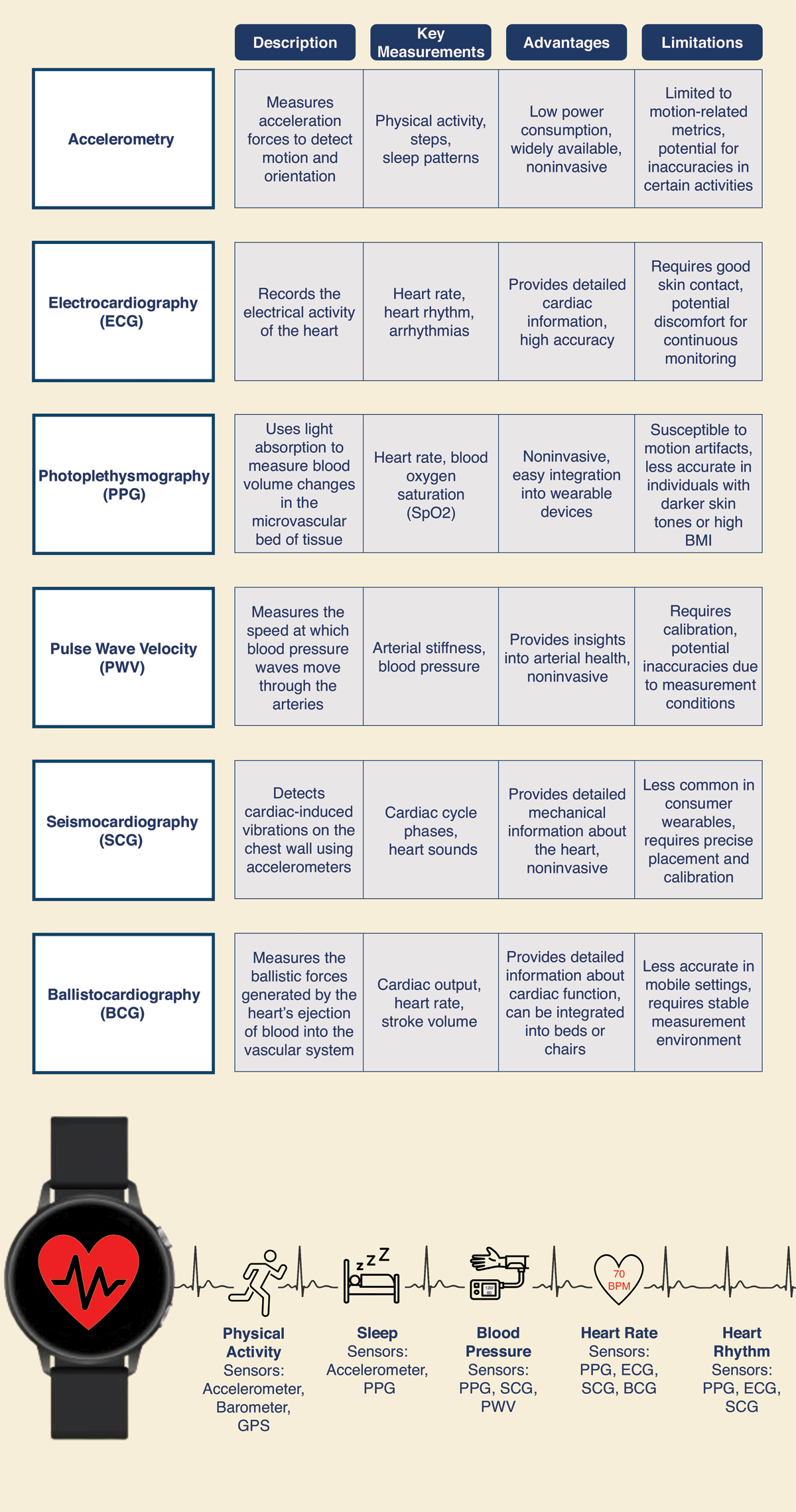
Figure 2
Summary of key measurements and technologies used in wearable health devices, including accelerometry, electrocardiography (ECG), photoplethysmography (PPG), pulse wave velocity (PWV), seismocardiography (SCG), and ballistocardiography (BCG). Each technology is described along with its primary applications, advantages, and limitations. The figure provides an overview of how these sensors contribute to monitoring various physiological parameters such as heart rate, blood pressure, physical activity, and sleep patterns, highlighting the potential and challenges of each measurement method.25
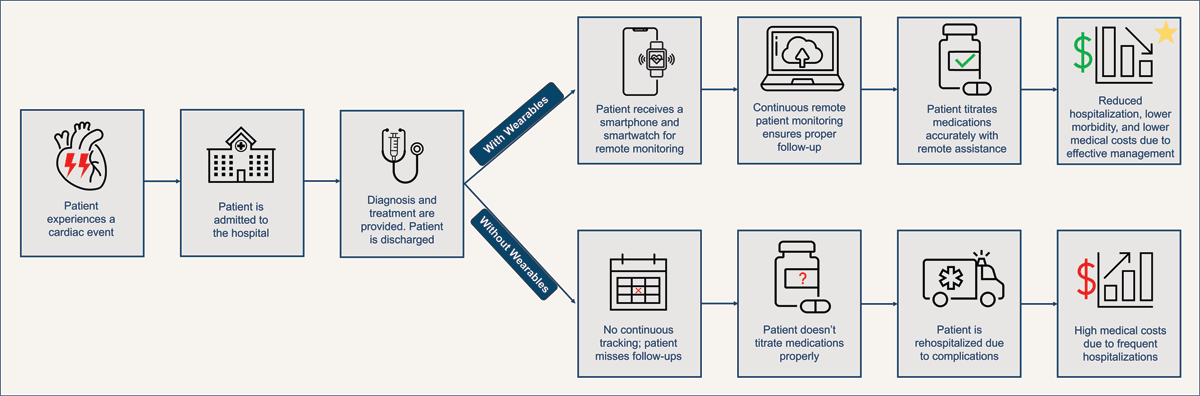
Figure 3
Comparison of patient outcomes with and without the use of wearable devices for remote monitoring. The figure illustrates a scenario where a patient receives a smartphone and smartwatch for continuous remote monitoring, leading to accurate medication titration, reduced hospitalizations, and better health outcomes. In contrast, the absence of wearable technology results in missed follow-ups, improper medication management, and higher medical costs due to frequent hospitalizations. The figure underscores the potential benefits of wearables in improving patient management and reducing healthcare costs.
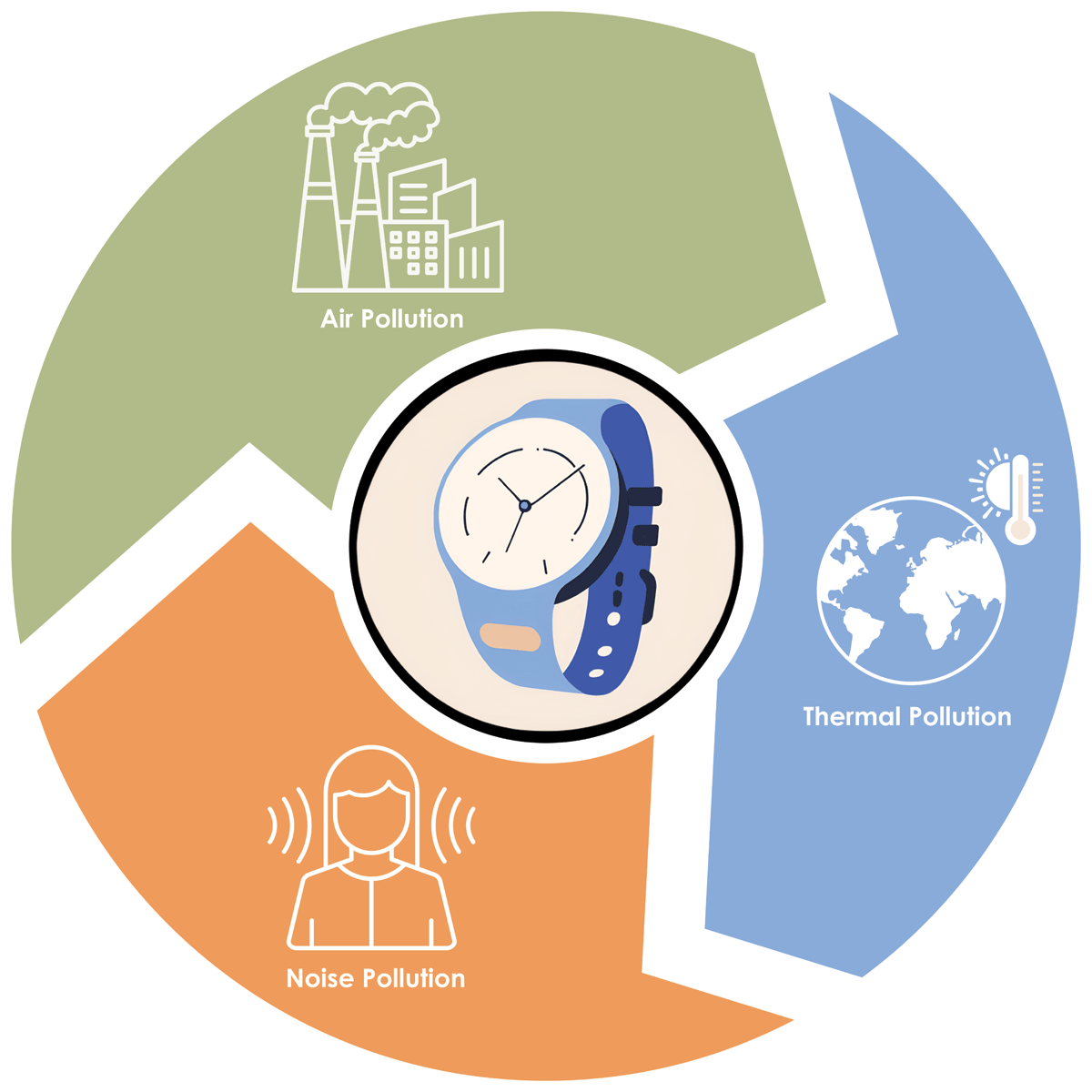
Figure 4
Visualization of different environmental exposures monitored by wearable devices, including air pollution, sound pollution, and thermal pollution. The figure highlights how wearables can track various environmental factors that contribute to the cardiovascular exposome, offering a comprehensive view of the external factors impacting cardiovascular health.