
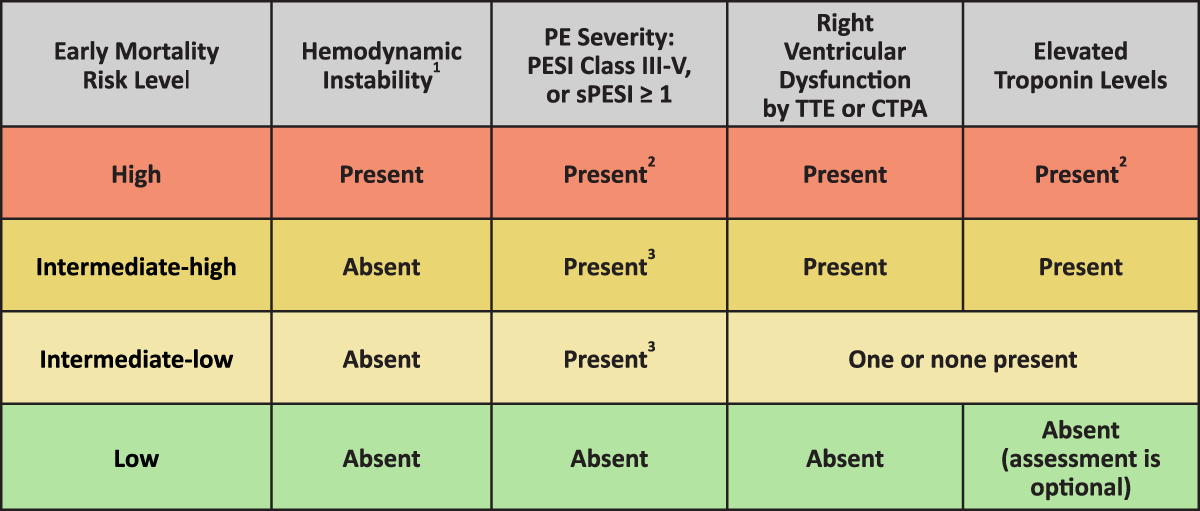
Table 1
Pulmonary embolism severity classification and risk of death within 30 days. Adapted from Konstantinides et al.6 PE: pulmonary embolism; PESI: pulmonary embolism severity index; sPESI: simplified pulmonary embolism severity index; TTE: transthoracic echocardiogram; CTPA: computed tomography pulmonary angiogram; RV: right ventricular
1Hemodynamic instability is defined as the presence of one or more of the following: cardiac arrest, systolic blood pressure < 90 mm Hg or vasopressors required to achieve systolic blood pressure ≥ 90 mm Hg along with end-organ hypoperfusion, or persistent hypotension (systolic blood pressure < 90 mm Hg or a systolic blood pressure drop ≥ 40 mm Hg for > 15 minutes, not caused by new-onset arrhythmia, hypovolemia, or sepsis).
2Presence of hemodynamic instability and right ventricular dysfunction are sufficient for high-risk designation; sPESI/PESI score calculation and troponin measurements are not required in these cases.
3Patients with signs of RV dysfunction and/or elevated troponins should be classified as intermediate-high or intermediate-low risk even if a high sPESI/PESI score is absent.
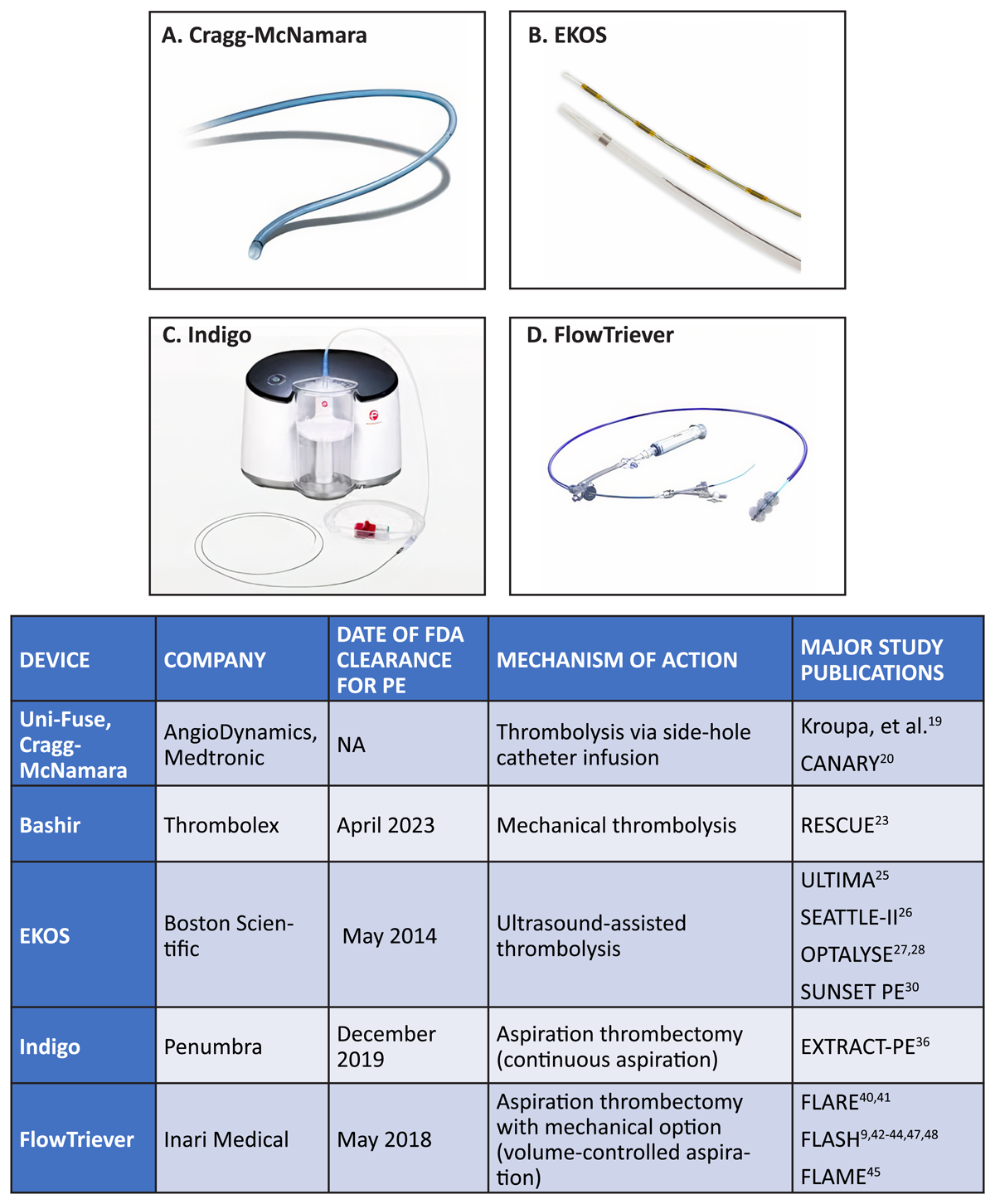
Figure 1
Interventional devices for pulmonary embolism treatment. Copyright 2024; reprinted with permission from Medtronic, Boston Scientific, Penumbra, and Inari Medical. FDA: Food and Drug Administration; PE: pulmonary embolism
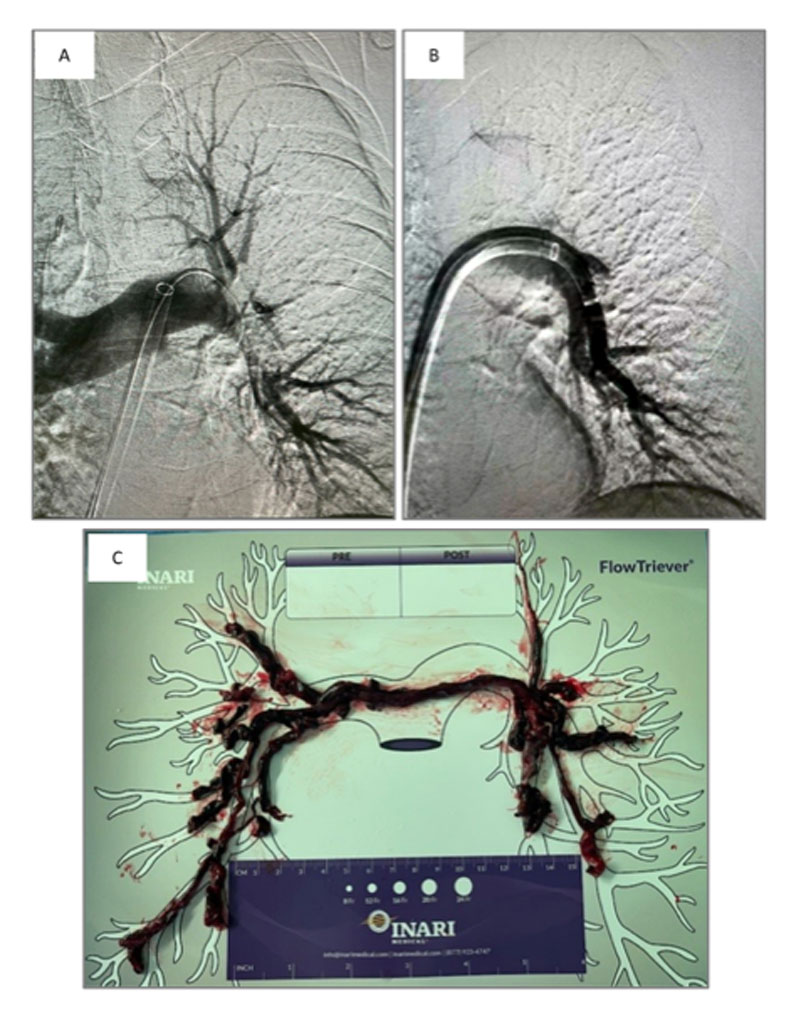
Figure 2
FlowTriever case examples. (A) Pre-thrombectomy angiogram of the left pulmonary artery with thrombus. (B) Post-thrombectomy angiogram of the same left pulmonary artery showing absence of thrombus and return of blood flow. (C) Successful thrombus extraction of patient presenting with massive saddle pulmonary embolism.
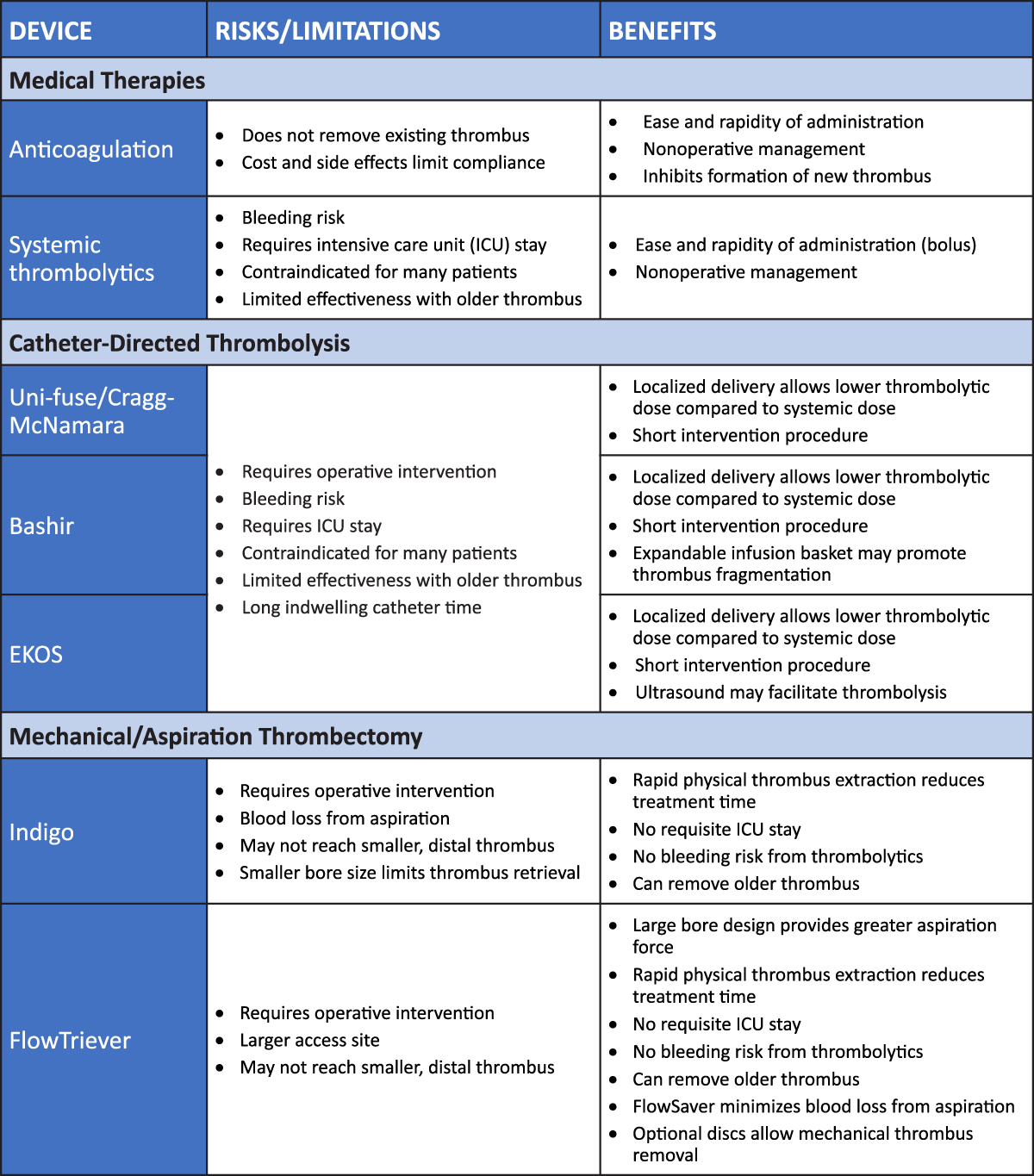
Table 2
Risks and benefits of current treatments for pulmonary embolism.
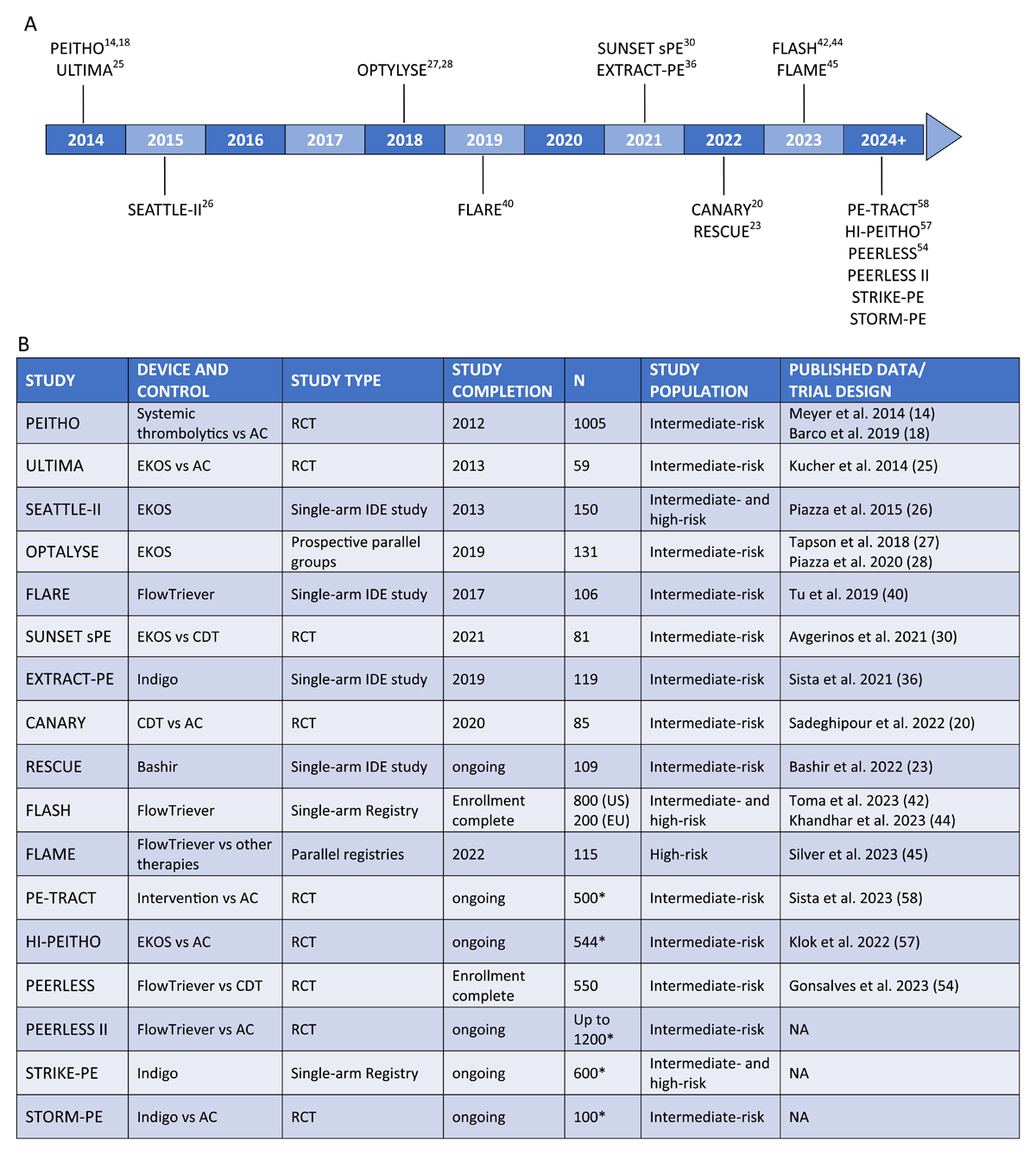
Table 3
(A) Timeline of relevant pulmonary embolism treatment study publications. (B) Table with study details. AC: anticoagulation; RCT: randomized controlled trial; IDE: investigational device exemption; CDT: catheter-directed thrombolysis; NA: not applicable
* Target enrollment; currently enrolling.