
Table 1
Low- to intermediate-risk congenital heart disease in pregnancy. PDA: patent ductus arteriosus; ASD: atrial septal defect; VSD: ventricular septal defect
| CONGENITAL HEART DISEASE | mWHO RISK (I, II AND II-III) |
|---|---|
| Uncomplicated small/mild pulmonary stenosis, PDA, mitral valve prolapse | I |
| Successfully repaired simple lesions (ASD, VSD, PDA, anomalous pulmonary venous drainage) | I |
| Unoperated ASD, VSD | II |
| Repaired tetralogy of Fallot | II |
| Repaired coarctation | II-III |
Table 2
High-risk congenital heart disease in pregnancy. CHD: congenital heart disease; LV: left ventricle; mWHO: modified World Health Organization; NYHA: New York Heart Association; CARPREG: Cardiac Risk in Pregnancy Study; BAV: bicuspid aortic valve; HCTD: high risk connective tissue disease
| CONGENITAL HEART DISEASE | PHYSIOLOGICAL VARIABLE | mWHO RISK (III vs IV) |
|---|---|---|
| Congenital severe aortic stenosis | Asymptomatic | III |
| Symptomatic | IV | |
| Unrepaired CHD | Hypoxemia (O2 < 94%) | III (degree of hypoxemia not addressed in mWHO or CARPREG 2) |
| Severe hypoxemia | ||
| Systemic right ventricle | Good or mildly reduced RV function | III |
| Moderate to severely reduced RV function | IV | |
| Fontan circulation | Well and uncomplicated | III |
| Arrhythmias | IV | |
| Degree of hypoxemia | IV | |
| Moderate to severe systemic ventricular dysfunction | IV | |
| NYHA functional class | IV | |
| Re-coarctation | Not severe | II-III |
| Severe | IV | |
| Any anatomically simple, moderate, or complex congenital heart disease | Pulmonary hypertension (including Eisenmenger syndrome) | IV |
| Moderate LV dysfunction (EF 30-45%) | III (Unless classified as IV due to NYHA FC III-IV) | |
| Severe LV dysfunction (EF < 30%) | IV | |
| NYHA Functional Class II-IV | IV | |
| Arrhythmia | Not addressed in mWHO, use CARPREG for risk assessment | |
| Mechanical valve | III | |
| Aortopathy | Moderate aortic dilatation (40-45 mm in Marfan syndrome or other HCTD; 45–50 mm in BAV, 20–25 mm/m2 in Turner syndrome) | III |
| Severe aortic dilatation (> 45 mm in Marfan syndrome or other HCTD, > 50 mm in BAV, > 25 mm/m2 in Turner syndrome) | IV |
Table 3
CARPREG II Risk Score. CARPREG: Cardiac Disease in Pregnancy Study; NYHA: New York Heart Association5
| PREDICTOR | POINTS |
|---|---|
| Prior cardiac events or arrhythmias | 3 |
| Baseline NYHA III-IV or cyanosis* | 3 |
| Mechanical valve | 3 |
| Ventricular dysfunction | 2 |
| High-risk left-sided valve disease/left ventricular outflow tract obstruction | 2 |
| Pulmonary hypertension | 2 |
| Coronary artery disease | 2 |
| High-risk aortopathy | 2 |
| No prior cardiac intervention | 1 |
| Late pregnancy assessment | 1 |
[i] * NYHA risk groups include individuals with at least mild reduction in systemic ventricular systolic function (ejection fraction < 55%), high-risk valve lesions, or left ventricular outflow tract (LVOT) obstruction (such as aortic valve area < 1.5 cm2, subaortic gradient > 30 mm Hg, mitral valve area < 2 cm, or moderate to severe mitral regurgitation); those with mechanical valves; individuals with pulmonary hypertension (right ventricular systolic pressure ≥ 50 mm Hg in the absence of RVOT); those with high-risk aortopathy (including Marfan syndrome; bicuspid aortopathy with aortic dimension > 45 mm; Loeys-Dietz syndrome; vascular Ehlers-Danlos syndrome; or a history of aortic dissection or pseudoaneurysm); and individuals with coronary artery disease; defined as angiographically proven coronary obstruction or a history of myocardial infarction.
Table 4
ZAHARA Risk Score.4 ZAHARA: Zwangerschap bij Aangeboren HARtAfwijking; NYHA: New York Heart Association; AV: atrioventricular
| PREDICTOR | POINTS |
|---|---|
| History of arrhythmias | 1.5 |
| Cardiac medications before pregnancy | 1.5 |
| NYHA class prior to pregnancy ≥ 2 | 0.75 |
| Left heart obstruction (peak gradient > 50 mm hg or aortic valve area < 1 cm2) | 2.5 |
| Systemic AV valve regurgitation (moderate/severe) | 0.75 |
| Pulmonary AV valve regurgitation (moderate/severe) | 0.75 |
| Mechanical valve prosthesis | 4.25 |
| Cyanotic heart disease (corrected/uncorrected) | 1.0 |
Table 5
Evaluation and management of women with high-risk congenial heart disease. mWHO: modified World Health Organization; NYHA: New York Heart: Association; CARPREG: Cardiac Risk in Pregnancy Study; ZAHARA: Zwangerschap bij Aangeboren HARtAfwijking; CHD: congenital heart disease
| PRECONCEPTION COUNSELING | ||
|---|---|---|
| Estimate maternal risk | mWHO, CARPREG 2, ZAHARA | |
| Discuss environmental risk such as diabetes, smoking, teratogenic medications etc | ||
| Discuss fetal risk | See section on outcomes | |
| Genetic counselling | Family history and prior pregnancy history | |
| Discuss risk of CHD in offspring of women with CHD (6% risk of CHD in offspring if mother has CHD, 3% if father has CHD; for autosomal dominant syndromes such as 22q11 deletion or Marfan syndrome, up to 50% risk) | ||
| Offer genetic testing when index of suspicious is high either based on phenotype (syndromic) or otherwise (non-syndromic) | ||
| Baseline testing | ECG, echocardiogram, cardiopulmonary exercise test, liver, kidney, and thyroid function tests. Consider cross-sectional imaging in vascular disease and when echocardiographic imaging is insufficient. | |
| Baseline O2 saturation, hemoglobin and coagulation studies, especially in cyanotic heart disease and those with thromboembolic risk | ||
| DURING PREGNANCY | ||
| First Trimester | Establish care with multidisciplinary team at regional adult CHD center | Cardio-obstetrics, Adult congenital Heart Disease, Obstetrics, Maternal Fetal Medicine, Anesthesia |
| Plan trimester-wise care and follow up | ||
| Medication reconciliation | Ensure discontinuation of teratogenic medications | |
| Baseline testing | ECG, echocardiogram, baseline lab work as mentioned in preconception stage | |
| Discuss lifestyle issues | Physical activity, employment, mental health, thromboembolic risk | |
| Second Trimester | Follow up visit | Consider repeat echocardiogram as hemodynamic changes are at maximum |
| Fetal echocardiography | ||
| Comprehensive plan for labor, delivery, and postpartum care | Service for Delivery: Labor and Delivery with or without Telemetry versus Cardiac Care Unit | |
| Sites for vascular access if hemodynamic monitoring in the peripartum period is planned. | ||
| Anesthesia consults for those with possibly unstable hemodynamics, those with musculoskeletal deformities that may affect epidural placement and those with anticoagulation needs | ||
| Cardiothoracic or Shock Team consult if mechanical circulatory support may be needed | ||
| Social services consult if required for support | ||
| Third Trimester | Follow-up visit | Reassess physical activity, employment, mental health, thromboembolic risk |
| Reassess and modify as needed plan for labor, delivery, and postpartum care | ||
| INTRAPARTUM CARE | ||
| Induction | Consider elective induction of labor ~39 weeks | |
| Position | Labor in right or left lateral tilt position | |
| Second stage | Avoid Valsalva or prolonged second stage of labor. Use vacuum or forceps delivery to shorten the second stage of labor | |
| Anesthesia | Cautious use of neuraxial anesthesia if cardiac output is preload dependent | |
| Preferred: epidural or combined spinal epidural analgesia using narcotic with a minimal dose of local anesthetic, least chance of reducing systemic vascular resistance and worsening right to left shunting in cyanotic patients | ||
| Cesarean Section | Cesarean delivery is usually reserved for obstetric indications | |
| Filters in intravenous drips to avoid embolism in patients with right to left shunt | ||
| Antibiotic prophylaxis | Reasonable to consider antibiotic prophylaxis in those with cyanotic heart disease | |
| POSTPARTUM | ||
| Oxytocin | Not contraindicated as postpartum hemorrhage prevention is highly important but use cautiously as hypotension and tachycardia are possible side effects | |
| Close monitoring | Due to hemodynamic shifts first 24-48 hours are critical and close monitoring is warranted | |
| Thromboembolic risk | Early ambulation | |
| Postpartum visit | 6-12 weeks to assess hemodynamic state | |
| ONGOING ADULT CONGENITAL HEART DISEASE FOLLOW-UP | ||
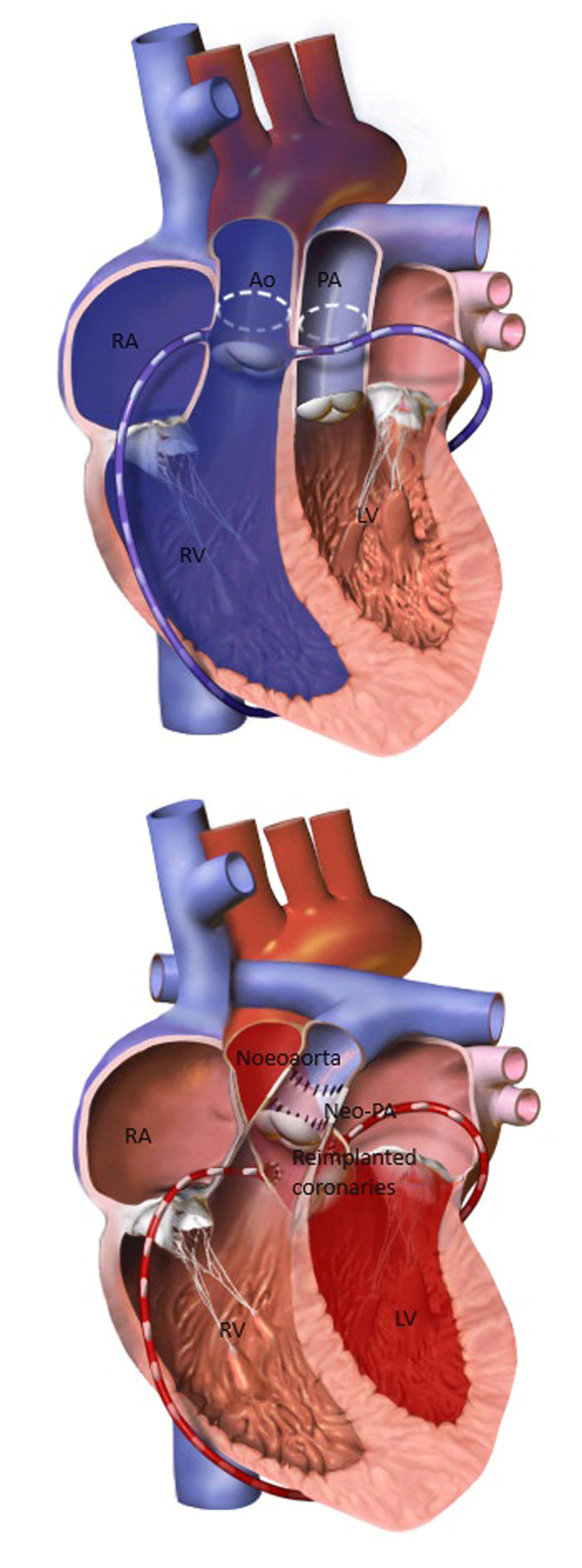
Figure 1
(Top) D-Loop transposition of great arteries; (Bottom) D-Loop transposition of great arteries, post arterial switch operation. Courtesy of Bruce Blausen (2014); WikiJournal of Medicine. RA: right atrium; RV: right ventricle; PA: pulmonary artery; Ao: aorta; LA: left atrium; LV: left ventricle
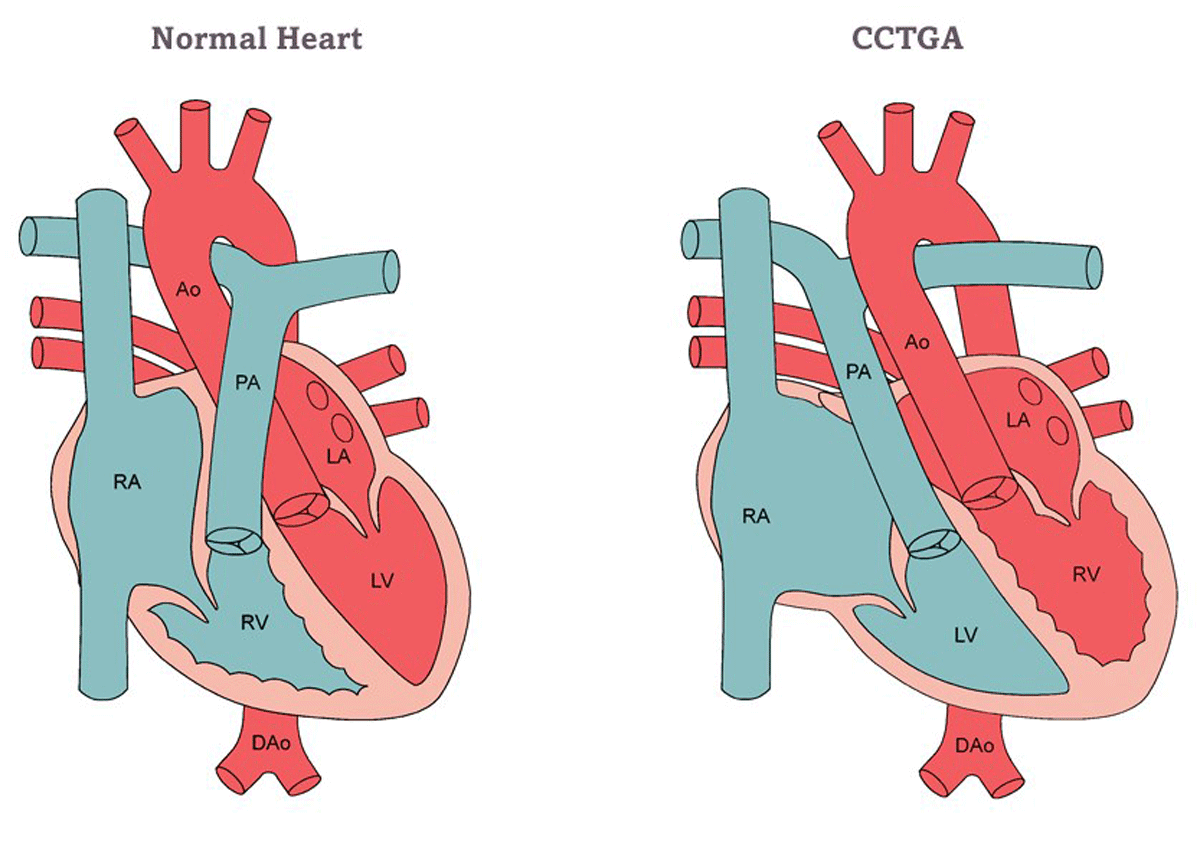
Figure 2
Congenitally corrected transposition of great arteries. Image Courtesy of the Adult Congenital Heart Association. RA: right atrium; RV: right ventricle; PA: pulmonary artery; Ao: aorta; LA: left atrium; LV: left ventricle; DAo: descending aorta
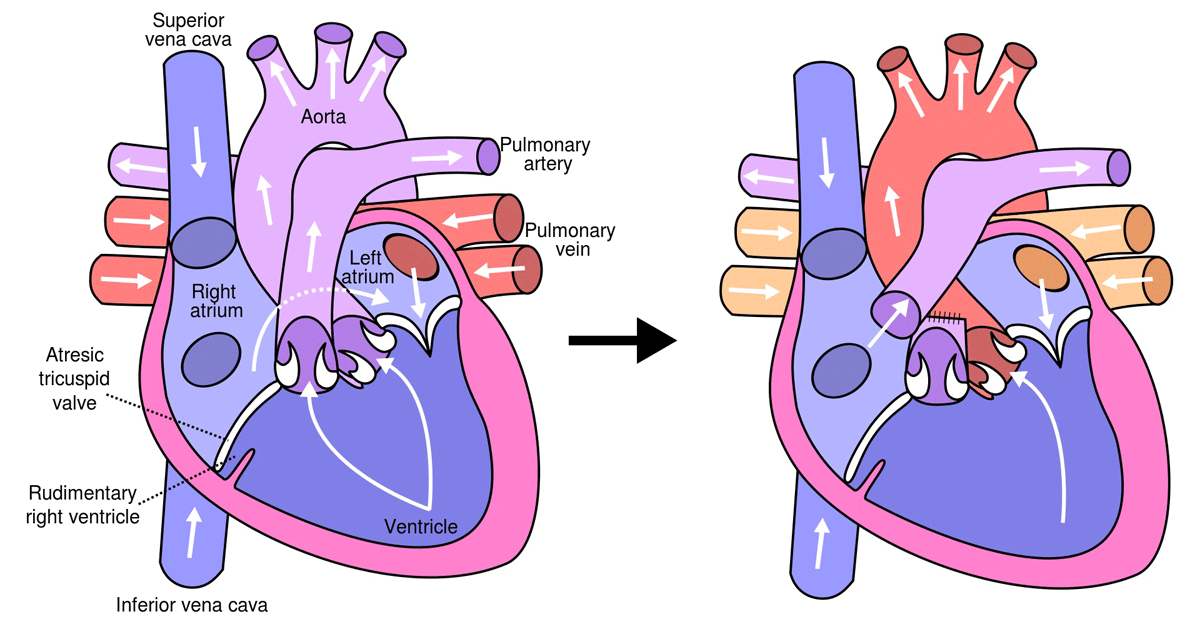
Figure 3
(Left) Diagram of the human heart with tricuspid atresia; (Right) Diagram of the human heart after Fontan procedure, via Wikimedia Commons.
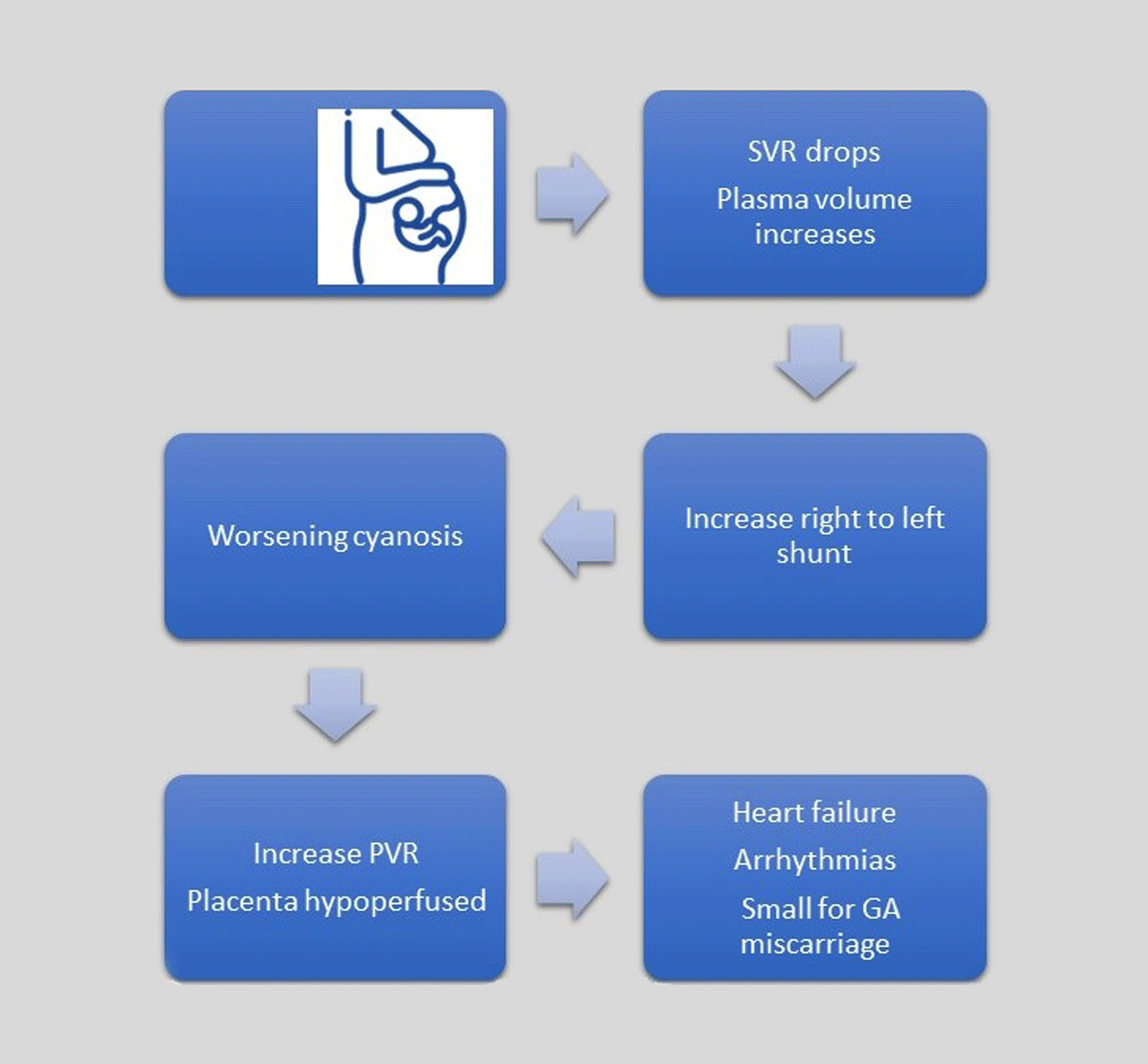
Figure 4
Hemodynamic changes in cyanotic patients during pregnancy. SVR: systemic vascular resistance; PVR: pulmonary vascular resistance; GA: gestational age