
Table 1
Transcatheter tricuspid valve interventions: past, present, and future.
| REPAIR | Coaptation Enhancement | Annuloplasty |
|---|---|---|
| Tri-Clip Pascal Dragonfly Mitralix | Trialign Cardioband TriCinch Millipede MIA PASTA Da Vingi | |
| REPLACEMENT | Orthotopic | Heterotopic |
| Evoque Intrepid V-Dyne Navigate Trisol Lux Topaz | TricValue TriCento Trillium | |
| ALTERNATIVE | Spacer | |
| Forma Croi Coramaze Tri-Flow | ||
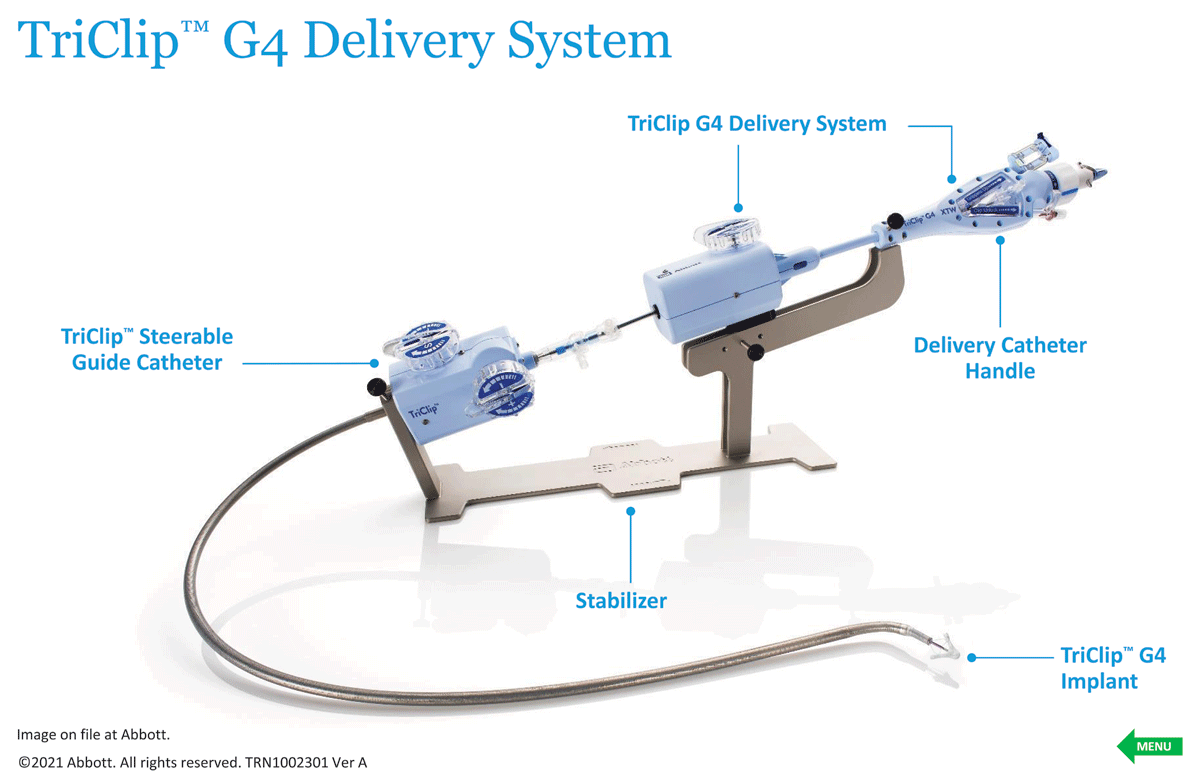
Figure 1
The Abbott TriClip G4 Delivery System and edge-to-edge repair device. Reproduced with permission of Abbott, © 2023. All rights reserved.
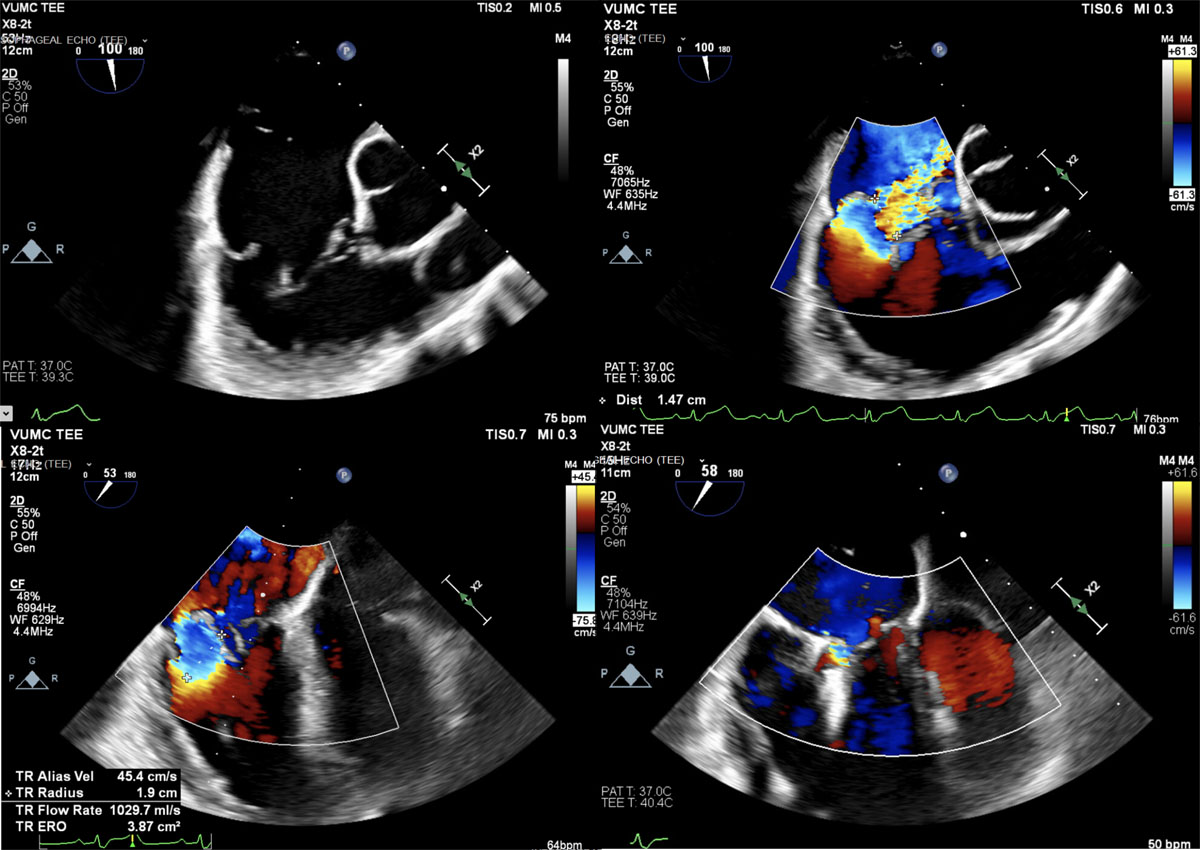
Figure 2
Transesophageal echocardiography intraprocedural image showing TriClip tricuspid valve repair. The tricuspid regurgitation went from torrential to trace after one anterior-posterior leaflet device and a second in the posterior-septal location.
Table 2
Benefits and risks of transcatheter tricuspid valve repair versus transcatheter tricuspid valve replacement. TR: tricuspid regurgitation; SLDA: single leaflet device attachment
| REPAIR | REPLACEMENT |
|---|---|
| Less invasive, safer | More invasive |
| More residual TR | TR eliminated |
| Low to no pacemaker risk | High risk for pacemaker |
| Allows for future intervention | Limited options when fails |
| Risk of SLDA | Risk of mortality, bleeding |
| No need for anticoagulation | Needs anticoagulation |
| Limited by anatomy | Less dependent on anatomy |