
Table 1
Cardiac Intensive Care Cohort patient population.
| PATIENT POPULATION | DESCRIPTION |
|---|---|
| Medicine, general surgery and neurology patients | Respiratory failure secondary to pneumonia, status post complex abdominal surgery, cerebrovascular accident status post intervention. |
| Preoperative cardiovascular, cardiac and vascular surgery patients | Unstable patients being evaluated for aortic dissection repair or cardiac surgery with or without devices. Heart transplant patient on inotropes or with intra-aortic balloon pump (IABP) or Impella. |
| Cardiovascular and thoracic surgery patients | Coronary artery bypass, valve repair or replacement, cardiac tumor resection, pneumonectomy, lobectomy, esophagectomy, aortoesophageal repair. |
| Complicated and combined vascular surgery patients | Post left ventricular assist device, heart transplant patients, aortic dissection repair (endovascular or open), superior vena cava syndrome repair, heart and/or lung transplant or combined with liver or kidney transplant. |
| Congestive heart failure patients | Acute decompensated heart failure, including those with or without cardiac devices; any patient requiring invasive cardiac monitoring, status post percutaneous coronary intervention for ST elevation myocardial infarction. |
| Extracorporeal membrane oxygenation (ECMO) patients | Venovenous in cardiac intensive care unit and venoarterial in cardiovascular intensive care unit. |
| Cardiogenic shock patients | Patients in need for mechanical circulatory support such as IABP, Impella, durable ventricular assist device, or ECMO. |
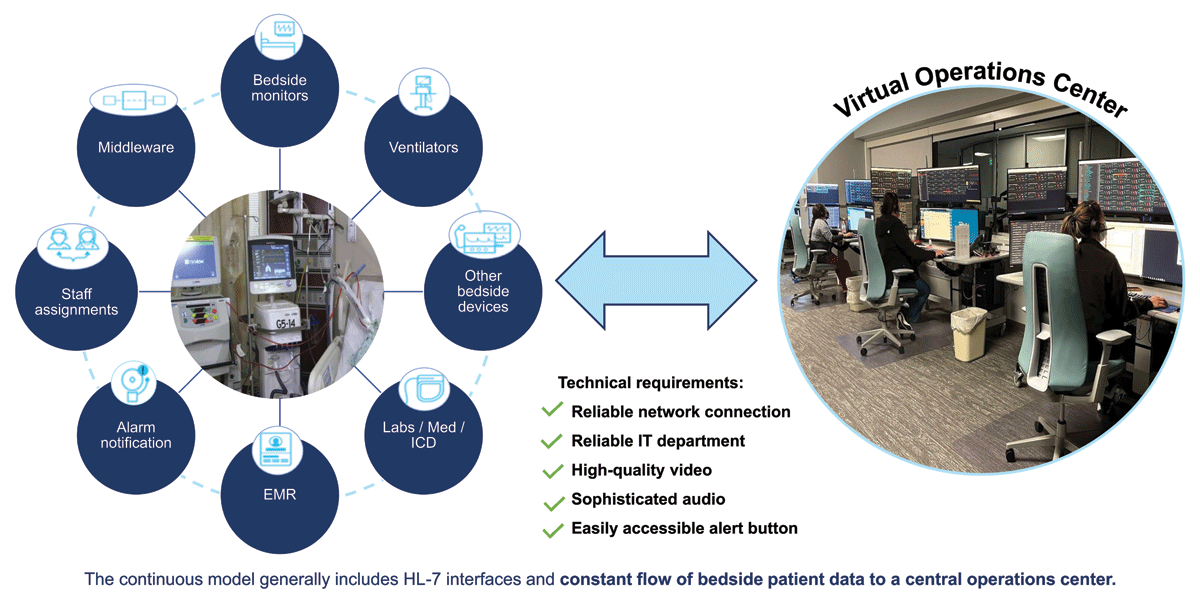
Figure 1
A primer on the virtual ICU (vICU) continuous model. The vICU platforms connect the hub (operations center) to the patient’s room using the audiovisual (AV) communication infrastructure, and patients are monitored by virtual intensivists and virtual critical care nurses vRNs) from the operations center using the AV infrastructure.18,19,20,21,22,23,24 HL-7: Health Care Level 7; EMR: electronic medical record; ICD: International Classification of Diseases
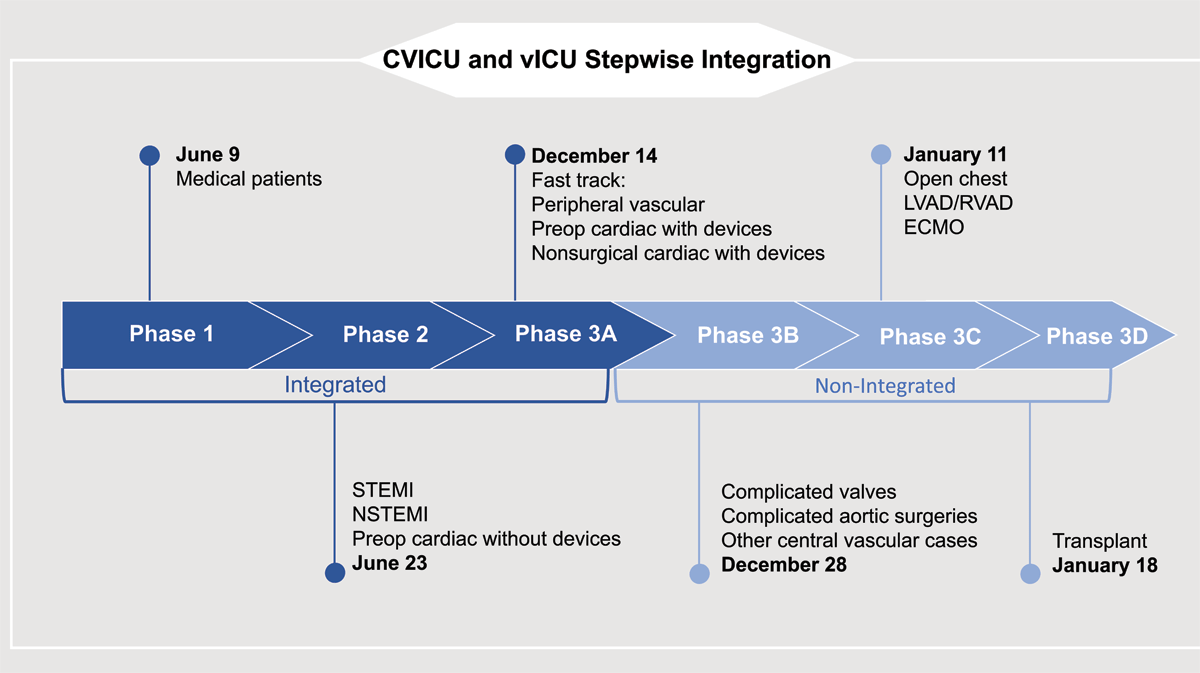
Figure 2
The introduction of virtual intensive care unit (vICU) services to the cardiovascular ICU required stepwise integration, taking almost 1 year. Two months after the initial launch, the CVICU patient population was divided into integrated and nonintegrated groups. STEMI: ST elevation myocardial infarction; NSTEMI: non-ST elevation myocardial infarction; LVAD: left ventricular assist device; RVAD: right ventricular assist device; ECMO: extracorporeal membrane oxygenation
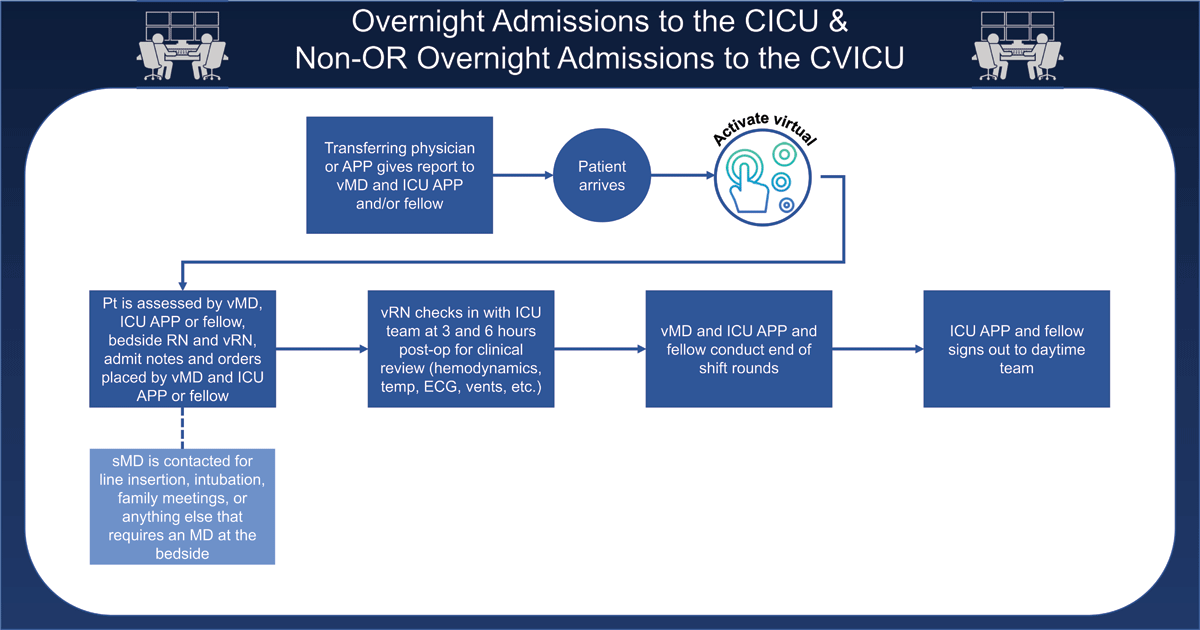
Figure 3
Workflow describing overnight integrated patient admissions to the CICU and nonoperating room (non-OR) patients to the CVICU, with the roles and responsibilities of the virtual MD (vMD). CICU: cardiac intensive care unit; CVICU: cardiovascular ICU; sMD: support intensivist; APPs: advanced practice providers; RNs: registered nurses; vRNs: virtual RNs; ECG: electrocardiogram
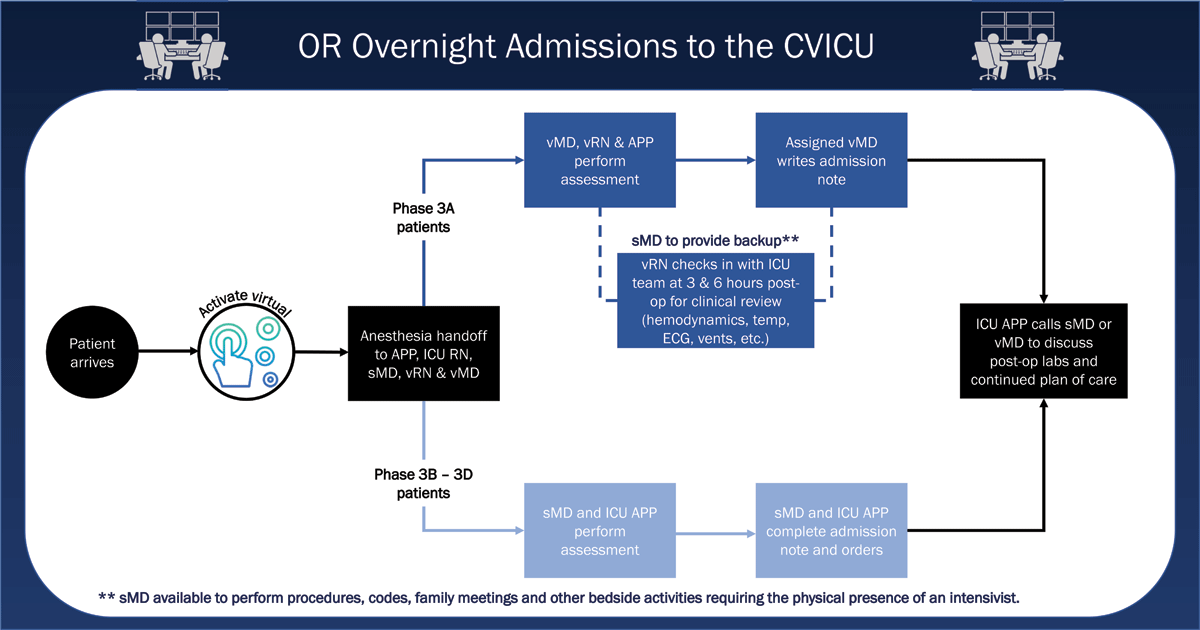
Figure 4
Workflow describing overnight admissions of patients from the operating room (OR) to the CVICU, with the roles and responsibilities of the virtual MD (vMD) covering the integrated patients, support intensivist (sMD) covering the nonintegrated patients, advanced practice providers (APPs), registered nurses (RNs) and virtual RNs (vRNs). CVICU: cardiovascular intensive care unit; ECG: electrocardiography
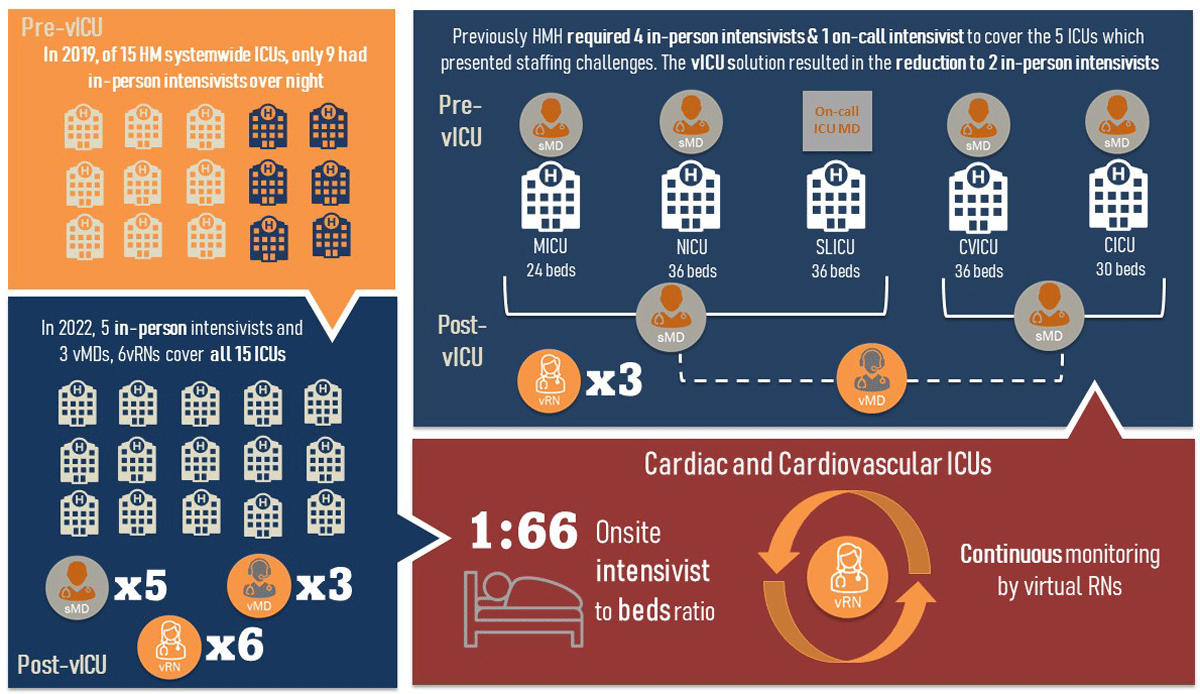
Figure 5
In-person intensivist staffing alignment pre-vICU and post-vICU across the entire Houston Methodist system, including HM hospital’s CICU and CVICU. CICU: cardiac intensive care unit; CVICU: cardiovascular ICU; vMD: virtual MD; sMD: support intensivist; vRN: virtual RNs; MICU: medical ICU; NICU: neonatal ICU: SLICU: surgical ICU
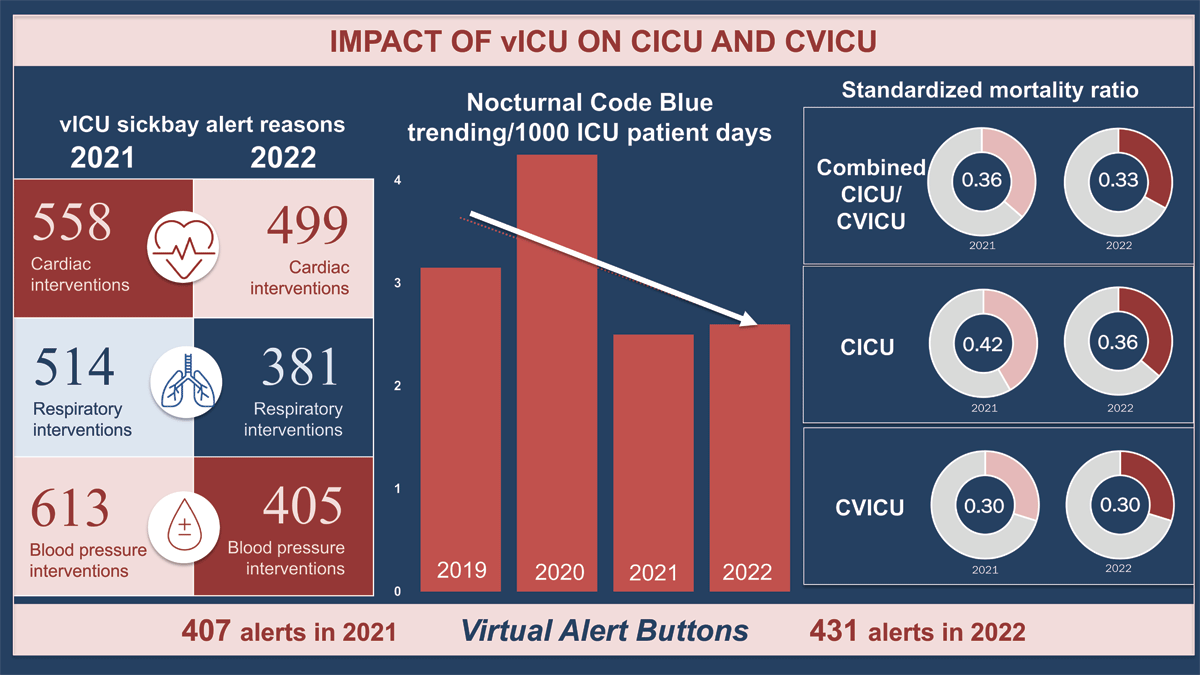
Figure 6
Number of cardiac, blood pressure, or respiratory alerts generated during the monitoring hours (2021–2022); Virtual alert triggered by bedside providers; nocturnal Code Blue trending for 1,000 patient days (2019–2022); and the Standardized Mortality Ratio for the Cardiac ICU Cohort (2021 & 2022). vICU: virtual intensive care unit; CICU: cardiac ICU: CVICU: cardiovascular ICU