
Table 1
Risk factors for familial thoracic aortic aneurysm (TAA).
| TAA and syndromic features of Marfan Syndrome, Loeys-Dietz syndrome, or vascular Ehlers-Danlos syndrome |
| TAA at < 60 years of age |
| Family history of TAA, intracranial or peripheral aneurysm |
| History of unexplained sudden death at a young age in a first- or second-degree relative |
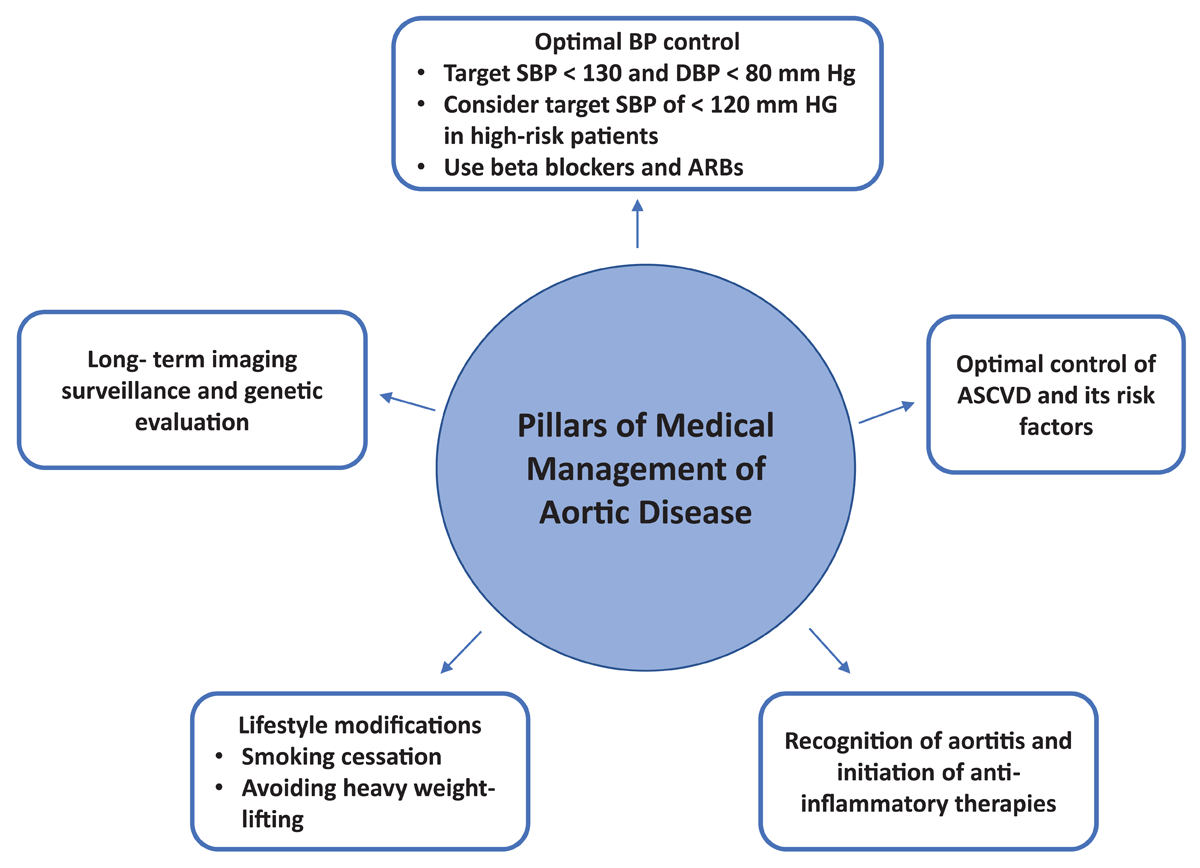
Figure 1
Summary figure of aortic disease management. BP: blood pressure; SBP: systolic blood pressure; DBP: diastolic blood pressure; ARBs: angiotensin receptor blockers; ASCVD: atherosclerotic cardiovascular disease
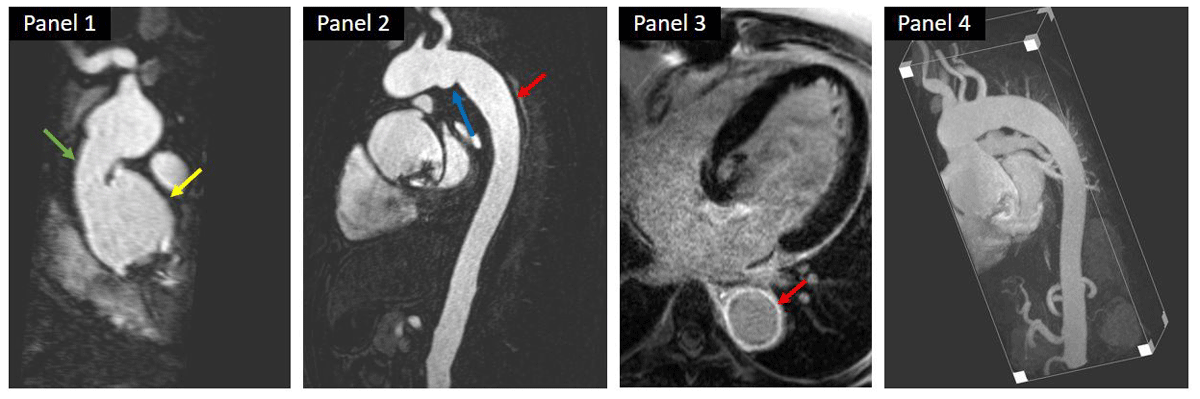
Figure 2
A case highlighting the importance of medical management in a patient with aortic disease. A 47-year-old man with a history of ascending aortic grafting and aortic valve replacement who underwent follow-up magnetic resonance angiography. The study showed a large aneurysmal formation (yellow arrow) just proximal to the ascending aortic graft (green arrow). Another small aneurysm (blue arrow) was seen at the aortic isthmus along with significant aortic wall thickening and enhancement on contrast angiography, consistent with aortitis (red arrows). Review of the histopathology slides from the aortic wall demonstrated wall thickening and extensive fibrosis along with a dense inflammatory infiltrate, with features suggestive of IgG4-related disease. The patient was started on immunomodulators and his follow-up imaging showed stable aortic dimensions.