
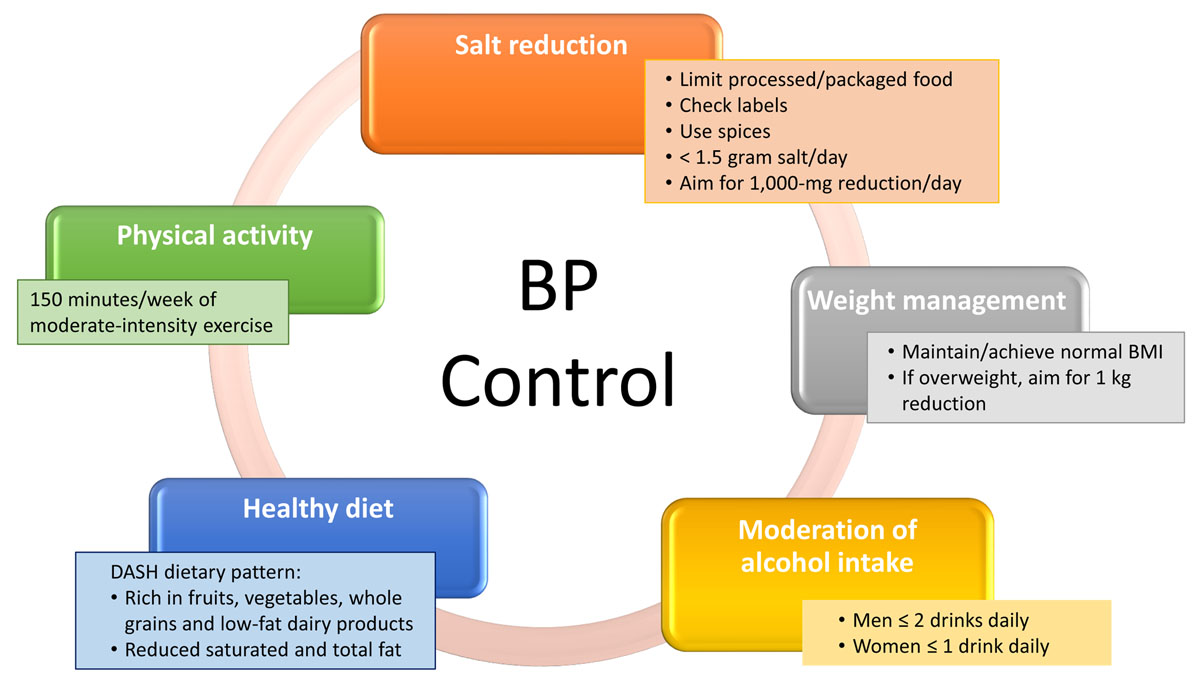
Figure 1
Non-pharmacological approaches to hypertension treatment. Attention to diet, salt and alcohol reduction, and physical activity need to be part of the therapeutic approach for all patients.
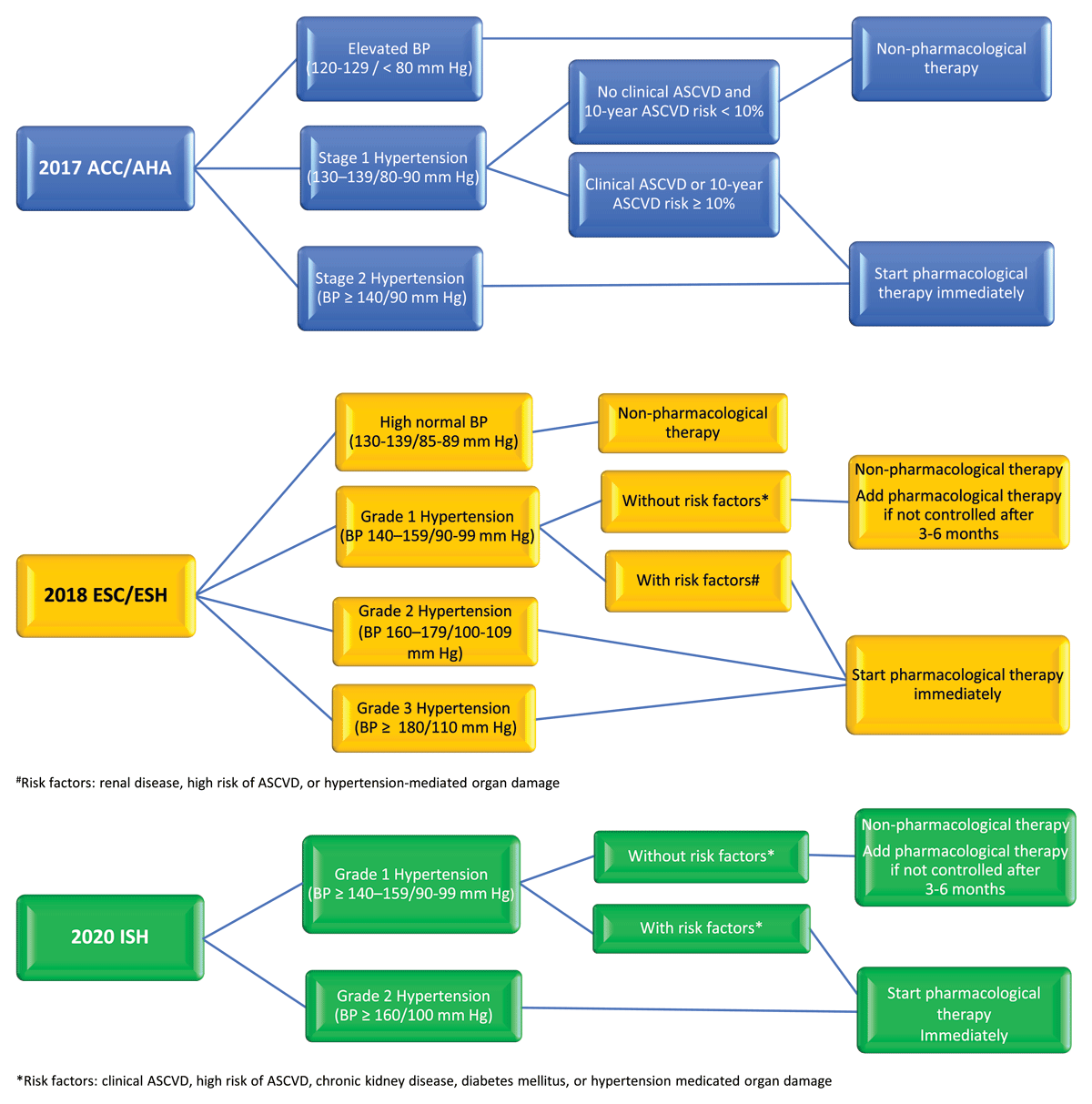
Figure 2
Overview of recommendations for hypertension treatment by current international guidelines. ACC/AHA: American College of Cardiology/American Heart Association; ESC/ESH: European Society of Cardiology/European Society of Hypertension; ISH: International Society of Hypertension
Table 1
Indications and contraindications for commonly used antihypertensive medications. ACE: angiotensin-converting enzyme inhibitor; Afib/flutter: atrial fibrillation/flutter; ARB: angiotensin II receptor blockers; CCB: calcium channel blocker; CKD: chronic kidney disease; HFrEF: heart failure with reduced ejection fraction; HFpEF: heart failure with preserved ejection fraction; MDD: major depressive disorder
| MEDICATION CLASS | CONSIDER USING | AVOID USING |
|---|---|---|
| Thiazide diuretics | Conditions associated with edema such as HFrEF and HFpEF | Hyperuricemia, hyponatremia, hypercalcemia, sulfa allergy |
| ACEi/ARB | HFrEF, CKD with proteinuria | Pregnancy, severe hyperkalemia, bilateral renal artery stenosis, angioedema (ACEi) |
| CCB | Prior stroke, stable angina, and Raynaud phenomenon (dihydropyridine), Afib/flutter and migraine headaches (non-dihydropyridine) | HFrEF (class 3 or 4), 2nd- or 3rd-degree AV nodal block, bradycardia, and sick sinus syndrome (nondihydropyridine) |
| Aldosterone antagonists | HFrEF, resistant hypertension | Severe hyperkalemia |