
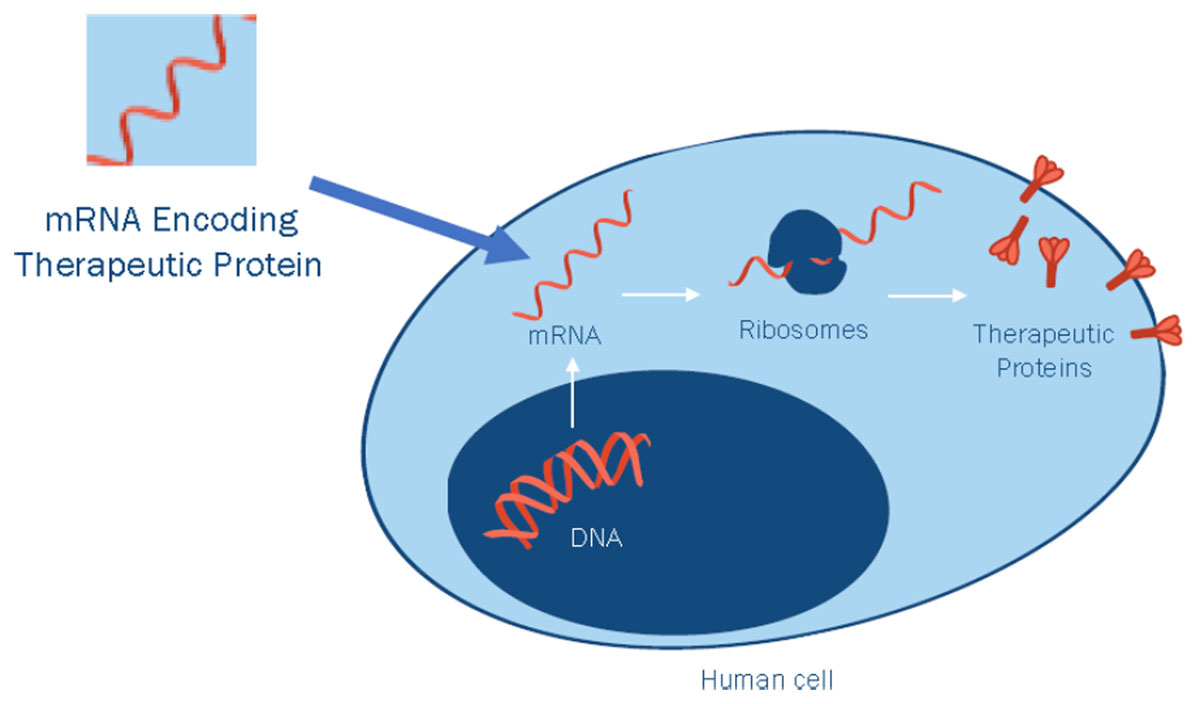
Figure 1
Transcription of endogenous mRNA, or transfection with exogenous mRNA, and its translation into proteins. Chromosomal DNA in the nucleus is transcribed into native mRNA by RNA polymerase. The mRNA that is generated is spliced and processed into the mature mRNA form that is transported into the cytoplasm. There it is translated into protein by the ribosomal machinery. Exogenous mRNA encoding a therapeutic protein crosses the cytoplasm with the aid of transfection procedures such as lipid nanoparticles or electroporation. In the cytoplasm, the ribosomal machinery translates the exogenous mRNA into the therapeutic protein.
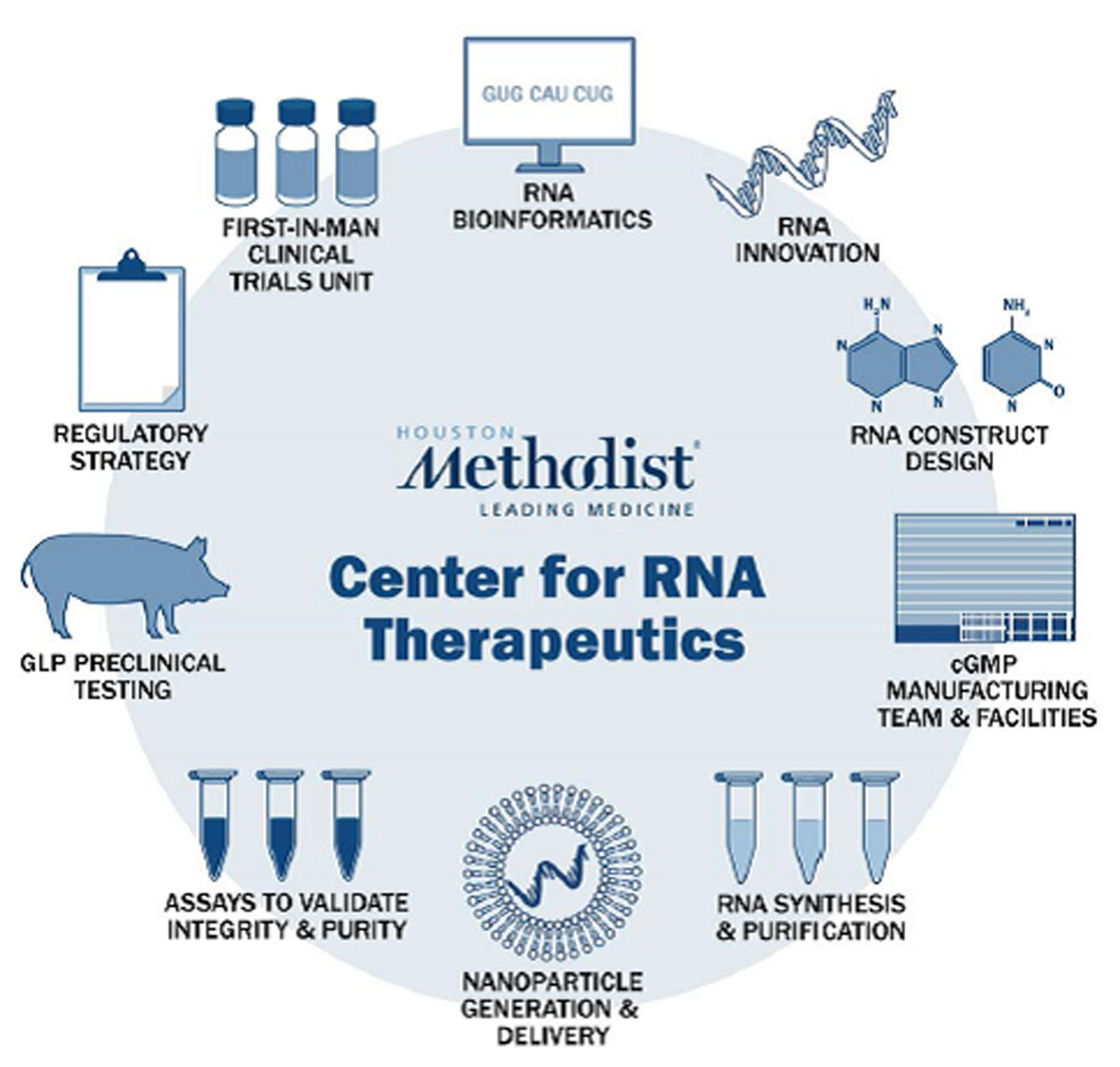
Figure 2
Hospital-based RNA therapeutics. The speed in which therapeutic mRNA can be generated using standard laboratory equipment in facilities with a small footprint facilitates hospital-based mRNA therapeutics. The Houston Methodist Center for RNA Therapeutics (CRT) innovates, designs, and synthesizes research or current Good Manufacturing Practice RNA constructs for internal use as well as for external clients such as biotech startups and academic groups. The center has the technology and know-how to encapsulate the mRNA and provide GLP validation with in vitro assays and preclinical small and large animal studies. In addition, it has a first-in-man clinical trials unit and a large hospital system that routinely performs phase 2 and 3 clinical trials (www.houstonmethodist.org/rna-therapeutics/).