
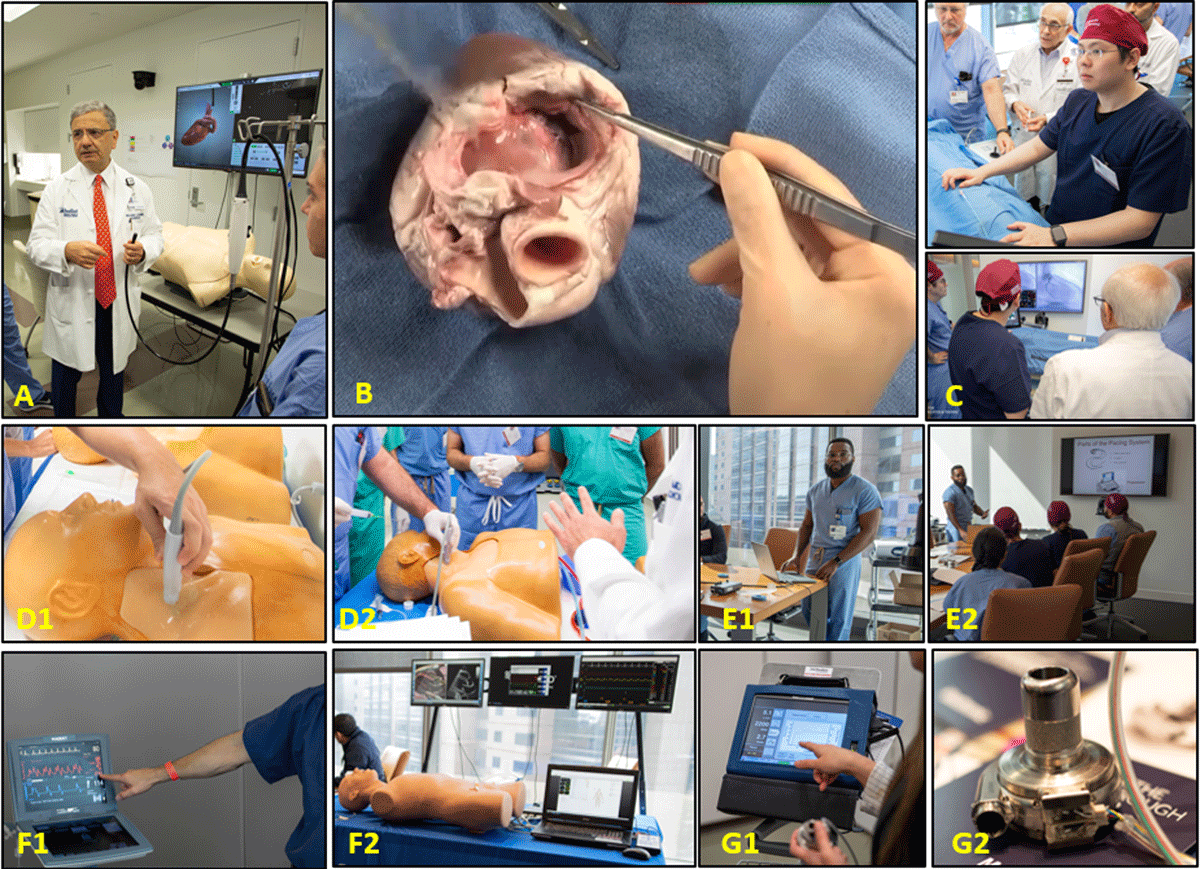
Figure 1
Hands-on skills stations in the prepandemic era. (A) Learning transesophogeal echocardiography using a simulator model. (B) Porcine heart dissection. (C) Learning cardiac catheterization skills and angiographic anatomy using a simulator model. (D) Practicing vascular ultrasound and ultrasound-guided access. (E) Learning device interrogation. (F) Understanding the basics and troubleshooting for mechanical circulatory support devices. (G) Learning the basic concepts of left ventricular assist device management.
Table 1
Challenges and solutions for moving Boot Camp from in-person to virtual.
| Challenges | Solutions |
|---|---|
| Avoid Zoom fatigue | Concise content made available for on-demand viewing |
| Reduce connectivity issues | Prerecorded lectures to minimize errors in live production and onsite audiovisual team for troubleshooting |
| Hands-on skills lab unavailable without in-person component | Prerecorded skills sessions and live “show and tell” |
| Replicate in-person networking and mentorship opportunities | Hold live virtual “Meet the Expert” sessions in small-group Zoom breakout rooms |
| Keep the event interactive | Use Zoom chat box for real-time question-and-answer, digital moderators to monitor questions, and social media team to encourage online conversations about content |
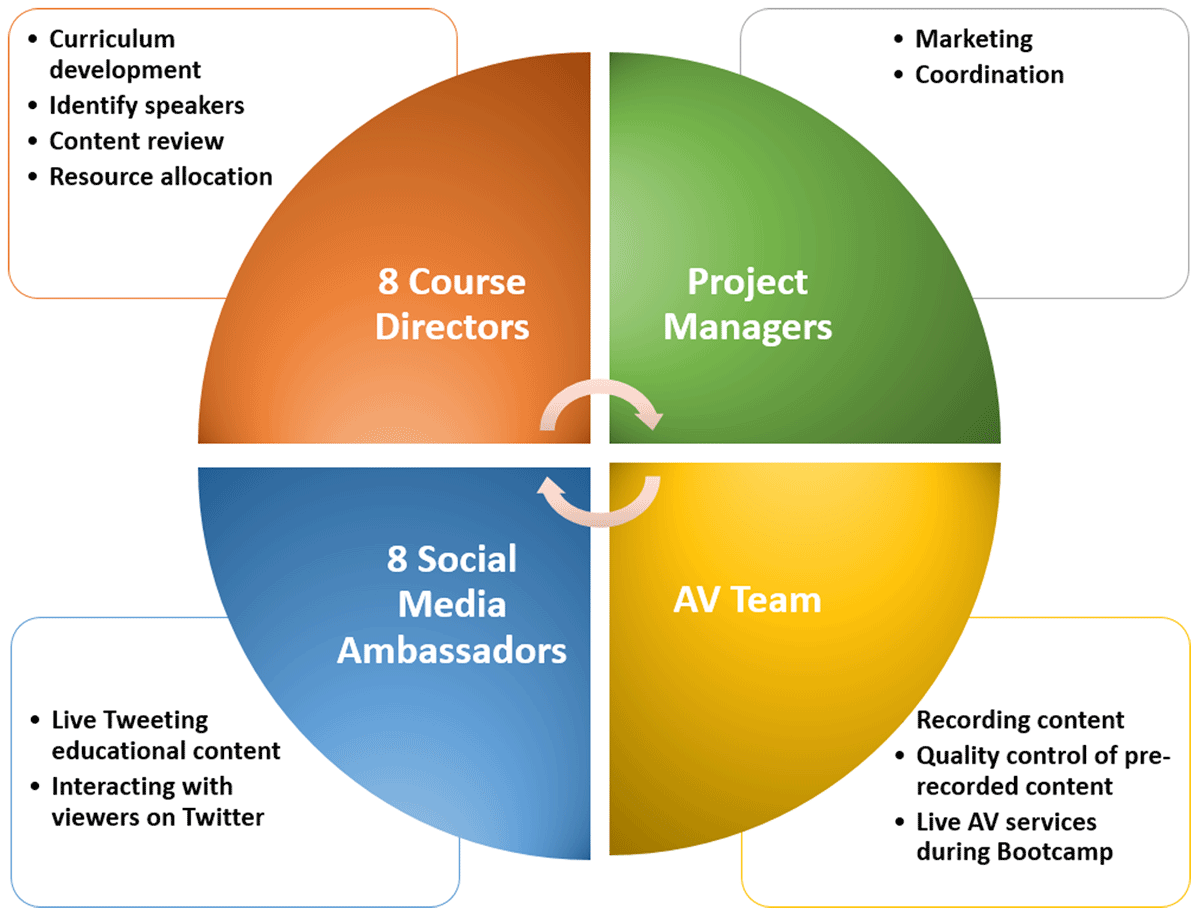
Figure 2
A team-based approach was used to plan and execute the virtual Boot Camp.
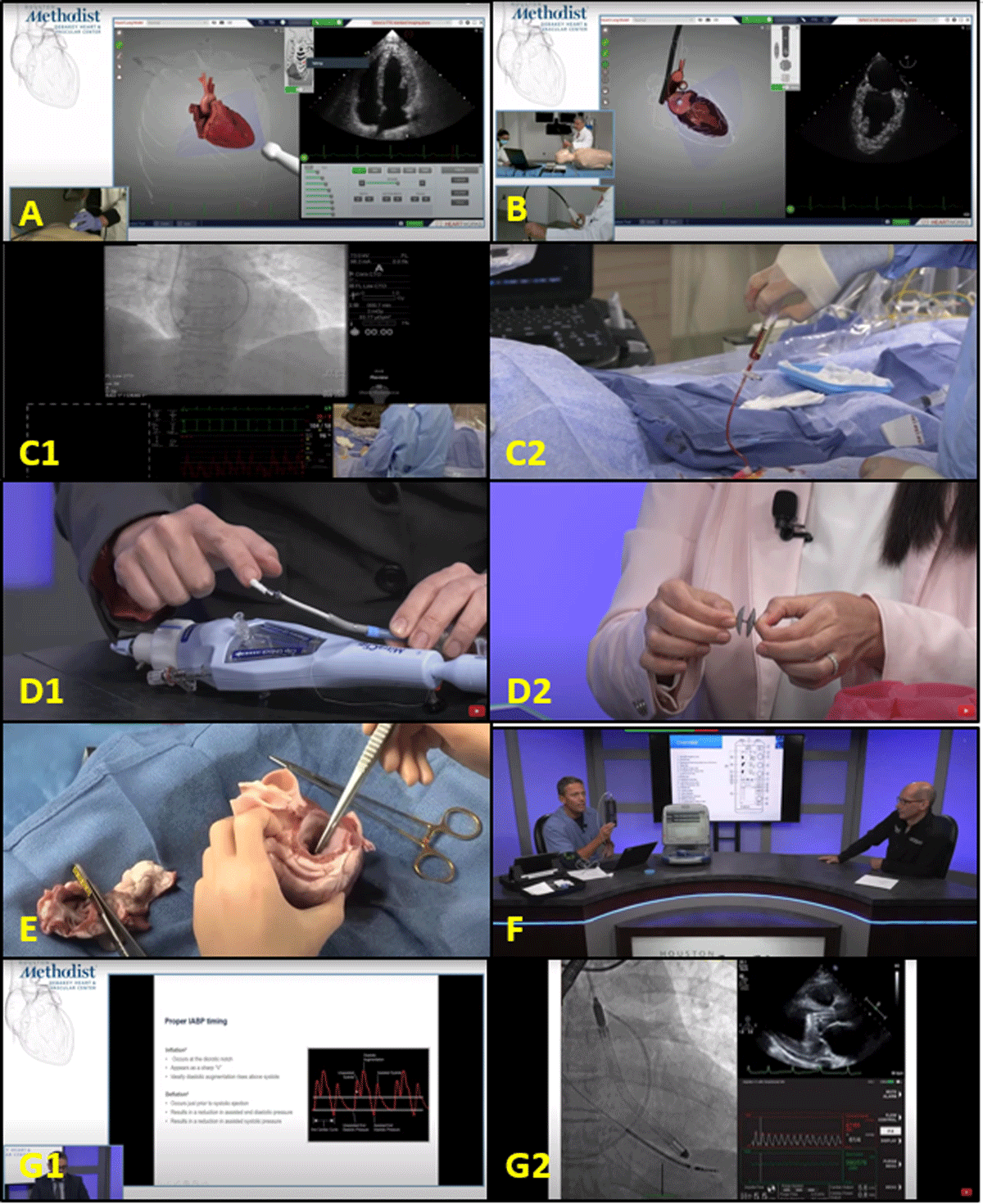
Figure 3
Hands-on skills session. (A) Transducer handling and optimal views were demonstrated simultaneously to teach how to obtain optimal transthoracic echocardiography images. (B) Transesophageal echocardiography was taught on a simulator model, starting with intubation technique to acquiring optimal views. (C) The cardiac catheterization skills demonstration included best practices to obtain vascular access and basics of performing right heart catheterization and coronary angiography. (D) A show-and-tell session demonstrated commonly used transcatheter devices to treat structural heart disease. (E) Porcine heart dissection was demonstrated on screen to explain cardiac anatomy. (F) Pacemaker and defibrillator basics and interrogation were demonstrated live from our studio. (G) A prerecorded video was used to explain the basics of mechanical circulatory support devices.
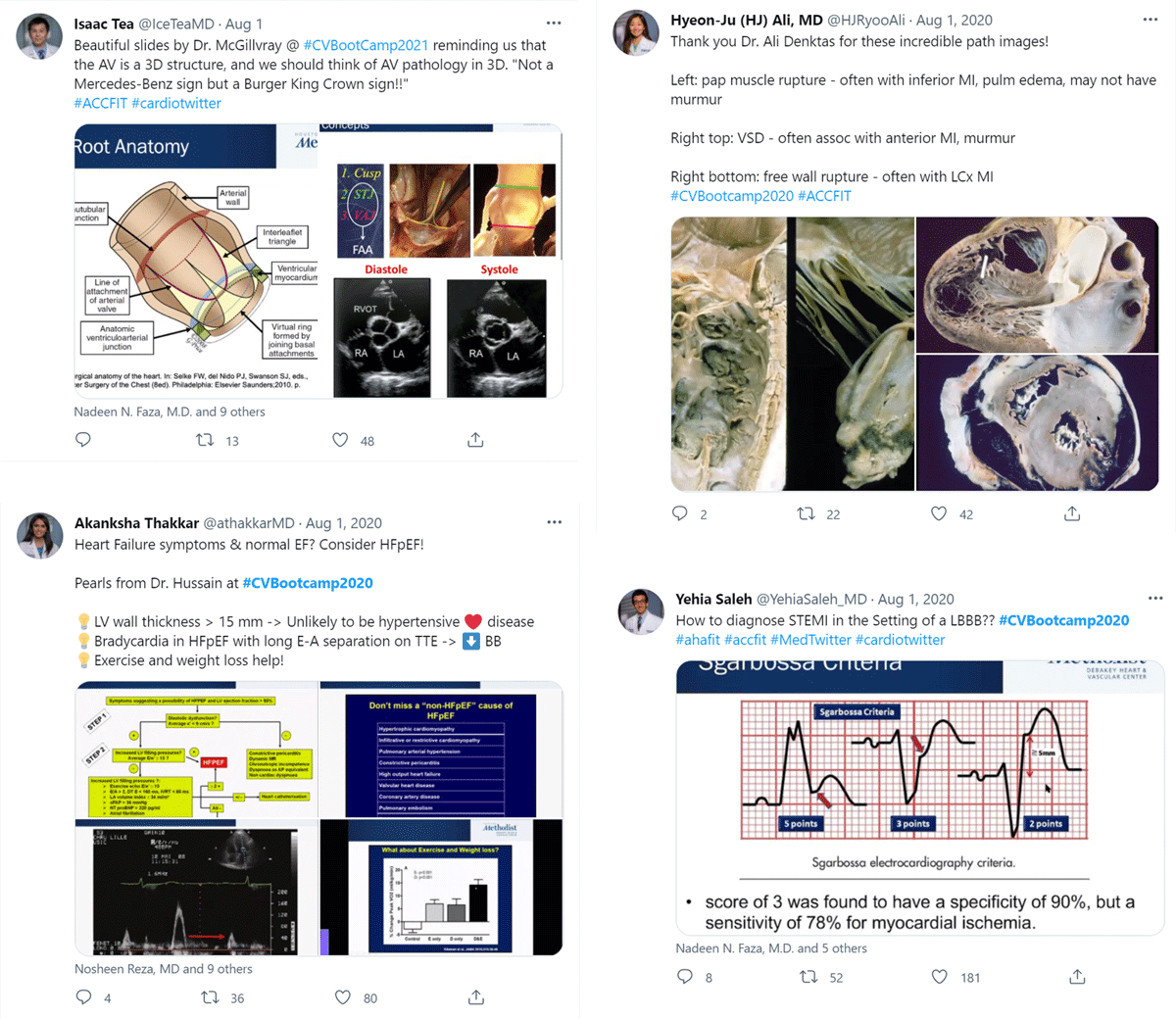
Figure 4
The social media team continued the conversation on Twitter by posting educational content and interacting with the audience.