
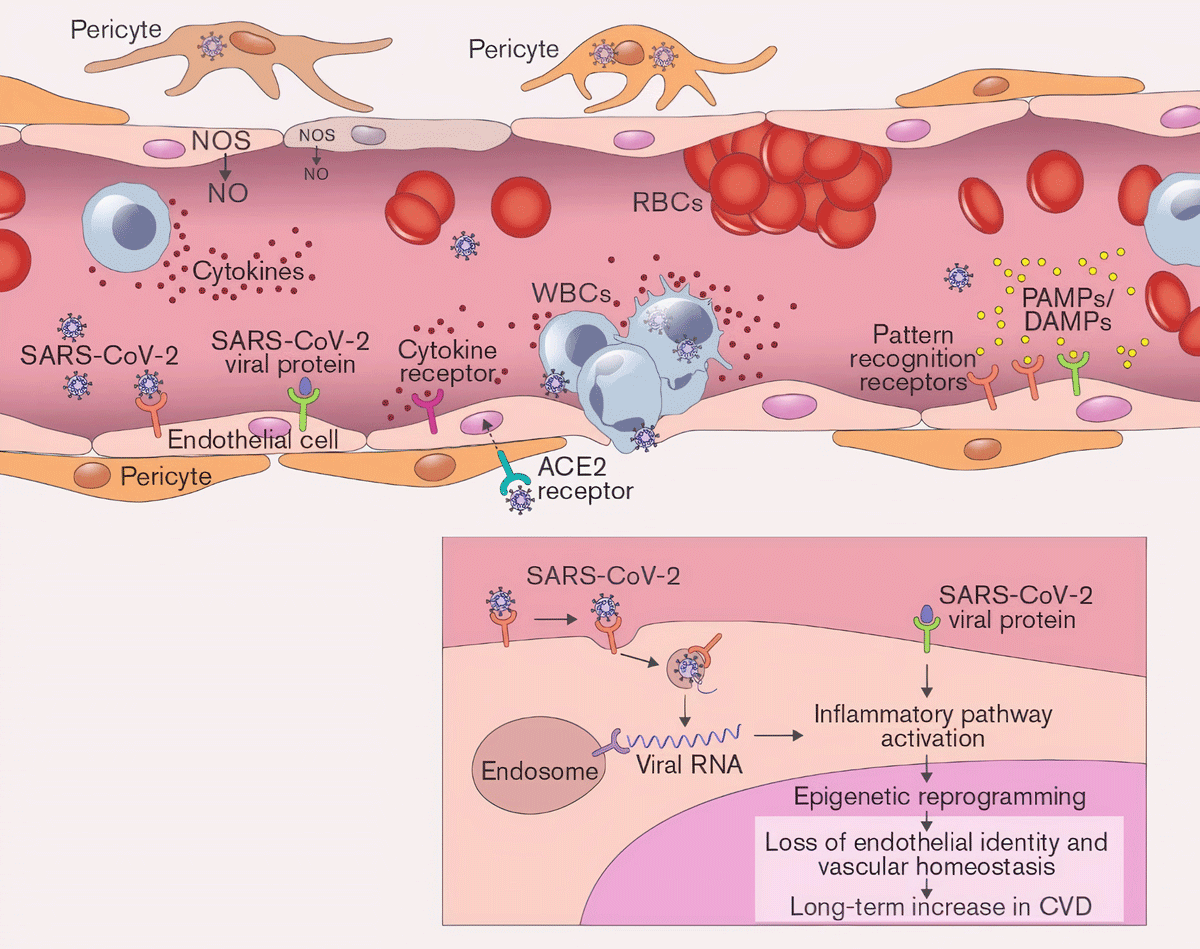
Figure 1
SARS-CoV-2 activates inflammatory signaling within endothelial cells (EC) that alters endothelial homeostasis and promotes inflammation, vascular permeability, and thrombosis. Epigenetic alterations contribute to the acute and chronic manifestations of COVID endotheliopathy. NOS: nitric oxide synthase; NO: nitric oxide; WBCs: white blood cells; RBCs: red blood cells; PAMP: pathogen-associated molecular patterns; DAMP: damage-associated molecular patterns; CVD: cardiovascular disease.
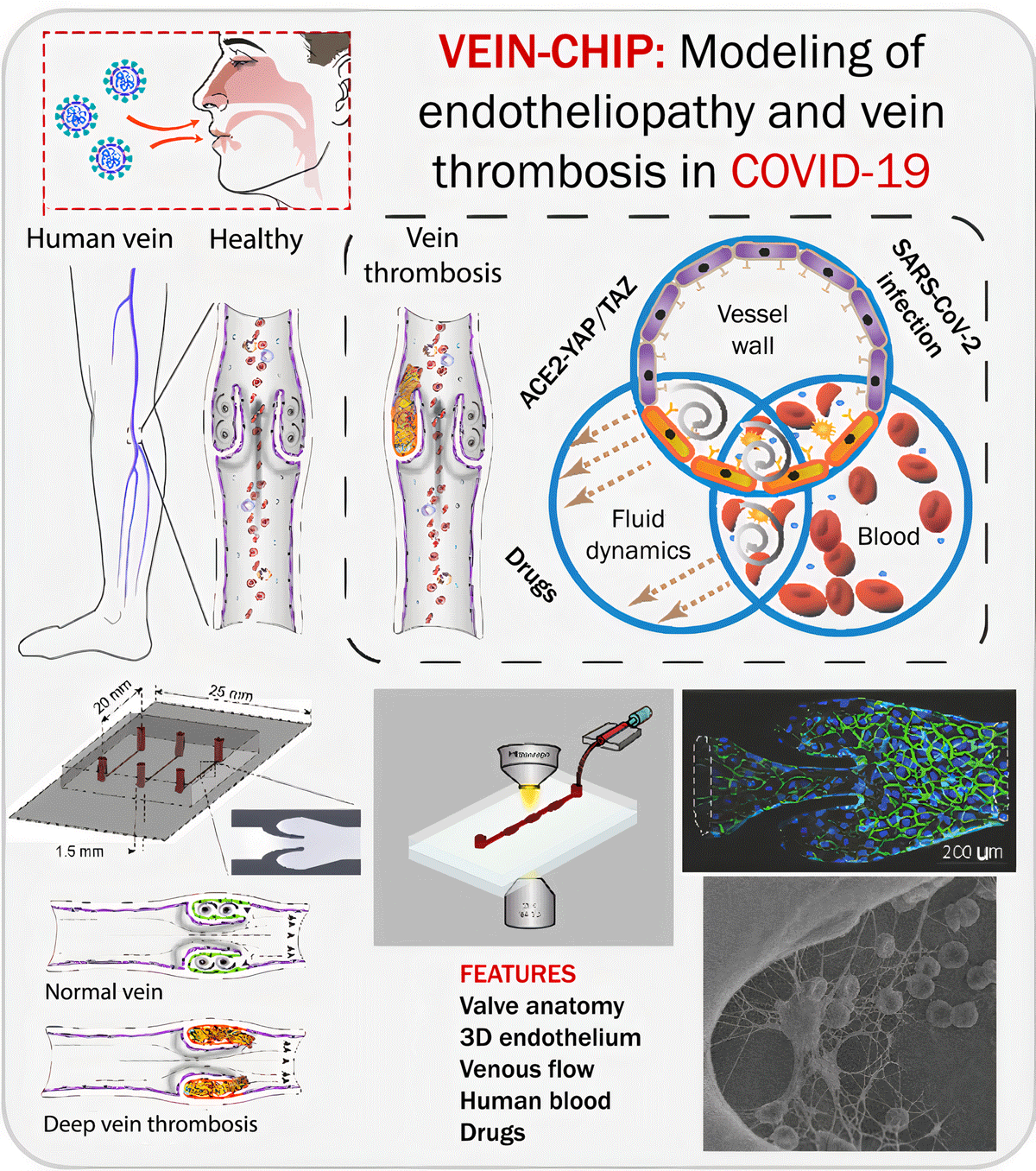
Figure 2
Infographic describing how the vein-chip will model endotheliopathy and thrombosis in COVID-19. Bottom fluorescence micrograph and scanning electron image taken from Rajeeva et al. Microengineered Human Vein-Chip Recreates Venous Valve Architecture and Its Contribution to Thrombosis. Small. 2020;16(49):2003401. doi: 10.1002/smll.202003401
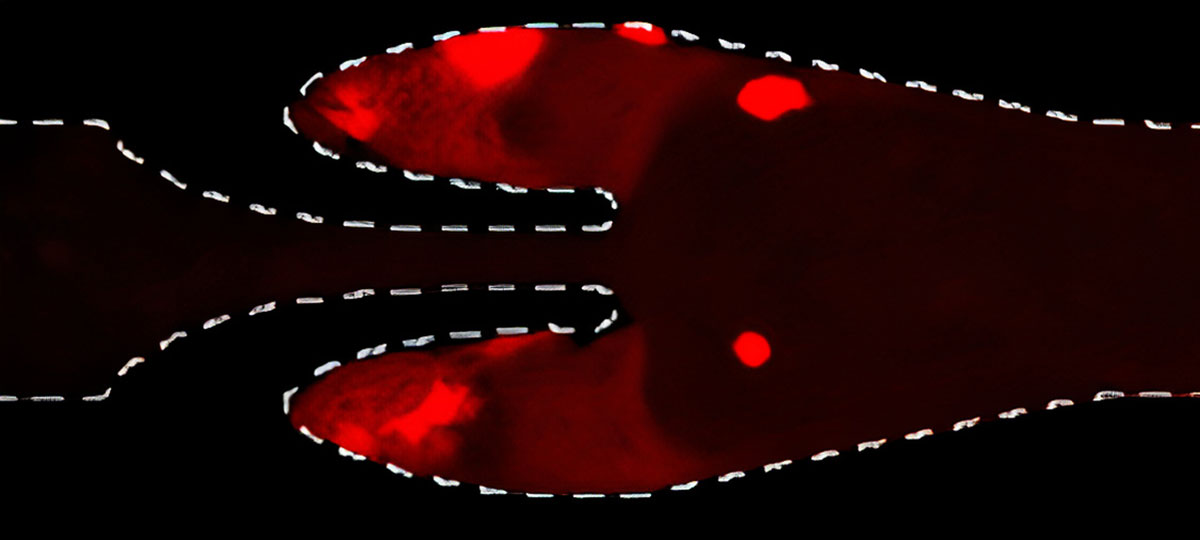
Figure 3
A section of vein-chip. Human vein-chip more accurately models human venous architecture, flow, and thrombosis. Taken from Rajeeva et al. Microengineered Human Vein-Chip Recreates Venous Valve Architecture and Its Contribution to Thrombosis. Small. 2020;16:2003401. doi: 10.1002/smll.202003401. Image enlarged using Let’s Enhance.
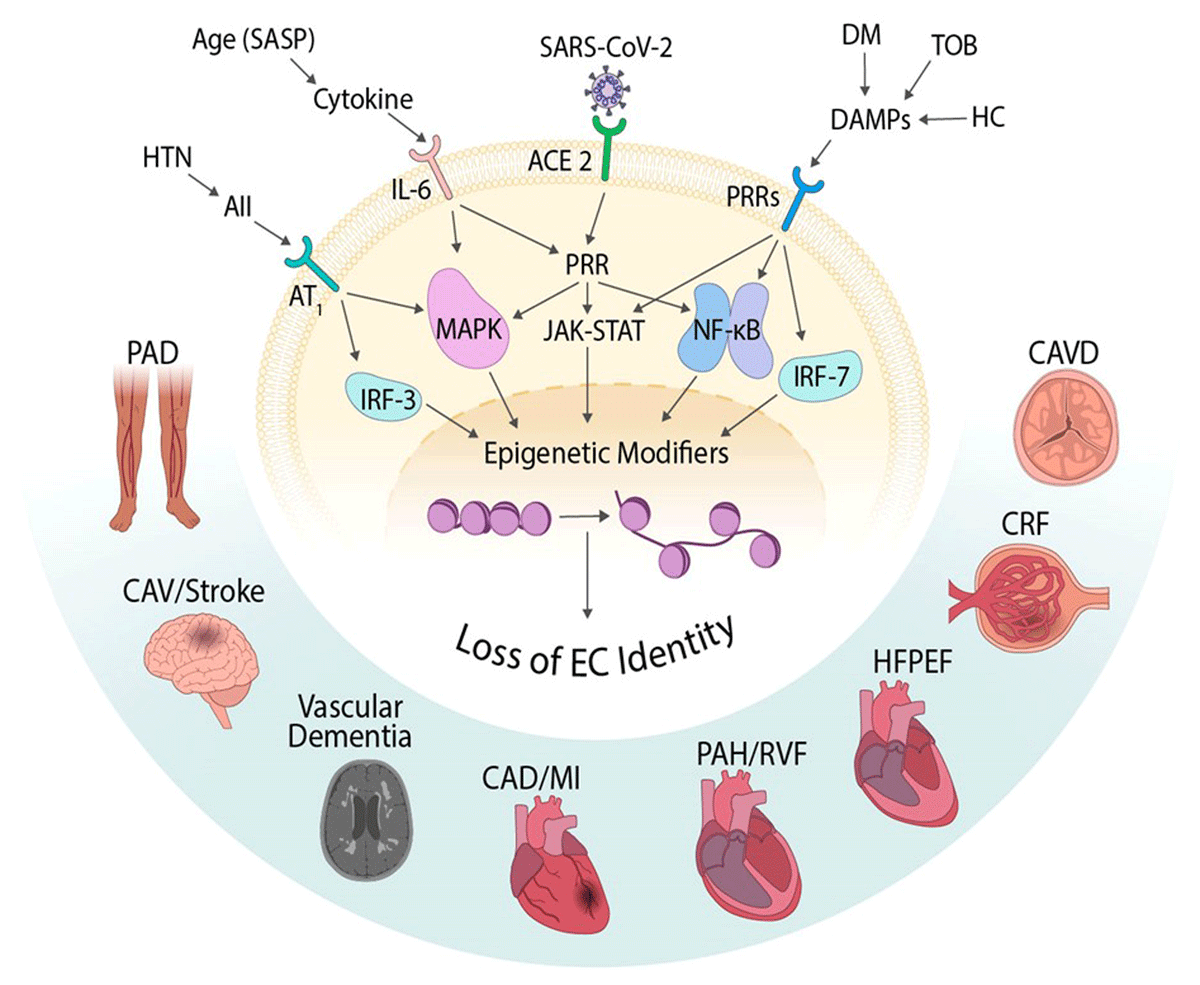
Figure 4
Pathways in endothelial cells (ECs) that contribute to epigenetic alterations and EC loss of function causing downstream cardiovascular disease. ACE2: angiotensin converting enzyme 2; DM: diabetes mellitus; TOB: tobacco exposure; DAMP: damage-associated molecular patterns; HC: hypercholesterolemia PRR: pattern recognition receptors; JAK/STAT: Janus kinase signal transducer and activator of transcription; NF-kB: nuclear factor kappa B; IRF-7: interferon regulatory factor 7; CAVD: calcific aortic valve disease; CRF: corticotropin-releasing factor; HFPEF: heart failure with preserved ejection fraction; PAH/RVP: pulmonary arterial hypertension/right ventricular pressure; CAD/MI: coronary artery disease/myocardial infarction; CAV: cardiac allograft vasculopathy; PAD: peripheral arterial disease; HTN: hypertension.