
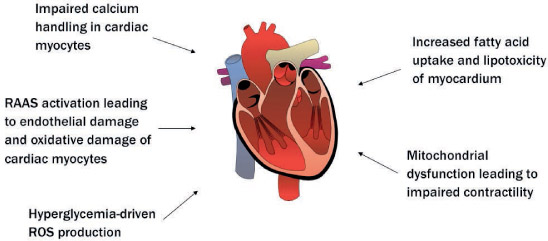
Figure 1.
Mechanisms underlying diabetic cardiomyopathy. RAAS: reninangiotensin-aldosterone system; ROS: reactive oxygen species
Table 1.
Comparison of efficacy and safety profiles between antihyperglycemic classes DPP-4 inhibitors, GLP-1 agonists, and SGLT2 inhibitors. DPP-4: dipeptidyl peptidase-4; GLP-1: glucagon-like peptide-1; SGLT2: sodium-glucose cotransporter-2; LDL-C: low-density lipoprotein cholesterol
| ANTIHYPERGLYCEMIC CLASS | HBA1C LOWERING EFFECT | COMMON SIDE EFFECTS | WARNINGS/CONTRAINDICATIONS |
|---|---|---|---|
| DPP-4 inhibitors | 0.5–0.8% | Headaches, upper respiratory tract infection, nasopharyngitis, joint pain, dizziness | Warnings: pancreatitis (avoid if history of chronic pancreatitis or discontinue if acute pancreatitis); heart failure (saxagliptin and alogliptin); arthalgias and bullous pemphigoid; hypersensitivity-related events; hepatotoxicity (alogliptin) Contraindications: serious hypersensitivity reactions to agent |
| GLP-1 agonists | 1–1.5% | Nausea, vomiting, diarrhea (mostly self limited and dose related), antibody development (attenuated glycemic response), injection site reaction, headaches, sinus tachycardia, abdominal pain or distension | Warnings: pancreatitis (avoid if history of chronic pancreatitis or discontinue if acute pancreatitis); gallbladder and bile duct disease; severe gastroparesis, caution on renal impairment (risk of acute injury observed if severe GI symptoms); increased risk of complications from diabetic retinopathy (semaglutide) Contraindications: serious hypersensitivity reactions to agent, personal or family history of medullary thyroid carcinoma or multiple endocrine neoplasia type 2 (boxed warning) |
| SGLT2 inhibitors | 0.7–1.0% | Genitourinary fungal infection, urinary tract infection, increased urine output, nausea, nasopharyngitis, hypotension | Warnings: euglycemic diabetic ketoacidosis, hypotension, acute kidney injury, urosepsis and pyelonephritis, increased LDL-C, genital mycotic infections, increased risk of bone fracture (canagliflozin), increased risk of lower limb amputation (canagliflozin) (boxed warning), avoid or use caution if active or history of bladder cancer, respectively (dapagliflozin) Contraindications: severe hypersensitivity reaction, severe renal dysfunction or end-stage kidney disease |
Table 2.
Major differences between incretin-based therapy classes: DPP-4 inhibitors and GLP-1 agonists.23 DPP-4: dipeptidyl peptidase-4; GLP-1: glucagon-like peptide-1
| FEATURES | DPP-4 INHIBITORS | GLP-1 AGONISTS |
|---|---|---|
| Biological effect | Both GLP-1 and GIP enhanced Increased to physiological endogenous levels (10–25 pmol/L) | Pure GLP-1 effect Increased to supraphysiological levels (60–90 pmol/L) |
| Route of administration | Oral | Subcutaneous |
| Efficacy | Moderate efficacy | Enhanced efficacy |
| Impact on HBA1c | 0.5–1% | 1–1.5% |
| Tolerance | Usually well tolerated | Common tolerance issues at initiation (nausea, gastrointestinal upset) |
| Cardiovascular risk | Noninferior to traditional therapies | Decreased compared to traditional therapies |
| Cost | Less expensive (approximately $150–$450) | More expensive (approximately $600–$850) |
| Effect on weight | Neutral | Promotes weight loss |
Table 3.
Recommendations for antihyperglycemic therapy based on heart failure stage.
| HEART FAILURE STAGE | RECOMMENDATIONS |
|---|---|
| Stage A | Lifestyle interventions and metformin Consider incretin-based therapy or SGLT2 inhibitor for overweight or obesity |
| Stage B | Lifestyle interventions and metformin Consider incretin-based therapy with DPP-4 inhibitors Consider SGLT2 inhibitors |
| Stage C | Lifestyle changes and metformin Switch from DPP-4 inhibitors to GLP-1 agonists SGLT2 inhibitors |
| Stage D | Lifestyle changes Insulin as mainstay of therapy SGLT2 inhibitors and GLP-1 agonists, if tolerated |
Table 4.
Newer agents, brand name, dosing, and recommended renal adjustments. eGFR: estimated glomerular filtration rate; ESRD: end-stage renal disease; CrCl: creatinine clearance; HD: hemodialysis; PD: peritoneal dialysis.
| MEDICATION | BRAND NAME | DOSING | RENAL ADJUSTMENT |
|---|---|---|---|
| DPP-4 inhibitors | |||
| Sitagliptin | Januvia | 100 mg daily | eGFR (mL/min/1.73 m2) 30–45: 50 mg daily < 30: 25 mg daily ESRD on HD or PD: 25 mg daily |
| Alogliptin | Nesina | 25 mg daily | CrCl (mL/min) 30–60: 12.5 mg daily < 30: 6.25 mg daily ESRD on HD: 6.25 mg daily |
| Saxagliptin | Onglyza | 5 mg daily | eGFR (mL/min/1.73 m2) < 45: 2.5 mg daily ESRD: 2.5 mg daily (post-dialysis) |
| Linagliptin | Tradjenta | 5 mg daily | Not necessary |
| GLP-1 agonists – short acting | |||
| Lixisenatide | Lyxumia, Adlyxin | Starting dose of 10 mg every day, titrate up to 20 mg daily | eGFR (mL/min/1.73 m2) < 30: cautious use < 15: not recommended |
| Exenatide | Byetta | 5–10 mg BID | CrCl (mL/min) < 30 or ESRD: not recommended |
| GLP-1 agonists – long acting | |||
| Albiglutide | Tanzeum | 30–50 mg every week | Not necessary |
| Dulaglutide | Trulicity | 0.75–1.5 mg every week | Not necessary |
| Liraglutide | Victoza | Initial dose of 0.6 mg for 1 week, titrate up to 1.2 mg daily Increase to 1.8 mg daily if inadequate glycemic control | Not necessary |
| Exenatide | Bydureon | 2 mg every week | CrCl (mL/min) 30–50: caution < 30: not recommended |
| Semaglutide | Ozempic | Initial dose of 0.25 mg once a week for 4 weeks, increase to 0.5 mg every week. Increase to 1 mg every week if inadequate glycemic response. | Not necessary |
| SGLT2 inhibitors | |||
| Empagliflozin | Jardiance | 10–25 mg daily | eGFR (mL/min/1.73 m2) 30–45: not recommended < 30: contraindicated |
| Canagliflozin | Invokana | 100–300 mg daily | eGFR (mL/min/1.73 m2) 45–60: max 100 mg daily 30–45: not recommended < 30: contraindicated |
| Dapagliflozin | Farxiga | 5–10 mg daily | eGFR (mL/min/1.73 m2) 30–60: not recommended < 30: contraindicated |