
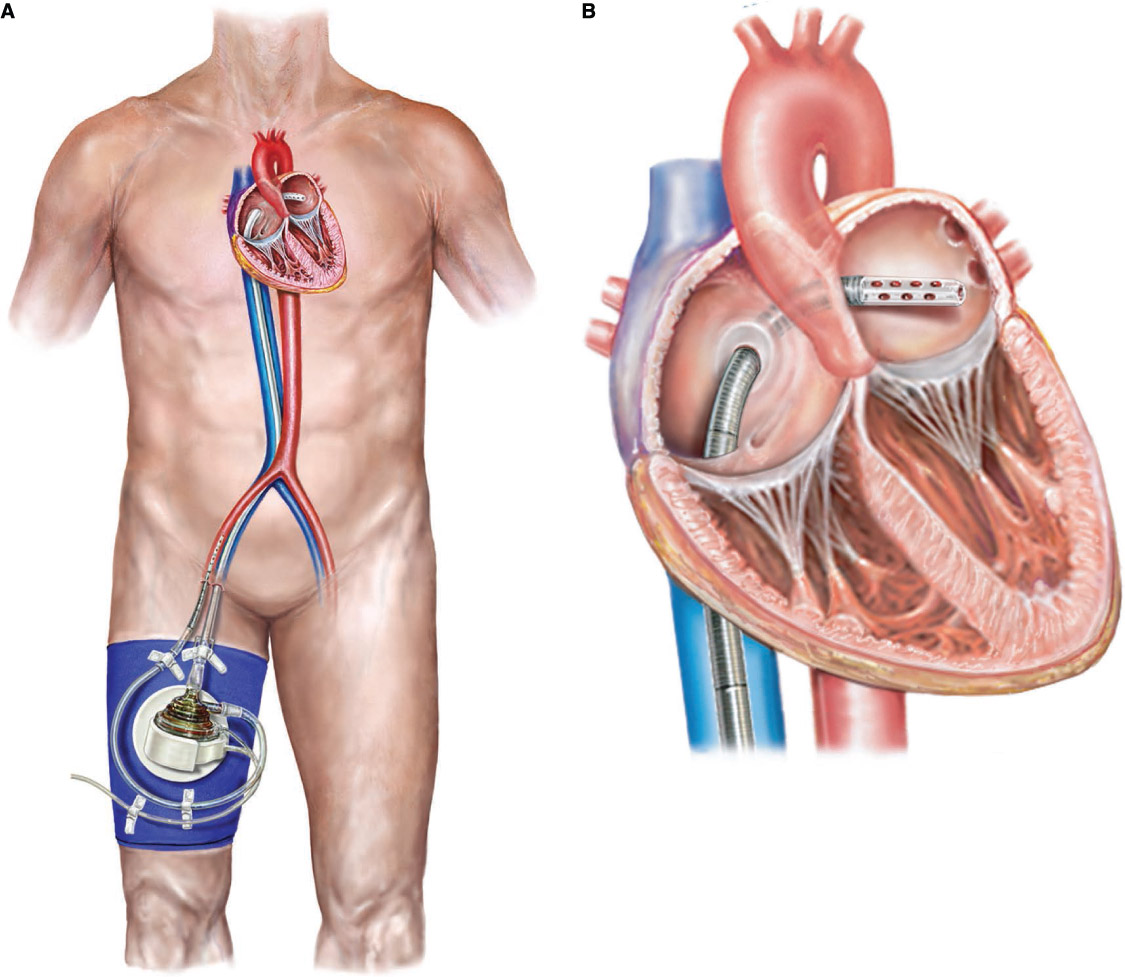
Figure 1.
TandemHeart (CardiacAssist, Inc.) percutaneous placed short-term left ventricular assist device. Reprinted with permission.
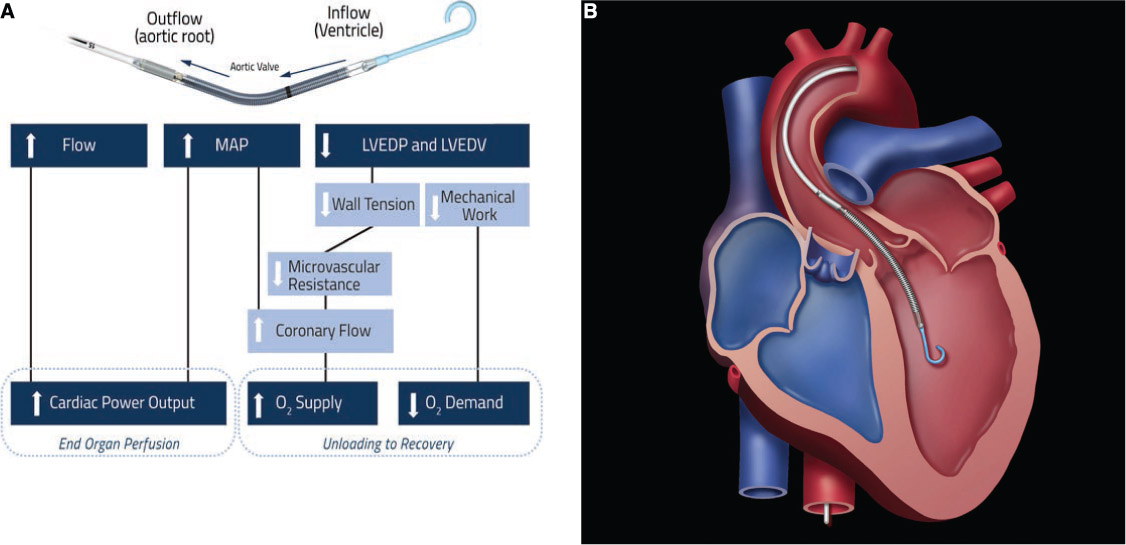
Figure 2.
(A) Effect of Impella® on cardiac output. (B) Position of Impella® inside the left ventricle. © 2018 Abiomed, Inc.
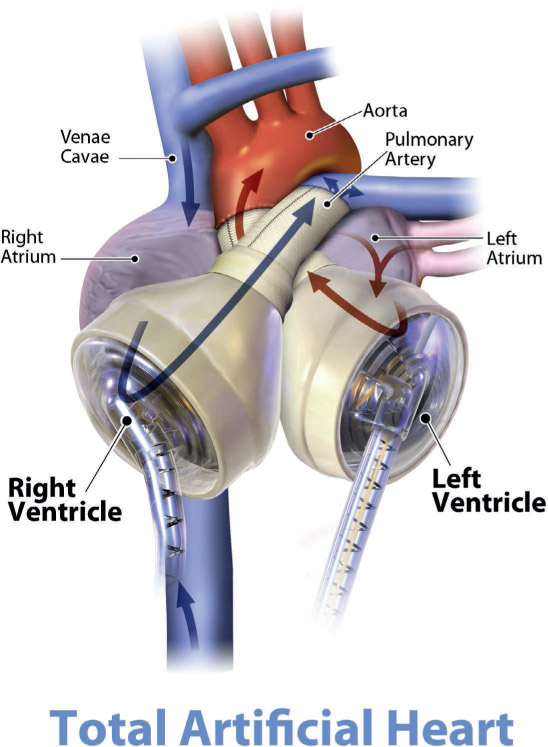
Figure 3.
The SynCardia Total Artificial Heart is used in end-stage biventricular heart failure and is approved by the FDA as a bridge to heart transplantation. Courtesy of syncardia.com
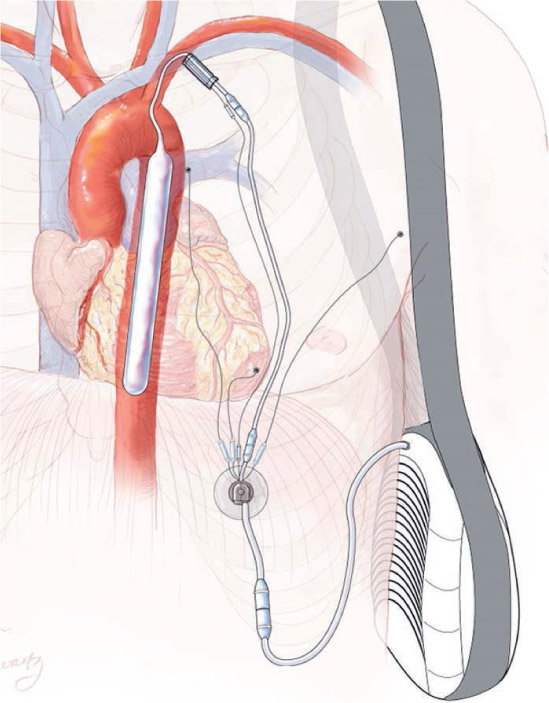
Figure 4.
The NuPulse cardiovascular intravascular assist system provides long-term hemodynamic support in advanced heart failure and is intended for use as a bridge to transplant or bridge to recovery. Reprinted with permission.
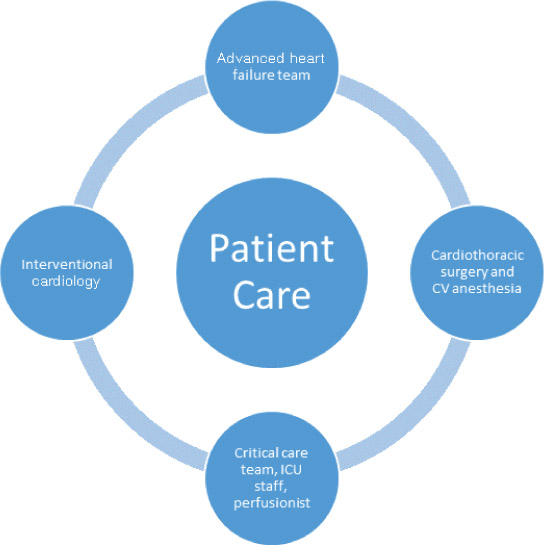
Figure 5.
Mechanical circulatory devices are best implanted by hospitals with multidisciplinary teams and specialized units experienced in caring for this exceedingly complex and critical patient population.
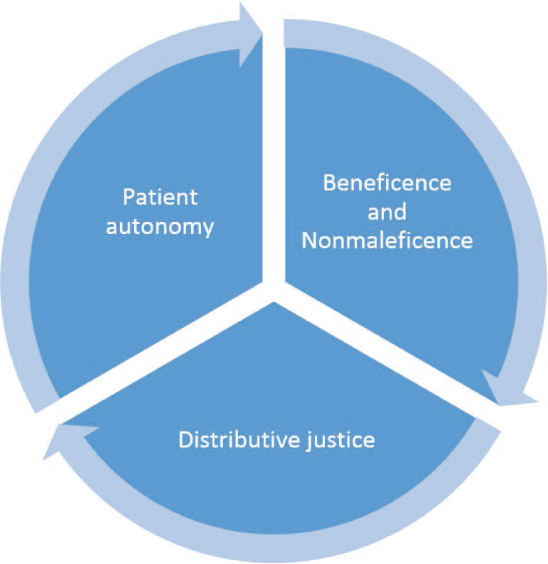
Figure 6.
Ethics teams must uphold and ensure the patient's right to decision making, beneficence of care provided, the physician's responsibility to do no harm, and fair use of resources.