
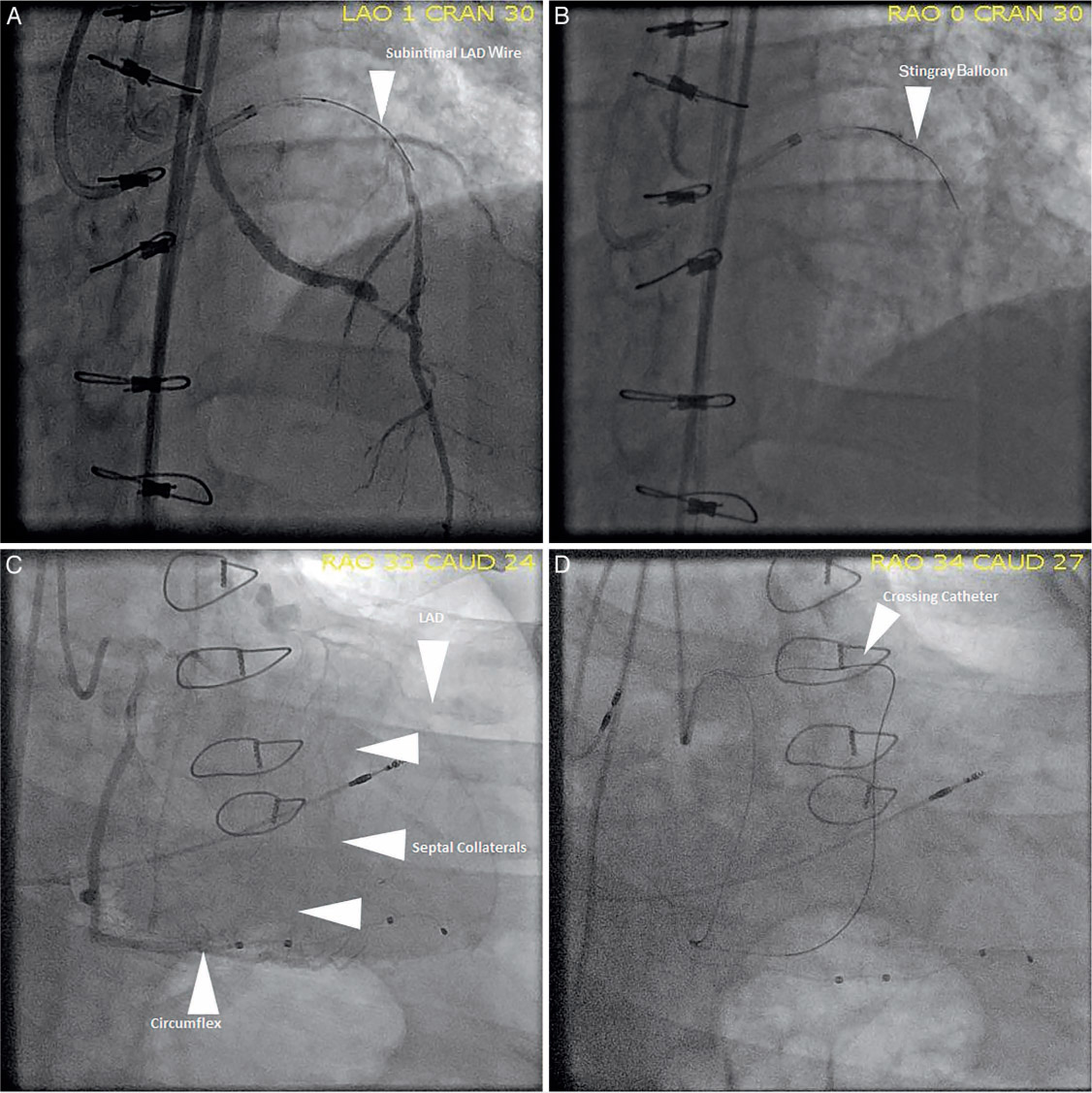
Figure 1.
(A, B) Antegrade wire reentry technique using a Stingray (Boston Scientific) balloon in mid LAD (left anterior descending). (C, D) Retrograde wire escalation technique using septal collaterals from circumflex to LAD.
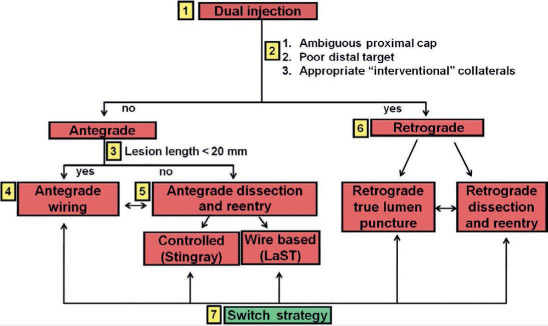
Figure 2.
Hybrid algorithm for chronic total occlusion percutaneous coronary intervention. Reprinted with permission.11
Table 1.
First, second, and successful strategies employed during hybrid chronic total occlusion (CTO) percutaneous coronary intervention (PCI). ADR: antegrade dissection and reentry; AWE: antegrade wire escalation; RDR: retrograde dissection and reentry; RWE: retrograde wire escalation8
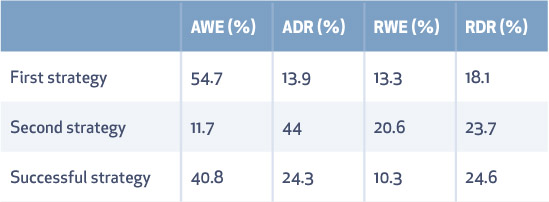
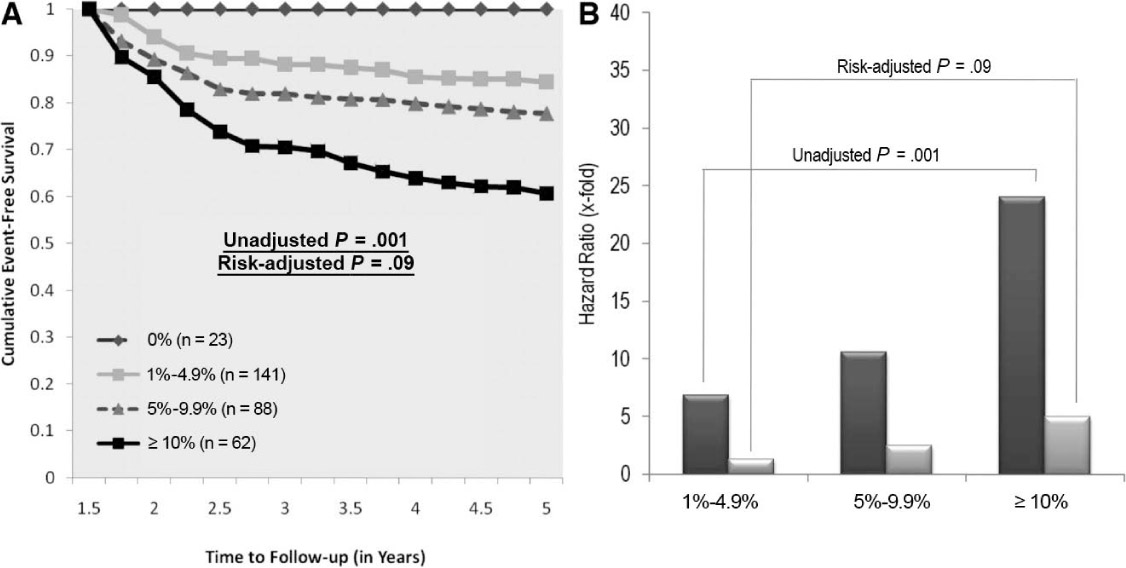
Figure 3.
(A) Kaplan–Meier survival for patients by residual ischemia, including 0%, 1% to 4.9%, 5% to 9.9%, and ⩾ 10% ischemic myocardium, respectively, after 6 to 18 months of combined percutaneous coronary intervention and optimal medical therapy or optimal medical therapy alone. Reprinted with permission.15
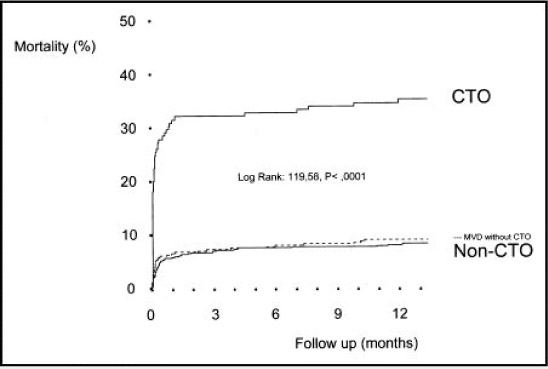
Figure 4.
Mortality in 1,417 patients with STEMI treated with primary percutaneous coronary intervention (*log-rank test for CTO vs no CTO). Reprinted with permission.18 MVD: multivessel disease; CTO: chronic total occlusion
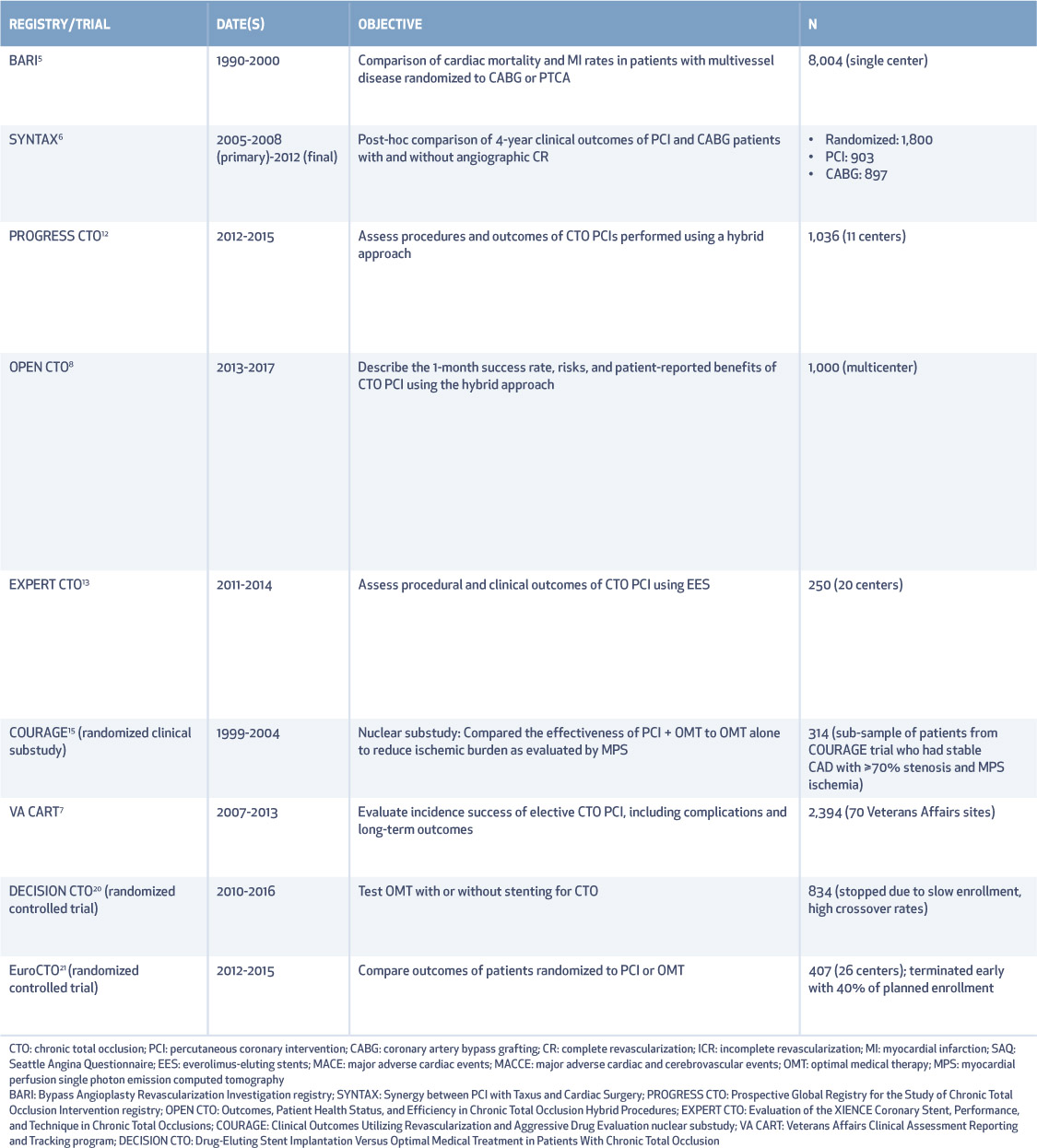
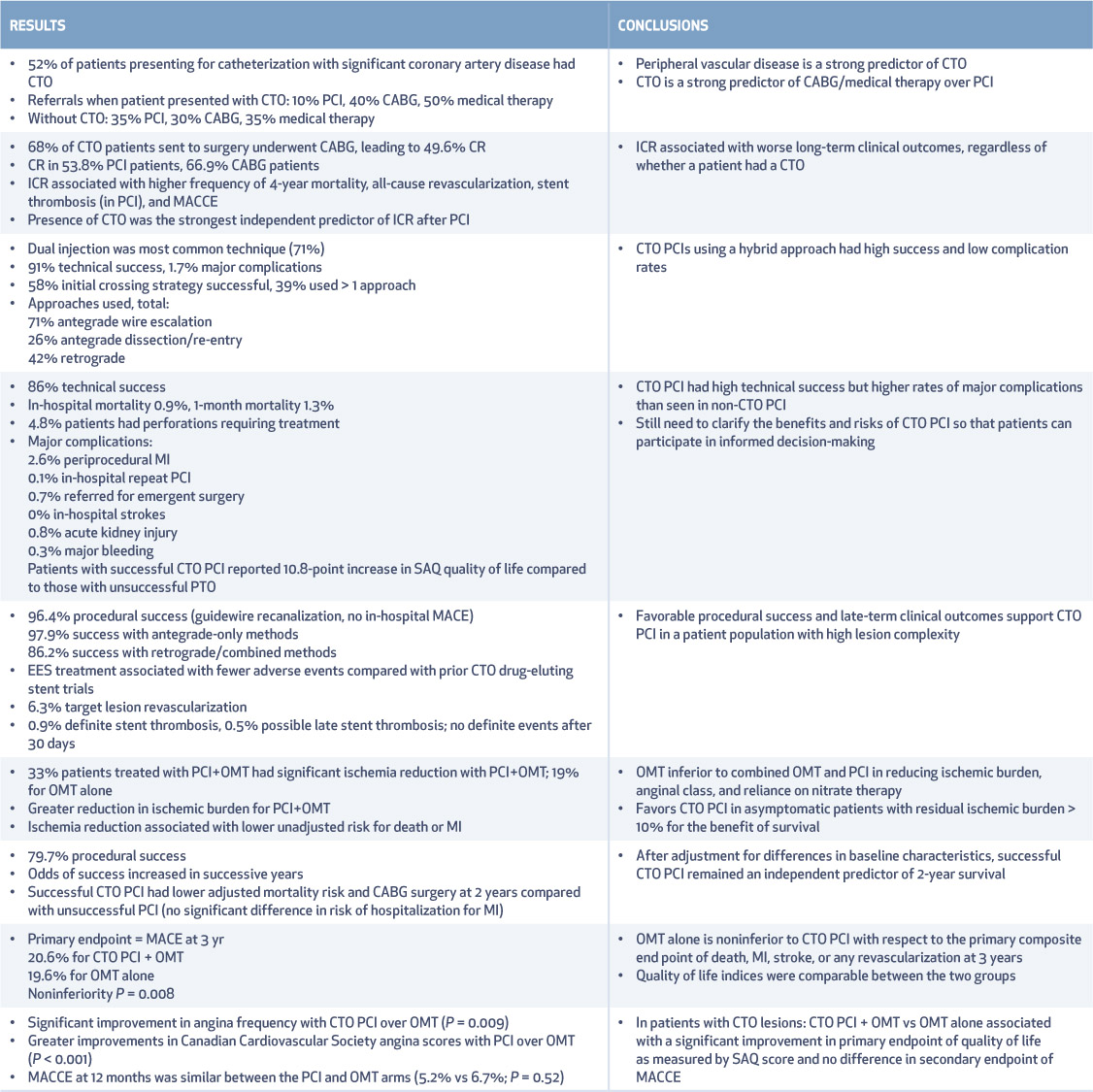
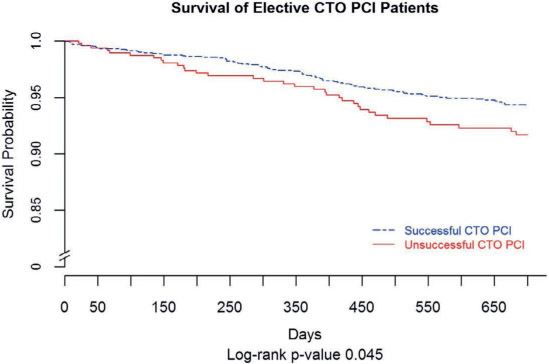
Figure 5.
Kaplan-Meier estimates of survival rates in patients with successful chronic total occlusion (CTO) percutaneous coronary intervention (PCI) (blue) versus unsuccessful CTO PCI (red). Reprinted with permission.7