
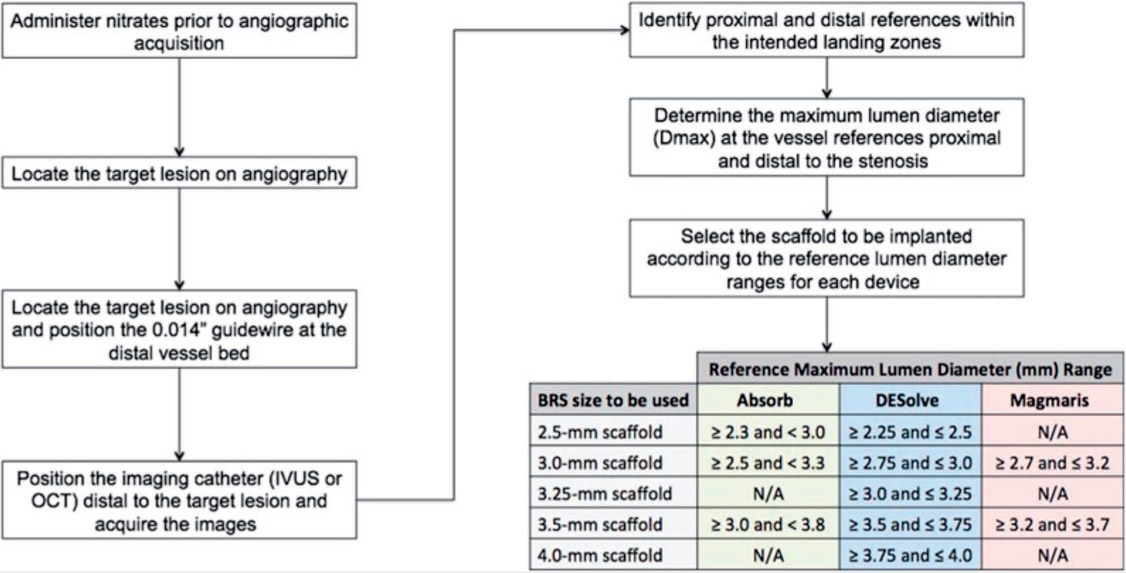
Figure 1.
Algorithm for vessel sizing by intravascular imaging and scaffold selection based on target vessel reference lumen diameter. The maximum lumen diameter (Dmax) at the intended proximal and distal landing zones must fall within the lower and upper reference Dmax ranges recommended for each device. If the proximal and distal Dmax fall into different diameter ranges, the intended device should not be implanted. BRS: bioresorbable scaffold.
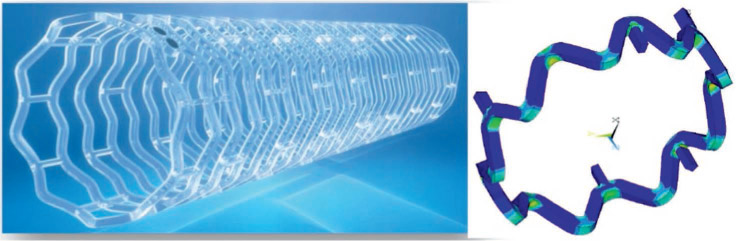
Figure 2.
The DESolve scaffold. This bioresorbable scaffold has sinusoidal ring patterns with an open-cell body optimized for each diameter; it is not radiopaque and requires two platinum markers at each end. Reprinted with permission.
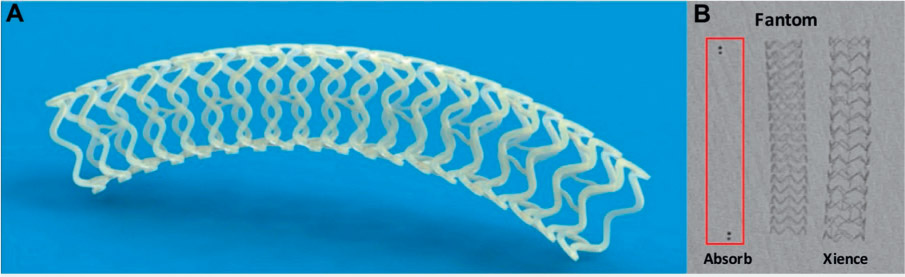
Figure 3.
The Fantom scaffold. (A) The Fantom bioresorbable scaffold (BRS), the current version of REVA's scaffold, shows the traditional deformable design that resulted in a significant reduction in strut thickness and crossing profile and improvement in device deliverability. (B) The combination polyestercarbonate polymer called poly (I2DAT-co-lactic acid) with 3,5-di-iododesaminotyrosine grants x-ray visibility to this BRS.33
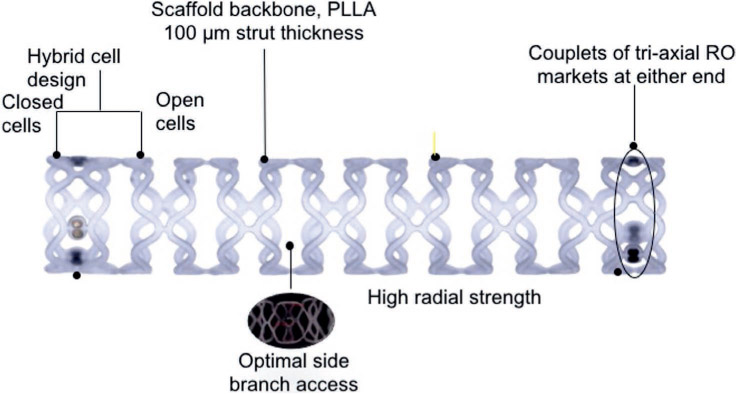
Figure 4.
The MeRes 100 scaffold. This bioresorbable scaffold has low strut thickness (100 μm) and a hybrid cell design. Couplets of tri-axial markers are positioned at either end to facilitate deployment and postdilation. Reprinted with permission.