
Table 1.
Clinical classification of pulmonary hypertension and pulmonary artery hypertension. Adapted from consensus guidelines of the 5th World Symposium held in Nice, France, 2013.4 BMPR: bone morphogenic protein receptor type II; CAV1: caveolin-1; ENG: endoglin; HIV: human immunodeficiency virus; ALK-1: activin receptor-like kinase; SMAD9: mothers against decapentaplegic homolog 9; KCNK3: potassium channel subfamily K member 3
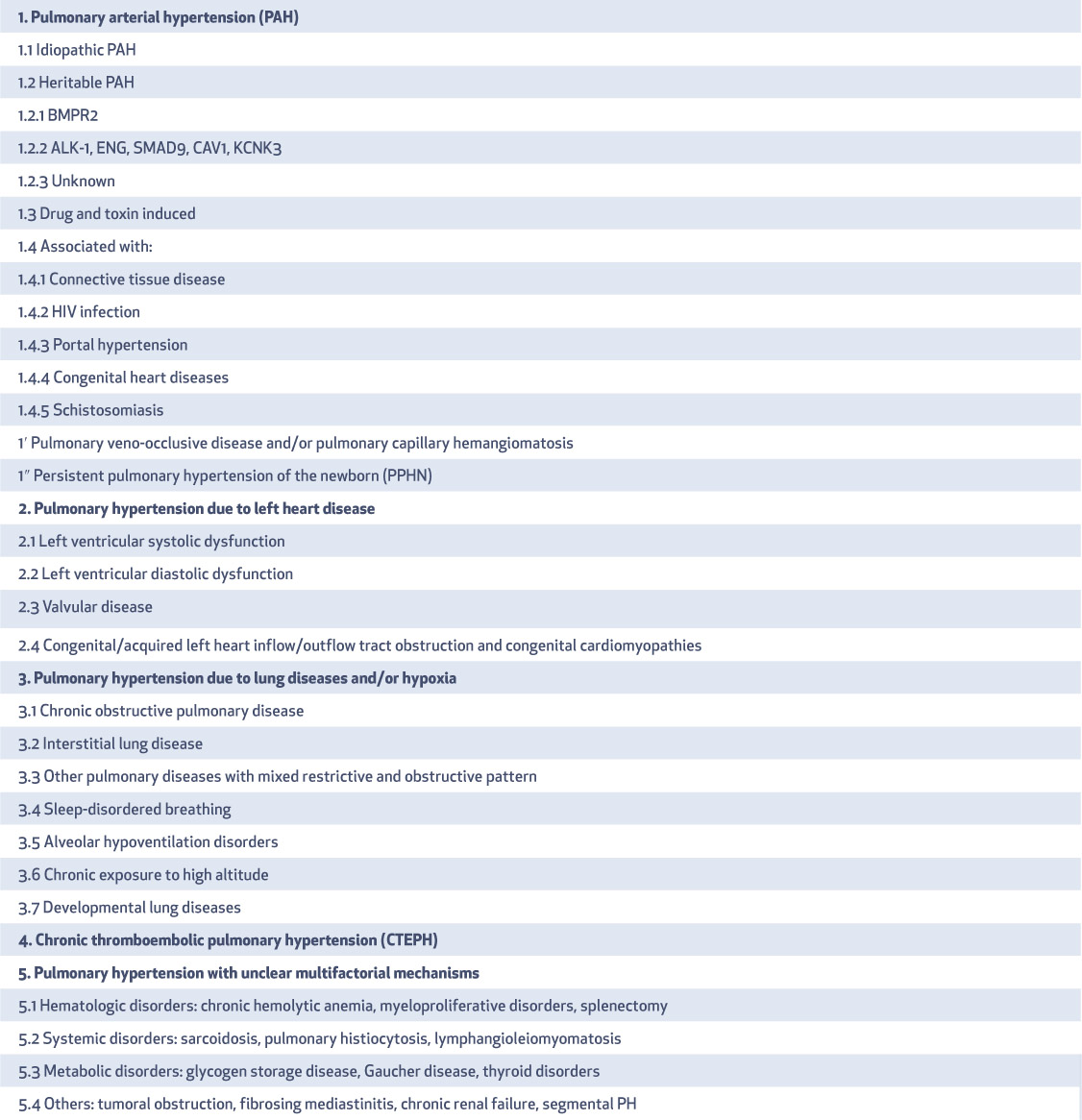
Table 2.
Incidence and survival of pulmonary hypertension based on different registries. IPAH: idiopathic pulmonary arterial hypertension; HPAH: hereditary pulmonary arterial hypertension; CHD: congenital heart disease; CTD: connective tissue disease; HTN: hypertension; NA: not available
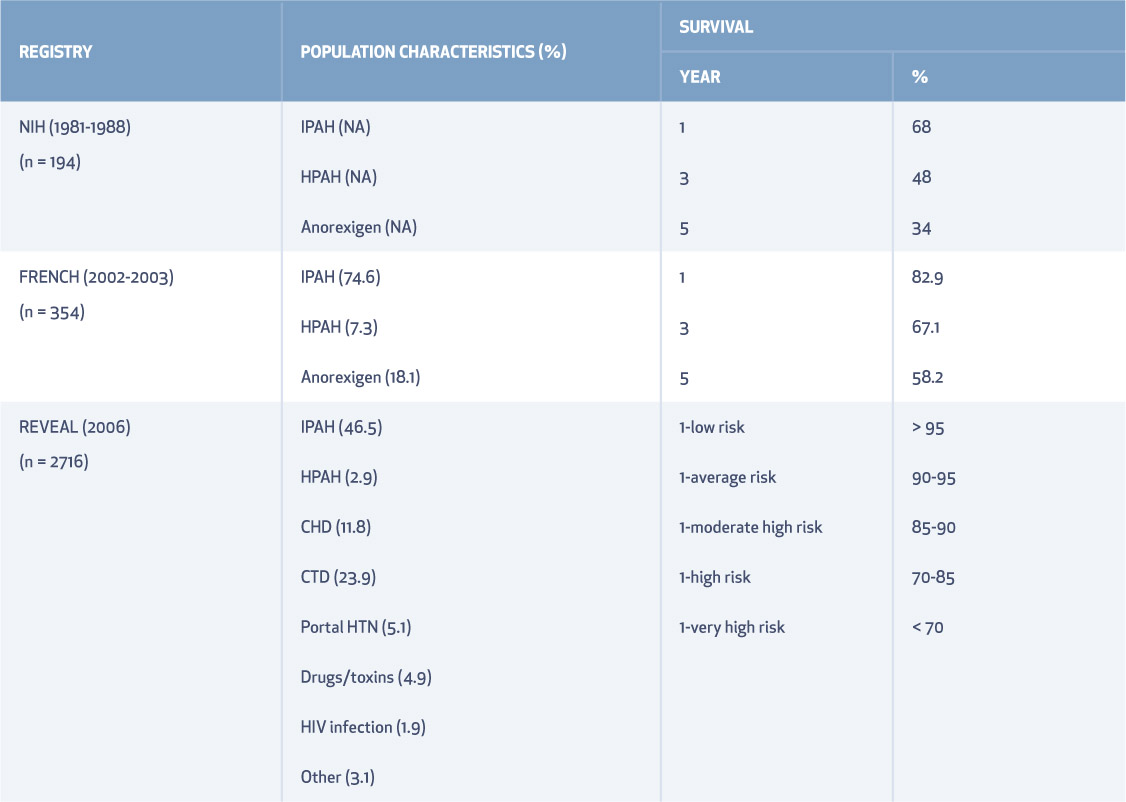
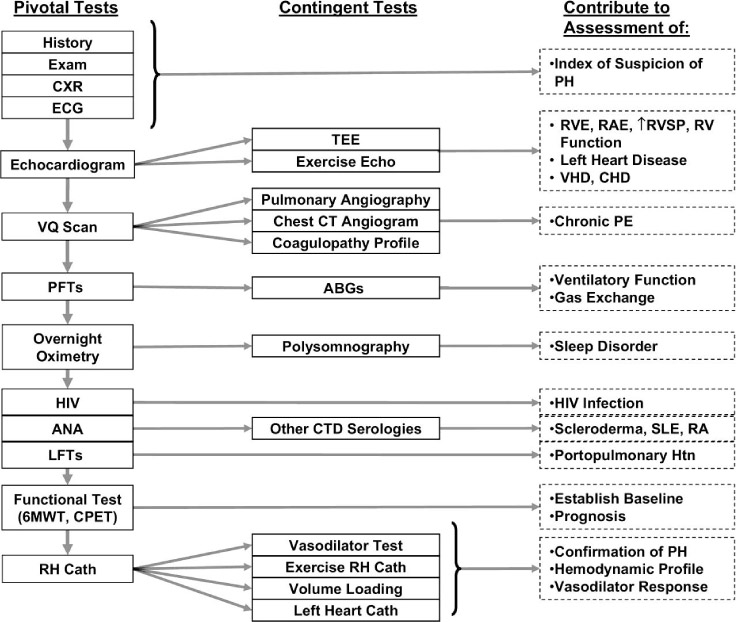
Figure 1.
Diagnostic approach to pulmonary artery hypertension (from the ACC/AHA 2009 Expert Consensus Document on Pulmonary Hypertension).33 6MWT: 6-minute walk test; ABGs: arterial blood gases; ANA: antinuclear antibody serology; CHD: congenital heart disease; CPET: cardiopulmonary exercise test; CT: computerized tomography; CTD: connective tissue disease; CXR: chest x-ray; ECG: electrocardiogram; echo: echocardiogram; HIV: human immunodeficiency virus screening; HTN: hypertension; LFT: liver function test; PE: pulmonary embolism; PFT: pulmonary function test; PH: pulmonary hypertension; RA: rheumatoid arthritis; RAE: right atrial enlargement; RH Cath: right heart catheterization; RVE: right ventricular enlargement; RVSP: right ventricular systolic pressure; SLE: systemic lupus erythematosus; TEE: transesophageal echocardiography; VHD: valvular heart disease; VQ Scan: ventilation-perfusion scintigram