
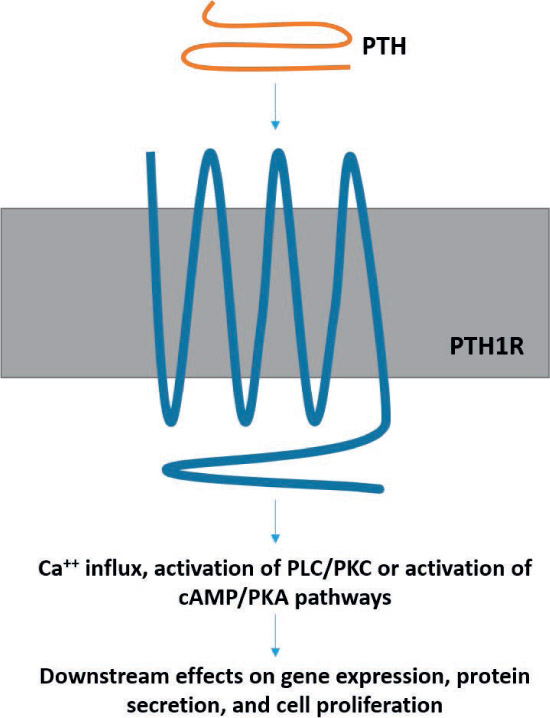
Figure 1.
PTH binds to the 7-transmembrane PTH1R, which is a GPCR. Activation of this receptor can activate cAMP/PKA or PLC/PKC cascades depending on the end organ. In the heart, the PKC pathway is activated and leads to downstream effects such as cell proliferation/hypertrophy and increased chronotropy. In vascular smooth muscle cells, PTH activation of cAMP cascade decreases Ca++ influx and leads to vasodilation. PTH: pituitary thyroid hormone; GPCR: G-protein coupled receptors; cAMP: cyclic adenosine monophosphate; PKA: protein kinase A; PLC: phospholipase C; PKC: protein kinase C
Table 1.
Proposed mechanisms of cardiac disease in parathyroid disorders. PTH: parathyroid hormone; RAAS: renin-angiotensin-aldosterone system; PTH1R: PTH type 1 receptors; PHPT: primary hyperparathyroidism
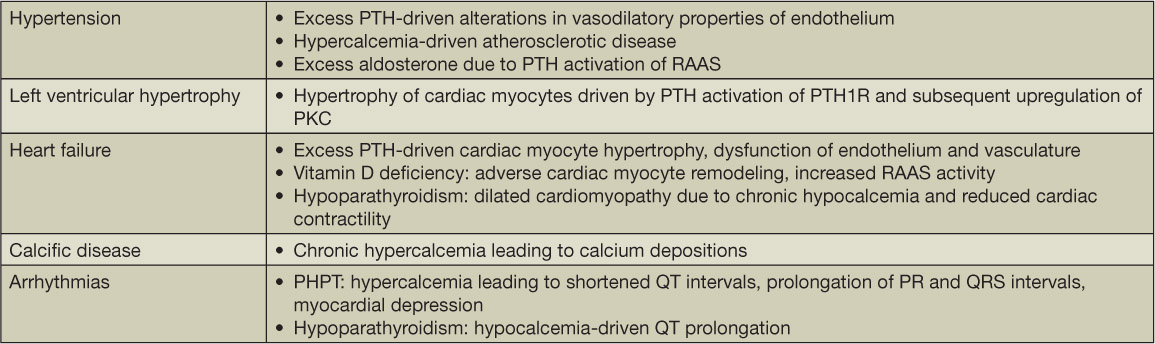
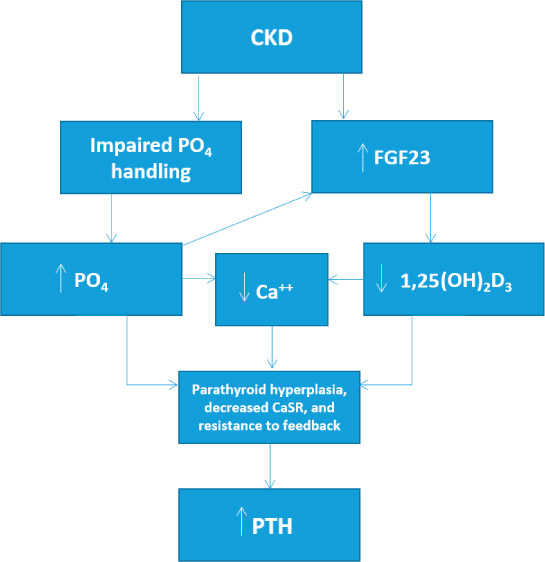
Figure 2.
Simplified pathophysiology of secondary hyperparathyroidism in chronic kidney disease (CKD) leading to elevated parathyroid hormone (PTH) levels, which leads to downstream effects on the cardiovascular (CV) system and increased CV mortality in this patient population. PO4: plasma phosphate; FGF23: fibroblast growth factor 23; CaSR: calcium-sensing receptor; 1,25(OH)2D3: 1,25-dihydroxyvitamin D