
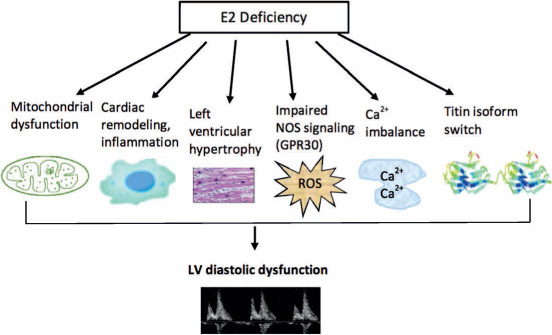
Figure 1.
Mechanisms of action of estrogen (E2) in regulating left ventricular (LV) diastolic function. Loss of E2 leads to aggravation of mitochondrial dysfunction, inflammation and cardiac remodeling, LV hypertrophy, inhibition of nitric oxide signaling, Ca2+ imbalance, and titin isoform switch, all of which contribute to reduced diastolic relaxation despite normal ejection fractions. These critical mechanistic nodes are potential targets for the development of personalized therapies that treat diastolic dysfunction in postmenopausal women. NOS: nitric oxide synthase; ROS: reactive oxygen species; GPR30: G protein-coupled receptor 30