
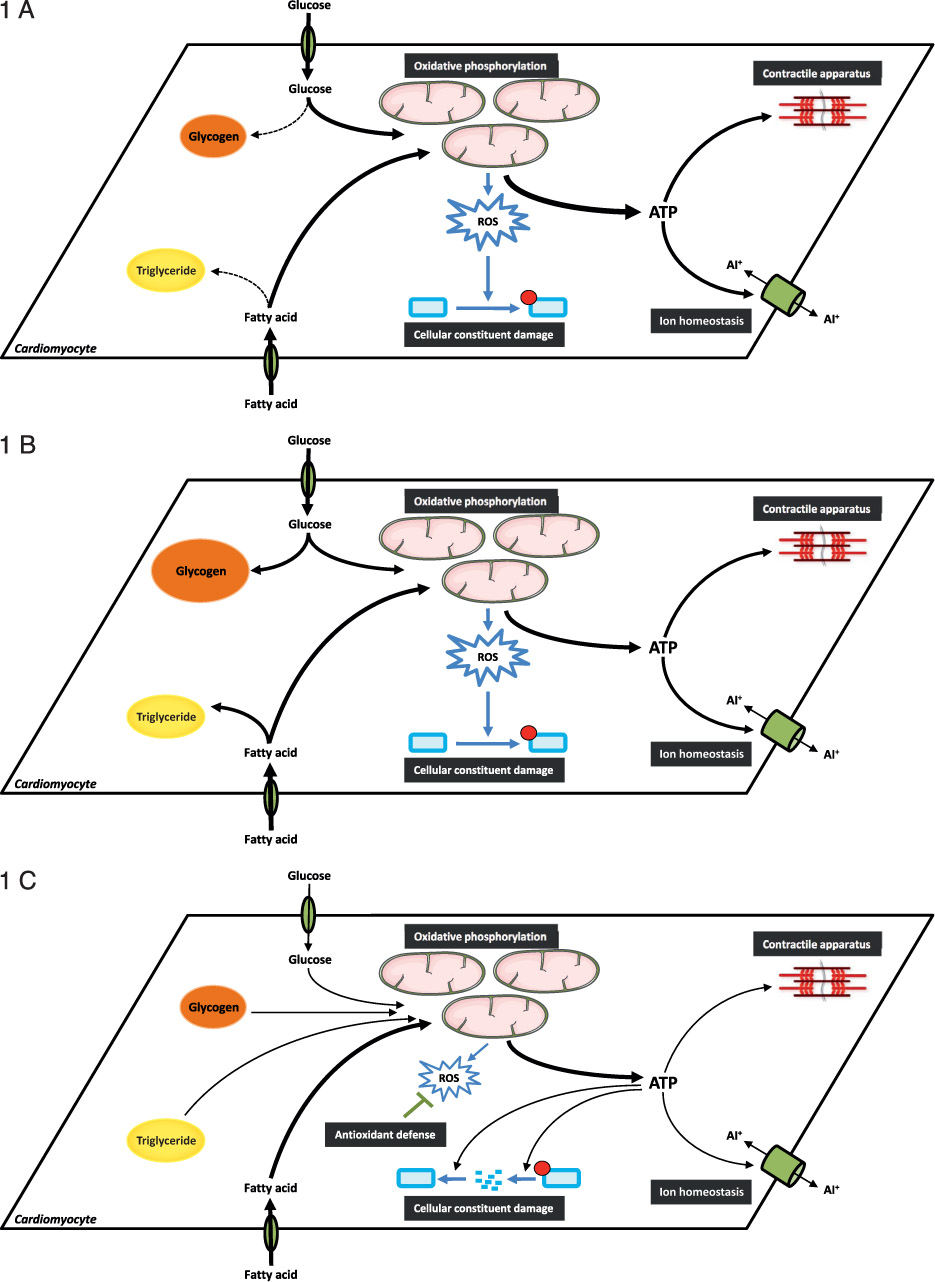
Figure 1.
Time-of-day-dependent oscillations in cardiac metabolism. (A) At the sleep-to-wake transition, energetic demand increases in the heart due to increased E-C coupling as the animal forages for food and avoids predation. This elevated energetic demand is met by increased glucose utilization (glucose uptake, glycolysis, and oxidation). During this period, cellular constituents (e.g., protein, phospholipids) are susceptible to oxidative damage. (B) In the latter half of the active period, excess nutrients are utilized for the synthesis of both glycogen and triglyceride. (C) During the sleep period, reliance on stored nutrients increases to meet the energetic demands of the heart; due to lower contractility, ATP can be utilized for the turnover of cellular constituents, thus replacing damaged proteins and phospholipids. At this time, the heart is less susceptible to oxidative damage, potentially through increased antioxidant capacity. In many cases, temporal partitioning of these metabolic processes is mediated by the cardiomyocyte circadian clock.