
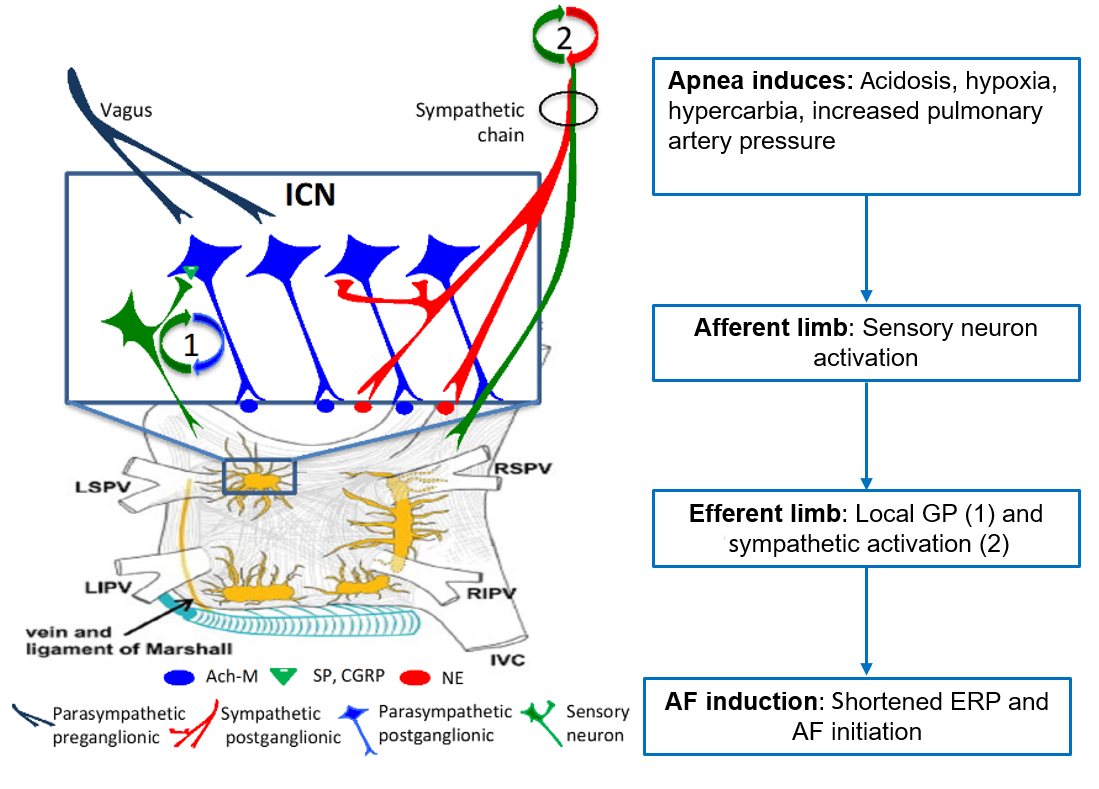
Figure 1.
Autonomic response to apnea that contributes to initiation of atrial fibrillation (AF). Proposed integrated autonomic response to apnea: upon apnea, sensory neurons respond to hypoxia and hypercapnia, thus activating a local reflex loop. The loop (1) activates postganglionic parasympathetic neurons that, via muscarinic receptors, lead to decreased ERP. Sympathetic afferents increase sympathetic outflow in a central loop, which leads to (2) increased blood pressure and contributes to AF inducibility. Ach-M: acetylcholine-muscarinic; CGRP: calcitonin gene-related peptide; ERP: effective refractory period; ICN: intrinsic cardiac nervous system; IVC: inferior vena cava; GP: ganglionated plexi; LIPV: left inferior pulmonary vein; LSPV: left superior pulmonary vein; NE: norepinephrine; RIPV: right inferior pulmonary vein; RSPV: right superior pulmonary vein; SP: substance P
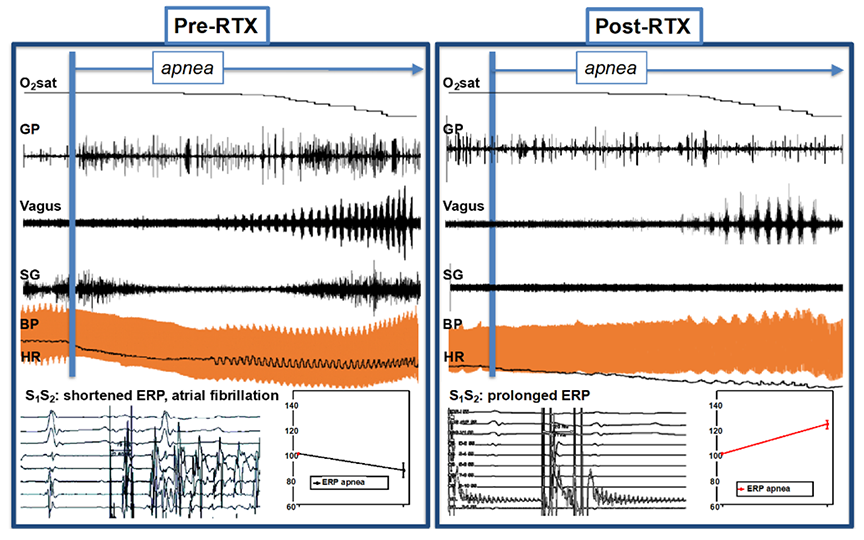
Figure 2.
Extrinsic and intrinsic autonomic response to apnea before and after GP sensory denervation. Top: examples of GP, vagal, and SG responses to apnea along with their hemodynamic and electrophysiological correlates. O2 sat: oxygen saturation; RTX: resiniferatoxin; GP: ganglionated plexi; SG: stellate ganglion; BP: blood pressure; HR: heart rate; S1 and S2 : stimulus 1 and 2; ERP: effective refractory period