
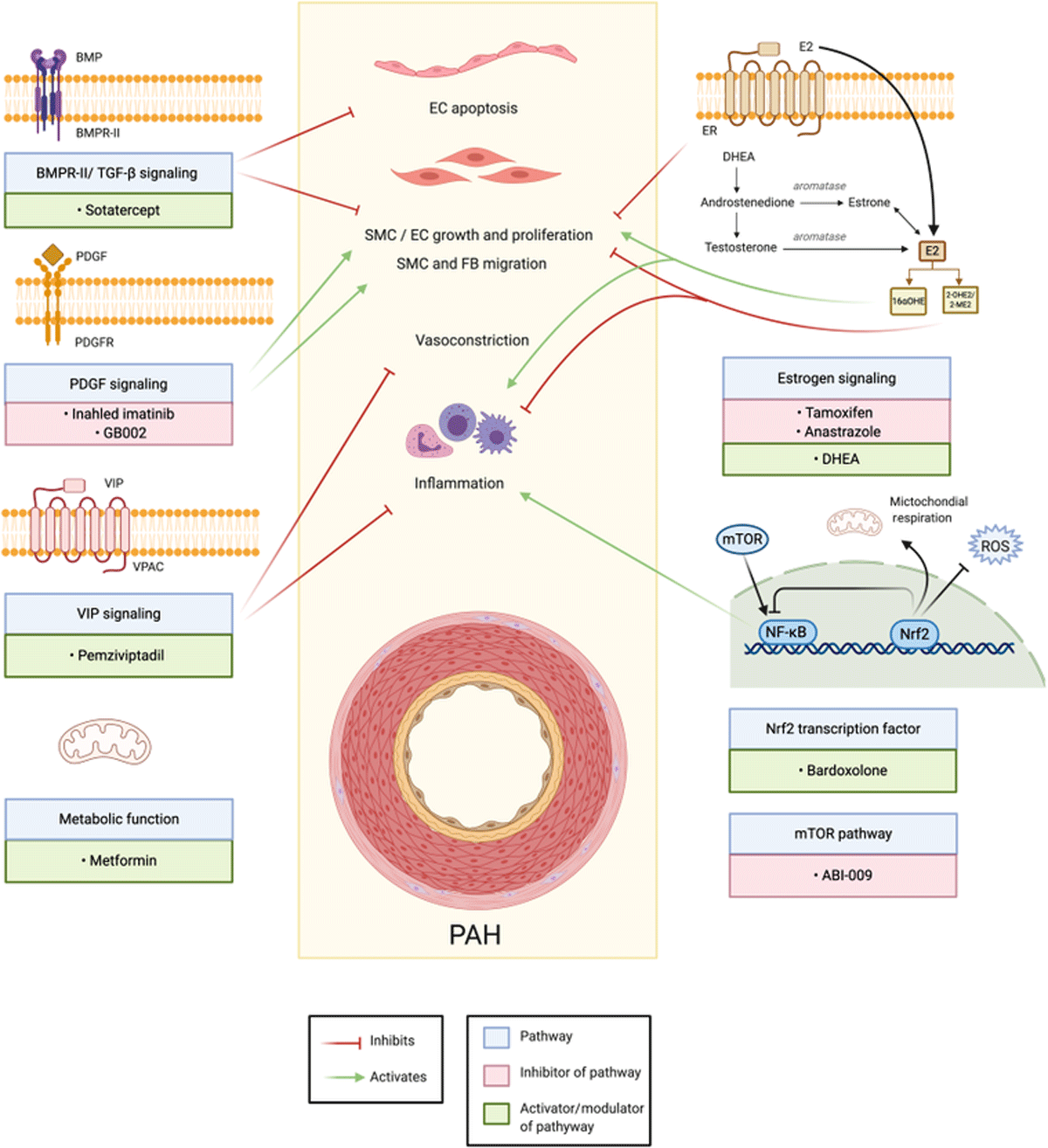
Figure 1
Promising therapeutic pathways in pulmonary arterial hypertension (PAH). The interplay of several pathways and cellular processes contributes to the development of PAH by various mechanisms, including vasoconstriction, inflammation, dysregulated endothelial and smooth muscle cell growth, proliferation, migration, and apoptosis. This figure represents the novel treatment pathways discussed in the article, along with the medications that inhibit, activate, or modulate theses pathways. It does not represent an exhaustive list. BMP: bone morphogenetic protein; BMPR-II: BMP receptor type 2; TGF-β: transforming growth factor-β; PDGF: platelet-derived growth factor; PDGFR: PDGF receptor; VIP: vasoactive intestinal peptide; VPAC: vasoactive intestinal peptide receptor; EC: endothelial cells; SMC: smooth muscle cells; FB: fibroblasts; PAH: pulmonary arterial hypertension; E2: estradiol; ER: estrogen receptor; 16αOHE: 16α-hydroxyoestrone; 2-OHE2: 2-hydroxyoestradiol; 2-ME2: 2-methoxyoestradiol; DHEA: dehydroepiandrosterone; ROS: reactive oxygen species; Nrf2: nuclear factor erythroid 2-related factor 2; NF-κB: nuclear factor kappa-light-chain-enhancer of activated B cells; mTOR: mammalian target of rapamycin. Created with BioRender.com