
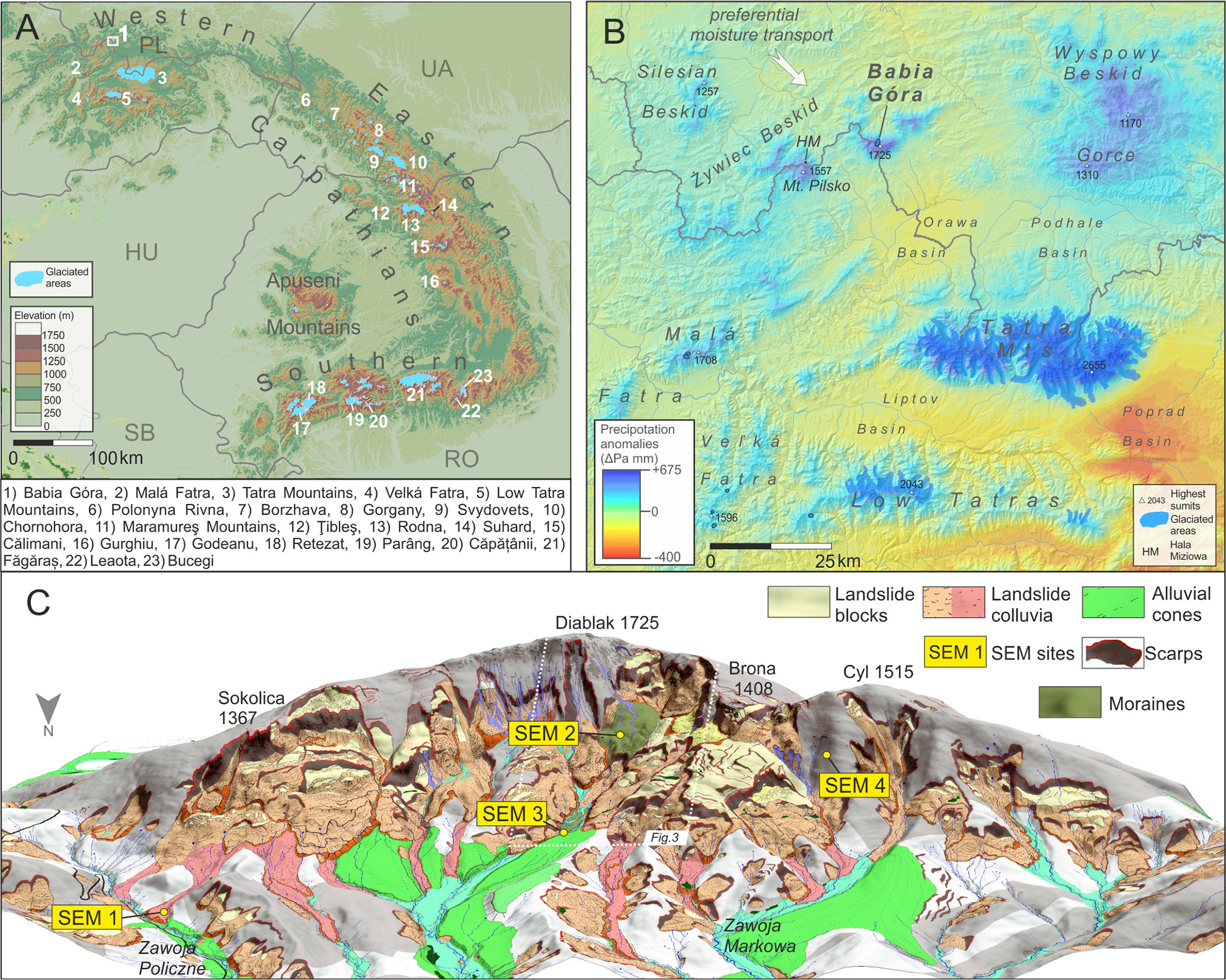
Fig. 1.
Location of the study area within the regional context of the glaciated mountain massifs in the Carpathians, according to Kłapyta et al. (2023a, b). A – distribution of precipitation anomalies in relation to the mean (1970–2000) in the Western Carpathians based on the climate data (Worldclim 2.1 dataset; Fick, Hijmans 2017). The extent of glaciers according to Zasadni and Kłapyta (2014) and Pyrda (2025). B – general view of the morphology of the northern slope of Babia Góra. The geomorphological map (Kłapyta 2020) is projected onto the LiDAR-derived digital terrain model (DTM). C – yellow circles indicate the location of scanning electron microscopy (SEM) sampling sites.
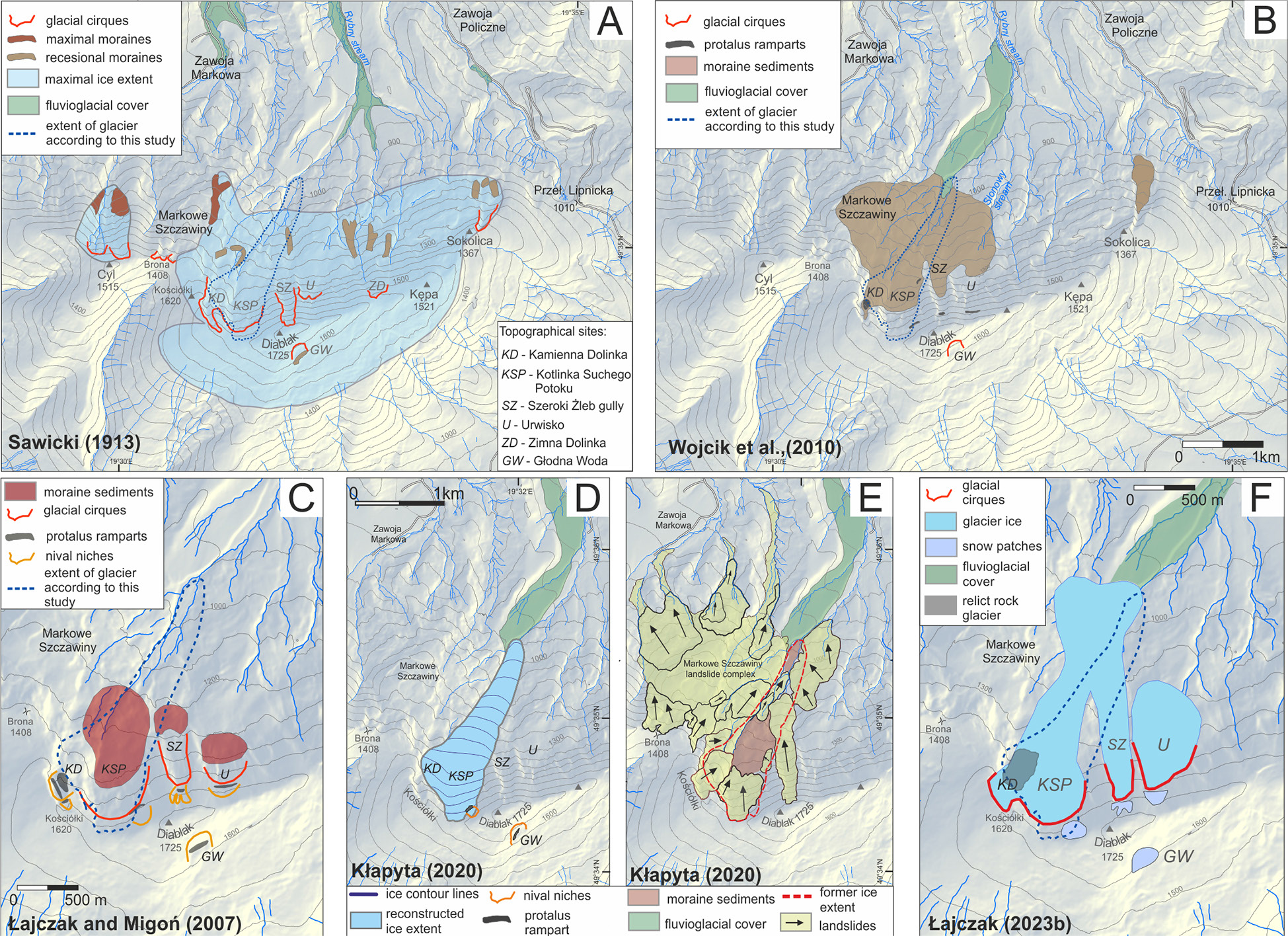
Fig. 2.
The extent of glaciation in the Babia Góra massif according to previous studies. The extent of the Szumiąca Woda glacier presented in this study is marked with blue dashed lines. A – first geomorphological map of the Babia Góra massif according to Sawicki (1913). B – extent of moraine deposits according to Wójcik et al. (2010). C – extent of glacial and periglacial features according to Łajczak and Migoń (2007). D and E – reconstruction of glacier geometry and extent of moraines and landslide deposits according to Kłapyta (2020). F – extent of glaciers and snow patches during the last glaciation according to Łajczak (2023b).
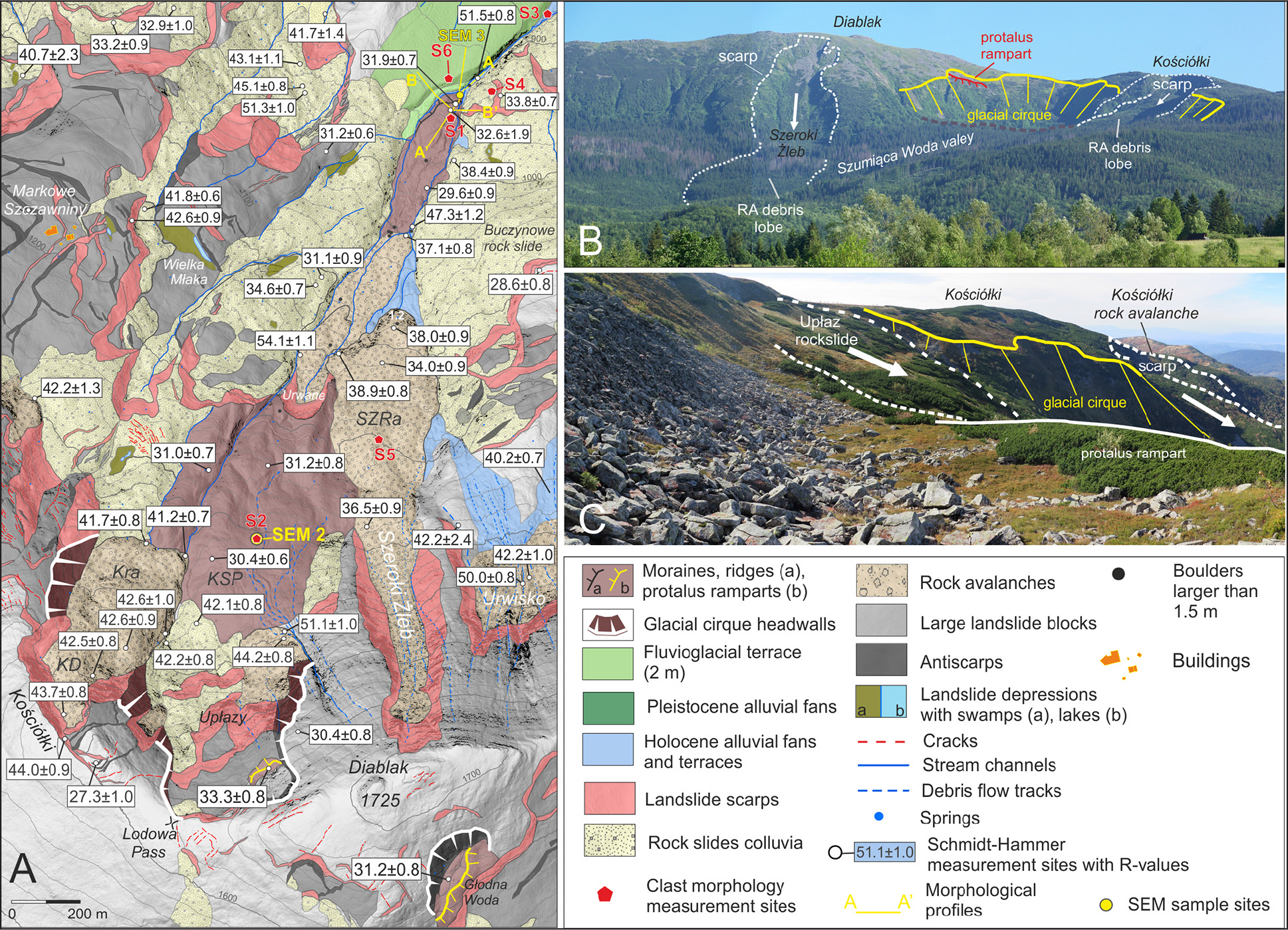
Fig. 3.
Geomorphology of the Szumiąca Woda valley. A – Geomorphological map of the Szumiąca Woda valley with marked location and result of Schmidt-hammer measurements (Kłapyta et al. 2025). B – general view from the north on the headwall of the glacial cirque and scarps of rock avalanches. C – a headwall of the glacial cirque remodelled by RSF, view from the ridge of the Late Glacial protalus rampart. KD, Kamienna Dolinka valley; KRa, Kościółki Rock avalanche; KSP, Kotlinka Suchego Potoku; SZRa, Szeroki Żleb Rock avalanche.
Table 1.
Basic morphometric parameters of glacial cirque size and shapes in the Babia Góra massif.
| Parameter | Unit | Kotlinka Suchego Potoku | Głodna Woda niche | |
|---|---|---|---|---|
| Length | [m] | 707 | 129 | |
| Width | 779 | 183 | ||
| Elongation L/W | [–] | 0.91 | 0.70 | |
| Perimeter | [m] | 2896 | 683 | |
| Circularity | [–] | 1.16 | 1.28 | |
| Area | Entire cirque | [ha] | 49.80 | 0.23 |
| Cirque floor | 20.300 | 0.095 | ||
| Bottom area/cirque area | [%] | 40.9 | 41.0 | |
| Median aspect of cirque axis | [°] | 17.5 | 156 | |
| Maximal cirque slope | 77 | 51 | ||
| Maximal elevation of cirque edge | [m a.s.l.] | 1664 | 1671 | |
| Minimal elevation of cirque bottom | 1295 | 1598 | ||
| Mean elevation of cirque floor | 1357 | 1620 | ||
| Height range | [m] | 369 | 73 | |
| Length/height range | [–] | 1.91 | 1.77 | |
| Grade | 4 | 5 | ||
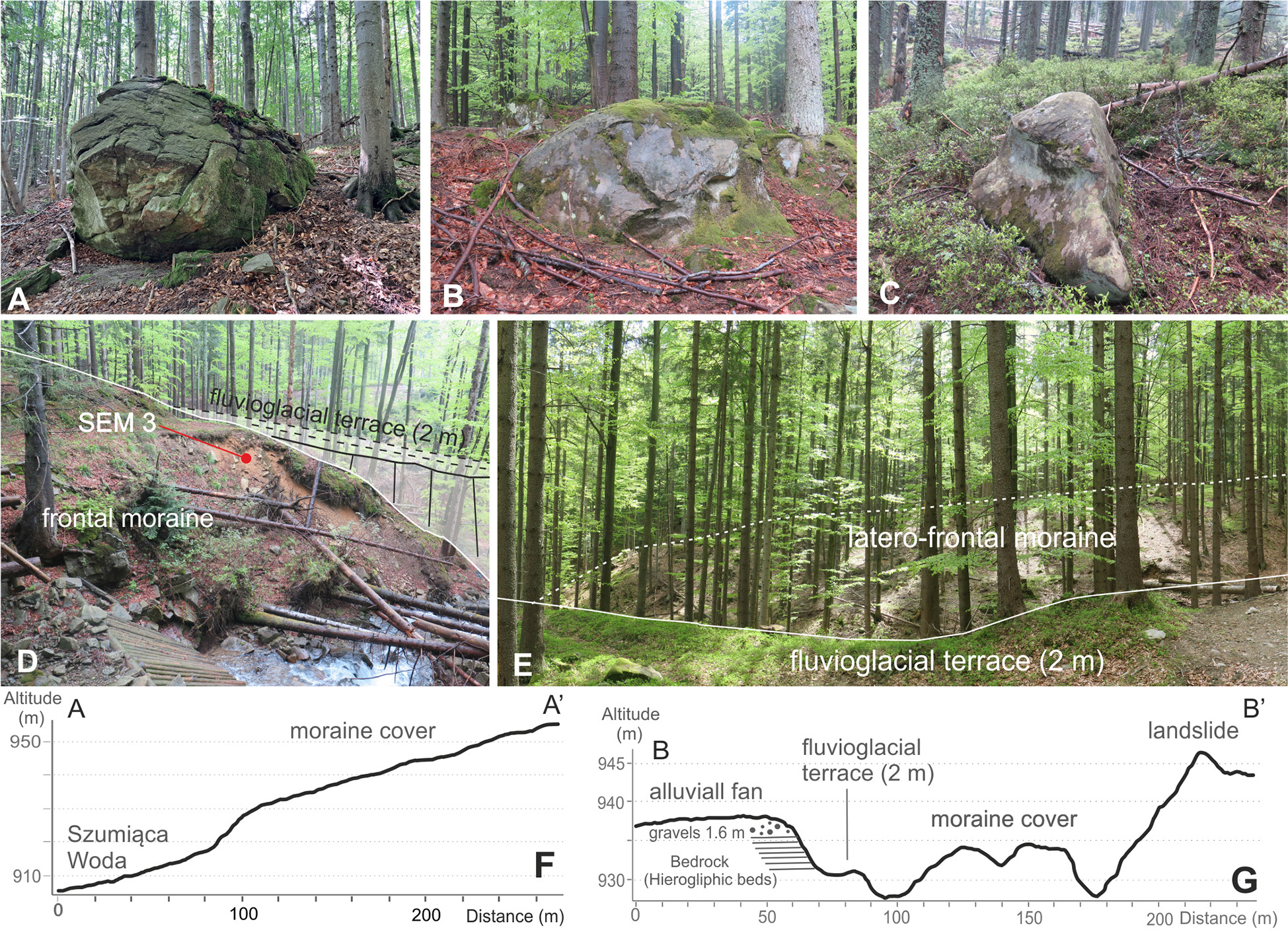
Fig. 4.
Moraine landforms and sediments in the Babia Góra massif. A–C – examples of large surface boulders at the surface of moraine covers (for location see Fig. 3A). D – a steep 15 m high front of moraines in the Szumiąca Woda valley (view from the east). E – laterofrontal moraines in the Szumiąca Woda valley (view from the west). F – longitudinal profile along the axis of the Szumiąca Woda valley (for location see Fig. 3A). G – transversal profile across moraine covers in the Szumiąca Woda valley (for location see Fig. 3A).
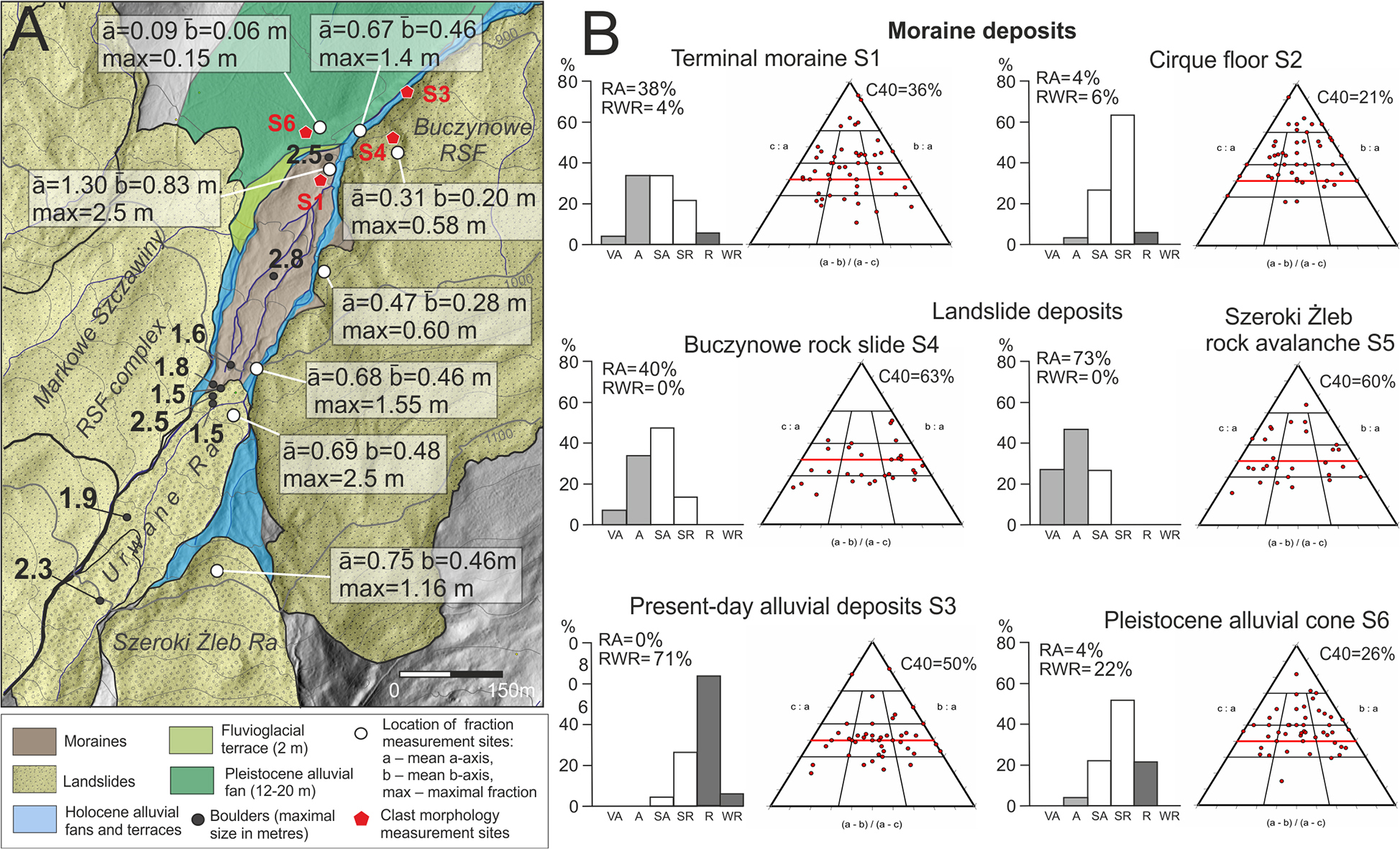
Fig. 5
Sedimentological analysis of clast in the Szumiąca Woda Valley. A – boulder and clast fraction measurements in the terminal moraine zone in the Szumiąca Woda valley. B – roundness (histograms) and clast shape data (ternary diagrams) for sampled sites in the Szumiąca Woda area. Red solid line marks the position of C40. Site locations are depicted in Fig. 3. RA and C40 are defined in the text.
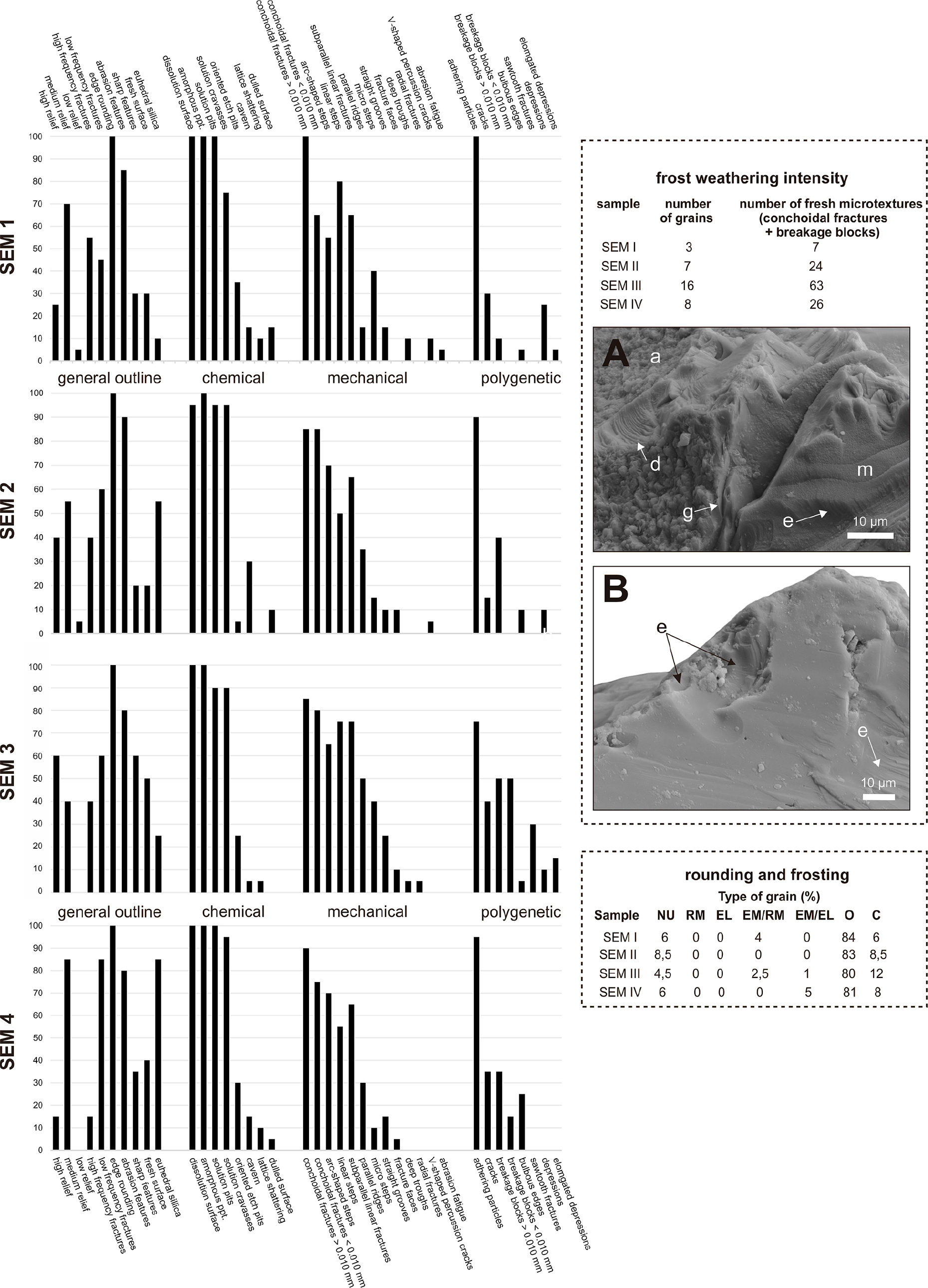
Fig. 6.
Variations of observed microtextures according to general features and genetic processes. Frost weathering microtextures depicted on micrographs A and B (explanations as in Fig. 7) were counted according to Woronko and Hoch (2011). Rounding and frosting types were according to Cailleux (1942) with modifications of Mycielska-Dowgiałło and Woronko (1998).
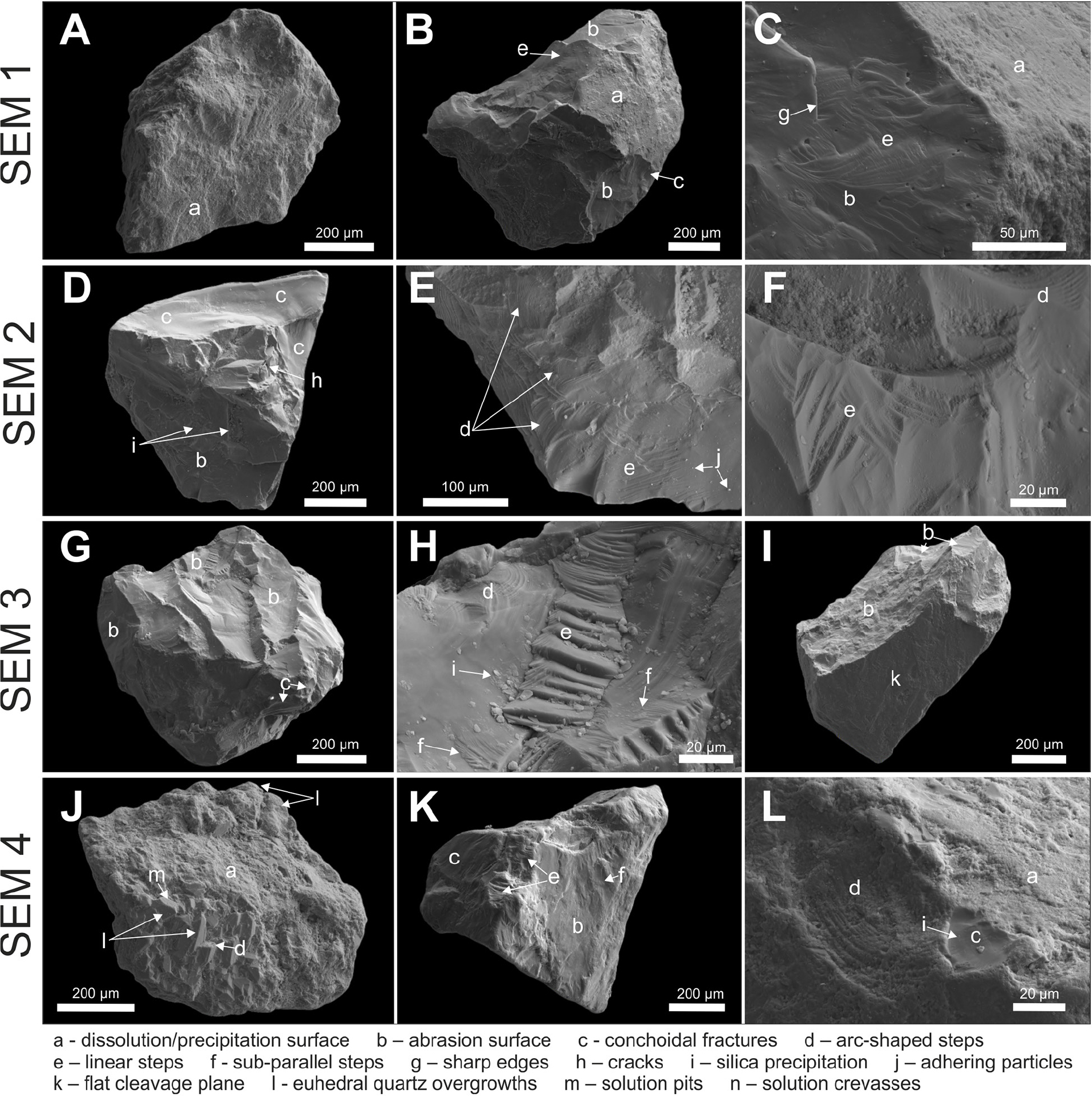
Fig. 7.
Micrographs of quartz grains: A – subrounded grain with medium relief and chemically weathered surface; B – subrounded grain with high relief and dissolution/precipitation surface overprinted by mechanical weathering; C – the contact zone between the older chemically weathered surface and younger abrasion surface of large fracture; D – angular grain with high relief and fresh surface. The grain is considered crushed during glacial transport due to almost complete reshaping of its surface by large conchoidal fractures and other abrasion features; E – details of abrasion features of the grain shown in D; F – details of probably older abrasion features. Edges of the fractures are slightly rounded, and precipitation features are frequent; G – glacially abraded/crushed grain with high relief and fresh surface. Elongated depressions created probably along the crystals’ contacts and numerous abrasion features are interpreted as the effects of glacial abrasion; H – details of the upper part of the grain in G showing the irregular abrasion patterns; I – angular grain with high relief. Abrasion surfaces are of different freshness – more weathered and probably older (upper left), adjoin fresh and sharper ones (top centre). The flat cleavage plane propagated along the crystal structure and is the most weathered; J – subrounded grain with medium relief and euhedral quartz overgrowths of different freshness, which are slightly altered due to chemical etching and mechanical weathering; K – subrounded grain with high relief. Although grain represents in situ slope covers, many abrasion features can be seen. They are subordinate to large conchoidal fractures and possibly arise during the separation of grain from the host rock; L – arc-shaped steps covered by solution/precipitation features. The relief is rejuvenated by a relatively fresh conchoidal fracture, which is slightly etched and precipitated by amorphous silica.
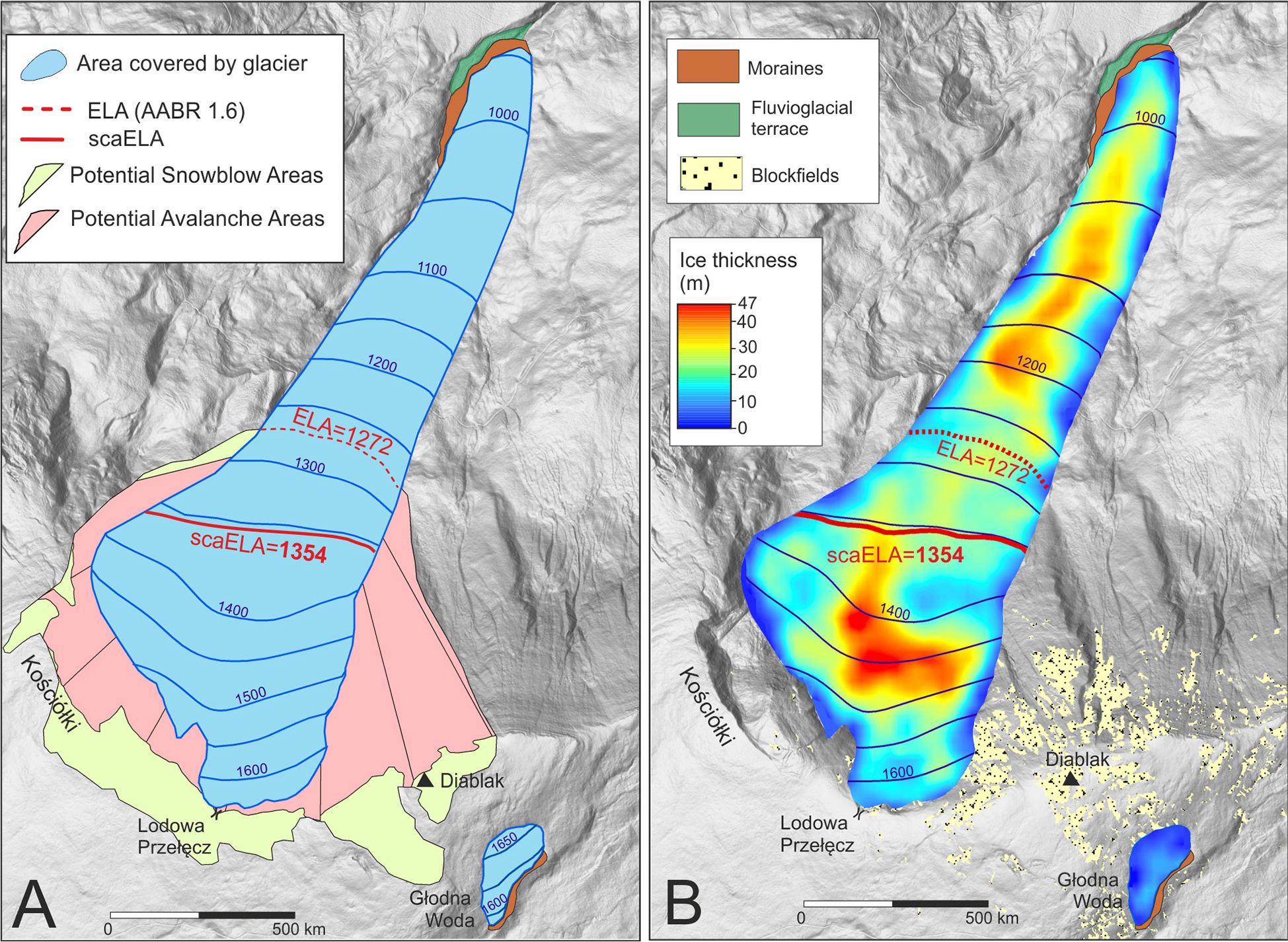
Fig. 8.
Glacier and equilibrium line altitude (ELA) reconstruction of the paleoglacier in the Szumiąca Woda valley and snow-ice body in the Głodna Woda area. A – distribution of potential snowblow areas and potential avalanche areas of the Szumiąca Woda palaeoglacier. The position of ELA area altitude balance ratio (AABR1.6) and scaELA are marked in dashed and solid red lines, respectively. B – glacier thickness of the palaeoglaciers.
Table 2.
Late Pleistocene ELA position in the Western Carpathians (AABR, area altitude balance ratio).
| Mountain massif | Altitude | ELA position | Method | Reference |
|---|---|---|---|---|
| [m a.s.l.] | ||||
| Babia Góra | 1725 | 1354 | AABR1.6 | This study |
| Malá Fatra | 1708 | 1392 | Cirque floors | Paulo (1937) |
| Western Tatras | 2250 | 1450 | AABR1.6 | Zasadni et al. (2008) |
| High Tatras | 2655 | 1580 | AABR1.6 | Zasadni et al. (2008) |
| Low Tatras | 2043 | 1431 | AABR1.6 | Pyrda (2025) |
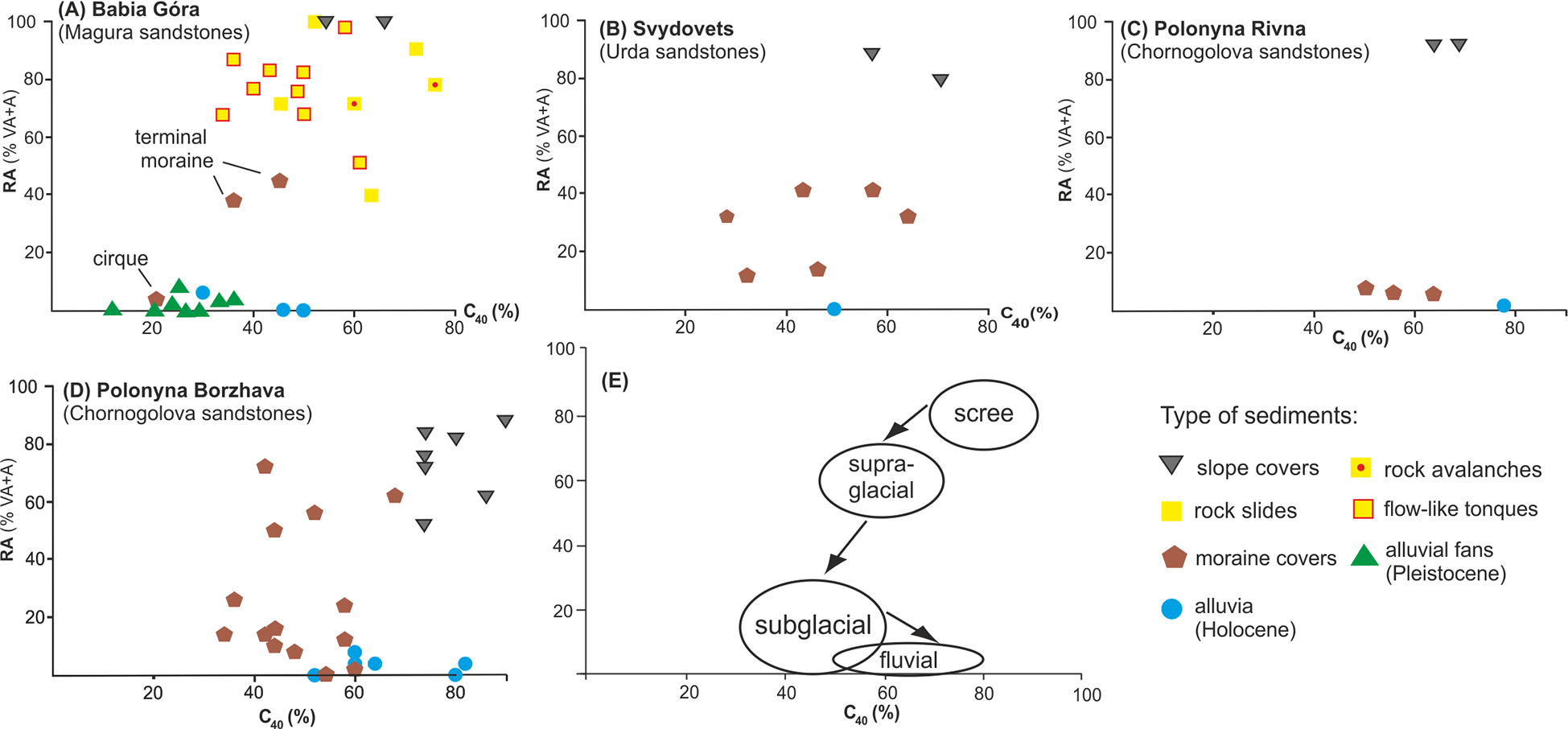
Fig. 9.
Covariance plots for the moraine deposits in flysch lithology in the Babia Góra massif (A – Kłapyta et al. 2025), Svydovets (B – Kłapyta et al. 2021a, b, Supp. data 1), Polonyna Rivna and Borzhava (C and D – Kłapyta et al. 2022a, b) in comparison with the debris cascade model in glaciated areas built with highly anisotropic rocks (E – Lukas et al. 2013). Each plotted point represents a sample group of 50 clasts.