
Introduction
The concept of relational capital was introduced into the literature on territorial development through studies and analyses of local ‘milieu’ and innovation processes. Particularly relevant was the work of the GREMI group on territorial production systems and innovation milieus (Maillat et al. 1993, Crevoisier 2001, Camagni 2006). An important contribution to the development of the notion of relational capital was also made by studies and analyses collectively referred to as the proximity paradigm, helping to explain both physical and non-physical aspects of cooperation (Rallet 1993, Gilly, Torre 2000, Torre, Wallet 2014). In these analytical perspectives, relational capital is placed at the core of the functioning of territorially organised production environments and is built by a system of local actors. Relational capital serves as a channel for gathering and transforming information and knowledge into innovations, enabling their effective use in the economy.
The concept was further developed primarily by Camagni, who interpreted relational capital as “a set of multilateral links built by local actors, both inside the territory and in external relations” (Camagni 2009: 126–127). In this view, relational capital is a product of the local environment and a form of collective capital that facilitates interaction. It is fostered by openness, trust and jointly developed behavioural patterns and values. A similar definition was proposed by Capello and Faggian (2005), who defined relational capital as a set of market, power and collaboration relationships established between firms, institutions and individuals that stem from a strong sense of belonging and a highly developed capacity for cooperation among culturally similar actors. They suggest that social capital exists wherever there is a local community, whereas relational capital refers to the rare ability to exchange skills, establish interactions between different actors and develop mutual trust and a cooperative spirit (Capello, Faggian 2005). In numerous studies, relational capital is interpreted either as a component of social or human capital or as an independent element of territorial capital (Camagni 2008, Mazzola et al. 2012, Camagni, Capello 2013, Fratesi, Perucca 2014, Jona 2015).
Relational territorial capital constitutes a strategically valuable asset for business and social activities, enabling the use of other resources in the development process. Its development generates a form of relational rent in the local environment, understood as the effect of cooperation between local actors, enhanced by synergistic effects (Nowakowska 2018, Zhang, Wang 2018). The ability to establish relationships reduces uncertainty in decision-making processes and mitigates risks in business activities, thereby increasing the stability of operating conditions for actors. Relational capital underpins collective learning (learning by interaction, peer learning) and building the skills and competencies of human resources. It is a specific condition for building territorial tacit knowledge and innovation capacities. Moreover, the interaction skills of actors improve the efficiency and effectiveness of territorial governance while reducing their transaction costs (Capello, Faggian 2005, Chrisidu-Budnik 2021, Nowakowska 2024).
Despite its wide use in the literature, the concept of relational capital remains poorly defined and studied. In this context, the purpose of this article is to operationalise and quantify relational capital in Poland within the context of the territorial paradigm of development, specifically to:
– identify the intensity of relational capital;
– specify spatial differences in relational capital;
– determine internal and external relations of territorial cooperation.
Measuring a territory’s relational capital directly is extremely challenging due to the multiplicity and diversity of actors involved in its creation, as well as the multiplicity of market, power and cooperation relationships between these actors and the entities operating in their surroundings. This challenge is compounded by the intangible nature of relational capital. As a result, existing studies and analyses provide only an approximate assessment of relational capital, relying on substitutive measures of its development.
The conducted research is innovative in nature, with its added value stemming from the attempt to operationalise and quantify the concept of relational capital. Furthermore, while existing studies focus on specific dimensions of territorial cooperation (Wiśniewska 2014, Swianiewicz et al. 2016, Nijander-Dudzińska et al. 2019), the present research aims to offer a more comprehensive perspective on the relational dimension of local government activities in Poland. In addition, the subject-matter literature is dominated by studies focused on relational capital in the context of business operations, individual sectors of economy and building smart specialisations (Cousins et al. 2006, Falcone, Castelfranchi 2011, Kogut-Jaworska 2022). Our study explores relational capital in the context of activities pursued by territorial government units and building the local ‘milieu’ (Camagni 1991, Camagni, Crevoisier 2000), which makes it original by nature and helps in closing an important cognitive gap.
Research methods
Operationalisation of the survey
The present analysis of relational capital was carried out within the context of research on territorial development and includes capital developed by local government units. This choice is justified by the fact that these units are, on the one hand, a derivative and emanation of the attitudes, values and ‘ways of doing things’ within local communities, and, on the other hand, they shape the context in which local actors establish relationships, cooperate and build territorial relational capital.
The study focuses on cooperation relationships with representatives of four groups of entities: (1) twin cities, (2) national and international local government organisations, (3) other municipalities and (4) non-governmental organisations. The first two groups create external relational capital, which reflects the ability to produce knowledge resources and new solutions. In particular:
– international cooperation demonstrates the local government’s openness to seeking knowledge and experience, as well as the ability to absorb innovative solutions; and
– cooperation with organisations representing territorial self-government (e.g., the Association of Polish Cities, the Union of Rural Communes of the Republic of Poland) provides a platform for the exchange of information and knowledge, further reflecting the local government’s openness to debate.
The two other dimensions are part of internal relational capital, which determines the conditions for social and economic activities as well as the quality of territorial governance. In particular:
– inter-municipal cooperation reveals the capacity to think territorially in terms of accomplishing common goals and actions that foster the coordination and integration of activities;
– cooperation with local NGOs reflects the involvement of citizens in governance processes and demonstrates the maturity of territorial governance.
The proposed analytical approach offers an original perspective on the study of territorial capital with regard to both the analysed subject (local government) and the scope of examined relations. The study is an unprecedented attempt undertaken in Poland to operationalise and measure relational capital referring to the idea of the local ‘milieu’ and territorial capital.
Research methodology
The research employed three complementary research methods:
A review of the relevant literature conducted to obtain a theoretical perspective for the analysis and to assess the state of research on relational capital;
A survey of local government units designed to examine the intensity of relationships across the four dimensions listed (Rossi et al. 2013). A questionnaire was distributed to all 2477 municipalities in Poland (LAU I level) and completed by 1872 municipalities, representing 76% of the population. This allowed for reliable conclusions.
The survey was carried out by making a freedom of information request. Respondents (mostly municipal secretaries) could choose between two forms of providing information, i.e., filling in an online form (98% of respondents) or filling in a questionnaire in the Word format (2% of respondents). The questionnaire form included 12 questions, most of which were closed questions about the number of cooperation relations and forms of cooperation. Open questions were intended to deepen knowledge about the scope of cooperation.
The procedure followed when carrying out the survey ensured compliance with ethical research principles. Respondents were informed about the purpose of the survey, its duration, and how the data would be used and anonymised. They were allowed to contact the researcher (by providing the email address) if they had questions or wished to withdraw from the study.
3. Based on the surveys, a synthetic measure of relational capital intensity was developed. The data were aggregated and analysed at the LAU II level, which corresponds to the concept of a functional area from the perspective of a territorial approach to development. To calculate relational capital intensity, the data were codified as follows:
– 0: for 0 relations,
– 1: for 1 to 2 relations;
– 2: for 3 to 4 relations; and
– 3: for 5 or more relations.
A synthetic measure of relational capital was calculated as the arithmetic mean of the values across the four areas. This measure could range from 0 to 3, with values closer to 0 indicating fewer relationships shown by the municipalities (represented by the lighter colour on the maps below), and values closer to 3 indicating a greater number of collaborative relationships.
Maps and charts (including box plots) were employed to visualise the data. Typical measures of central tendency and dispersion, the ANOVA model, correlation coefficients and linear regressions for cross-sectional data were employed to analyse the data.
Research results and discussion
Intensity and spatial differences in the relational capital of local governments
The synthetic measure of relational capital (Fig. 1) shows a relatively low level of local government relational capital in Poland. The average value of the indicator is 1.6, meaning that an average municipality maintains approximately three cooperation relations. The highest level of capital is observed in 24 counties (cities with county status), where the measure reached the maximum value. The lowest level of capital is observed in 28 counties in central and eastern Poland, characterised by an average degree of urbanisation. Such a low level of local government relational capital poses a barrier to the effective use of resources and prevents the activation of synergy mechanisms in territorial development. Research confirms the limited relationship-building and networking capacities of local governments, which, according to Granovetter’s concept of the ‘strength of weak ties’, hinder the diffusion of information and knowledge, as well as the creation of new resources and developmental impulses (Granovetter 1985, Capello, Faggian 2005).
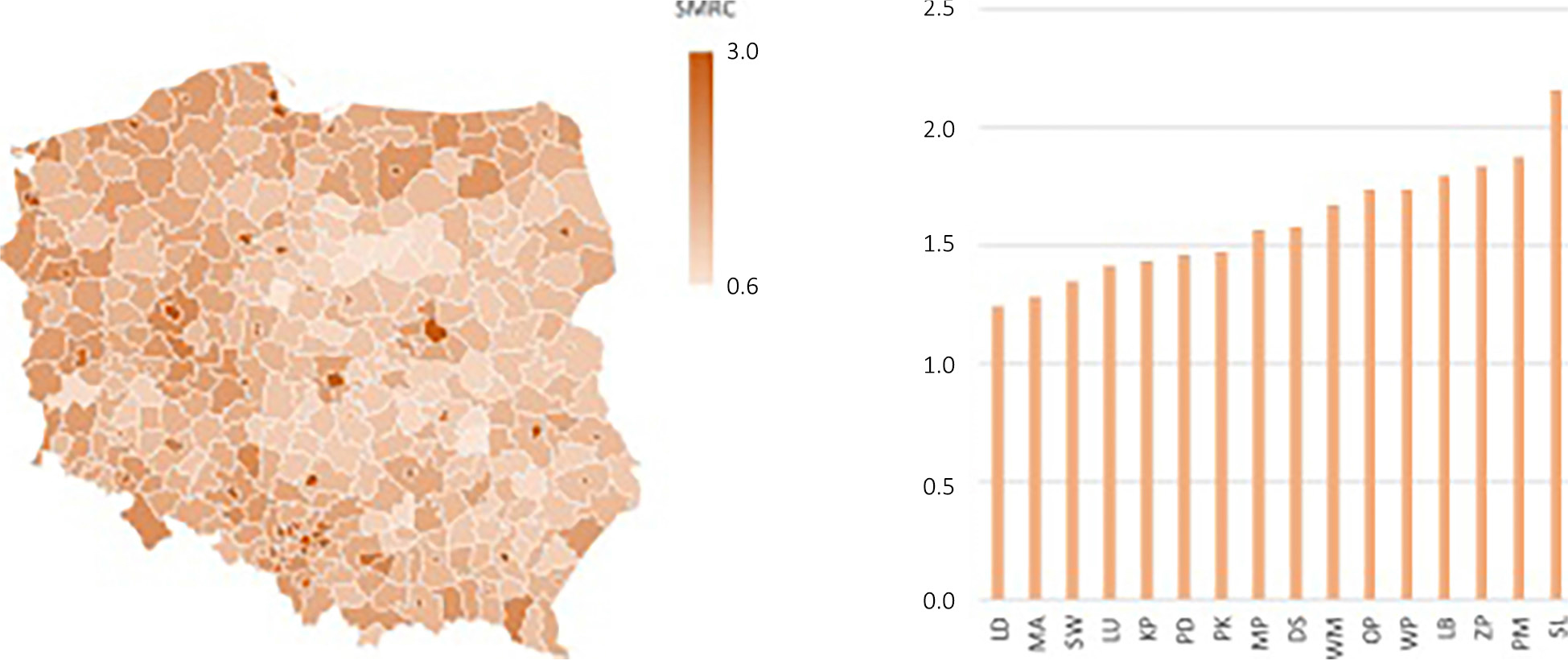
Fig. 1.
Synthetic measure of relational capital (mean for Poland: 1.6) based on interviews.
The following abbreviations were used to designate Polish voivodeships (NUTS II regions): DS – Dolnośląskie, KP – Kujawsko-Pomorskie, LU – Lubelskie, LB – Lubuskie, LD – Łódzkie, MP – Małopolskie, MA – Mazowieckie, OP – Opolskie, PK – Podkarpackie, PD – Podlaskie, PM – Pomorskie, SL – Śląskie, SW – Świętokrzyskie, WM – Warmińsko-Mazurskie, WP – Wielkopolskie, ZP – Zachodniopomorskie.
The intensity of relational capital is highly heterogeneous at the spatial level. At the regional level, a high level of relational capital is characteristic of local governments in Śląskie Voivodeship (where as many as five cities with county status exhibit the highest value of the measure). The counties in Łódzkie, Małopolskie and Świętokrzyskie Voivodeships exhibit the lowest intensity of cooperation relations. Interestingly, the Łódzkie region, which is in the last place in terms of relational capital (Fig. 1), also ranked last in terms of good governance (Kusideł 2014).
Characteristically, relational capital in Poland is strongly concentrated in highly urbanised areas. High intensity of cooperation is observed primarily in areas dominated by metropolitan centres and large cities with county status. A clear example of this is highly urbanised Śląskie Voivodeship, where 18 units are classified as cities with county status.
This is also confirmed by an analysis of relational capital from the point of view of the degree of the counties’ urbanisation (Fig. 2). The graph demonstrates that as urbanisation increases, both the median intensity of relational capital (illustrated by the horizontal line) and its average level (represented by the cross) increase. The lower whisker of the box plots shows the minimum values, which are higher than 0 for all groups, meaning that all municipalities in the counties reported some form of cooperation relations. The upper whisker shows the maximum intensity of relational capital, with only the last group of cities with county status reaching the maximum value of established cooperation relationships.
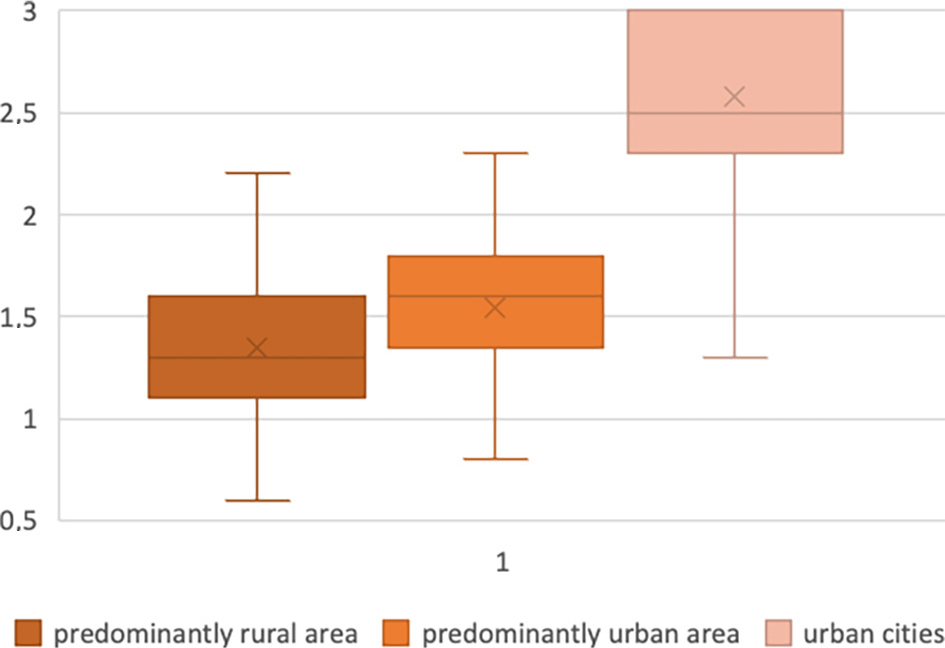
Fig. 2.
Level of relational capital depending on the level of urbanisation based on interviews.
Explanatory note: a predominantly rural area constitutes an urban population of <50%; a predominantly urban area constitutes an urban population of >50% and <100%; cities with county status constitute an urban population of 100%.
The high level of relational capital in metropolises, large cities and their functional areas is a consistent feature across Poland, regardless of regional differences. This holds true for all four examined dimensions of relational capital. The relatively lower differences in the intensity of territorial capital between predominantly rural and predominantly urban counties are somewhat unexpected.
Spatial differences in territorial capital exhibit close convergence with the adopted models of Poland’s social and economic development (Dominiak 2014, Rudnicka et al. 2020). Western and southwestern regions – where GDP per capita is higher, the inflow of investment is more intensive, and labour market performs better – report higher levels of relational capital. In contrast, the eastern regions – often identified as peripheral or less developed – are characterised by a lower intensity of cooperative relationships. This correlation suggests that relational capital is an important component that favours social and economic processes; or, conversely, more developed regions generate stronger stimuli and have a craving for cooperative relationships. On the other hand, relational capital deserts correlate strongly with areas referred to as inner peripheries and require place-based territorial interventions to support the strengthening of cooperative capabilities (Churski et al. 2024).
The study’s results show that the weakness of relational capital strongly coincides with deprived and underdeveloped rural areas. This is particularly true for those rural areas where agriculture is the primary source of income and where negative demographic, social and economic trends persist. In these areas, the quality of human capital – the foundation for building and using territorial capital – is typically low (Stanny et al. 2021, Heffner, Twardzik 2022, Churski et al. 2024). This pattern is particularly evident in Łódzkie, Mazowieckie, Świętokrzyskie, Lubelskie and Podlaskie Voivodeships. These observations are statistically confirmed in our study, which identifies a negative and statistically significant correlation between the share of those working in agriculture and the level of relational capital (r = –0.62, p < 0.001, N = 380).
A synthetic measure of relational capital reveals its highest levels in territorial units located in northern, western and partly southern Poland, whereas units in eastern and central Poland typically report the lowest levels. This spatial differentiation appears to be strongly linked to different historical and institutional contexts resulting from Poland’s partition by the three powers. This is confirmed by the average capital intensity values, which are lowest in counties located in the Russian partition (1.36), followed by those in the Prussian (1.74) and Austrian (1.80) partitions. The low intensity of relational capital in Russian partition areas may be attributed to factors such as the lack of self-government in the past, weak institutional frameworks, and a low culture of cooperation. This suggests that ‘soft’, intangible conditions significantly influence the strength of relational capital and the importance of path dependency (Jałowiecki 1996, Churski et al. 2021, Michalak et al. 2022).
Differences in relational capital by four types of cooperation
The intensity of relational capital varies significantly depending on the type of cooperation. The relatively lowest intensity is typically observed in two external dimensions: international relations within the framework of twinning city-to-city programmes and membership in associations and other local government organisations. Regarding international cooperation, the average value of the measure for Poland is 1.1, indicating a prevailing number of cooperation relations between 1 and 2. This type of cooperation typically varies considerably across counties, as reflected in a coefficient of variation of 84% (Fig. 3). The cooperation measure is the highest for Śląskie Voivodeship, with an indicator value of 2.0 (representing an average of 3–4 cooperation relations), and the lowest for Podkarpackie Voivodeship, with a value of 0.6 (the distance between the maximum and minimum indicator values is 1.4).
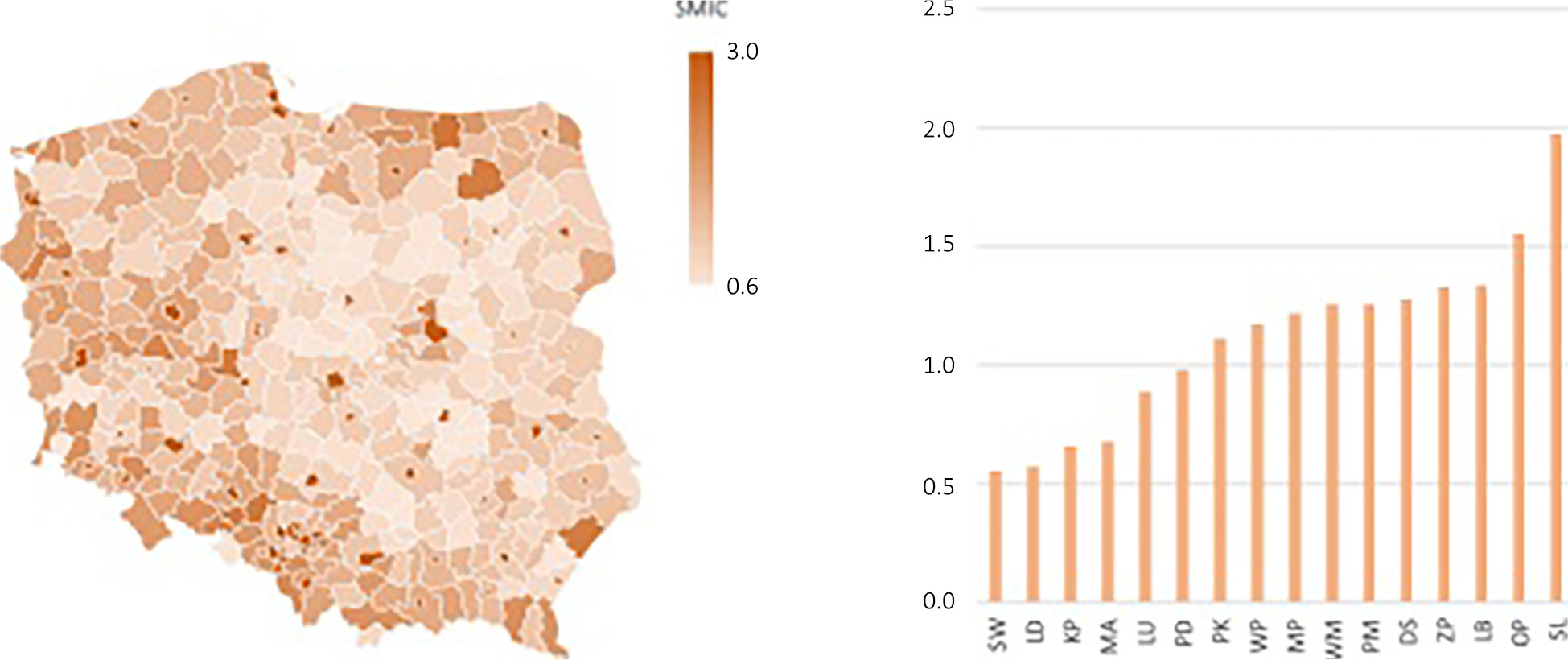
Fig. 3.
Intensity of international cooperation (mean for Poland: 1.1) based on interviews.
The low average level of cooperation between twin cities may suggest that this type of cooperation is losing significance due to the openness of EU borders and the freedom to establish cooperation relations through various projects, particularly in the fields of education, culture and innovation. As a result, international cooperation evolves towards sporadic project-based cooperative relationships (Zakrzewska 2022). On top of that, insufficient financial resources that local governments have for such activities and little interest of local population in taking part in these undertakings are reasons why these partnerships often remain superficial or symbolic (Dąbrowski et al. 2019, Instytut Spraw Publicznych (ISP), Deutsches Polen-Institut (DPI) 2023).
The second dimension of cooperation, namely with organisations representing the local government, exhibits the lowest average value of the measure. For Poland, this measure stands at 1.0, indicating that, on average, the local government maintains between 1 and 2 relations with representative organisations (Fig. 4). This level of cooperation relations is reported by most municipalities (197 out of 380), though the variability of this activity is relatively high (77%). The relatively highest average number of cooperation relations is once again observed in Śląskie Voivodeship, where the relation intensity indicator is 1.7. The lowest indicator (0.6) is reported for Świętokrzyskie Voivodeship (the distance between the maximum and minimum is 1.1).
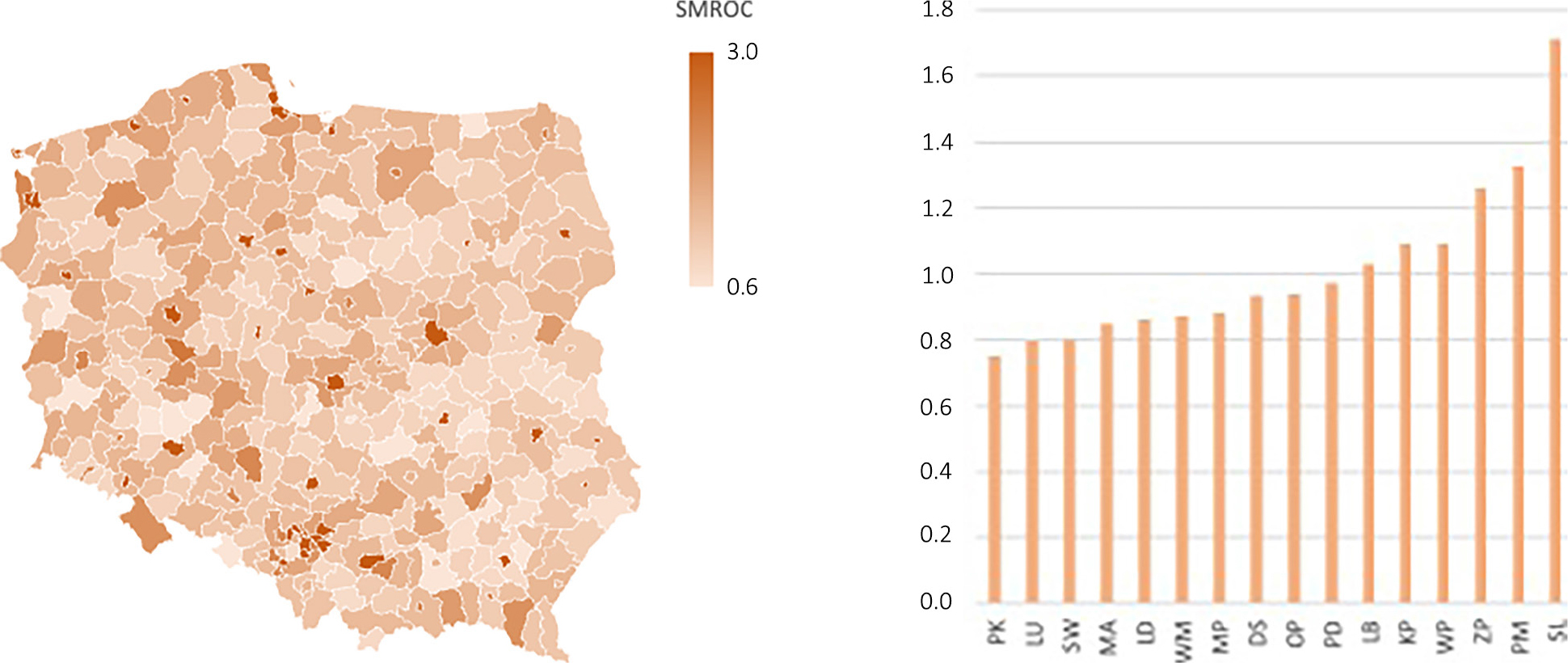
Fig. 4.
Intensity of cooperation with representative organisations (mean for Poland: 1.0) based on interviews.
The low level of development of this form of relational capital may be due to the limited efficiency of institutions representing territorial self-government and the failure of local authorities to realise the potential benefits of having them. Although local government organisations offer institutional support, representation of interests and the ability to formulate a common position, many territorial self-government units fail to acknowledge the tangible added value resulting from their activities. An additional factor limiting the intensification of cooperation is the strong politicisation of the structures of local government organisations and the diversity of interests represented by different types of units (evident, inter alia, in tensions between big metropolitan centres and smaller towns and municipalities (Potkański 2016)). Economic aspects are also not insignificant. The cost of participation in structures of local government organisations – membership fees as well as organisational outlays – can act as a significant barrier especially for rural municipalities with limited financial resources (Danielewicz, Turała 2013).
The dimension of inter-municipal cooperation (Fig. 5) exhibits an average value of 1.8 for Poland, meaning that the average number of cooperation relations ranges between 3 and 4 (as declared by 189 out of 380 counties). The variation between counties is lower compared to the external dimensions of cooperation, amounting to 36%, which results in more evenly distributed capital values, as illustrated in the map below. Lubuskie Voivodeship reports the highest number of cooperation relations, with an average of 2.4, while Mazowieckie Voivodeship records the lowest value at 1.3 (the distance between the maximum and minimum is 1.1).
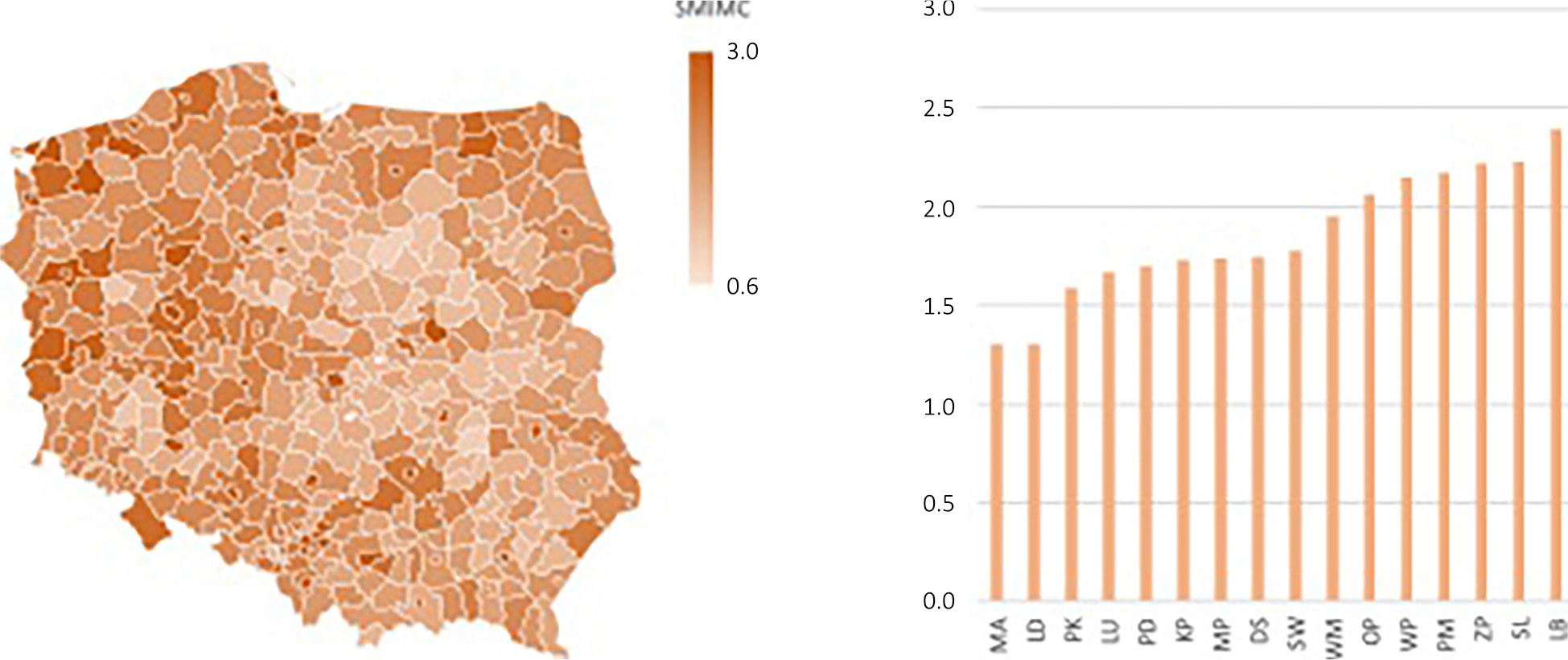
Fig. 5.
Intensity of inter-municipal cooperation (mean for Poland: 2.4) based on interviews.
In Poland, inter-municipal cooperation remains a relatively underdeveloped form of relational capital even though potentially it enhances the efficiency of public services, cost rationalisation, and joint management of local growth. Limited scope and low intensity of such cooperation often result from asymmetric economic potentials and interests of partners. The aforesaid triggers concerns about the domination of stronger partners (e.g., large cities over rural municipalities at their outskirts) in cooperative structures leading to the lack of trust and unwillingness to institutionalise the relationship (Żak-Skwierczyńska 2018, Pyka 2021). Sometimes, cooperation between local government units is distorted by different political affiliations of municipal authorities, which impedes the reaching of consensus, especially around strategic or long-term projects. Moreover, in Poland trust between local government units is generally low and they have little experience in cooperating within a broader territorial framework. In many instances cooperation is limited to small, single-off activities that do not take any lasting institutional forms (Kołsut 2015; Łukomska, Szmigiel-Rawska 2018).
For the last dimension, cooperation with NGOs (Fig. 6), the indicator reaches the highest average value for Poland (2.4), with relatively small differences between voivodeships (2.7 for Pomorskie and 2.2 for Podlaskie). This is confirmed by both the smallest maximum–minimum indicator distance (0.5) and the lowest variability, as measured by the coefficient of variation (21%).
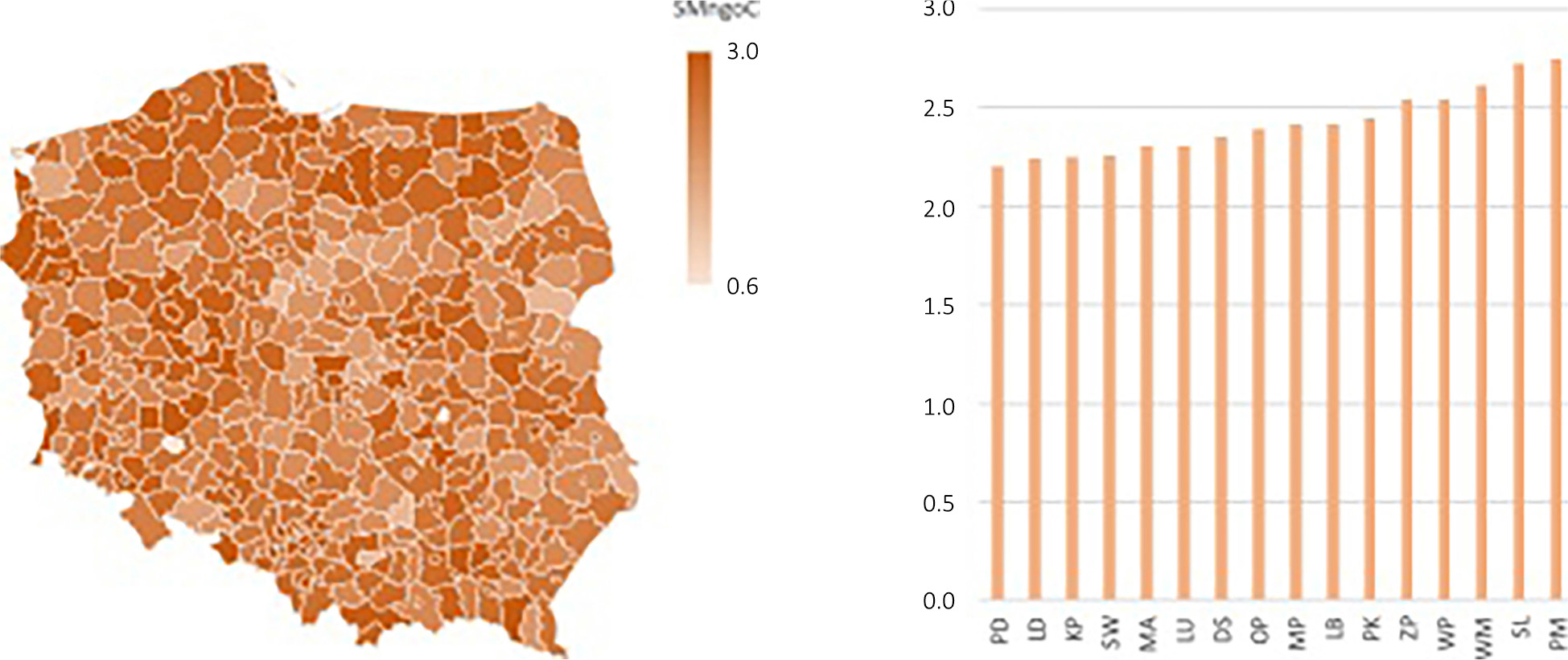
Fig. 6.
Intensity of NGO cooperation (mean for Poland: 1.8) based on interviews.
The widespread and relatively high degree of cooperation with NGOs may suggest that local governments are ready and open to citizen participation in governance. The real-life situation is far from ideal. Intense relationships with NGOs are dictated by regulations which oblige local governments to cooperate with them (Act of 24 April 2003 on public benefit and volunteer work; Art. 5(1)). In practical terms it means that local governments are obliged by law to cooperate with NGOs when delivering responsibilities entrusted to them (e.g., in the field of culture, sport, social welfare and education) (Act of 24 April 2003). On top of that, municipal councils are obliged to adopt annual programmes of cooperation with NGOs (Kotowski, Wijas 2021).
The real engagement of NGOs continues to be very limited. In most cases the cooperation boils down to subcontracting simple public tasks while areas requiring a dialogue, partnership and participation remain marginalised. Cooperation rests mainly on formal mechanisms (subsidies, subcontracting) rather than on real co-decision and social involvement in managing territorial development (Kryk 2017).
What draws attention in the analysis of local government relational capital is the clear difference in the intensity and variability of the local government’s internal and external cooperation relations. Cooperation in the external dimension is certainly less developed (with an average cooperation measure value of 1–1.1) and exhibits higher variability between districts (77–84%). The internal dimension of relational capital is characterised by a greater number of cooperation relations (with an average of 1.8–2.4) and lower variation (21–36%). It can therefore be concluded that high values of the synthetic measure of relational capital, along with its moderate variability, are primarily determined by the internal dimension of cooperation, particularly with NGOs. Interestingly, this type of cooperation is also the most independent of others, as confirmed by correlation coefficients.
The greater number of internal relationships compared to external ones confirms local governments’ stronger orientation towards building local relations and cooperation networks, whose effects are measurable and noticeable in the local environment. The low intensity of external relations suggests that the importance of knowledge resources and the exchange of experience or innovative capacity are clearly underestimated, directly affecting the quality of the socio-economic environment and territorial governance (Capello, Faggian 2005, Lenart-Gansiniec 2016, Ezcurra, Rios 2020).
Significantly, in each dimension of cooperation, the relational capital intensity depended on the degree of urbanisation, with the level of relational capital increasing with the level of urbanisation. We have demonstrated this pattern for three types of territorial units, though the conclusion also holds when urbanisation is considered a continuous variable, assuming values from 0 to 100 (without categorisation into three groups). Using this approach (cross-sectional regression), variations in the degree of urbanisation of counties can be calculated to explain as much as 54% of the variation in relational capital. When broken down into the four types of cooperation, urbanisation exhibits the strongest impact on the international dimension (0.025 meaning that as the level of urbanisation increases, the synthetic measure rises by 0.025), followed by cooperation with representative organisations (0.019), other municipalities (0.011) and NGOs (0.006).
The degree of relational capital development in Poland shows that today it is not a source of a meaningful stimulus for development. In order to strengthen relational capital, a package of actions needs to be adopted within the framework of targeted regional policy. Putting in place powerful financial incentives is crucial as they should be effective in encouraging engagement in cooperation-based initiatives. In this context, it appears particularly important to deploy sustainable and transparent financial support instruments, such as subsidy bonuses or extra score awarded in the assessment of projects co-financed with the EU funds. At the same time, a shift in organisational culture exercised by local governments is needed to change the mindset of the administration – from competition-oriented to a cooperative approach relying on principles of cooperation and pursuing the common interest. Strong leadership and effective coordination are crucial for the process. Having active local leaders able to build trust and launch and maintain cooperation between local government units is an absolute pre-condition for the effective development of relational capital.
Conclusion
This study aimed to measure the relational capital of Polish local government units and to assess its intensity and spatial differences. Our analyses focused on four dimensions of relations: cooperation with other municipalities, NGOs, international cooperation and cooperation with local government organisations.
The results clearly indicate a low level of relational capital and its significant heterogeneity, suggesting a strong territorial character of the phenomenon. Local governments maintain more cooperation relations with NGOs and other municipalities, while engaging in limited cooperation with their twin partners or professional organisations. The research shows a clear dominance of internal cooperation relations over external ones, suggesting a strong orientation of local governments towards building relations that favour territorial governance.
At the same time, this reveals a weakness of relations that facilitate the creation of knowledge resources and enhance the innovation capacities of territories. The spatial variation in relational capital clearly corresponds to three determinants. First, the degree of urbanisation is crucial for territorial cooperation. Second, the low intensity of cooperation relations is particularly evident in areas considered as inner peripheries. Third, the influence of cultural and historical contexts remains significant.
The study provides arguments that contribute to a better understanding of relational capital as a determinant of territorial development processes. However, it has weaknesses and limitations. The proposed approach attempts to estimate territorial relational capital only based on local government cooperation patterns rather than measuring it directly. Furthermore, the level of data aggregation for territorial relational capital analysis remains a methodological challenge. While the focus on counties represents an analytical simplification, it appears to be justified given Poland’s territorial division and the need for an appropriate perspective on the analysis of territorial development determinants.
The results of the study have provided a strong impulse to further explore the relationship between relational capital and other dimensions of territorial capital or socio-economic conditions. An interesting outcome of this research would be to learn about the causal direction of these relationships.
Notes
[1] Contributed by Authors’ contributions
AN: conceptualisation, methodology, formal analysis, writing – original draft, supervision; EK: software, methodology, data analysis, visualisation, writing; MM: preparing and conducting the survey, data collection, formal analysis.