Have a personal or library account? Click to login
The Impact of Circulation Types and their Changing Thermal Properties on the Probability of Days with Snowfall and Rainfall in Poland, 1966–2020 Cover

The Impact of Circulation Types and their Changing Thermal Properties on the Probability of Days with Snowfall and Rainfall in Poland, 1966–2020

Open Access
|Aug 2024

Figures & Tables

Fig. 1.

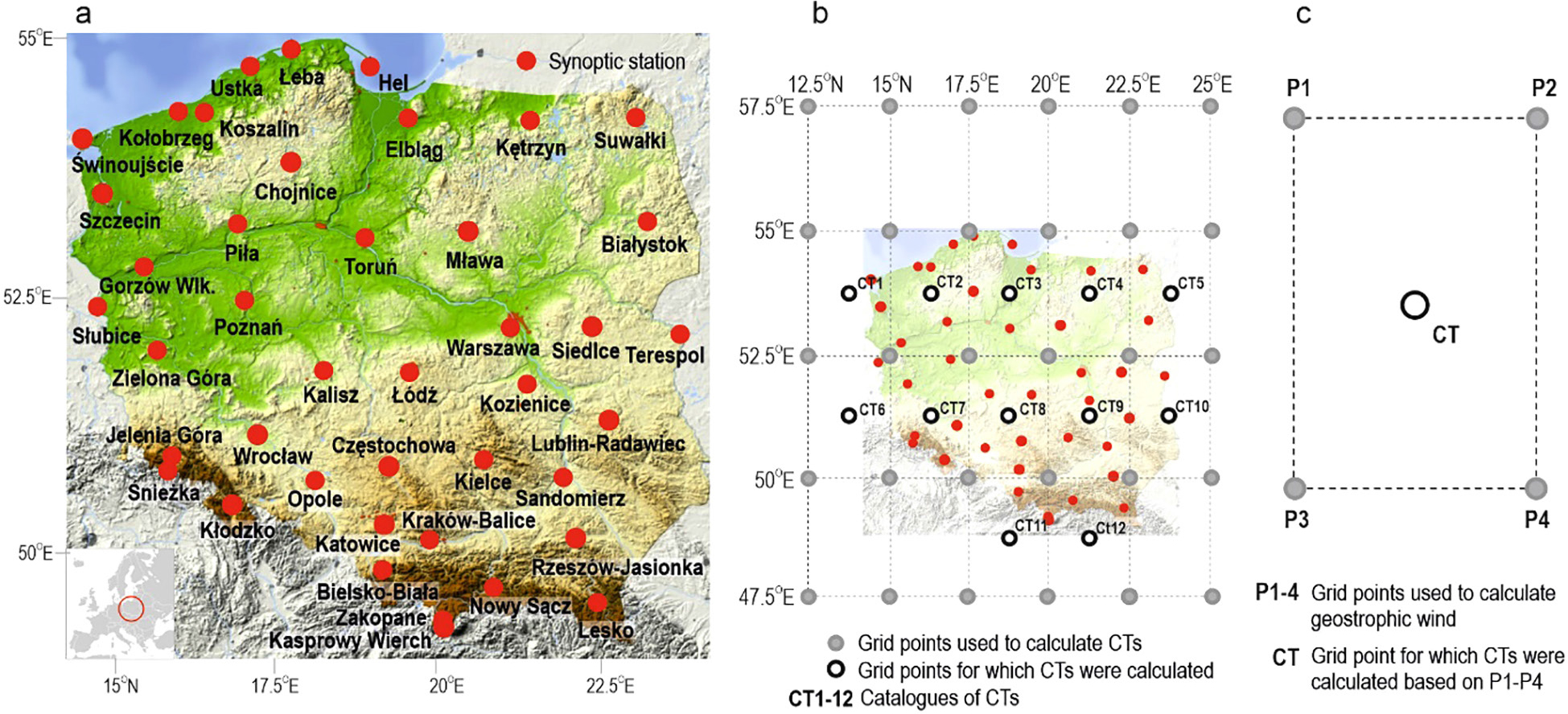
Location of synoptic stations used in this study in Poland (A), and distribution of grids over Poland for which circulation types were identified (B), an example distribution of grids for calculating geostrophic wind used to identify a direction of air advection (C).

Fig. 2.

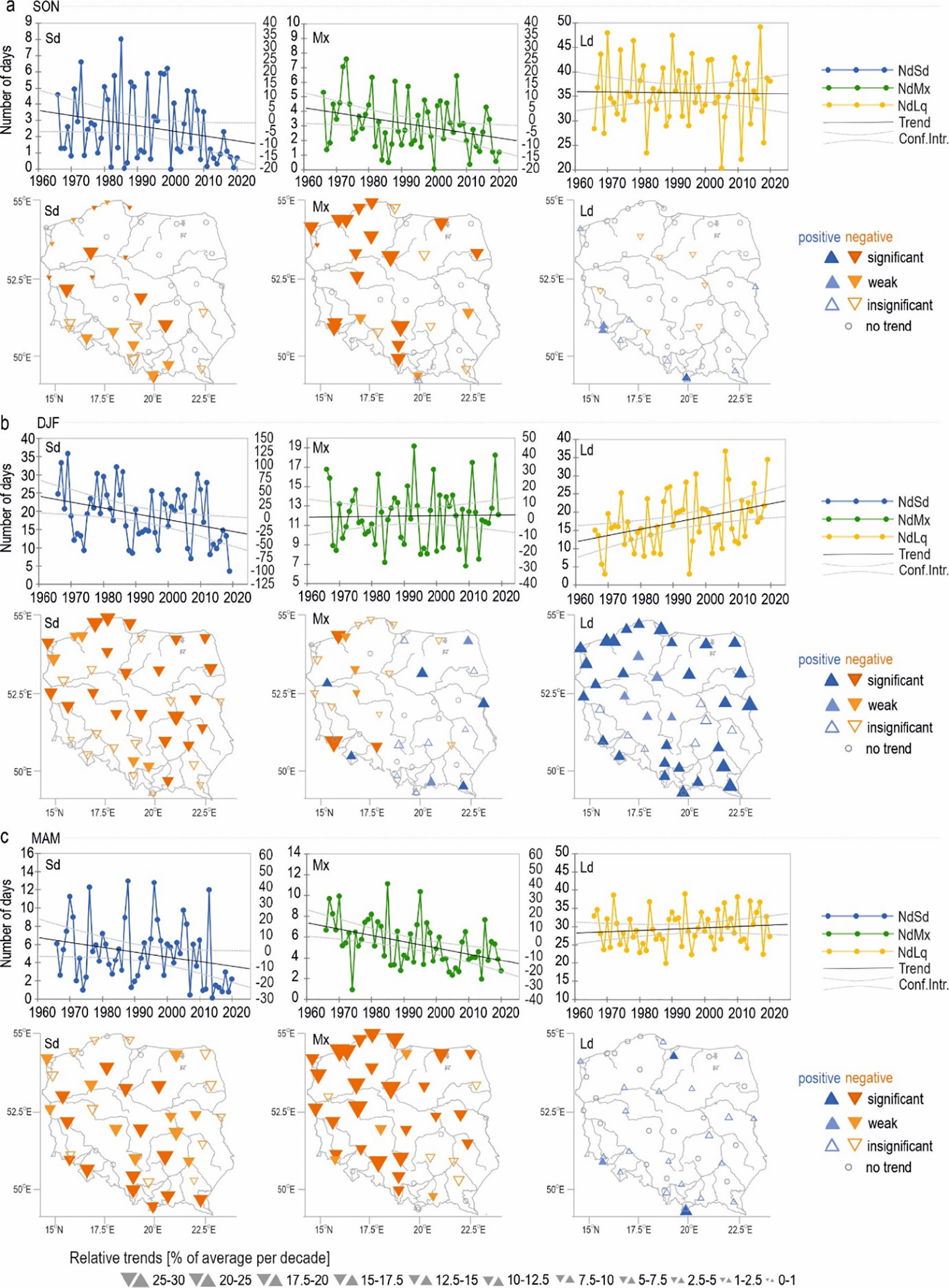
Long-term variability in the number of days with precipitation phases averaged over stations (graphs) and spatial distribution of trends (maps) in the number of days with precipitation phases (Sd, solid; Mx, mixed; Lq, liquid, yellow) in the period 1966–2020.
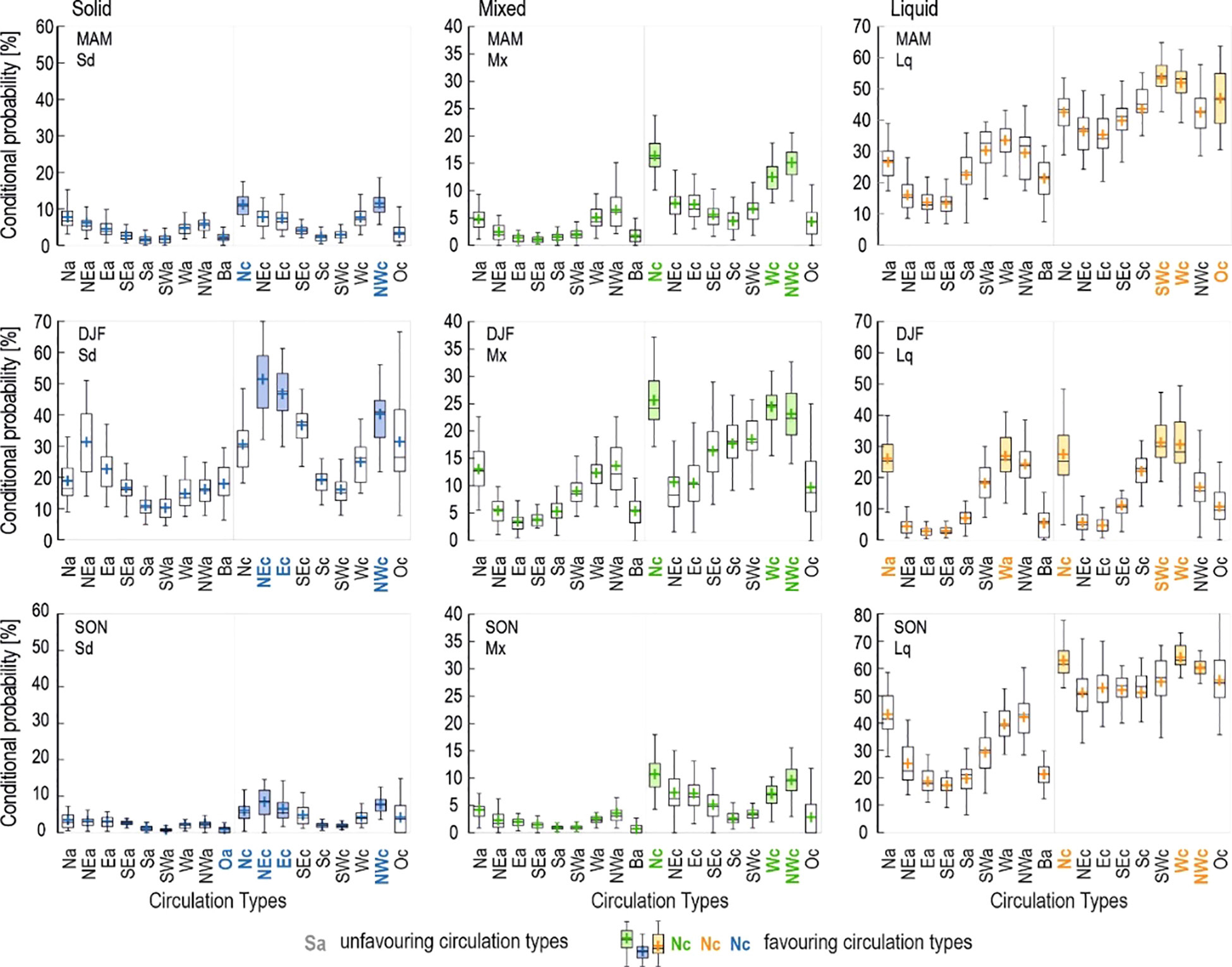

Fig. 3.

Conditional probability of solid (Sd, blue), mixed (Mx, green) and liquid (Lq, orange) precipitation in circulation types, Poland, 1966–2020, a – boxplots: statistical distribution of the station probabilities of precipitation phases for each circulation type; cross – mean; horizontal line – median; box – 25th and 75the percentiles; whiskers – limits for outliers.
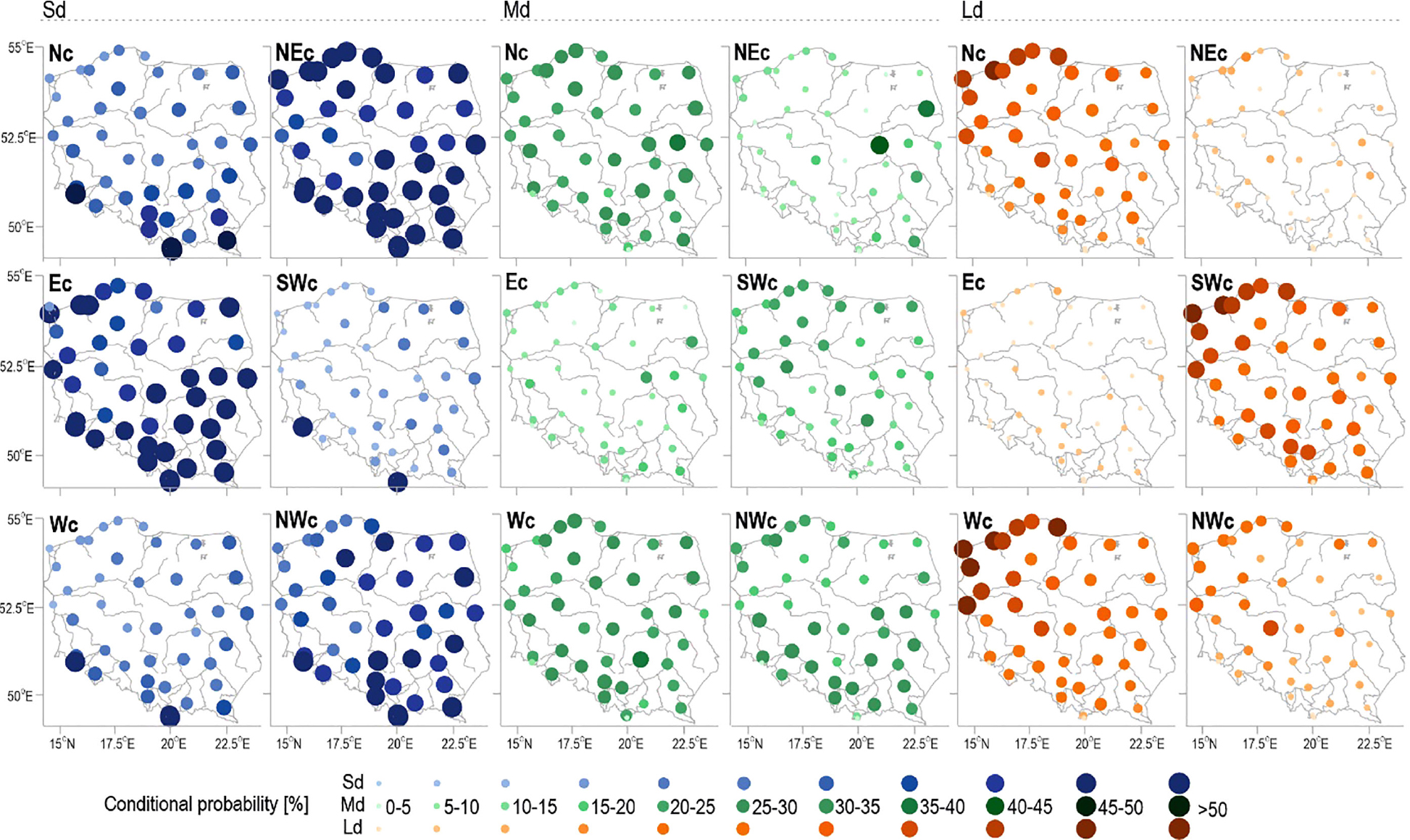

Fig. 4.

Spatial distribution of the conditional probability of solid (Sd, blue), mixed (Mx, green) and liquid (Lq, orange) precipitation in cyclonic advective circulation types in DJF.
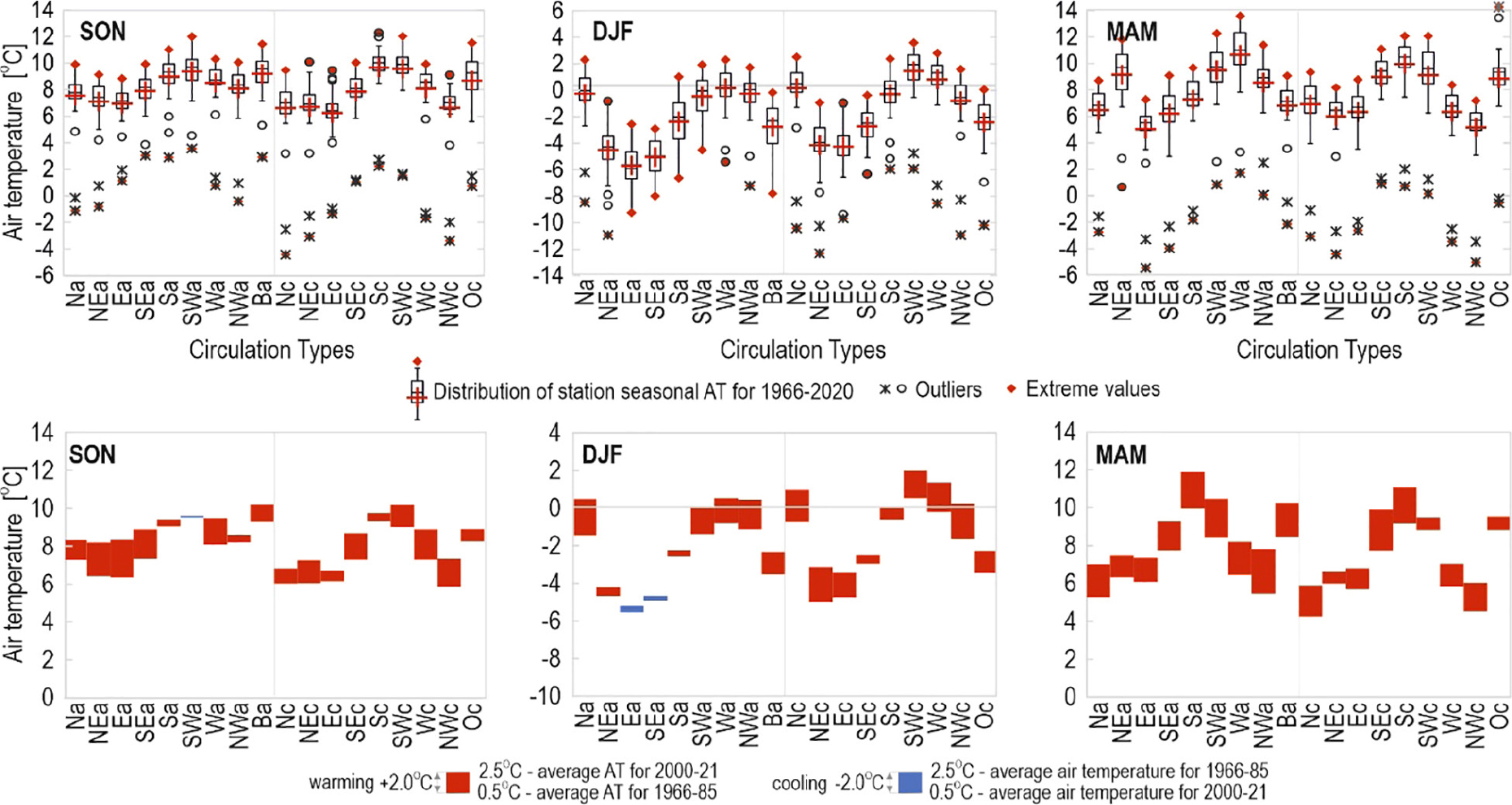

Fig. 5.

Average air temperature for circulation types, box-plots –average seasonal station air temperature for the entire research period 1966–2020, red cross – mean; horizontal line – median; box – 25th and 75th percentiles; whiskers – limits for outliers (upper panel). Averaged over stations range of change in air temperature between the cold period 1966–1985 and the warm period 2001–2020 for circulation types (lower panel).
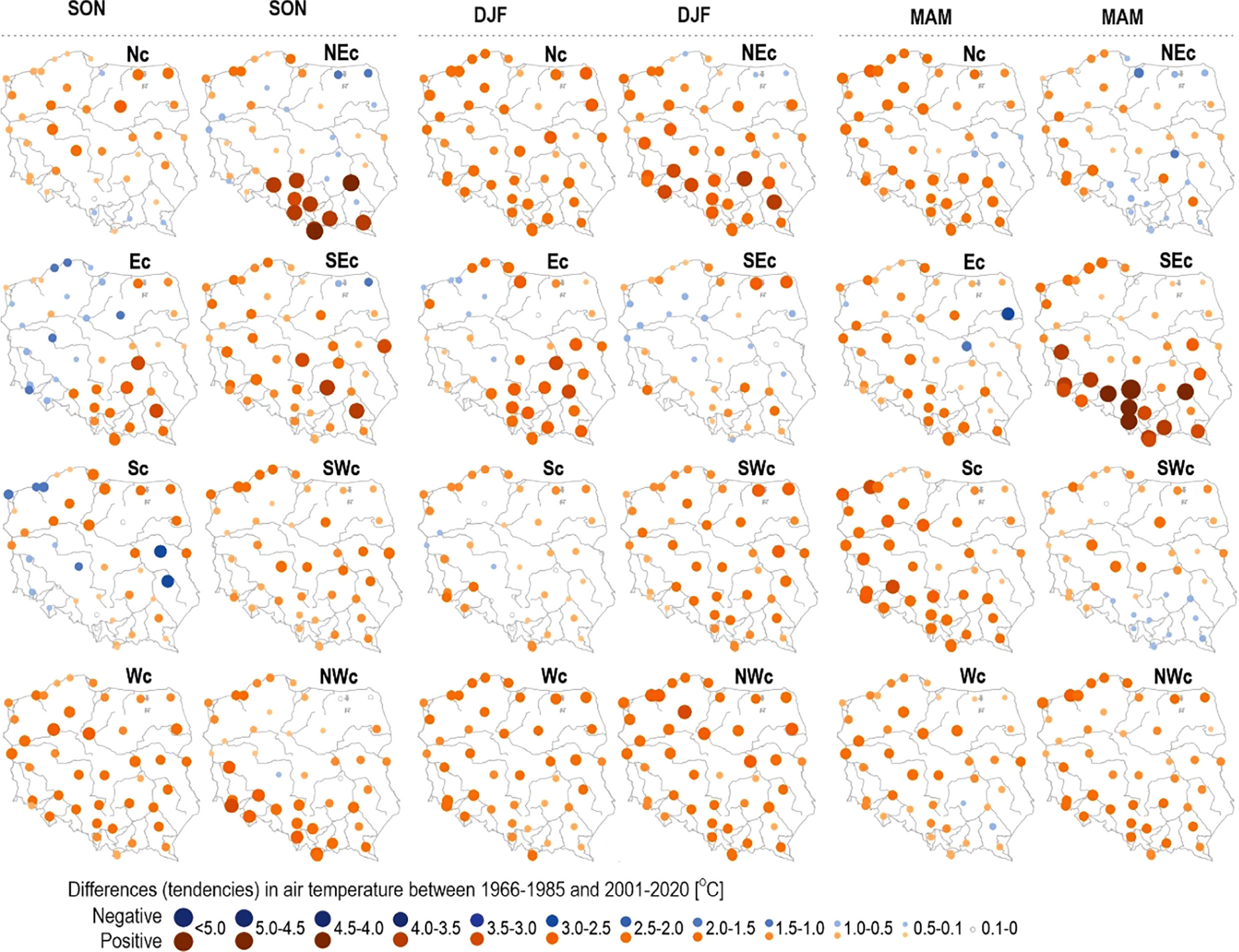

Fig. 6.

Differences (tendencies) in air temperature between 1966–1985 and 2001–2020 for advective cyclonic circulation types.
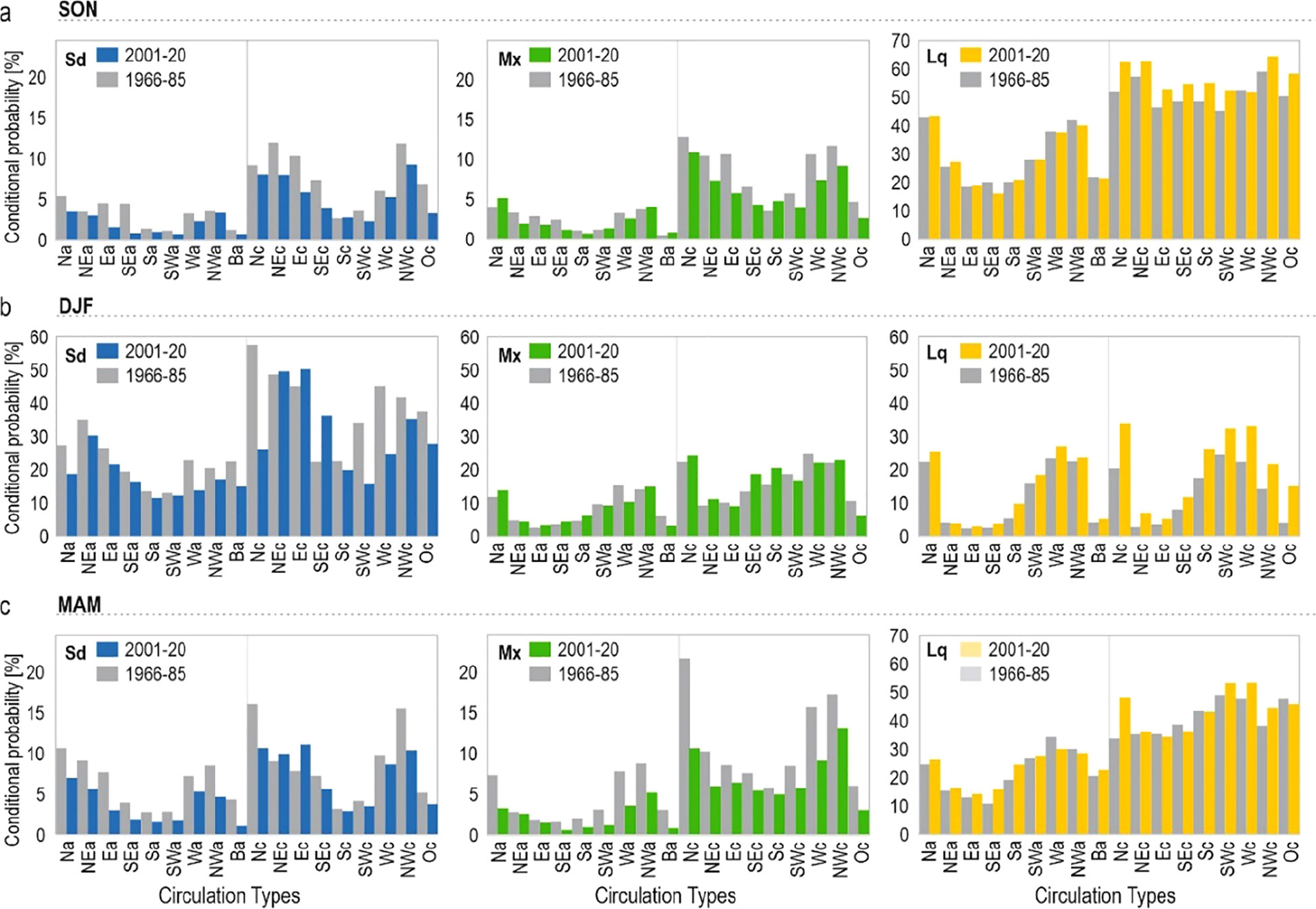

Fig. 7.

Conditional probability of precipitation phases (Sd – solid; Mx – mixed; Lq – liquid) in the cold 1966–1985 and warm 2001–2020 periods averaged over stations for circulation types.
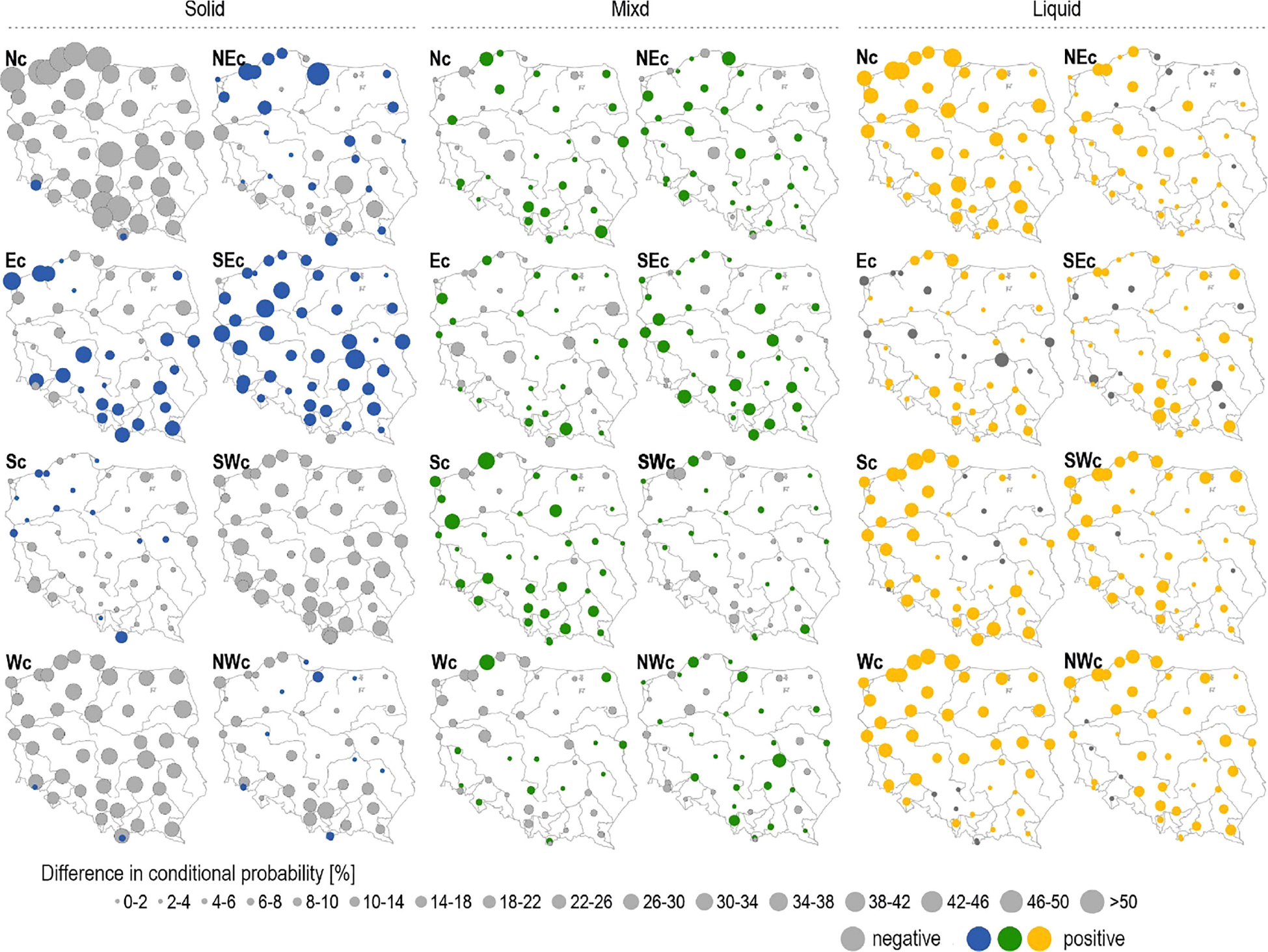

Fig. 8.

Spatial distribution of tendencies (differences between the 20-year periods) in the conditional probability of precipitation phases for cyclonic advective circulation types in DJF.
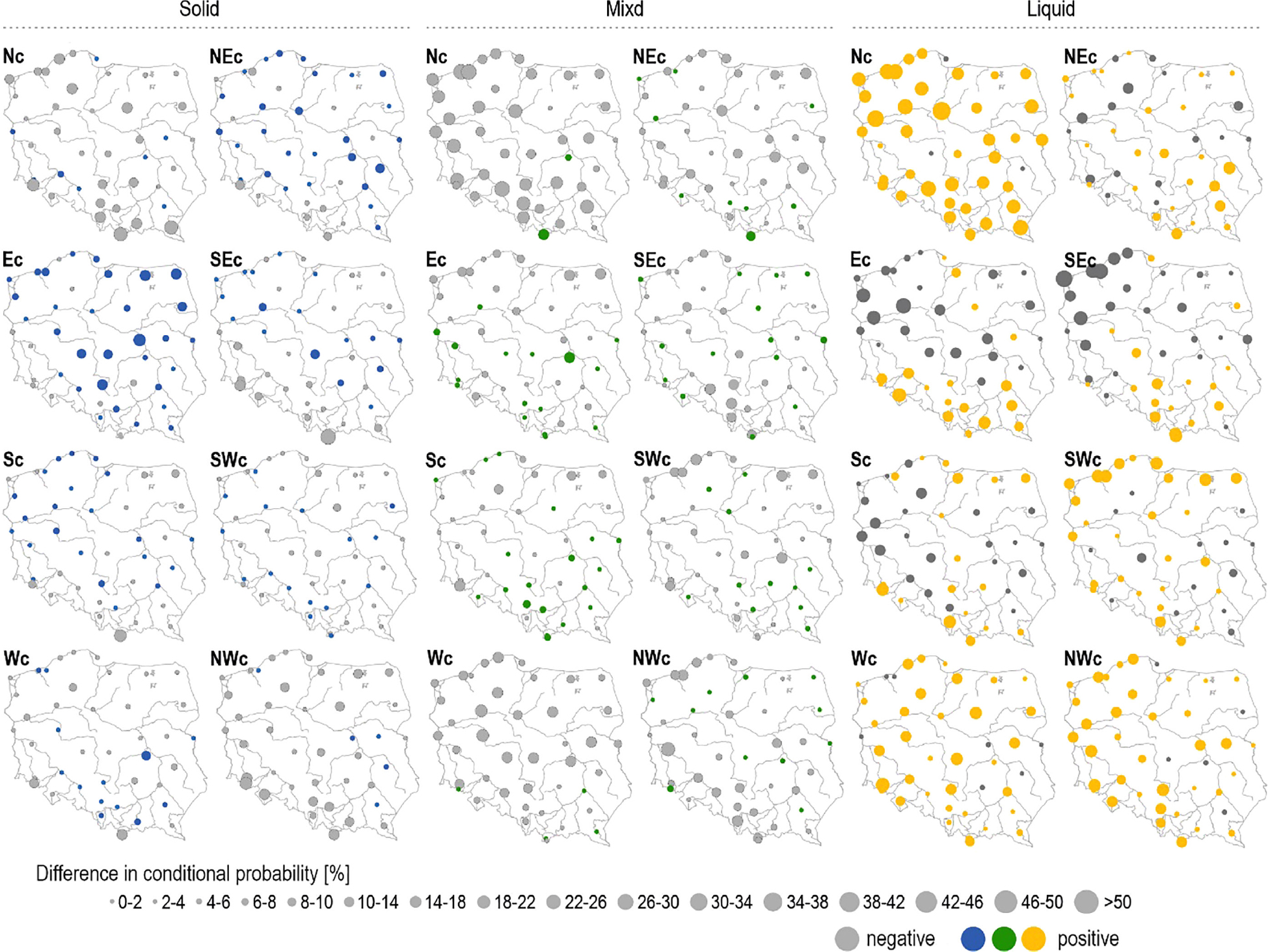

Fig. 9.

Spatial distribution of tendencies (differences between the 20-year periods) in the conditional probability of precipitation phases for cyclonic advective circulation types in MAM.
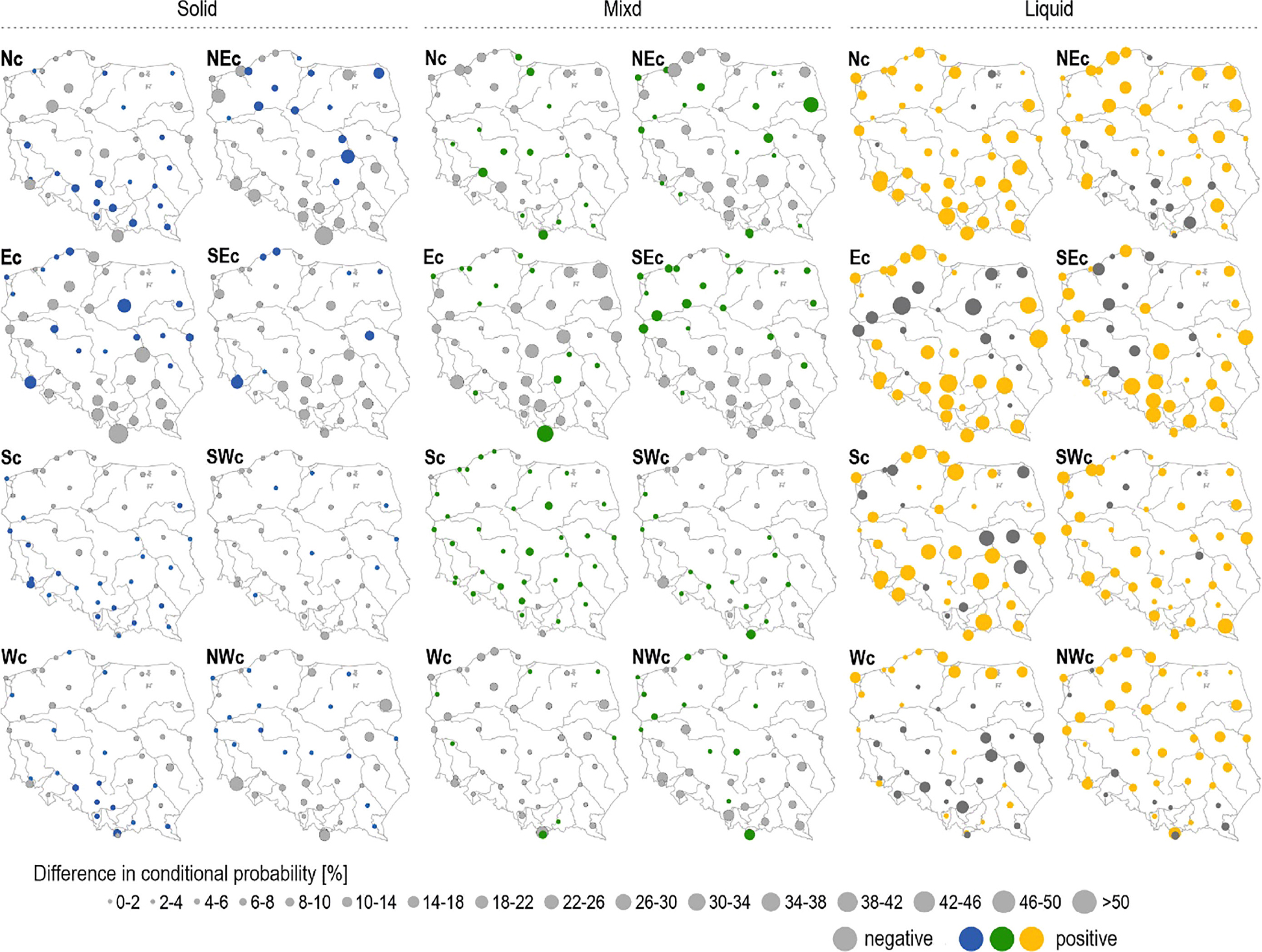

Fig. 10.

Spatial distribution of tendencies (differences between the 20-year periods) in the conditional probability of precipitation phases for cyclonic advective circulation types in SON.

Classification of circulation types_

Anticyclonic typesCyclonic typesDirection of air advection
NaNcNorthern
NEaNEcNortheastern
EaEcEastern
SeaSecSoutheastern
SaSaSouthern
SWaSWcSouthwestern
WaWcWestern
NWaNWcNorthwestern
OaOcNon-advective types
DOI: https://doi.org/10.14746/quageo-2024-0025 | Journal eISSN: 2081-6383 | Journal ISSN: 2082-2103
Language: English
Page range: 47 - 64
Submitted on: Oct 20, 2023
|
Published on: Aug 19, 2024
In partnership with: Paradigm Publishing Services
Publication frequency: 4 issues per year
Related subjects:

© 2024 Ewa B. Łupikasza, Łukasz Małarzewski, Quoc B. Pham, published by Adam Mickiewicz University
This work is licensed under the Creative Commons Attribution 4.0 License.