
Figure 1
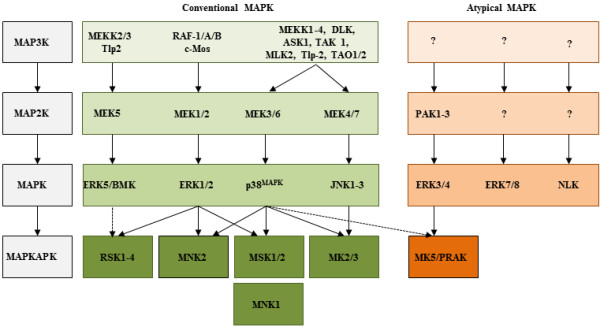
Schematic presentation of the different mammalian MAP kinase pathways. The conventional MAP kinase pathways, represented by the MEK/ERK, JNK, p38MAPK, and MEK5/ERK5 pathways, consist of a module of three kinases that subsequently phosphorylate and active each other. The MAPK kinase kinase (MAP3K) phosphorylates MAPK kinase (MAP2K), which in turn phosphorylates MAPK. Downstream of MAPK are substrates including other protein kinases referred to as MAPK-activated protein kinases (MAPKAPK). The atypical pathways include ERK3, ERK4, ERK7, ERK8, and NLK. MAPKs can converge to different MAPKAPK as shown in this figure.
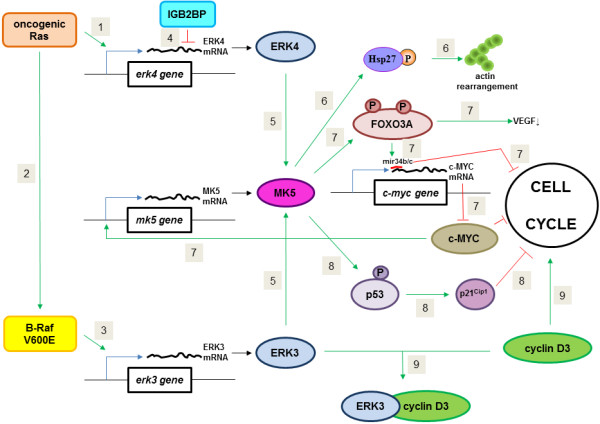
Figure 2
Molecular mechanisms of the pro- and anti-oncogenic properties of ERK3, ERK4, and MK5. (1,2) Oncogenic Ras mutants can increase the transcript levels of ERK4, but also results in constitutive activation of Raf. (3) Activated Raf or oncogenic BRAFV600E also stimulates transcription of the erk3 gene. (4) The RNA binding protein IGB2BP can inhibit translation of ERK4 mRNA. (5) ERK3 and ERK4 proteins can activate MK5. (6) Active MK5 can phosphorylate Hsp27, which will affect actin remodelling and cell migration. (7) MK5 can also phosphorylate transcription factor FOXO3a, which in turn will trigger transcription of microRNA mir34b/c. mir34b/c inhibits the cell cycle and prevents translation of c-myc mRNA and hence the production of c-MYC, a protein that is important for cell cycle regulation. C-MYC binds to the promoter of the mk5 gene and enhances transcription of this gene. FOXO3a also reduces expression of VEGF and may thus hamper angiogenesis. (8) MK5-mediated phosphorylation of p53 at Ser-37 stimulates the transcriptional activity of p53, resulting in enhanced expression of p21Cip1. p21Cip1 inhibits cell cycle progression. (9) ERK3 can sequester cyclin D3. By usurping cyclin D3, it may cause cell cycle arrest.
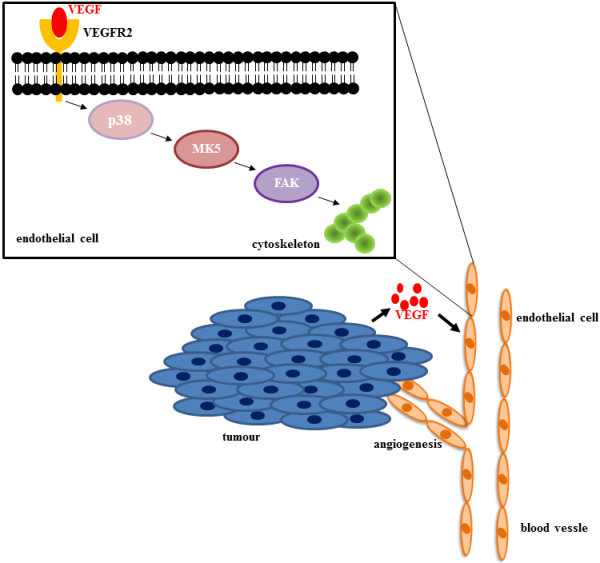
Figure 3
MK5 is implicated in VEGF-mediated angiogenesis. VEGF produced by tumour cells will bind to the VEGF receptor VEGFR2 on endothelial cells. This will trigger a cascade involving the MAP kinases p38 and MK5. MK5 can in turn activate FAK, and this will result in changes in the cytoskeletal architecture and migration of endothelial cells towards the tumour. A blood vessel with endothelial cells aligning the vessel is shown. The pathway induced by VEGF and which involves MK5 is depicted in detail.
Table 1
Somatic mutations in mapk6/erk3 in cancer tissues
| Primary tissue | Unique mutated samples | % mutated | Total unique samples | Mutation data | references |
|---|---|---|---|---|---|
| urinary tract | 0 | 0% | 2 |