
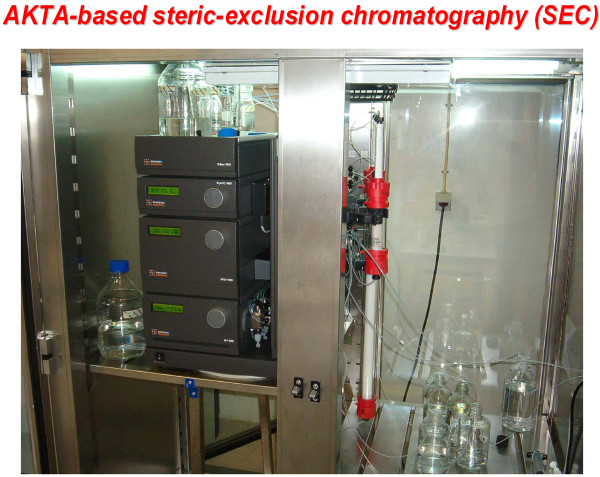
Figure 1
Steric-exclusion chromatography enables isolation and molecular sieving of large, supermolecular complexes/signalsomes. One configuration of steric-exclusion chromatography optimized in the authors' laboratory makes use of the Pharmacia AKTA-based liquid handler equipped with large diameter, long (30-60 cm) columns packed with wide-bore matrices such as Sephacryl 200, 400, or larger. The system can accommodate large sample loading and provides excellent performance in efforts designed to isolated very large supermolecular complexes like the Dishevelled3-based signalsomes highlighted in this article.
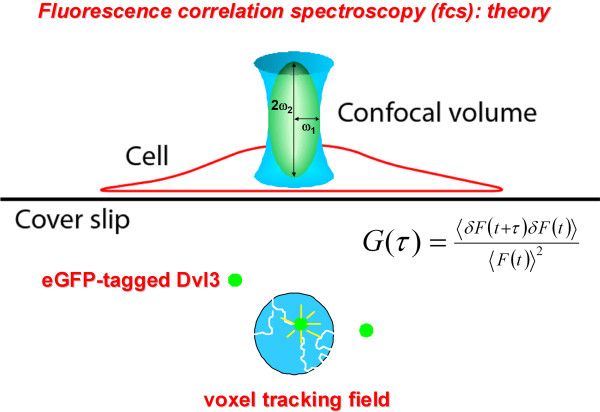
Figure 2
Fluorescence correlation spectroscopy enables measurements of diffusion constants and calculate MW of fluorescently-tagged molecules core to supermolecular complexes of interest, such as the Dvl3-based signalsomes. Fcs is a single molecule analysis of the dwell time of a molecule/complex of interest, sampled in situ in live cells. Please consult the Methods section for a detailed explanation of the theory and practical aspects of applying fcs measurements in live cells.
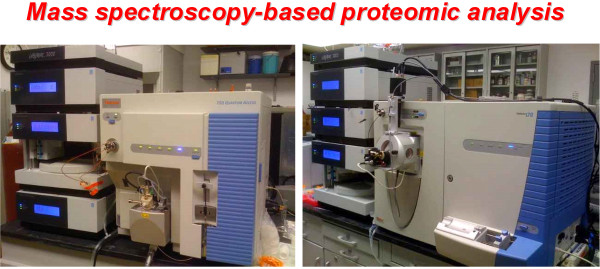
Figure 3
Mass spectrometry-based proteomic analysis enables identification of the proteins that constitute large supermolecular complexes such as Dvl3-based signalsomes. The ability to fragment and subsequently sequence a complex of proteins, such as the Dvl3-based signalsome, is essential for similar efforts aimed at establishing the identity of protein partners involved in large complexes that integrate and propagate signaling downstream. These mass spectrometry-based analyses can be performed in parallel or sequentially to optimize the discovery of constituent peptides.