Have a personal or library account? Click to login
Patients with intellectual disabilities in the forensic asylums 1915–1982: before admission Cover

Patients with intellectual disabilities in the forensic asylums 1915–1982: before admission

Open Access
|Jan 2015

Figures & Tables

Table 1.

Problems described in the proximate family (parents and siblings) of the admitted patients (n = 272). A combination of several problems in the family was found for some of the patients.

Problem in the proximate familyNumber of proximate family members affected (%)Mental disorder61 (22.3)Intellectual defect60 (22.0)Alcohol (substance) problem81 (29.7)Criminality26 (9.5)Supported by the poor relief52 (19.0)Parental death during childhood72 (26.4)No such family problems20 (7.3)
Table 2.

Offending behaviour described in the patient records. Some patients had several previous and different criminal offences.
OffenceN (%)N (%)Theft and robbery94 (34.4) Petty theft83 (30.5) Robbery/ organized crime11 (4.0)Sexual offencesa82 (30.1) Rape17 (6.3) Attempted rape36 (13.2) Indecency or exposure42 (15.5)Violent offencesb94 (34.4) Homicide12 (4.4) Serious violence offence41 (15.1) Less serious violence offence49 (18.0)Property damage39 (14.3)Arson26 (9.6)Other offending behaviourc104 (38.1) illegal begging17 (6.3) threats50 (18.4) public order offences68 (25.0)

a A few patients were convicted for several types of sexual offences.

b A few patients were convicted for both serious and less serious violent offences.

c Some patients had been convicted for more than one other type of offending behaviour.

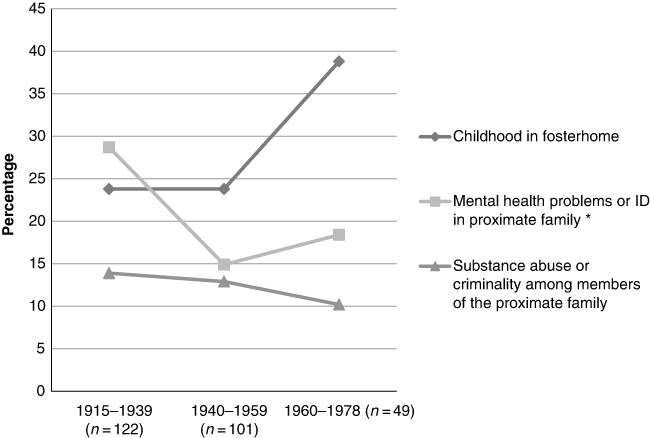
Figure 1.

Childhood experiences in patients with an ID. (*) indicates that the difference were found significant below the level of 0.05 using a Chi square-test.
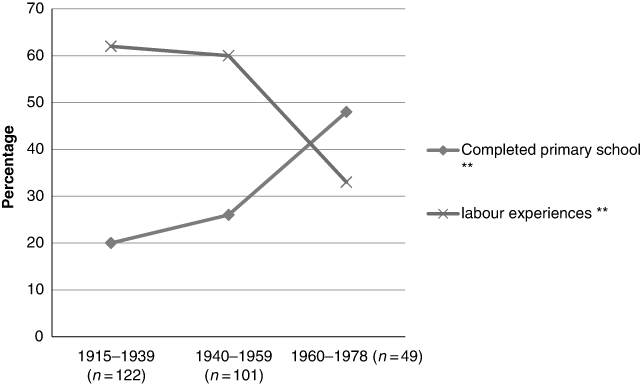
Figure 2.

Education and employment before admitting in the hospital. (**) indicates that the difference were found significant below the level of 0.01 using a Chi square-test.
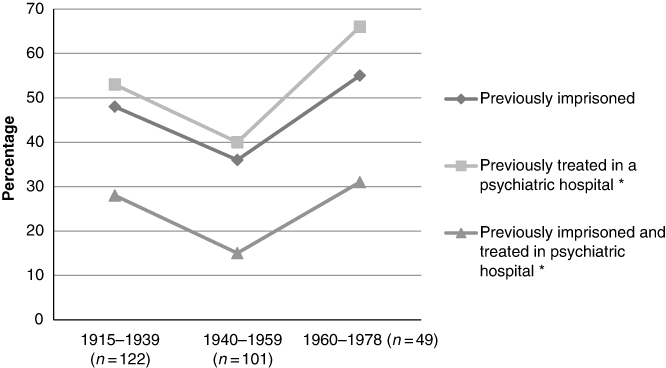
Figure 3.

Institutional past amongst patients with an ID. (*) indicates that the difference were found significant below the level of 0.05 using a Chi square-test.

Language: English
Page range: 14 - 25
Submitted on: Aug 29, 2013
Accepted on: Nov 20, 2013
Published on: Jan 1, 2015
In partnership with: Paradigm Publishing Services

© 2015 Erik Søndenaa, Camilla Gudde, Øyvind Thomassen, published by Stockholm University Press
This work is licensed under the Creative Commons Attribution 4.0 License.