Have a personal or library account? Click to login
Staff's Collaborative Work Process with an Adolescent Boy with Autism and Intellectual Disability in Community-based Sheltered Housing Cover

Staff's Collaborative Work Process with an Adolescent Boy with Autism and Intellectual Disability in Community-based Sheltered Housing

Open Access
|Mar 2008

Figures & Tables

Table 1.

Concordance between different types of data (diary, individual and focus group interviews) over time by presence of units of meanings assigned to categories (yes = ≥ 80% of statements assigned to demanded categories, no = ≤ 20% of statements assigned to demanded categories)
DiaryIndividual interviewsFocus group interviewsFirst setFollow upBipolar categories Positiveyesyesnono NegativeyesnoyesyesPedagogical strategies Successful strategiesyesyesnono Unsuccessful strategiesyesnoyesyes
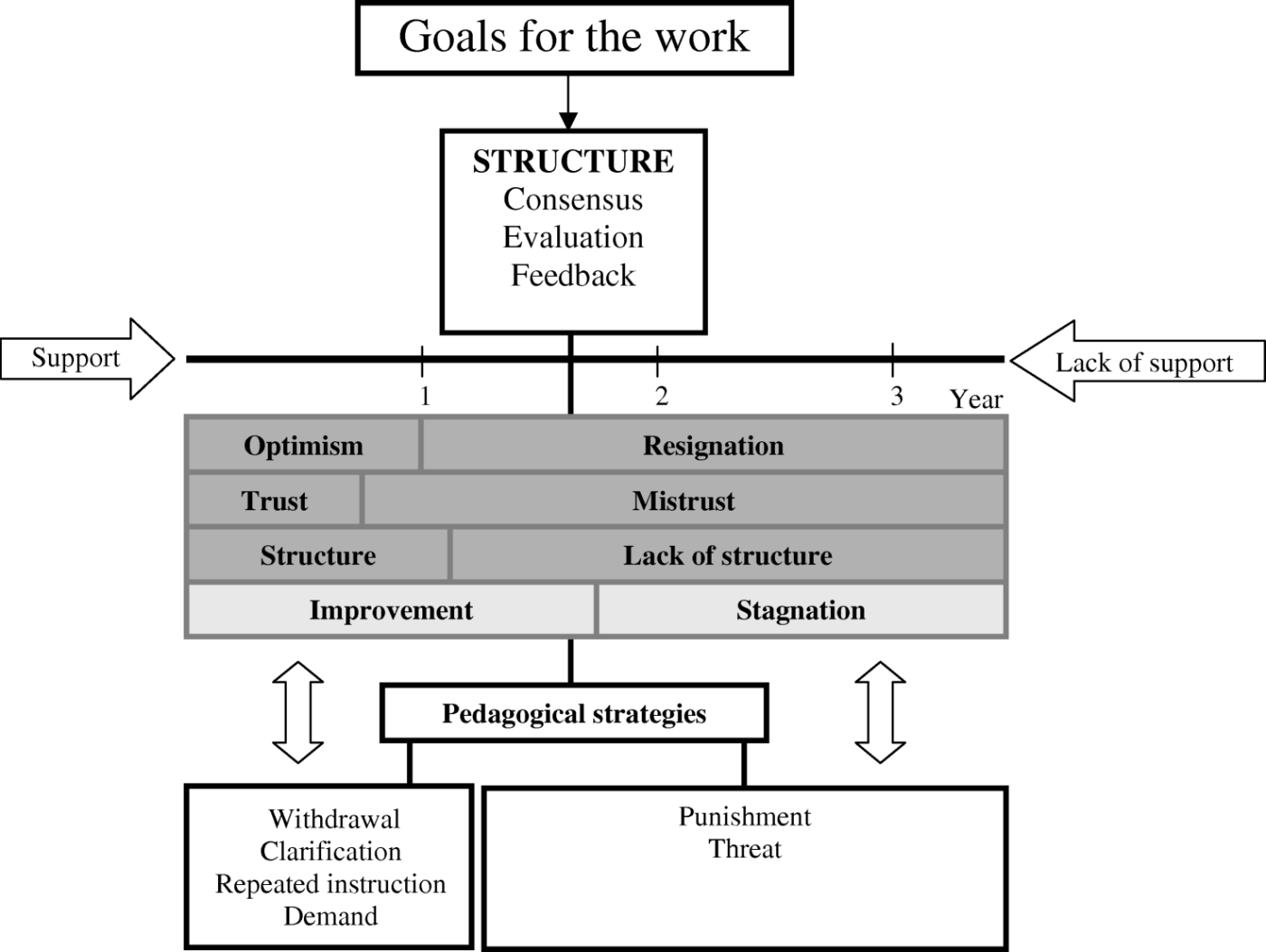
Figure 1.

Model showing how the staff's use of different pedagogical strategies was connected to the three bipolar categories describing the working process and showing the pedagogical goals, conditions, expectations and changes over time during the whole period.

Table 2.

Gradual shifts of proportions of statements within categories in the diary in relation to time periods.

Positive (+) Negative (−)CategoriesYear 0–1Year 1–2Year 2–3.5*Bipolar categories+Optimism873243−Resignation235246+Trust38713−Mistrust294356+Structure1123239−Lack of Structure314037Pedagogical strategiesWithdrawal311922SuccessfulClarification533726Repeated instruction282119Demand231714UnsuccessfulPunishment71513Threat0815*The last period, Year 2–3.5, is six months longer than the other periods.
Language: English
Page range: 49 - 66
Published on: Mar 1, 2008
In partnership with: Paradigm Publishing Services

© 2008 Marie Hübel, Karin Linder, Bengt Sivberg, published by Stockholm University Press
This work is licensed under the Creative Commons Attribution 4.0 License.