
Adopting a Universal Mandate on Platform Work: Balancing Contrasting Realities
Londoño Polo Juliana
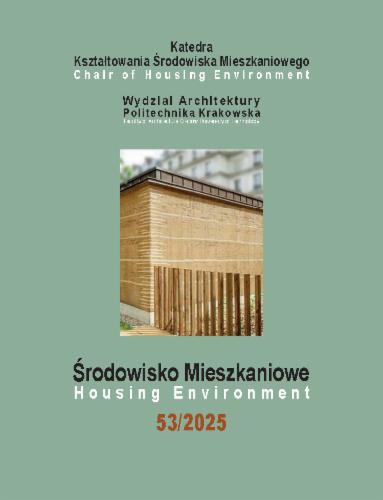
Munich’s Olympiadorf: Synthesis of an Urban Audit’s Results
Jolanta Tofil
Prawo dostępu do Internetu, prawo do niekorzystania z Internetu i prawo do bycia offline a prawo do prywatności – czy multiplikacja praw człowieka jest remedium na ich efektywność?
Iwona Wrońska, Ewelina Cała-Wacinkiewicz, Maciej Nyka
The Constitutionalization of the Internet and the Right to Non-Use
Joanna Wegner
The Legal Entity Identifier and Legacy Systems: Harmonisation, Interoperability, and Balance in Digital Governance
Katarzyna Barbara Wojtkiewicz
Impact of structural system type and thermal insulation material on the internal floor area of residential buildings.
Paweł Mika, Yifan Jing
The Right Not to Use the Internet and Protection against the Digital Divide: Some Preliminary Remarks
Michał Ożóg, Radosław Puchta
The Right to (Not) Make an Electronic Will: The Case of Nevada
Sławomir Patrycjusz Kursa
The Limited Use and Non-Use of Digital Tools and Technologies in the Activities of Political Parties in Poland
Michał Jacuński
Unseen Influence: Computational Propaganda, Free Elections, and the Reluctance to Seek Judicial Remedies in Poland. Evidence from AI-Assisted Case Law Analysis
Łukasz Augustyniak, Michał Bernaczyk, Berenika Kaczmarek-Templin
Czas pracy a prawo do bycia offline – analiza w świetle koncepcji „non-use of technology” w prawie polskim i unijnym
Katarzyna Sakowska, Karolina Zapolska
Evaluation of Thermal Retrofit Variants for Facades in High-Rise Large-Panel Residential Buildings: Impact on Energy Demand Using the BESM Model
Dariusz Gaweł, Łukasz Guz, Natalia Jakubiak