Have a personal or library account? Click to login
County-Level Integrated Healthcare Practice in China: A Kaiser Permanente-Inspired Approach Cover

County-Level Integrated Healthcare Practice in China: A Kaiser Permanente-Inspired Approach

By: Na Li,  Yin Dong and  Gaofeng Zhang  
Open Access
|Dec 2024

Figures & Tables

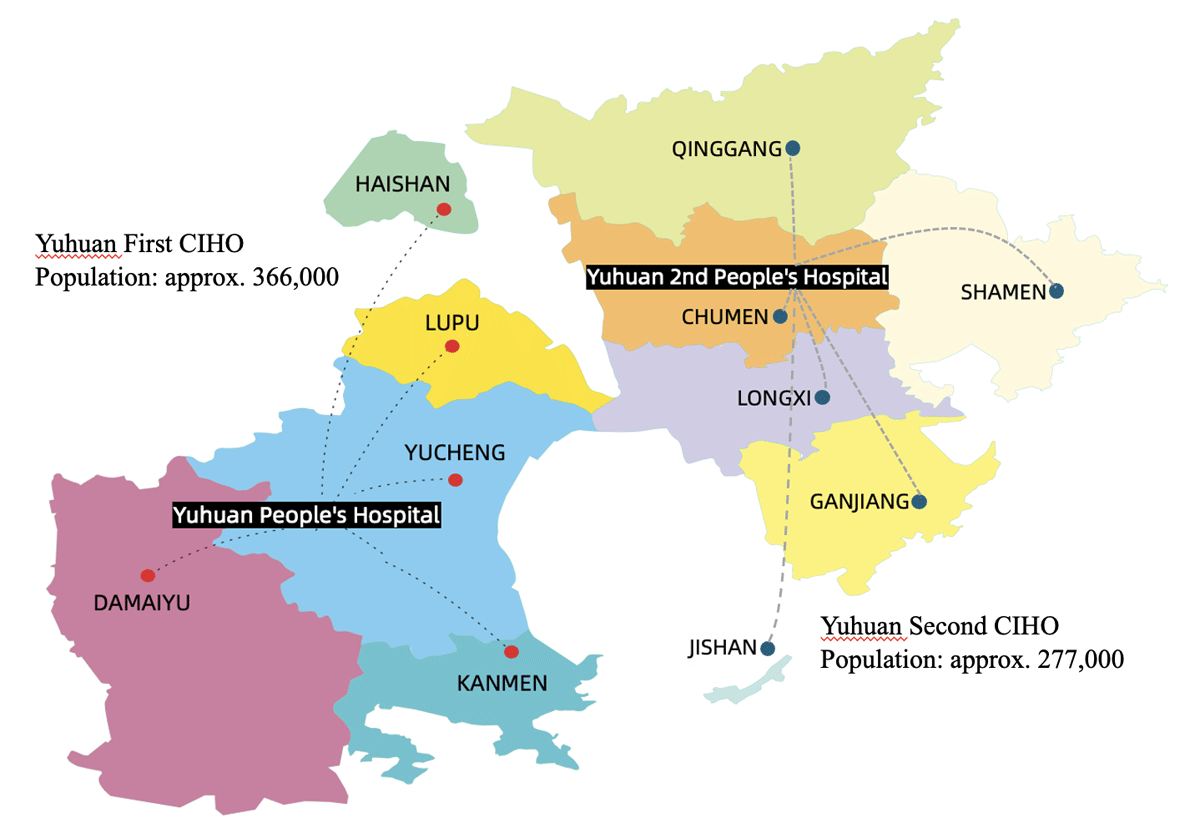
ijic-24-4-8610-g1.png
Figure 1

The map of YUHUAN.
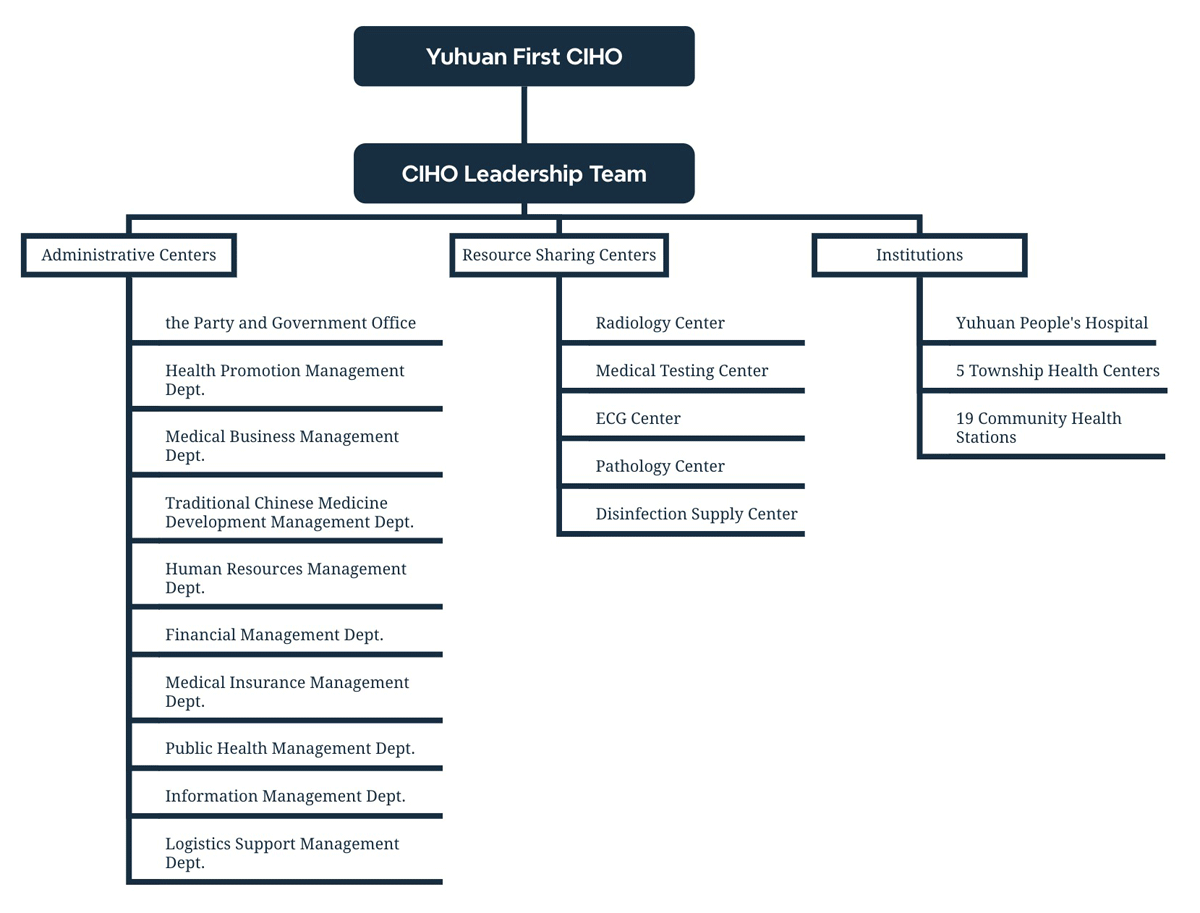
ijic-24-4-8610-g2.png
Figure 2

The organizational structure of Yuhuan First CIHO.
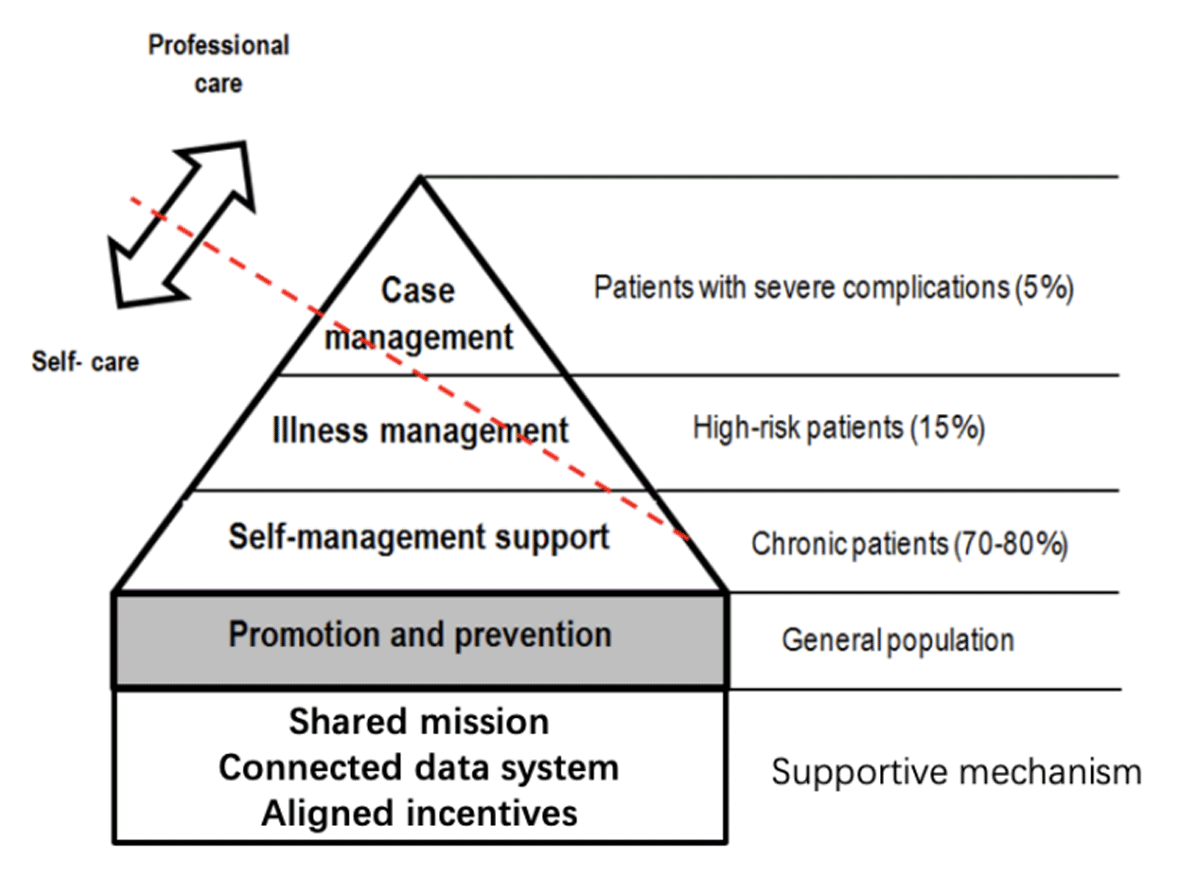
ijic-24-4-8610-g3.png
Figure 3

Kaiser Permanente Model.

Table 1

The approaches to integrating care in Yuhuan First CIHO.

DIMENSIONSKEY STRATEGIES
Promotion and
prevention
  • THCs conduct basic public health services (e.g. chronic disease management, physical examinations, vaccination, and health education).

  • Part-time grassroots personnel have been enlisted to reinforce the manpower and capabilities for health promotion efforts.

  • A Health Map, based on residents’ health statistics, is introduced to analyze the top prevalence diseases in different towns.

  • Activate disease screening and vaccination programs according to the Health Map.

  • Build Joint Outpatient Clinics in THCs to strengthen the screening abilities of General Practitioners (GPs) according to the Health Map.

Self-management support
  • GPs conduct scheduled follow-ups for chronic disease patients, to provide assistance in managing their living habits, diet and exercise routines.

  • A Medical and Social Work Department was established to conduct supportive care for outpatients and inpatients in both the hospital and THCs.

  • Encourage patients to engage in digital therapeutics, which facilitates self-management through features such as data monitoring, reminders, and alerts.

Disease management
  • Multidisciplinary teams, comprising professionals such as doctors, nurses, pharmacists, nutritionists, and others, have been established and are dedicated to delivering patient-centric treatments.

  • Platforms (e.g. disease management centers, medical consortium) are utilized to improve specialty capabilities in both the hospital and THCs.

  • Specialist-GP joint clinics have been established in THCs, and a family doctor clinic has been set up within the hospital as transitional measures to guide residents in seeking healthcare in an organized manner.

  • Rehabilitation services are strengthened at the community level.

Case management
  • Medical Extended Service Package (MESP), which aims at tailored disease management and is provided by medical staff within the CIHO, is launched to provide transitional care after discharge.

Information system reform
  • The electronic health profile system enables stratified assessment and can formulate standardized follow-up plan. Referral recommendations are prompted automatically in specific circumstances.

  • Automated reminder functions and outpatient clinical pathways were embedded in electronic medical record system.

  • A follow-up system can support medical staff in creating categorized outpatient management plans which can be shared within the management team. Meanwhile, the function of AI-based telephone follow-up was introduced to improve work efficiency.

Payment reform
  • Initiate “fee-for-value” outpatient medical insurance payment reform for GPs.

  • Combined payment methods were applied for inpatients, including Diagnosis-Related Group (DRG) payment method, payment based on per diem rates, a two-way referral incentive mechanism.

  • Piloted supplementary payment mechanisms by providing chronic disease health insurances.

  • Start performance appraisal for acute cardiovascular and cerebrovascular (death) events.

Shared culture
  • A unified mission and vision were defined at the establishment of the CIHO.

  • Integrating the concept of health-centered care into the workflow of chronic disease management when transforming the delivery system of healthcare.

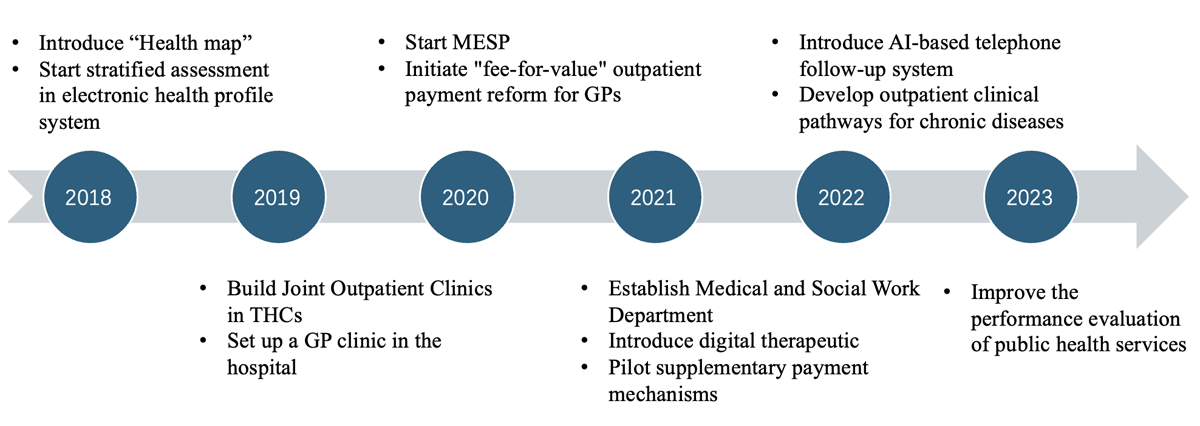
ijic-24-4-8610-g4.png
Figure 4

Timeline of main elements of integrated care practice.

DOI: https://doi.org/10.5334/ijic.8610 | Journal eISSN: 1568-4156
Language: English
Submitted on: Feb 20, 2024
Accepted on: Dec 17, 2024
Published on: Dec 31, 2024
Published by: Ubiquity Press
In partnership with: Paradigm Publishing Services
Publication frequency: 4 issues per year

© 2024 Na Li, Yin Dong, Gaofeng Zhang, published by Ubiquity Press
This work is licensed under the Creative Commons Attribution 4.0 License.